
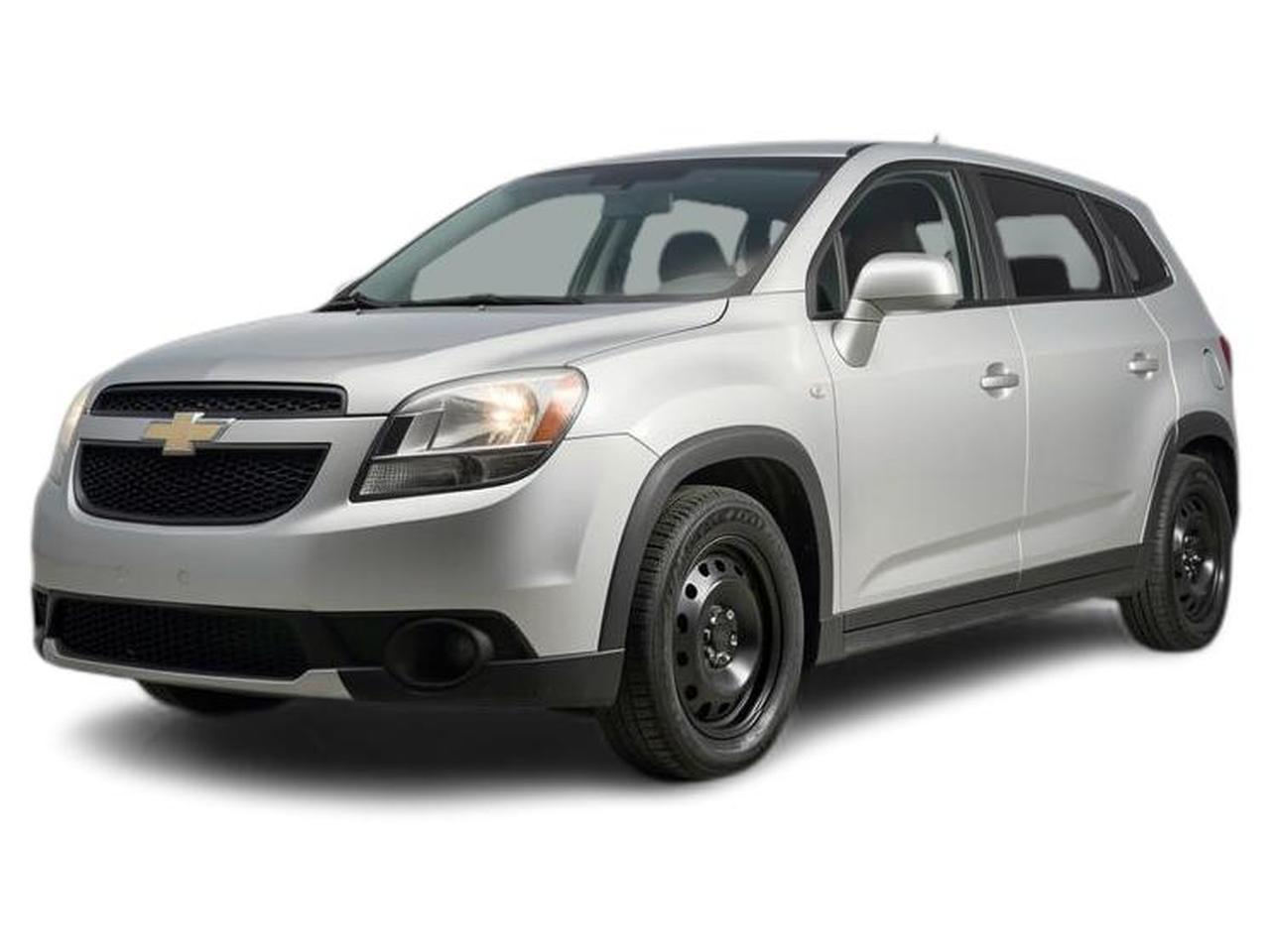
The Good
The 2012 Orlando offers a comfortable and car-like ride, with a surprisingly spacious interior for its class. Its bold styling appeals to those wanting a unique look, while its practicality and available all-wheel drive provide confidence and utility for families. It generally presents a good value proposition.
The Bad
Potential buyers should be aware of the Orlando's somewhat sluggish acceleration, particularly with the base engine. Some owners have reported concerns regarding the infotainment system's responsiveness and the vehicle's overall fuel economy compared to some rivals. Rear visibility can also be a concern for some drivers.
2012 Chevrolet Orlando: Quick Overview
- Engine Options: The 2012 Chevrolet Orlando typically offered two engine choices in most markets:
- A 2.4-liter inline-4 cylinder engine.
- An optional 1.4-liter turbocharged inline-4 cylinder engine (often focused on efficiency).
- Horsepower:
- The 2.4-liter engine generally produced around 174 horsepower.
- The 1.4-liter turbocharged engine typically produced around 138 horsepower.
- Fuel Economy:
- Fuel economy varied depending on the engine and drivetrain. For the 2.4L engine, expect figures in the range of 20-22 MPG city and 27-30 MPG highway. The 1.4L turbo might offer slightly better highway mileage but potentially lower city MPG due to its smaller displacement.
- 0-60 Times:
- With the 2.4L engine, 0-60 mph times were generally in the 9-10 second range. The 1.4L turbo would be slower, likely in the 10-11 second range.
- Towing Capacity:
- The Chevrolet Orlando was not primarily designed as a towing vehicle. Its towing capacity was typically limited, often around 1,000 lbs for light loads.
- Trim-Level Features:
- LS (Base): Often included power windows and locks, air conditioning, a tilt-steering wheel, and a basic audio system.
- 1LT: Added features like cruise control, a CD player with an auxiliary input, satellite radio, and potentially body-colored mirrors.
- 2LT: Further enhanced with alloy wheels, upgraded cloth upholstery, Bluetooth connectivity, and a rearview camera.
- LTZ (Top Trim): Typically featured leather upholstery, heated front seats, automatic climate control, a premium sound system, fog lights, and larger alloy wheels. Optional features across trims could include a sunroof, navigation system, and enhanced safety features.
2012 Chevrolet Orlando Specifications
Vehicle Information
| Year | 2012 |
| Make | Chevrolet |
| Model | Orlando |
| Trim | - |
| Style | - |
| Type | Wagon |
| Category | Minivan |
Manufacturing Details
| Made In | Korea |
| Manufacturing City | - |
Dimensions
| Doors | - |
| Curb Weight | - |
| Gross Vehicle Weight Rating | - |
| Overall Height | - |
| Overall Length | - |
| Overall Width | - |
| Wheelbase Length | - |
| Standard Seating | - |
Engine & Performance
| Engine | 2.4L L4 |
| Engine Size | 2.4L |
| Engine Cylinders | 4 |
| Transmission | - |
| Transmission Type | - |
| Transmission Speeds | - |
| Drivetrain | Front-Wheel Drive |
Additional Features
| Anti-Brake System | - |
| Steering Type | - |
Pricing
| Manufacturer Suggested Retail Price (MSRP) | - |
| Invoice Price | - |
| Delivery Charges | - |
Vehicle History Report
Specifications
History
Events
History Check
Check
Check
Check
Check
Listings
Recalls
Check
Analysis
What Problems Does the 2012 Chevrolet Orlando Have?
Transmission issues, though less frequent, have also been mentioned. Some drivers have experienced rough shifting or hesitation from the automatic transmission.
In terms of recalls, the 2012 Orlando has been subject to several, as is common for many vehicles. These have ranged from potential issues with the power steering system, which could affect driver control, to concerns with the airbag system or even fuel system components. It is crucial for prospective buyers to check the specific recall history for any vehicle they are considering.
Long-term reliability can be a mixed bag. While some owners report trouble-free ownership, others have encountered more significant repairs as the vehicle ages. Electrical gremlins, such as issues with the infotainment system, power windows, or dashboard lights, have also been reported. The suspension system may also require attention over time, with reports of worn components leading to a less refined ride. Overall, while the Orlando offers a unique package, potential buyers should be aware of these recurring themes and ensure a thorough pre-purchase inspection is conducted, with a particular focus on the engine and transmission health.
How long will the 2012 Chevrolet Orlando last?
What Technology & Safety Features are Included?
Technology and Entertainment: Base models typically came with a standard AM/FM/CD player and an auxiliary input jack. Higher trims, such as the 1LT and 2LT, often included features like satellite radio, Bluetooth connectivity for hands-free calling and audio streaming, and a USB port. The top-tier LTZ could be equipped with Chevrolet's MyLink infotainment system (though this was less common in early models and more prevalent in later model years or as an option), which offered a touchscreen interface for audio, phone, and navigation. A rearview camera was also an available feature on some higher trims or as part of an optional package, enhancing parking convenience.
Driver-Assistance Features: Advanced driver-assistance systems were not as prevalent in 2012 as they are today. The Orlando primarily relied on standard safety features. However, a rearview camera, as mentioned, was a significant driver-assistance aid available. Parking sensors might have been an optional addition on some trims.
Safety Features: The 2012 Chevrolet Orlando was designed with safety in mind. Standard safety features across all trims included anti-lock brakes (ABS), electronic stability control (ESC), traction control, and a comprehensive set of airbags, including front-seat side-impact airbags and roof-mounted side-curtain airbags for all rows.
Crash-Test Ratings: The Chevrolet Orlando generally performed well in safety tests conducted by the National Highway Traffic Safety Administration (NHTSA) and the Insurance Institute for Highway Safety (IIHS). For instance, NHTSA awarded the 2012 Orlando an overall safety rating of 5 stars. IIHS also recognized it with good ratings in various crashworthiness tests, contributing to its appeal as a family vehicle. Specific ratings can be found on their respective websites, but generally, it was considered a safe vehicle for its class during its production run.
What Colors Options are Available?
2012 Chevrolet Orlando Prices and Market Value
Currently, on the used market, prices for a 2012 Chevrolet Orlando can vary widely depending on mileage, condition, trim level, and geographic location. You might find examples ranging from as low as $4,000 to $9,000.
Factors affecting resale value include its unique styling, which was a strong point for some but perhaps polarizing for others. The availability of the more fuel-efficient 1.4L turbo engine or the practicality of the 2.4L engine also plays a role. Maintenance history is paramount; a well-documented service record significantly boosts value. Recalls that have been addressed and any known common issues that have been repaired will also positively impact its desirability. Overall, the Orlando falls into a segment where depreciation is typically quite rapid, making it a potentially good value for used car buyers.
2012 Chevrolet Orlando Cost of Ownership
2012 Chevrolet Orlando Fuel Efficiency
2012 Chevrolet Orlando Insurance
reasonable repair costs.
How Does the 2012 Chevrolet Orlando Compare to Other Wagon?
Performance: In terms of performance, the Orlando's base 2.4L engine was competitive, offering adequate power, but it often lagged behind rivals that offered more potent optional engines or a more refined driving experience. The 1.4L turbo engine prioritized fuel economy over spirited acceleration, which could feel sluggish compared to competitors. Rivals like the CR-V and RAV4 often offered a smoother, more responsive powertrain.
Features: The Orlando generally held its own in terms of features, especially in higher trims, offering amenities like Bluetooth, available navigation, and a good set of standard safety features. However, some competitors, particularly those from Japanese manufacturers, were often praised for more intuitive infotainment systems and a wider array of available advanced tech features.
Reliability: This is where the Orlando sometimes faced challenges compared to its more established rivals. Vehicles like the Toyota RAV4 and Honda CR-V have long-standing reputations for exceptional reliability and durability. While the Orlando wasn't necessarily unreliable, it did have more reported issues concerning its powertrain and electrical systems compared to the benchmarks in the class, which could impact long-term ownership peace of mind.
Price: The Orlando often offered a compelling price point when new and continued to be a strong value on the used market, often priced below comparable models from Honda or Toyota. This made it an attractive option for budget-conscious buyers.
Alternatives:
- Similar Alternatives (if value is a priority): Hyundai Tucson and Kia Sportage offered good value, decent features, and improving reliability.
- Better Alternatives (for reliability and refinement): Honda CR-V and Toyota RAV4 are often considered the gold standards for reliability, resale value, and overall refinement in this segment, though they might command a higher price, especially on the used market. Ford Escape offered a good balance of performance and features.
Final Verdict: Is the 2012 Chevrolet Orlando a Good Wagon?
Whether it's worth buying depends heavily on the specific vehicle and its condition. It is generally a better value on the used market due to significant depreciation. If you find one with a thorough maintenance history, low mileage for its age, and no signs of the commonly reported powertrain or electrical issues, it can be a good purchase.
Conditions for buying:
- Used is preferred: Due to depreciation, the used market offers the best value.
- Higher trims: Consider 2LT or LTZ for better feature content, but be aware of potential complexity.
- Thorough inspection is crucial: Prioritize vehicles with complete service records and have a mechanic check for engine sludge, transmission health, and any recalls.

Cathleen V
Cathleen is an exceptional freelance writer covering hot topics in the automotive world from a gearhead's perspective. Her articles delve into various aspects of automotive technology and history, offering readers detailed insights into engine performance, reliability, and maintenance. Through her engaging and informative writing, Cathleen provides valuable information to automotive enthusiasts and consumers alike, helping them make informed decisions about vehicle maintenance and purchases.