The 2019 Kawasaki Ninja 400 Non-ABS is a popular entry-level sportbike, known for its approachable performance and sleek styling. As part of Kawasaki's long-standing Ninja lineage, it replaced the Ninja 300. This model year features a single, non-ABS trim. Its popularity stems from its lightweight chassis, manageable power, and attractive price point, making it an excellent choice for new riders and experienced enthusiasts seeking a nimble machine. The pricing range for a new model was generally around $5,000-$5,500.
The Good
The 2019 Ninja 400 Non-ABS offers a thrilling yet forgiving performance, legendary Kawasaki reliability, and surprisingly comfortable ergonomics for its class. Its aggressive, sporty design evokes emotion, while its exceptional fuel efficiency and outstanding value proposition appeal to practical riders. It's a well-rounded package for both heart and head.
The Bad
Owners sometimes note the basic suspension can feel a bit soft under hard riding. The non-ABS version lacks a crucial safety feature for some, especially in wet conditions. Additionally, highway passing power can be limited at higher speeds due to its smaller displacement.
2019 Kawasaki Ninja 400 Non-ABS: Quick Overview
- Engine: 399cc, liquid-cooled, parallel-twin
- Horsepower: Approximately 45 hp @ 10,000 rpm
- Torque: Approximately 28 lb-ft @ 8,000 rpm
- Fuel Economy: Estimated 50-60 mpg (combined)
- 0-60 mph: Approximately 4.4 - 5.0 seconds
- Top Speed: Around 110-115 mph
- Transmission: 6-speed
- Brakes: Front: 310mm petal disc with dual-piston caliper; Rear: 220mm petal disc with dual-piston caliper (Non-ABS)
- Suspension: Front: 41mm telescopic fork; Rear: Bottom-link Uni-Trak with adjustable preload
- Towing Capacity: Not applicable (motorcycle)
- Curb Weight: Approximately 363.8 lbs
- Fuel Tank Capacity: 3.7 gallons
- Seat Height: 30.9 inches
- Lighting: LED headlights and taillight
- Instrument Cluster: Digital LCD with tachometer, speedometer, fuel gauge, clock, trip meters, and gear position indicator.
- Key Trim Features (Non-ABS): Standard ABS-delete configuration focusing on affordability and lighter weight for entry-level riders.
2019 Kawasaki Ninja 400 Non-ABS Specifications
Vehicle Information
| Year | 2019 |
| Make | Kawasaki |
| Model | Ninja 400 Non-ABS |
| Trim | - |
| Style | - |
| Type | Motorcycle |
| Category | Motorcycle |
Manufacturing Details
| Made In | Japan |
| Manufacturing City | AMPHUR PLUAK DAENG |
Dimensions
| Doors | - |
| Curb Weight | - |
| Gross Vehicle Weight Rating | - |
| Overall Height | - |
| Overall Length | - |
| Overall Width | - |
| Wheelbase Length | - |
| Standard Seating | - |
Engine & Performance
| Engine | 399CC |
| Engine Size | 399L |
| Engine Cylinders | 2 |
| Transmission | - |
| Transmission Type | - |
| Transmission Speeds | - |
| Drivetrain | - |
Additional Features
| Anti-Brake System | - |
| Steering Type | - |
Pricing
| Manufacturer Suggested Retail Price (MSRP) | - |
| Invoice Price | - |
| Delivery Charges | - |
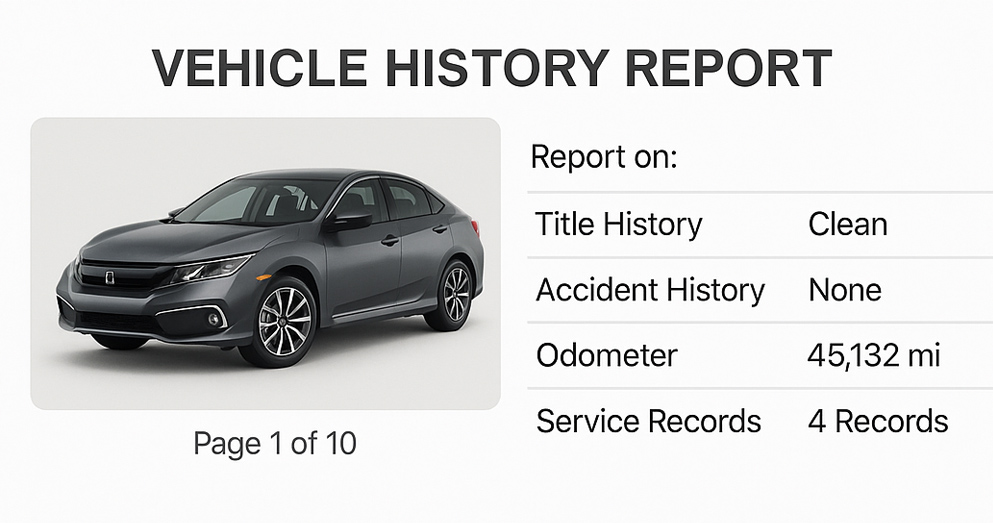
Vehicle History Report
Vehicle
Specifications
Specifications
Ownership
History
History
All History
Events
Events
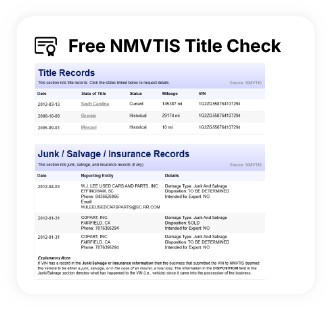
NMVTIS Title
History Check
History Check
Salvage/Rebuilt
Check
Check
Accident
Check
Check
Theft
Check
Check
Open Lien
Check
Check
Past Sale
Listings
Listings
Safety
Recalls
Recalls
Odometer
Check
Check
Market Price
Analysis
Analysis
What Problems Does the 2019 Kawasaki Ninja 400 Non-ABS Have?
The 2019 Kawasaki Ninja 400 Non-ABS is generally regarded as a very reliable motorcycle, especially for its class. Kawasaki has a strong reputation for building durable machines, and this model is no exception. Most reported issues tend to be minor and related to typical motorcycle wear and tear rather than inherent design flaws. Owners frequently praise the engine's smoothness and robustness.
One of the most commonly discussed aspects, though not strictly a 'problem,' is the basic nature of the suspension. While perfectly adequate for commuting and general riding, some riders find it can become a bit soft or underdamped when pushed hard in aggressive riding scenarios or on rougher roads. This is a common characteristic of budget-friendly sportbikes and is often addressed by aftermarket upgrades for enthusiasts seeking a more performance-oriented feel.
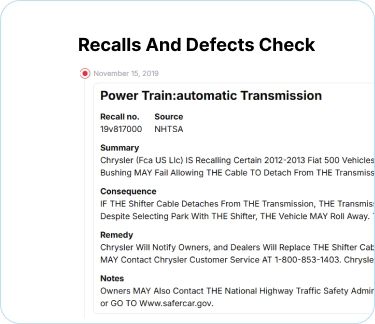
There have been no widespread, significant mechanical failures or design defects reported for the 2019 model year that would indicate a serious long-term reliability concern. Recalls for this specific model year have been infrequent and typically address minor issues, such as potential problems with certain fasteners or electrical components that are quickly rectified by dealers. Owners should always ensure their vehicle has had any applicable recalls addressed. Long-term reliability is expected to be excellent with regular maintenance, including oil changes, chain adjustments, and proper fluid checks.
One of the most commonly discussed aspects, though not strictly a 'problem,' is the basic nature of the suspension. While perfectly adequate for commuting and general riding, some riders find it can become a bit soft or underdamped when pushed hard in aggressive riding scenarios or on rougher roads. This is a common characteristic of budget-friendly sportbikes and is often addressed by aftermarket upgrades for enthusiasts seeking a more performance-oriented feel.
There have been no widespread, significant mechanical failures or design defects reported for the 2019 model year that would indicate a serious long-term reliability concern. Recalls for this specific model year have been infrequent and typically address minor issues, such as potential problems with certain fasteners or electrical components that are quickly rectified by dealers. Owners should always ensure their vehicle has had any applicable recalls addressed. Long-term reliability is expected to be excellent with regular maintenance, including oil changes, chain adjustments, and proper fluid checks.
How long will the 2019 Kawasaki Ninja 400 Non-ABS last?
With proper and consistent maintenance, a 2019 Kawasaki Ninja 400 Non-ABS can easily last for well over 50,000 miles and potentially reach 100,000 miles. Owners who follow the recommended service intervals, use quality fluids, and keep the motorcycle clean often report minimal issues. The parallel-twin engine is known for its robustness. The main areas that might require attention over time include the clutch plates (depending on riding style), fork seals, and chain and sprockets, all of which are wear items. The bike's lightweight construction and simple mechanics contribute to its overall long-term durability, making it a dependable companion for many years of riding.

What Technology & Safety Features are Included?
The 2019 Kawasaki Ninja 400 Non-ABS is designed with simplicity and functionality as its core technological tenets, reflecting its entry-level positioning. It features a comprehensive digital LCD instrument cluster. This display provides the rider with essential information including a prominent tachometer, speedometer, fuel gauge, clock, and dual trip meters. It also includes a gear position indicator, which is a highly valuable feature for new riders helping them stay in the optimal gear. The headlights and taillight are LED, offering improved visibility and a modern aesthetic.
In terms of driver-assistance features, the 2019 Ninja 400 Non-ABS, by definition of being the 'Non-ABS' model, does not come equipped with an Anti-lock Braking System (ABS). ABS is a significant safety feature that helps prevent wheel lock-up during hard braking, especially in slippery conditions. While this model omits ABS to reduce cost and weight, the ABS-equipped version was available as an optional upgrade and is highly recommended for enhanced safety. Other than the lack of ABS, there are no advanced electronic rider aids like traction control or riding modes, which are typically found on larger, more performance-oriented motorcycles.
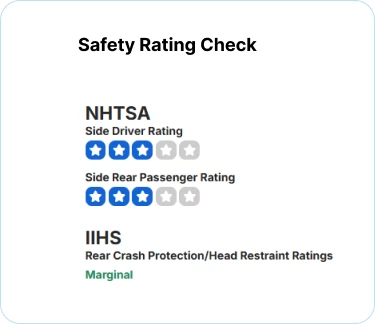
The Ninja 400 does not offer integrated entertainment systems or connectivity features. Its focus is purely on the riding experience. Due to its motorcycle nature, formal crash-test ratings in the same vein as automobiles (like NHTSA or IIHS ratings) are not applicable. Safety is primarily reliant on the rider's skill, adherence to road rules, and the functionality of the standard braking and lighting systems. The availability of ABS in an optional trim significantly enhances its safety profile.
In terms of driver-assistance features, the 2019 Ninja 400 Non-ABS, by definition of being the 'Non-ABS' model, does not come equipped with an Anti-lock Braking System (ABS). ABS is a significant safety feature that helps prevent wheel lock-up during hard braking, especially in slippery conditions. While this model omits ABS to reduce cost and weight, the ABS-equipped version was available as an optional upgrade and is highly recommended for enhanced safety. Other than the lack of ABS, there are no advanced electronic rider aids like traction control or riding modes, which are typically found on larger, more performance-oriented motorcycles.
The Ninja 400 does not offer integrated entertainment systems or connectivity features. Its focus is purely on the riding experience. Due to its motorcycle nature, formal crash-test ratings in the same vein as automobiles (like NHTSA or IIHS ratings) are not applicable. Safety is primarily reliant on the rider's skill, adherence to road rules, and the functionality of the standard braking and lighting systems. The availability of ABS in an optional trim significantly enhances its safety profile.
What Colors Options are Available?
2019 Kawasaki Ninja 400 Non-ABS Prices and Market Value
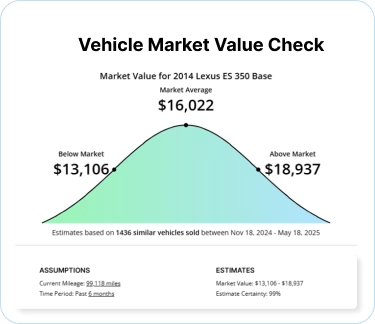
When new, the 2019 Kawasaki Ninja 400 Non-ABS typically retailed in the range of $5,000 to $5,500 USD, depending on color options and dealer pricing. The used market for this model is generally strong due to its popularity as an entry-level bike. Currently, you can expect to find them in good condition for anywhere between $3,500 and $4,800, with prices varying based on mileage, condition, and any aftermarket modifications. The Ninja 400 holds its value well for its segment, exhibiting moderate depreciation. Factors that positively affect its resale value include low mileage, excellent maintenance records, stock condition (or tasteful, quality modifications), and the absence of cosmetic damage or accident history. The non-ABS version will generally be slightly cheaper than its ABS-equipped counterpart in the used market.
2019 Kawasaki Ninja 400 Non-ABS Cost of Ownership
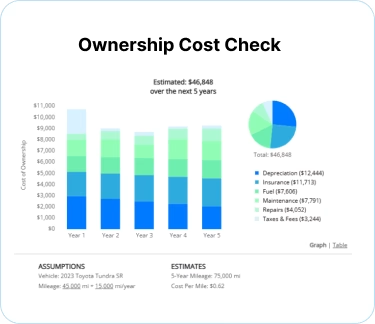
The 2019 Kawasaki Ninja 400 Non-ABS is remarkably economical to own. Insurance premiums are typically low, especially for new riders, compared to larger sportbikes. Fuel costs are minimal, with its 399cc engine achieving excellent MPG (often 50-60 mpg). Regular maintenance, including oil changes and chain care, is straightforward and inexpensive. Parts are readily available and reasonably priced. Repairs, should they be needed, are also generally affordable due to the bike's simplicity and widespread parts support. Overall, it is a very budget-friendly motorcycle to own and operate, making it an ideal choice for those mindful of running costs.
2019 Kawasaki Ninja 400 Non-ABS Fuel Efficiency
Fuel Type
Gasoline
Fuel Capacity
-
City Mileage
-
Highway Mileage
-
2019 Kawasaki Ninja 400 Non-ABS Warranty
Basic
Original warranty
0 months / No data
Estimated remaining
Expired
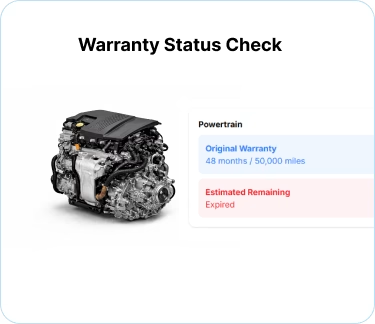
Powertrain
Original warranty
0 months / No data
Estimated remaining
Expired
Rust
Original warranty
0 months / No data
Estimated remaining
Expired
2019 Kawasaki Ninja 400 Non-ABS Insurance
Insurance for a 2019 Kawasaki Ninja 400 Non-ABS is moderately priced, reflecting its status as a Motorcycle with strong safety ratings and
reasonable repair costs.
How Does the 2019 Kawasaki Ninja 400 Non-ABS Compare to Other Motorcycle?
The 2019 Kawasaki Ninja 400 Non-ABS sits at the top of the lightweight sportbike class, often competing with bikes like the Yamaha YZF-R3 and the KTM RC 390.
Performance: In terms of raw performance, the Ninja 400's 45 hp parallel-twin engine offers a smooth power delivery and sufficient acceleration for its class. The Yamaha R3, with its similar displacement and parallel-twin configuration, often feels slightly more potent in the mid-range. The KTM RC 390, though a single-cylinder, offers more horsepower (around 43 hp, but with a more aggressive powerband) and a sportier chassis, but can be less refined and more vibration-prone.
Features: The Ninja 400's feature set is basic but functional, with an LCD dash and LED lighting. The R3 has a comparable digital dash. The RC 390 often boasts more premium features like adjustable suspension (on some variants) and a TFT display, appealing to a more track-focused rider. The lack of ABS on the base Ninja 400 is a notable omission compared to some ABS-equipped competitors, though an ABS version was available.
Reliability: Kawasaki has an excellent reputation for reliability, and the Ninja 400 generally upholds this. The R3 is also known for its bulletproof reliability. The KTM, while improved in recent years, has historically had more reports of minor gremlins and can be more costly to maintain long-term.
Price: The Ninja 400 typically sits in a very competitive price bracket, often being the most affordable option when new, especially in its non-ABS form. The R3 is usually similarly priced, while the RC 390 tends to be more expensive.
Recommendations:
* Similar: The Yamaha YZF-R3 is a very close competitor offering similar performance, reliability, and price, with a slightly more lively engine.
* Alternative (More Performance-Oriented): The KTM RC 390 is for those seeking a sharper, more aggressive riding experience and willing to accept potential trade-offs in comfort and refinement for its sporty nature and features.
* Alternative (More Practical/Naked): If sportbike styling isn't essential, consider the Kawasaki Z400 (naked version of the Ninja 400) or the KTM 390 Duke for a more upright riding position and slightly different character.
Performance: In terms of raw performance, the Ninja 400's 45 hp parallel-twin engine offers a smooth power delivery and sufficient acceleration for its class. The Yamaha R3, with its similar displacement and parallel-twin configuration, often feels slightly more potent in the mid-range. The KTM RC 390, though a single-cylinder, offers more horsepower (around 43 hp, but with a more aggressive powerband) and a sportier chassis, but can be less refined and more vibration-prone.
Features: The Ninja 400's feature set is basic but functional, with an LCD dash and LED lighting. The R3 has a comparable digital dash. The RC 390 often boasts more premium features like adjustable suspension (on some variants) and a TFT display, appealing to a more track-focused rider. The lack of ABS on the base Ninja 400 is a notable omission compared to some ABS-equipped competitors, though an ABS version was available.
Reliability: Kawasaki has an excellent reputation for reliability, and the Ninja 400 generally upholds this. The R3 is also known for its bulletproof reliability. The KTM, while improved in recent years, has historically had more reports of minor gremlins and can be more costly to maintain long-term.
Price: The Ninja 400 typically sits in a very competitive price bracket, often being the most affordable option when new, especially in its non-ABS form. The R3 is usually similarly priced, while the RC 390 tends to be more expensive.
Recommendations:
* Similar: The Yamaha YZF-R3 is a very close competitor offering similar performance, reliability, and price, with a slightly more lively engine.
* Alternative (More Performance-Oriented): The KTM RC 390 is for those seeking a sharper, more aggressive riding experience and willing to accept potential trade-offs in comfort and refinement for its sporty nature and features.
* Alternative (More Practical/Naked): If sportbike styling isn't essential, consider the Kawasaki Z400 (naked version of the Ninja 400) or the KTM 390 Duke for a more upright riding position and slightly different character.
Final Verdict: Is the 2019 Kawasaki Ninja 400 Non-ABS a Good Motorcycle?
The 2019 Kawasaki Ninja 400 Non-ABS is ideal for new riders looking for their first sportbike, commuters seeking an economical and stylish ride, or experienced riders wanting a fun, lightweight machine for city riding and twisty backroads. It's an excellent value proposition.
It is absolutely worth buying, particularly on the used market, where it offers a fantastic blend of performance, reliability, and affordability. For new riders, opting for the ABS version is highly recommended for added safety, even if it means a slight increase in cost. If budget is the absolute priority and the rider has good control, the non-ABS version is still a capable choice. For seasoned riders, it remains a joy to flick through corners and an economical choice for daily use. Buying used, with good maintenance history, offers the best overall value.