
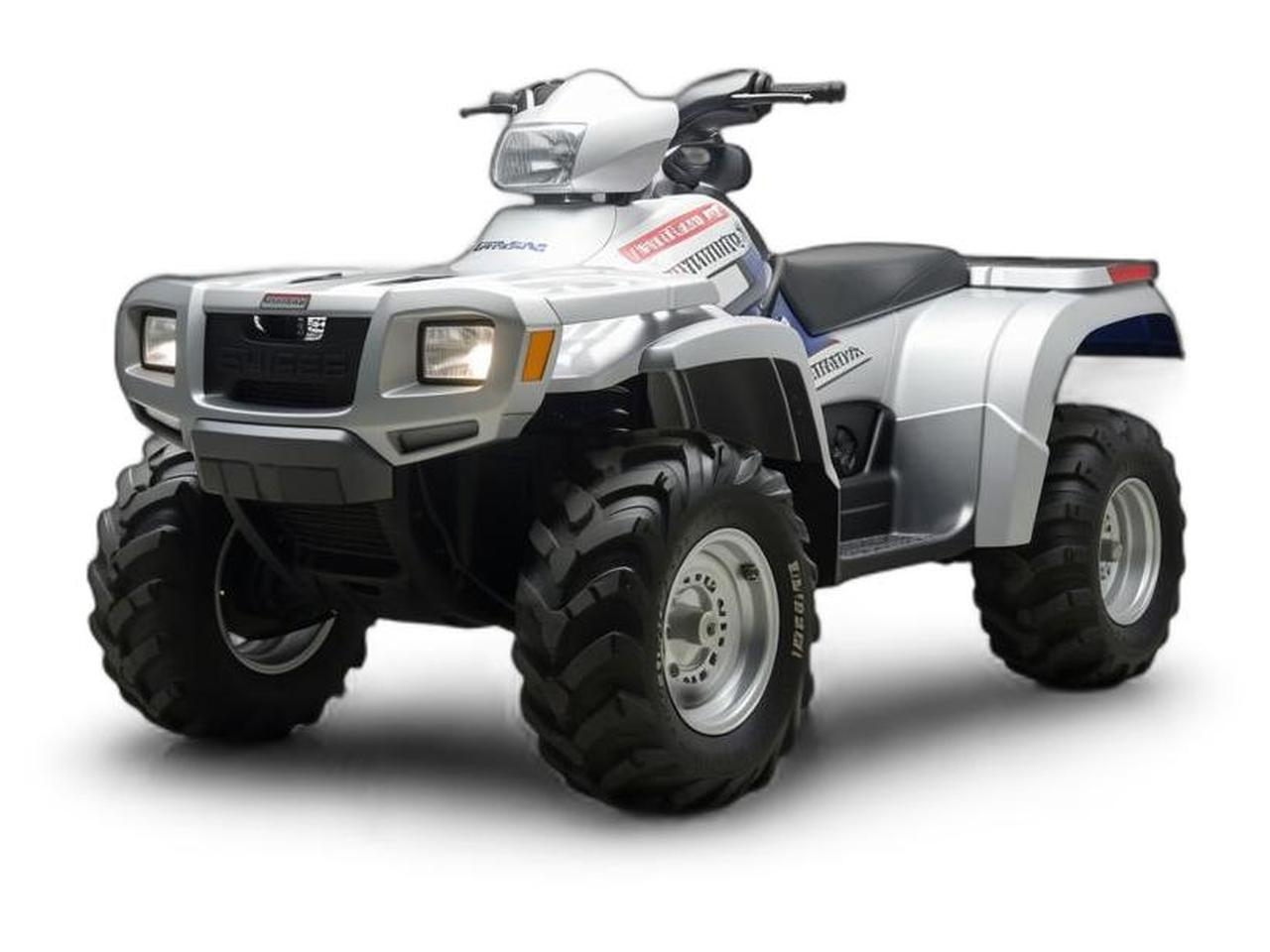
The Good
The 2004 Polaris Sportsman 6x6 excels with its exceptional traction and stability, offering a commanding presence on any terrain. Its powerful engine ensures ample performance for demanding tasks, while the robust build promises long-term reliability. The comfortable seating and intuitive controls enhance the user experience, making it a practical choice for demanding jobs and adventurous outings.
The Bad
Potential buyers should be aware of its significant weight, which impacts maneuverability in tight spaces and transport. The 6x6 drivetrain, while offering superior traction, can also lead to increased tire wear and potentially higher fuel consumption. Some owners report occasional issues with the electronic fuel injection (EFI) system under extreme conditions.
2004 Polaris Sportsman 6x6: Quick Overview
- Engine Options: The 2004 Polaris Sportsman 6x6 was primarily equipped with a single engine option designed for robust performance.
- Engine Type: It featured a 4-stroke, liquid-cooled, SOHC twin-cylinder engine.
- Displacement: The engine displacement was typically around 700cc (specifically 700cc).
- Horsepower: Horsepower ratings for this engine were generally in the range of 45-50 horsepower. This provided ample power for towing, hauling, and navigating difficult terrain.
- Fuel Economy: Fuel economy for ATVs of this era and class is generally not a primary focus, but it would likely be in the range of 10-15 miles per gallon, depending heavily on riding conditions and load.
- 0-60 Times: Official 0-60 mph times are rarely published for ATVs. Given its weight and purpose, acceleration would be moderate, focusing more on torque and steady power delivery rather than rapid acceleration.
- Towing Capacity: The 2004 Polaris Sportsman 6x6 boasted a substantial towing capacity. It was rated to tow up to 1,500 pounds (680 kg) when properly equipped with a hitch. This made it ideal for hauling trailers, equipment, or other heavy loads.
- Payload Capacity: In addition to towing, it offered significant payload capacity on its front and rear racks, typically around 200 lbs (90 kg) on the front and 400 lbs (181 kg) on the rear.
- Transmission: It featured an automatic PVT (Polaris Variable Transmission) with high, low, and reverse gears, offering ease of operation.
- Drivetrain: The defining feature is its 6x6 drive system, providing exceptional traction. It also featured Polaris's on-demand all-wheel-drive system which could engage front wheels as needed.
- Suspension: Independent front and rear suspension with long travel for comfortable ride and obstacle clearance.
- Brakes: Hydraulic disc brakes on all wheels for reliable stopping power.
- Features (Key Trim): The 2004 Sportsman 6x6 typically came as a single, well-equipped trim. Key features included:
- Electronic Fuel Injection (EFI) for improved throttle response and cold starts.
- Shaft drive for durability and low maintenance.
- Front and rear cargo racks.
- Sealed storage compartments.
- Durable steel wheels.
- Handguards for protection.
- Powerful headlights for visibility.
- A comfortable, ergonomically designed seat.
2004 Polaris Sportsman 6x6 Specifications
Vehicle Information
| Year | 2004 |
| Make | Polaris |
| Model | Sportsman |
| Trim | - |
| Style | 4x4 |
| Type | Motorcycle |
| Category | Low Speed Vehicle |
Manufacturing Details
| Made In | Taiwan |
| Manufacturing City | TAINAN |
Dimensions
| Doors | - |
| Curb Weight | - |
| Gross Vehicle Weight Rating | - |
| Overall Height | - |
| Overall Length | - |
| Overall Width | - |
| Wheelbase Length | - |
| Standard Seating | - |
Engine & Performance
| Engine | 89cc 1cyl |
| Engine Size | 89L |
| Engine Cylinders | 1 |
| Transmission | - |
| Transmission Type | Manual |
| Transmission Speeds | - |
| Drivetrain | Four-Wheel Drive |
Additional Features
| Anti-Brake System | - |
| Steering Type | - |
Pricing
| Manufacturer Suggested Retail Price (MSRP) | - |
| Invoice Price | - |
| Delivery Charges | - |
Vehicle History Report
Specifications
History
Events
History Check
Check
Check
Check
Check
Listings
Recalls
Check
Analysis
What Problems Does the 2004 Polaris Sportsman 6x6 Have?
Another area that sometimes requires attention is the drivetrain, particularly the additional components needed for the 6x6 configuration. While generally robust, excessive use in harsh conditions can lead to wear on universal joints (U-joints) and drive shafts. Ensuring proper lubrication and inspecting for any play or noise is crucial. The Polaris Variable Transmission (PVT), while convenient, can also be a point of failure if not maintained. Belt slippage, clutch issues, or problems with the low/high range engagement can occur with high mileage or hard use. Regular belt inspection and replacement are key.
Some owners have noted that the cooling system, especially the radiator and fan, can become clogged with mud and debris, leading to overheating if not frequently cleaned. The plastics and body panels, while durable, can become brittle with age and sun exposure, leading to cracks. Suspension components, such as ball joints and bushings, can also wear out over time, especially with aggressive riding or heavy loads, leading to play and reduced handling precision.
Regarding recalls, it is always advisable for owners of any vehicle, including this 2004 model, to check the official manufacturer recall databases or NHTSA website for any safety-related campaigns that may have been issued for this specific model year or related components. While no widespread, major recalls are consistently highlighted for the 2004 6x6 model across various forums, individual component failures can occur.
Long-term reliability is highly dependent on consistent and proper maintenance. For owners who diligently follow the service intervals, clean the vehicle regularly, and address minor issues promptly, the 2004 Sportsman 6x6 can remain a capable machine for many years. However, neglect of routine maintenance, such as oil changes, filter replacements, and fluid checks, will significantly shorten its lifespan and increase the likelihood of costly repairs.
How long will the 2004 Polaris Sportsman 6x6 last?
The long-term durability of the Sportsman 6x6 is generally considered good, thanks to its robust build and powerful engine. The 6x6 drivetrain, while adding complexity, is designed for heavy-duty use. However, weaknesses can emerge over time. The electronic fuel injection (EFI) system, while efficient, can be prone to issues with sensors or wiring as the vehicle ages. Drivetrain components, particularly universal joints and the PVT transmission, may require more frequent attention and potential replacement with high mileage. Suspension bushings and ball joints are also wear items that will eventually need servicing. With diligent maintenance, including regular fluid changes, lubrication, and prompt attention to any developing issues, this ATV can offer reliable service for a considerable duration, proving its value as a workhorse.
What Technology & Safety Features are Included?
Entertainment features are virtually non-existent. You won't find radios, infotainment screens, or advanced audio systems on this ATV. Its purpose is to traverse difficult terrain and perform work, not to provide a cabin-like experience. Similarly, driver-assistance features are also absent. There are no sophisticated electronic aids like traction control, stability control, or anti-lock braking systems (ABS) common in modern vehicles. The rider is in full manual control, relying on their skill and the machine's mechanical capabilities.
Safety features are primarily mechanical and inherent to its design. The 6x6 configuration itself contributes to stability and traction, reducing the likelihood of getting stuck or losing control on slippery surfaces. Powerful disc brakes on all wheels provide reliable stopping power. The robust frame and suspension are designed to absorb impacts and provide a stable platform. Handguards are typically included to protect the rider's hands from debris and branches. Powerful headlights are standard for visibility during dawn, dusk, or night operations.
Optional features for the 2004 Sportsman 6x6 would have been limited to accessories rather than integrated electronics. These could include winches, specialized hitches, auxiliary lighting, storage boxes, and windshields. There are no crash-test ratings available for ATVs like the Polaris Sportsman 6x6, as they are not subjected to the same standardized testing protocols as passenger vehicles. Safety in an ATV is largely dependent on rider awareness, adherence to safe riding practices, and the mechanical integrity of the vehicle itself.
What Colors Options are Available?
2004 Polaris Sportsman 6x6 Prices and Market Value
Currently, the used market value for a 2004 Polaris Sportsman 6x6 varies significantly based on condition, mileage, maintenance history, and location. Expect to find examples typically ranging from $3,000 to $6,000 USD. Excellent, well-maintained examples with low hours or miles can command prices towards the higher end of this spectrum.
The depreciation on this ATV has been considerable from its original new price, which is typical for most vehicles over this age. However, the resale value is strongly influenced by its mechanical condition. A well-maintained unit with recent service, good tire tread, and no major cosmetic or mechanical flaws will hold its value much better than a neglected one. Factors that significantly decrease resale value include significant rust, worn-out components, non-functional electronics, or cosmetic damage. Its unique 6x6 capability, while a selling point for specific needs, also narrows its buyer pool compared to standard 4x4 models, which can sometimes affect its overall market velocity.
2004 Polaris Sportsman 6x6 Cost of Ownership
2004 Polaris Sportsman 6x6 Fuel Efficiency
2004 Polaris Sportsman 6x6 Insurance
reasonable repair costs.
How Does the 2004 Polaris Sportsman 6x6 Compare to Other Motorcycle?
Can-Am Outlander 800: Known for its powerful engine and solid performance, the Outlander often competed on raw horsepower and features. In terms of performance, the Sportsman 6x6 offered superior traction due to its six wheels, excelling in mud and deep sand where a 4x4 might struggle. However, the Outlander might have offered better agility and a slightly higher top speed.
Arctic Cat 700 EFI: Arctic Cat's offerings were also strong contenders in the utility segment. Similar to the Outlander, the 700 EFI would have offered competitive power and features. The 6x6 advantage of the Sportsman would be its defining difference, providing unparalleled grip and stability.
Honda Foreman/Rancher series (4x4 models): While generally smaller in displacement and perhaps less powerful than the Sportsman 700, Honda is renowned for its legendary reliability and bulletproof engineering. In terms of reliability, Honda often held an edge for sheer dependability and lower long-term repair costs, though the Sportsman 6x6 provided a distinct advantage in pure traction.
Yamaha Grizzly 660: The Grizzly was a powerhouse in its own right, known for its ruggedness and capable 4x4 system. Performance-wise, it was a strong competitor to the Sportsman 700 in terms of hauling and towing, but again, lacked the ultimate traction of the 6x6 setup.
Price: The 2004 Sportsman 6x6 was typically priced higher than most comparable 4x4 models due to its specialized drivetrain. Its unique offering meant that if 6x6 capability was paramount, the price was justifiable. Otherwise, similarly powerful 4x4s might have offered more features for the money.
Features: The Sportsman 6x6 came well-equipped with EFI, independent suspension, and a robust cargo capacity. Competitors would have offered similar feature sets, with variations in suspension travel, power steering (less common in 2004), and braking systems.
Alternatives: For those specifically needing 6x6 capability, there were very few direct factory alternatives in 2004. Some aftermarket conversions existed, but a factory 6x6 was rare. If 6x6 was not an absolute necessity, a high-performance 4x4 like the Can-Am Outlander 800, Yamaha Grizzly 660, or an Arctic Cat 700 EFI would be excellent choices, potentially offering better agility and often a stronger reputation for long-term mechanical simplicity (especially Honda). For ultimate reliability and ease of maintenance, a well-maintained Honda Foreman or Rancher 4x4 would be a strong recommendation. The choice ultimately hinges on whether the unparalleled traction of the 6x6 system is a critical requirement.
Final Verdict: Is the 2004 Polaris Sportsman 6x6 a Good Motorcycle?
Whether it's worth buying today depends heavily on its condition and price. As a used vehicle, it represents good value if found in well-maintained condition for a reasonable price (around $3,000-$6,000). It is *not* worth buying if it exhibits significant mechanical issues, especially with the EFI or drivetrain, as repairs can be expensive. It's best purchased when used, as finding new models is impossible. Focus on inspecting the vehicle thoroughly for signs of abuse or neglect, and prioritize those with documented maintenance history. For its intended purpose, the 6x6 capability is its strongest selling point, making it a worthwhile investment for those who truly need that level of off-road prowess.

Cathleen V
Cathleen is an exceptional freelance writer covering hot topics in the automotive world from a gearhead's perspective. Her articles delve into various aspects of automotive technology and history, offering readers detailed insights into engine performance, reliability, and maintenance. Through her engaging and informative writing, Cathleen provides valuable information to automotive enthusiasts and consumers alike, helping them make informed decisions about vehicle maintenance and purchases.