The 2009 Harley-Davidson FLSTC, also known as the Heritage Softail Classic, is a cruiser motorcycle celebrated for its timeless retro styling and comfortable ride. Part of the Softail family, which debuted in 1984, the FLSTC embodies classic American motorcycle aesthetics. Its model years span many decades, with the 2009 iteration featuring the iconic Harley-Davidson look. It typically represents a mid-to-high range price point within the Harley-Davidson lineup. Its popularity stems from its blend of vintage charm, accessible handling, and the authentic Harley-Davidson experience, making it a favorite for both cruising and touring.
The Good
The 2009 FLSTC boasts a classic, head-turning design appealing to emotion, while its comfortable ergonomics, smooth ride, and robust engine offer practical touring and cruising capabilities. Its Harley-Davidson heritage provides a sense of reliability and enduring value.
The Bad
Potential owners should watch for typical Harley-Davidson maintenance costs and the bike's substantial weight, which can be a challenge at low speeds. Some older models might exhibit minor electrical gremlins or require attention to suspension components over time.
2009 Harley-Davidson FLSTC: Quick Overview
- Engine Options: The 2009 Harley-Davidson FLSTC Heritage Softail Classic is equipped with a single engine option: the 96 cubic inch (1584cc) Twin Cam 96B V-twin engine. This engine is counter-balanced for smoother operation, a key feature of the Softail line. It is air-cooled and features electronic fuel injection (EFI).
- Horsepower: While Harley-Davidson typically advertises torque figures more prominently than horsepower, the Twin Cam 96B engine in the 2009 FLSTC produces approximately 72-75 horsepower at the crankshaft, with peak power typically occurring around 5,200 rpm.
- Fuel Economy: Fuel economy for the 2009 FLSTC averages around 35-40 miles per gallon (MPG), depending on riding conditions, throttle input, and load. This makes it reasonably efficient for a motorcycle of its size and displacement, especially for highway cruising.
- 0-60 Times: 0-60 mph acceleration times for the FLSTC are generally in the range of 5 to 6 seconds. While not designed for drag racing, this performance is more than adequate for confident merging and passing on the highway.
- Towing Capacity: The 2009 Harley-Davidson FLSTC is not designed or rated for towing. While some owners may attach small trailers or sidecars, this is typically done at the owner's discretion and without manufacturer endorsement for load-bearing towing.
- Trim-Level Features: As the Heritage Softail Classic, the 2009 FLSTC comes standard with a host of classic styling cues and touring-oriented features. Key features include:
- Full-coverage fenders reminiscent of the 1940s era.
- Studded leather saddlebags with quick-release buckles for convenient access and classic aesthetics.
- A large, clear windscreen that is easily removable for a different riding experience.
- A comfortable two-up seat with passenger backrest support.
- Chrome wire-spoke wheels with wide whitewall tires.
- A chrome-plated engine guard with integrated highway pegs.
- A full instrumentation panel with a speedometer, tachometer (on some models or as an option), fuel gauge, and indicator lights.
- Brake/tail lights with classic tombstone styling.
- Forward-mounted foot controls for a relaxed riding posture.
- A robust suspension system designed for comfort during long rides.
2009 Harley-Davidson FLSTC Specifications
Vehicle Information
| Year | 2009 |
| Make | Harley-Davidson |
| Model | FLSTC |
| Trim | - |
| Style | - |
| Type | Motorcycle |
| Category | Motorcycle |
Manufacturing Details
| Made In | United States |
| Manufacturing City | YORK |
Dimensions
| Doors | - |
| Curb Weight | - |
| Gross Vehicle Weight Rating | - |
| Overall Height | - |
| Overall Length | - |
| Overall Width | - |
| Wheelbase Length | - |
| Standard Seating | - |
Engine & Performance
| Engine | 1584CC |
| Engine Size | 1584L |
| Engine Cylinders | 2 |
| Transmission | - |
| Transmission Type | - |
| Transmission Speeds | - |
| Drivetrain | - |
Additional Features
| Anti-Brake System | - |
| Steering Type | - |
Pricing
| Manufacturer Suggested Retail Price (MSRP) | - |
| Invoice Price | - |
| Delivery Charges | - |
Vehicle History Report
Vehicle
Specifications
Specifications
Ownership
History
History
All History
Events
Events
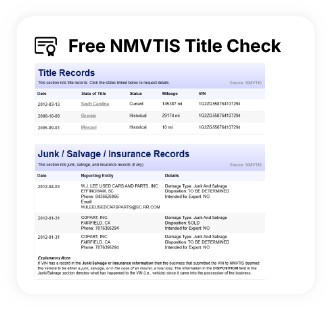
NMVTIS Title
History Check
History Check
Salvage/Rebuilt
Check
Check
Accident
Check
Check
Theft
Check
Check
Open Lien
Check
Check
Past Sale
Listings
Listings
Safety
Recalls
Recalls
Odometer
Check
Check
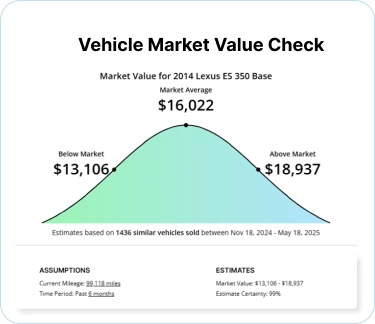
Market Price
Analysis
Analysis
What Problems Does the 2009 Harley-Davidson FLSTC Have?
The 2009 Harley-Davidson FLSTC, while generally a robust machine, can experience some common issues that owners report. One frequently mentioned concern revolves around the Twin Cam engine's oiling system. While not a universal problem, some Twin Cam engines, particularly those with higher mileage, can develop issues like cam chain tensioner wear. This can lead to premature wear on the cam chains and guides, potentially requiring replacement. Harley-Davidson later introduced hydraulic tensioners in subsequent model years, but the 2009 model year typically uses the earlier, spring-loaded or fixed tensioners which are more susceptible to wear over time. Inspecting the service history for any related maintenance is crucial.
Electrical gremlins are another area to be aware of, though often minor. This can include issues with wiring harness connections, particularly in areas exposed to vibration or moisture, leading to intermittent signal loss for lights or accessories. Battery charging system components, like the stator and voltage regulator, can also be points of concern on older bikes, though these are common wear items across many motorcycle brands. It's advisable to check for any diagnostic trouble codes and ensure the battery holds a proper charge.
Brake systems, while functional, may require regular maintenance. Over time, seals can degrade, and brake fluid can become contaminated, affecting stopping power. Owners often recommend flushing and bleeding the brake system periodically. The clutch operation, while generally smooth, can also become stiff or exhibit wear over many miles, necessitating adjustments or eventual replacement of clutch components.
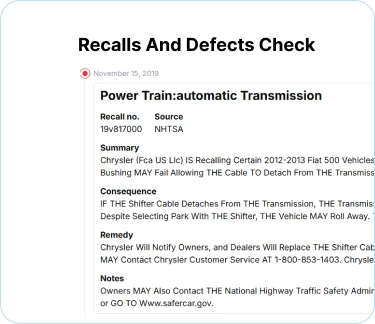
Regarding recalls, it's always recommended to check the National Highway Traffic Safety Administration (NHTSA) website using the vehicle's VIN for any outstanding recalls specific to the 2009 model year. While no widespread, model-defining recalls are overwhelmingly cited for the 2009 FLSTC, individual units might have been subject to specific service bulletins or safety campaigns. Long-term reliability is generally good, with many FLSTCs accumulating hundreds of thousands of miles with proper and consistent maintenance. However, owners should be prepared for the typical costs associated with maintaining a large V-twin motorcycle, including regular fluid changes, filter replacements, and potential component wear over extended use.
Electrical gremlins are another area to be aware of, though often minor. This can include issues with wiring harness connections, particularly in areas exposed to vibration or moisture, leading to intermittent signal loss for lights or accessories. Battery charging system components, like the stator and voltage regulator, can also be points of concern on older bikes, though these are common wear items across many motorcycle brands. It's advisable to check for any diagnostic trouble codes and ensure the battery holds a proper charge.
Brake systems, while functional, may require regular maintenance. Over time, seals can degrade, and brake fluid can become contaminated, affecting stopping power. Owners often recommend flushing and bleeding the brake system periodically. The clutch operation, while generally smooth, can also become stiff or exhibit wear over many miles, necessitating adjustments or eventual replacement of clutch components.
Regarding recalls, it's always recommended to check the National Highway Traffic Safety Administration (NHTSA) website using the vehicle's VIN for any outstanding recalls specific to the 2009 model year. While no widespread, model-defining recalls are overwhelmingly cited for the 2009 FLSTC, individual units might have been subject to specific service bulletins or safety campaigns. Long-term reliability is generally good, with many FLSTCs accumulating hundreds of thousands of miles with proper and consistent maintenance. However, owners should be prepared for the typical costs associated with maintaining a large V-twin motorcycle, including regular fluid changes, filter replacements, and potential component wear over extended use.
How long will the 2009 Harley-Davidson FLSTC last?
The 2009 Harley-Davidson FLSTC is built for longevity, and with diligent maintenance, these motorcycles are known to last for many years and accumulate significant mileage. It is not uncommon to see FLSTCs with well over 100,000 miles on the odometer, and many can even exceed 200,000 miles with proper care. Owners who adhere to Harley-Davidson's recommended service intervals, including regular oil changes, filter replacements, and belt inspections, will find the FLSTC to be a durable machine. The Twin Cam 96B engine is fundamentally robust, and its weaknesses, such as cam chain tensioner wear, become more pronounced with age and mileage but are manageable with proactive servicing. Long-term durability is a strong suit, provided routine maintenance is not neglected. The classic styling also contributes to its enduring appeal, making owners more inclined to maintain them over the long haul.
What Technology & Safety Features are Included?
The 2009 Harley-Davidson FLSTC Heritage Softail Classic, true to its retro design ethos, is not a vehicle that prioritizes cutting-edge technology or extensive electronic driver-assistance systems. Its focus is on the pure riding experience. Built-in tech is relatively minimalist. The instrumentation panel is a primary interface, typically featuring a large, chrome-bezeled speedometer prominently placed on the fuel tank. This display includes essential indicators for turn signals, oil pressure, neutral, high beam, and diagnostics. A digital odometer and trip meter are usually integrated into the speedometer face. Some models might offer a tachometer as an option or as part of a specific package.
Entertainment features are practically non-existent in the factory configuration. There is no integrated audio system, Bluetooth connectivity, or navigation. Owners looking for these features typically opt for aftermarket solutions, such as installing a stereo system or using their own portable GPS devices. The large windscreen can help reduce wind noise to some extent, allowing for more focus on the engine's exhaust note.
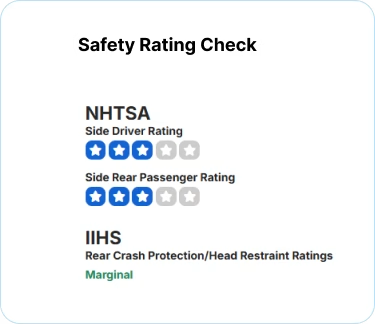
In terms of driver-assistance and safety features, the 2009 FLSTC offers the fundamental safety provided by its mechanical design. It is equipped with disc brakes on both the front and rear wheels, providing adequate stopping power for its weight and performance. Anti-lock Braking System (ABS) was not a standard or commonly available option on the FLSTC in 2009; it was a feature reserved for higher-end touring models or introduced later in Harley-Davidson's lineup. Headlight and taillight functionality are standard, with a bright halogen headlight for illumination and a combined brake/taillight for visibility. There are no advanced safety systems like traction control, stability control, or electronic rider aids. Crash-test ratings are generally not applicable or available for motorcycles in the same way they are for cars, as standardized testing protocols differ significantly. The motorcycle's design prioritizes rider control and road feel over complex electronic interventions. Overall, the 2009 FLSTC emphasizes a classic, analog riding experience, leaving advanced technological integration to the aftermarket or later model years.
Entertainment features are practically non-existent in the factory configuration. There is no integrated audio system, Bluetooth connectivity, or navigation. Owners looking for these features typically opt for aftermarket solutions, such as installing a stereo system or using their own portable GPS devices. The large windscreen can help reduce wind noise to some extent, allowing for more focus on the engine's exhaust note.
In terms of driver-assistance and safety features, the 2009 FLSTC offers the fundamental safety provided by its mechanical design. It is equipped with disc brakes on both the front and rear wheels, providing adequate stopping power for its weight and performance. Anti-lock Braking System (ABS) was not a standard or commonly available option on the FLSTC in 2009; it was a feature reserved for higher-end touring models or introduced later in Harley-Davidson's lineup. Headlight and taillight functionality are standard, with a bright halogen headlight for illumination and a combined brake/taillight for visibility. There are no advanced safety systems like traction control, stability control, or electronic rider aids. Crash-test ratings are generally not applicable or available for motorcycles in the same way they are for cars, as standardized testing protocols differ significantly. The motorcycle's design prioritizes rider control and road feel over complex electronic interventions. Overall, the 2009 FLSTC emphasizes a classic, analog riding experience, leaving advanced technological integration to the aftermarket or later model years.
What Colors Options are Available?
2009 Harley-Davidson FLSTC Prices and Market Value
When new, the 2009 Harley-Davidson FLSTC Heritage Softail Classic had an MSRP that typically ranged from approximately $18,000 to $19,500, depending on color options and any minor factory accessories. The used market for a 2009 FLSTC today can vary significantly based on mileage, condition, maintenance history, and geographic location. Expect to find prices generally ranging from $8,000 to $13,000. Harley-Davidsons, especially popular models like the FLSTC, tend to depreciate slower than many other brands of motorcycles. Factors affecting resale value include originality, the presence of desirable factory options, low mileage, a well-documented service history, and clean title. Modifications can either enhance or detract from value; tasteful, period-correct additions might be a plus, while extensive, non-standard customization can sometimes lower appeal to a broader buyer base. The iconic styling and the Harley-Davidson brand name itself contribute to strong residual values.
2009 Harley-Davidson FLSTC Cost of Ownership
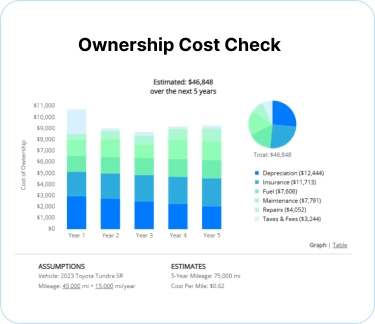
Owning a 2009 Harley-Davidson FLSTC is generally considered moderately costly, rather than economical. Insurance costs can vary widely based on rider age, experience, location, and coverage levels, but Harley-Davidsons often incur higher premiums than smaller, less powerful bikes. Fuel costs are reasonable, averaging around 35-40 MPG, making it competitive for its class. However, maintenance and repair costs can be significant. Harley-Davidson parts and labor can be expensive, and regular servicing, including oil changes, brake fluid flushes, and potential component replacements (like clutch plates or cam tensioners over time), adds up. While not prohibitively expensive for dedicated enthusiasts, it's a machine that rewards consistent investment in upkeep.

2009 Harley-Davidson FLSTC Fuel Efficiency
Fuel Type
Gasoline
Fuel Capacity
-
City Mileage
-
Highway Mileage
-
2009 Harley-Davidson FLSTC Warranty
Basic
Original warranty
0 months / No data
Estimated remaining
Expired
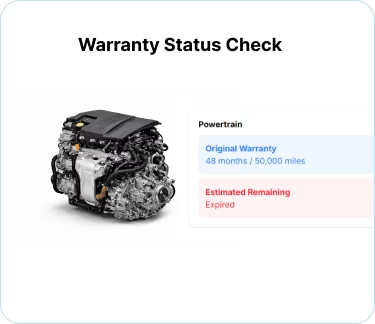
Powertrain
Original warranty
0 months / No data
Estimated remaining
Expired
Rust
Original warranty
0 months / No data
Estimated remaining
Expired
2009 Harley-Davidson FLSTC Insurance
Insurance for a 2009 Harley-Davidson FLSTC is moderately priced, reflecting its status as a Motorcycle with strong safety ratings and
reasonable repair costs.

How Does the 2009 Harley-Davidson FLSTC Compare to Other Motorcycle?
The 2009 Harley-Davidson FLSTC Heritage Softail Classic operates in the cruiser segment, facing competition from American manufacturers as well as Japanese brands that offer retro-styled models. Key rivals include:
Indian Chief (various models): Similar in styling and historical appeal, Indian motorcycles offer a comparable V-twin experience. Performance is often in the same ballpark, with a focus on torque and relaxed cruising. Features can be comparable, with a strong emphasis on classic aesthetics. Reliability has improved significantly for Indian in recent years. Price-wise, Indian models can often be positioned slightly higher than a comparable Harley-Davidson.
Honda Shadow (e.g., Shadow Spirit 750, Aero): The Honda Shadow line offers a more budget-friendly entry into the cruiser market. Performance from their smaller V-twins is less potent than the Harley's 96ci engine, but they are known for exceptional reliability and lower maintenance costs. Features are typically more basic, lacking the premium feel of the FLSTC. Price is a significant advantage, with new Shadows being considerably cheaper and used models offering excellent value. They appeal more to practical buyers seeking a reliable, stylish cruiser without the Harley premium.
Kawasaki Vulcan (e.g., Vulcan 900 Classic): The Vulcan 900 Classic offers a comparable engine displacement and classic styling. Performance is good for its class, with respectable torque. Reliability is a strong suit for Kawasaki, often surpassing Harley-Davidson in terms of fewer reported issues and lower maintenance needs. Features are generally straightforward, focused on essential cruising comfort. Price is competitive, often landing between the Honda Shadow and the Harley-Davidson FLSTC.
Triumph Bonneville/America: Triumph's offerings, particularly the America, present a British take on the classic cruiser. The parallel-twin engine provides a different character but good torque and performance. Reliability is generally very good. Features often include a more refined feel and sometimes slightly more modern touches than the FLSTC, while maintaining a classic aesthetic. Prices tend to be in a similar range to the FLSTC.
Recommendation: For those seeking the quintessential American V-twin cruiser experience with iconic styling, classic comfort, and the Harley-Davidson legacy, the 2009 FLSTC is an excellent choice. However, if budget is a primary concern or maximum reliability with minimal fuss is paramount, a used Honda Shadow or Kawasaki Vulcan 900 Classic are strong alternatives that offer similar styling at a lower price point and often with lower running costs. If a different engine character with robust British styling is desired, the Triumph America is a noteworthy consideration.
Indian Chief (various models): Similar in styling and historical appeal, Indian motorcycles offer a comparable V-twin experience. Performance is often in the same ballpark, with a focus on torque and relaxed cruising. Features can be comparable, with a strong emphasis on classic aesthetics. Reliability has improved significantly for Indian in recent years. Price-wise, Indian models can often be positioned slightly higher than a comparable Harley-Davidson.
Honda Shadow (e.g., Shadow Spirit 750, Aero): The Honda Shadow line offers a more budget-friendly entry into the cruiser market. Performance from their smaller V-twins is less potent than the Harley's 96ci engine, but they are known for exceptional reliability and lower maintenance costs. Features are typically more basic, lacking the premium feel of the FLSTC. Price is a significant advantage, with new Shadows being considerably cheaper and used models offering excellent value. They appeal more to practical buyers seeking a reliable, stylish cruiser without the Harley premium.
Kawasaki Vulcan (e.g., Vulcan 900 Classic): The Vulcan 900 Classic offers a comparable engine displacement and classic styling. Performance is good for its class, with respectable torque. Reliability is a strong suit for Kawasaki, often surpassing Harley-Davidson in terms of fewer reported issues and lower maintenance needs. Features are generally straightforward, focused on essential cruising comfort. Price is competitive, often landing between the Honda Shadow and the Harley-Davidson FLSTC.
Triumph Bonneville/America: Triumph's offerings, particularly the America, present a British take on the classic cruiser. The parallel-twin engine provides a different character but good torque and performance. Reliability is generally very good. Features often include a more refined feel and sometimes slightly more modern touches than the FLSTC, while maintaining a classic aesthetic. Prices tend to be in a similar range to the FLSTC.
Recommendation: For those seeking the quintessential American V-twin cruiser experience with iconic styling, classic comfort, and the Harley-Davidson legacy, the 2009 FLSTC is an excellent choice. However, if budget is a primary concern or maximum reliability with minimal fuss is paramount, a used Honda Shadow or Kawasaki Vulcan 900 Classic are strong alternatives that offer similar styling at a lower price point and often with lower running costs. If a different engine character with robust British styling is desired, the Triumph America is a noteworthy consideration.
Final Verdict: Is the 2009 Harley-Davidson FLSTC a Good Motorcycle?
The 2009 Harley-Davidson FLSTC Heritage Softail Classic is ideal for riders who cherish classic American styling, appreciate the iconic Harley-Davidson rumble, and seek a comfortable motorcycle for leisurely cruising and touring. It's a bike that appeals to both the heart and the practicality of owning a dependable machine. Given its age, buying new is impossible; therefore, it is definitely worth buying on the used market, provided it has been well-maintained. Look for bikes with lower mileage, a documented service history, and original or tastefully done modifications. The FLSTC, in its standard trim, offers a complete package of classic aesthetics and ride comfort, making it a great value for those looking for an enduring symbol of freedom on two wheels without the complexity of modern electronics.