
2002 Ford Think Overview, Reviews, Ratings & Specs
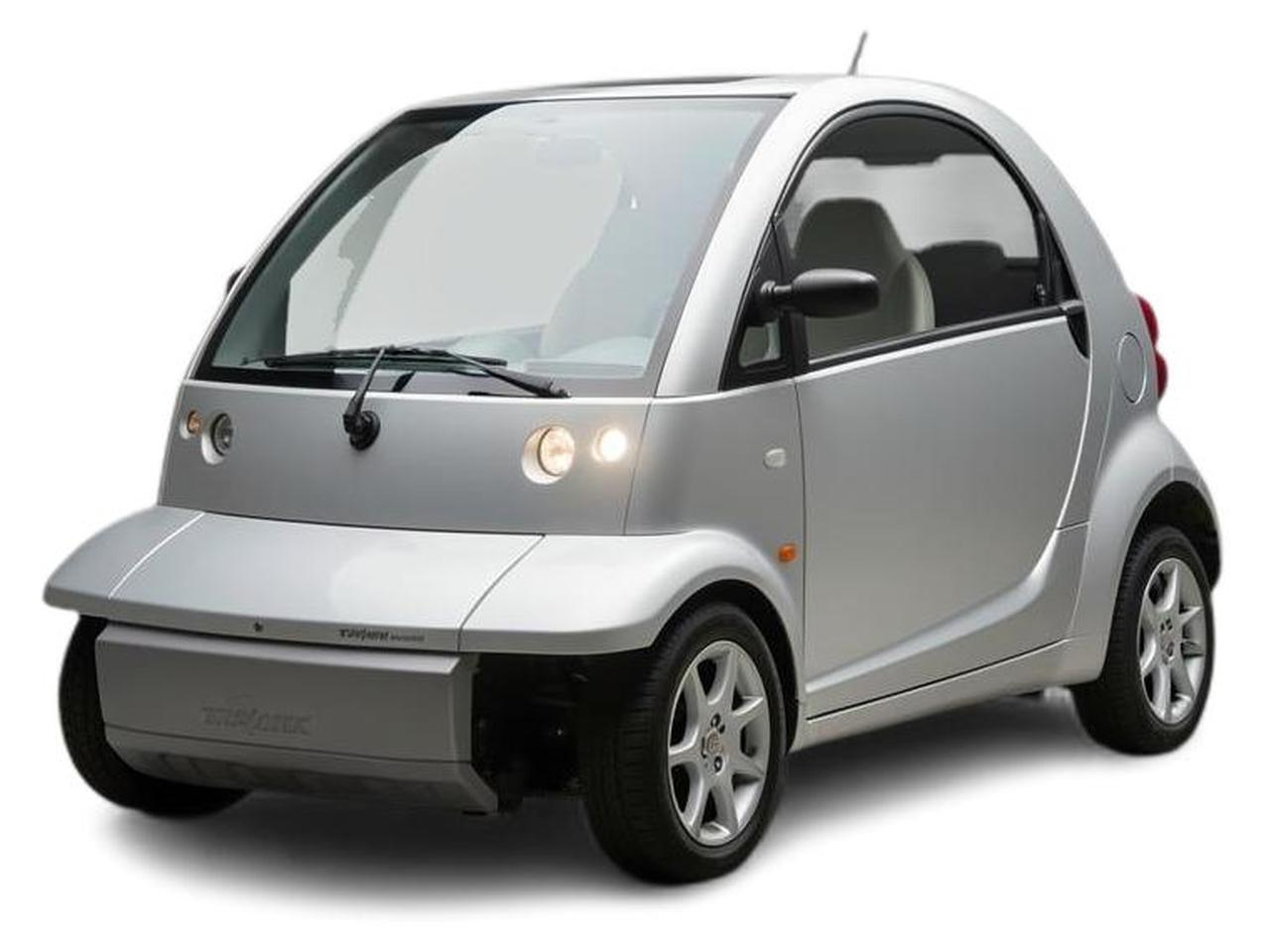
The 2002 Ford THINK was a unique electric vehicle developed by Ford. Introduced in the late 1990s and produced into the early 2000s, this compact, two-seater city car was designed primarily for urban commuting. Its distinctive, futuristic design and its status as an early production electric vehicle made it stand out. While it didn't have traditional trims, its focus was on its electric powertrain.
The Good
The 2002 Ford THINK offered an exceptionally quiet and smooth ride, showcasing its electric nature. Its compact size made parking a breeze, and its zero tailpipe emissions appealed to eco-conscious buyers. The unique design garnered attention, while its simplicity promised lower running costs.
The Bad
Potential buyers should be aware of the 2002 Ford THINK's limited range, slow acceleration, and battery degradation over time. The specialized nature of electric vehicle parts from this era could also lead to higher repair costs and parts availability issues.
2002 Ford Think: Quick Overview
- Engine Options: The 2002 Ford THINK was exclusively powered by an electric motor.
- Horsepower: It typically produced around 45 horsepower.
- Fuel Economy: As an electric vehicle, its efficiency is measured in miles per gallon equivalent (MPGe). Specific MPGe ratings for the 2002 model can vary, but it was designed for urban efficiency, consuming minimal energy for its intended use.
- 0-60 Times: Acceleration was not a strong suit for the THINK. Expect 0-60 mph times to be significantly longer than gasoline-powered cars of its era, likely in the 15-20 second range, emphasizing its city-driving focus.
- Towing Capacity: The 2002 Ford THINK did not have a towing capacity. It was designed as a personal commuter vehicle and not for hauling or towing.
- Trim-Level Features: The THINK was generally offered in a single configuration, focusing on its core electric functionality. Key features typically included:
- Compact, two-door body style
- Two-passenger seating
- Basic climate control (heating and air conditioning, though performance could be limited)
- Standard safety features like seatbelts and basic interior lighting
- Power windows and locks were often standard for the time
- A simple dashboard display indicating speed, battery charge, and basic vehicle status
- The primary distinguishing feature was its all-electric powertrain, powered by lead-acid batteries (though some later models may have offered advancements).
2002 Ford Think Specifications
Vehicle Information
| Year | 2002 |
| Make | Ford |
| Model | Think |
| Trim | - |
| Style | - |
| Type | Sedan |
| Category | Compact Car |
Manufacturing Details
| Made In | United States |
| Manufacturing City | - |
Dimensions
| Doors | 2-Door |
| Curb Weight | - |
| Gross Vehicle Weight Rating | - |
| Overall Height | - |
| Overall Length | - |
| Overall Width | - |
| Wheelbase Length | - |
| Standard Seating | - |
Engine & Performance
| Engine | - |
| Engine Size | - |
| Engine Cylinders | - |
| Transmission | - |
| Transmission Type | - |
| Transmission Speeds | - |
| Drivetrain | - |
Additional Features
| Anti-Brake System | - |
| Steering Type | - |
Pricing
| Manufacturer Suggested Retail Price (MSRP) | - |
| Invoice Price | - |
| Delivery Charges | - |
Vehicle History Report
Vehicle
Specifications
Specifications
Ownership
History
History
All History
Events
Events
NMVTIS Title
History Check
History Check
Salvage/Rebuilt
Check
Check
Accident
Check
Check
Theft
Check
Check
Open Lien
Check
Check
Past Sale
Listings
Listings
Safety
Recalls
Recalls
Odometer
Check
Check
Market Price
Analysis
Analysis
What Problems Does the 2002 Ford Think Have?
The 2002 Ford THINK, being an early electric vehicle, faced several challenges regarding long-term reliability and common issues. One of the most significant concerns was battery life and degradation. These vehicles often used lead-acid batteries, which have a limited lifespan and can lose their capacity to hold a charge over time, necessitating expensive replacements.
Another frequently reported issue revolved around the powertrain components, including the electric motor and its associated electronics. While generally simpler than internal combustion engines, these systems could still experience failures, and finding qualified technicians and parts for such specialized vehicles could be difficult.
The charging system was another area where owners sometimes encountered problems, with issues ranging from the charging port itself to the onboard charger. The vehicle's overall range, even when new, was limited, and as batteries aged, this range would diminish further, making it impractical for anything beyond very short trips.
While specific recalls for the 2002 model year are not as widely documented as for more common vehicles, any early electric vehicle is prone to unique issues related to its battery management system and its connection to the grid. Long-term reliability was hampered by the technology of the time and the limited support infrastructure for electric vehicles. Owners often had to rely on specialized shops or their own mechanical skills to maintain these vehicles. The lack of widespread manufacturer support in later years also contributed to potential reliability concerns.
Another frequently reported issue revolved around the powertrain components, including the electric motor and its associated electronics. While generally simpler than internal combustion engines, these systems could still experience failures, and finding qualified technicians and parts for such specialized vehicles could be difficult.
The charging system was another area where owners sometimes encountered problems, with issues ranging from the charging port itself to the onboard charger. The vehicle's overall range, even when new, was limited, and as batteries aged, this range would diminish further, making it impractical for anything beyond very short trips.
While specific recalls for the 2002 model year are not as widely documented as for more common vehicles, any early electric vehicle is prone to unique issues related to its battery management system and its connection to the grid. Long-term reliability was hampered by the technology of the time and the limited support infrastructure for electric vehicles. Owners often had to rely on specialized shops or their own mechanical skills to maintain these vehicles. The lack of widespread manufacturer support in later years also contributed to potential reliability concerns.
How long will the 2002 Ford Think last?
Estimating average mileage for a 2002 Ford THINK is challenging due to its niche market and often limited use as a secondary vehicle or for specific fleet purposes. However, based on the technology of the time, many of these vehicles likely saw lower annual mileage compared to conventional cars, perhaps in the 5,000-10,000 miles per year range. The service life of the vehicle was heavily dictated by the battery pack, which typically had a lifespan of 3-5 years before requiring significant service or replacement. Beyond the battery, the electric powertrain components themselves were generally robust but could suffer from the availability of parts and specialized maintenance. Long-term durability was not a strong suit when compared to modern vehicles, with electrical system issues and battery degradation being the primary weaknesses that limited their overall lifespan.
What Technology & Safety Features are Included?
The 2002 Ford THINK was a minimalist vehicle, and its technology, entertainment, and safety features reflected the era and its purpose as a basic urban commuter.
Built-in Tech: The dashboard was functional rather than fancy, typically featuring a speedometer, a battery charge indicator, and warning lights for various systems. There was no sophisticated infotainment system as we know it today. Some models might have had a basic radio, but advanced connectivity like Bluetooth or GPS was non-existent. The primary technological marvel was its all-electric drivetrain.
Entertainment: Entertainment options were very basic. If equipped, it would likely have had an AM/FM radio. The novelty of driving an electric car was often entertainment enough for its owners.
Driver-Assistance Features: Driver-assistance features were virtually absent in the 2002 Ford THINK. Systems like ABS, traction control, or cruise control were not standard and unlikely to have been offered even as options, given the vehicle's basic design and intended use.
Safety Features: Safety features were rudimentary. Standard equipment included three-point seatbelts for both occupants. The vehicle's construction was focused on providing basic protection in a low-speed urban environment. Unlike modern cars, there were no airbags, crumple zones designed to absorb impact energy, or advanced stability control systems.
Optional Features: Options were limited and focused on convenience rather than technology. These might have included air conditioning (which significantly impacted range), power windows, and possibly different interior trim materials.
Crash-Test Ratings: Specific crash-test ratings from agencies like the NHTSA or IIHS for the 2002 Ford THINK are not readily available or were not conducted in the same manner as for mass-market vehicles of that period. Given its construction and lack of advanced safety features, it would likely not perform well in modern crash tests compared to contemporary vehicles.
Built-in Tech: The dashboard was functional rather than fancy, typically featuring a speedometer, a battery charge indicator, and warning lights for various systems. There was no sophisticated infotainment system as we know it today. Some models might have had a basic radio, but advanced connectivity like Bluetooth or GPS was non-existent. The primary technological marvel was its all-electric drivetrain.
Entertainment: Entertainment options were very basic. If equipped, it would likely have had an AM/FM radio. The novelty of driving an electric car was often entertainment enough for its owners.
Driver-Assistance Features: Driver-assistance features were virtually absent in the 2002 Ford THINK. Systems like ABS, traction control, or cruise control were not standard and unlikely to have been offered even as options, given the vehicle's basic design and intended use.
Safety Features: Safety features were rudimentary. Standard equipment included three-point seatbelts for both occupants. The vehicle's construction was focused on providing basic protection in a low-speed urban environment. Unlike modern cars, there were no airbags, crumple zones designed to absorb impact energy, or advanced stability control systems.
Optional Features: Options were limited and focused on convenience rather than technology. These might have included air conditioning (which significantly impacted range), power windows, and possibly different interior trim materials.
Crash-Test Ratings: Specific crash-test ratings from agencies like the NHTSA or IIHS for the 2002 Ford THINK are not readily available or were not conducted in the same manner as for mass-market vehicles of that period. Given its construction and lack of advanced safety features, it would likely not perform well in modern crash tests compared to contemporary vehicles.
What Colors Options are Available?
2002 Ford Think Prices and Market Value
When new, the 2002 Ford THINK carried a price tag that could range from approximately $20,000 to $30,000, depending on any optional equipment and the market it was sold in. This was a significant investment for a small, two-seater electric vehicle at the time. On the used market today, the 2002 Ford THINK is a niche vehicle with very low resale values, often found for just a few thousand dollars, sometimes even under $1,000. Depreciation was steep from the outset due to its limited practicality and early-adopter technology. Factors affecting its current resale value include its rarity, the condition of the battery pack (a major expense to replace), its operational status, and its historical significance as an early electric car. Finding parts and service also impacts its desirability and therefore its value.
2002 Ford Think Cost of Ownership
Owning a 2002 Ford THINK can be economical in terms of fuel, as electricity is generally cheaper per mile than gasoline. However, maintenance and repair costs can be surprisingly high. The specialized nature of its electric components means that finding parts and qualified technicians can be difficult and expensive. Battery replacement is a significant recurring cost, often costing thousands of dollars. Insurance rates can vary, but due to its rarity and specialized nature, premiums might be higher than for a common compact car. Overall, while seemingly economical due to low energy consumption, the potential for high repair bills, especially battery replacement, makes long-term ownership potentially costly and unpredictable.
2002 Ford Think Fuel Efficiency
Fuel Type
Electric
Fuel Capacity
-
City Mileage
-
Highway Mileage
-
2002 Ford Think Warranty
Basic
Original warranty
0 months / No data
Estimated remaining
Expired
Powertrain
Original warranty
0 months / No data
Estimated remaining
Expired
Rust
Original warranty
0 months / No data
Estimated remaining
Expired
2002 Ford Think Insurance
Insurance for a 2002 Ford Think is moderately priced, reflecting its status as a Sedan with strong safety ratings and
reasonable repair costs.
How Does the 2002 Ford Think Compare to Other Sedan?
Comparing the 2002 Ford THINK to its contemporaries requires understanding its unique position as an early production electric vehicle. In terms of performance, it was significantly outclassed by even the most basic gasoline-powered subcompact cars of the era, such as the Honda Civic or Toyota Echo, which offered much better acceleration and higher top speeds. Its range was also severely limited compared to gasoline cars that could travel hundreds of miles on a tank.
Features were another area where the THINK lagged. While it offered basic transportation, rivals provided more creature comforts, advanced safety features like airbags and ABS, and more robust infotainment systems. Reliability was a significant concern for early EVs like the THINK. While electric powertrains are simpler, battery technology was nascent, leading to frequent battery degradation and costly replacements. Gasoline-powered rivals from reputable manufacturers often offered better long-term reliability with more established service networks.
Price was also a factor. While the THINK was positioned as an affordable urban car, its purchase price was relatively high for its limited utility.
Alternatives:
For buyers seeking an affordable, practical, and reliable small car from the early 2000s, alternatives like the Honda Civic, Toyota Echo, or Ford Focus would offer vastly superior performance, features, and proven reliability. If the desire is specifically for an electric or very fuel-efficient vehicle, modern electric vehicles like the Nissan Leaf or used models like the early Chevrolet Volt (plug-in hybrid) offer significantly better range, performance, technology, and safety, though at a higher initial cost. For a quirky, low-speed urban vehicle, the THINK was unique, but its practical limitations make most conventional cars of its era a better overall choice for most buyers.
Features were another area where the THINK lagged. While it offered basic transportation, rivals provided more creature comforts, advanced safety features like airbags and ABS, and more robust infotainment systems. Reliability was a significant concern for early EVs like the THINK. While electric powertrains are simpler, battery technology was nascent, leading to frequent battery degradation and costly replacements. Gasoline-powered rivals from reputable manufacturers often offered better long-term reliability with more established service networks.
Price was also a factor. While the THINK was positioned as an affordable urban car, its purchase price was relatively high for its limited utility.
Alternatives:
For buyers seeking an affordable, practical, and reliable small car from the early 2000s, alternatives like the Honda Civic, Toyota Echo, or Ford Focus would offer vastly superior performance, features, and proven reliability. If the desire is specifically for an electric or very fuel-efficient vehicle, modern electric vehicles like the Nissan Leaf or used models like the early Chevrolet Volt (plug-in hybrid) offer significantly better range, performance, technology, and safety, though at a higher initial cost. For a quirky, low-speed urban vehicle, the THINK was unique, but its practical limitations make most conventional cars of its era a better overall choice for most buyers.
Final Verdict: Is the 2002 Ford Think a Good Sedan?
The 2002 Ford THINK is ideal for a very niche buyer: collectors of early electric vehicles, enthusiasts seeking a unique piece of automotive history, or perhaps as a very short-range, low-speed campus or resort shuttle vehicle. It is generally not worth buying for everyday transportation due to its severe limitations in range, performance, and the significant challenges in finding parts and servicing. If considering a purchase, it should be treated as a collector's item rather than a practical car. Buying it would only make sense at an extremely low price, assuming it is in working condition and its battery status is known, acknowledging that substantial future investment in repairs or battery replacement is highly probable.