by VIN, Year, Make, Model by License Plate

2022 Peterbilt 377 Overview, Reviews, Ratings & Specs

Rating: 0.00
Based on 0 Owner Reviews
Jovan | May 4, 2026
The 2022 Peterbilt 377, while not a new model year for this specific designation, represents the enduring legacy of Peterbilt's vocational and long-haul trucks. Historically, the 377 was known for its aerodynamic design and versatility, often configured as a Class 8 tractor. Pricing for a comparable Peterbilt truck of this era, depending on configuration and condition, can range significantly, but new Peterbilt models with similar capabilities start in the mid-$100,000s and can go much higher. Its popularity stems from Peterbilt's reputation for ruggedness, driver comfort, and customization options, making it a favored choice for owner-operators and fleets prioritizing durability and brand prestige.
The Good

Peterbilt trucks, including the lineage of the 377, are renowned for their exceptional durability and robust performance, offering a commanding presence on the road. Drivers appreciate the superior comfort and quiet cabin, enhancing long-haul productivity. The iconic Peterbilt design appeals to pride of ownership, while their engineering ensures reliable operation, translating to long-term value for pragmatic buyers.

The Bad

While Peterbilts are generally robust, potential buyers should watch out for the high initial purchase price and potential for higher maintenance costs due to specialized parts. Older models might exhibit wear and tear on interiors or drivelines. Ensuring proper and regular maintenance is crucial to avoid issues related to complex emissions systems or aging electrical components.

2022 Peterbilt 377: Quick Overview

  • Engine Options: Peterbilt trucks, including models within the 377's lineage and contemporary Peterbilt offerings, typically feature powerful PACCAR MX-13 engines. Other common options include Cummins ISX15 or ISX12 engines, and Detroit Diesel Series 60 engines in older configurations. These are heavy-duty diesel engines designed for demanding vocational and over-the-road applications.
  • Horsepower: Horsepower ratings for these heavy-duty engines generally range from approximately 400 hp to over 600 hp, depending on the specific engine model and tune.
  • Torque: Torque figures are equally impressive, often ranging from 1,250 lb-ft to well over 2,000 lb-ft, essential for hauling heavy loads.
  • Fuel Economy: Fuel economy for Class 8 trucks like the Peterbilt 377 is measured in miles per gallon (MPG) but is significantly lower than passenger vehicles. Typical figures can range from 4.5 to 7.5 MPG, heavily influenced by load, terrain, speed, aerodynamics, and driver habits.
  • 0-60 Times: 0-60 mph times for fully loaded Class 8 trucks are not a standard metric and are generally irrelevant due to their weight and purpose. Acceleration is gradual and dependent on gearing and load.
  • Towing Capacity: The towing capacity is immense and depends on the truck's configuration (e.g., tractor unit), axle ratings, chassis, and fifth wheel rating. Peterbilt trucks are designed to haul trailers weighing tens of thousands, or even hundreds of thousands, of pounds (e.g., 80,000 lbs Gross Combined Weight Rating - GCWR and often much higher for specialized applications).
  • Trim-Level Features: Peterbilt trucks are highly customizable, meaning there aren't distinct "trims" in the same way as light-duty vehicles. Instead, features are chosen à la carte or through package options. Key areas of customization include:
    • Cab Configurations: Day cabs, flat-roof sleepers, mid-roof sleepers, and high-roof sleepers, offering varying degrees of living and working space.
    • Interior Options: Different materials for seats (e.g., cloth, leather), dashboard finishes, lighting, storage solutions, and upgraded amenities for driver comfort on long hauls.
    • Aerodynamics: Options like aerodynamic fairings, roof fairings, and side skirts to improve fuel efficiency.
    • Chassis and Axle Configurations: Various axle setups (e.g., single axle, tandem axle, tridem) and suspension types to suit specific hauling needs.
    • Technology: Advanced telematics, navigation systems, and integrated infotainment options.

2022 Peterbilt 377 Specifications

Vehicle Information
Year 2022
Make Peterbilt
Model 377
Trim -
Style -
Type Truck
Category Heavy Truck
Manufacturing Details
Made In United States
Manufacturing City DENTON
Dimensions
Doors -
Curb Weight -
Gross Vehicle Weight Rating 33001 pounds
Overall Height -
Overall Length -
Overall Width -
Wheelbase Length -
Standard Seating -
Engine & Performance
Engine 12.9L I6
Engine Size 12.9L
Engine Cylinders 6
Transmission -
Transmission Type -
Transmission Speeds -
Drivetrain 6x4
Additional Features
Anti-Brake System -
Steering Type -
Pricing
Manufacturer Suggested Retail Price (MSRP) -
Invoice Price -
Delivery Charges -

Vehicle History Report

Vehicle
Specifications
Ownership
History
All History
Events
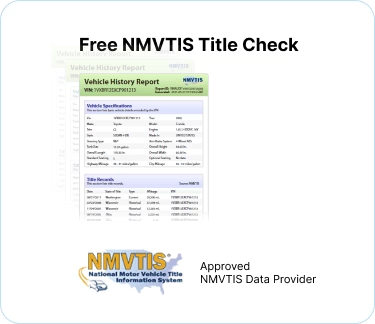
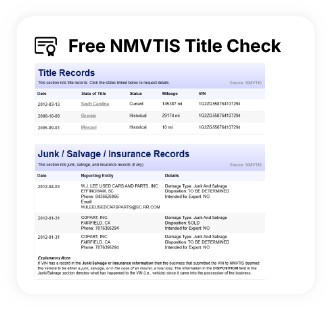
NMVTIS Title
History Check
Salvage/Rebuilt
Check
Accident
Check
Theft
Check
Open Lien
Check
Past Sale
Listings
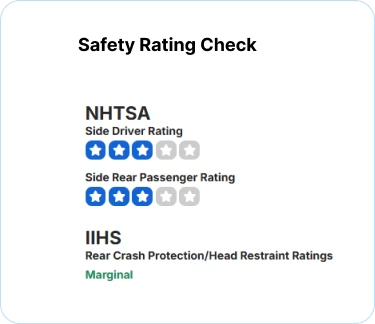
Safety
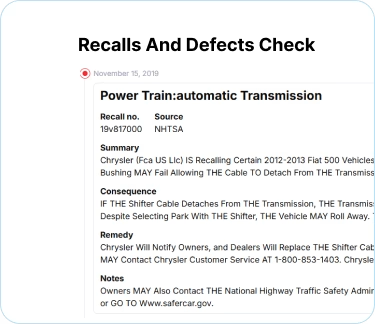
Recalls
Odometer
Check
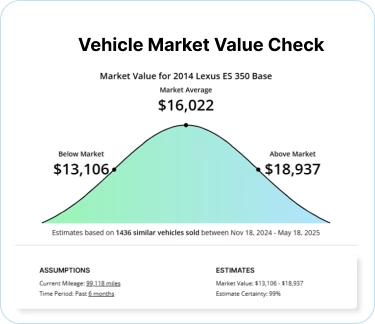
Market Price
Analysis

What Problems Does the 2022 Peterbilt 377 Have?

Given that the Peterbilt 377 as a distinct model designation primarily predates the 2022 model year, discussions of frequently reported problems and recalls for a *2022 Peterbilt 377* are based on the general reliability of Peterbilt trucks of that era and the evolution of their components. However, for Peterbilt trucks in general, and by extension, models that might be configured in a similar vocational or aerodynamic style as the 377 would have been, several areas can be points of attention for long-term ownership.

Common Areas of Concern in Heavy-Duty Trucks:
  • Emissions Systems: Modern heavy-duty trucks are equipped with complex diesel particulate filters (DPFs) and selective catalytic reduction (SCR) systems to meet emissions standards. These systems can be prone to clogging or malfunction if not properly maintained or if the truck is used primarily for short-haul, low-load applications that don't allow for sufficient regeneration cycles. Issues with sensors, dosing units, or the DPF itself are not uncommon and can lead to reduced power or costly repairs.
  • Electrical Systems: The intricate electrical systems in heavy-duty trucks, with numerous sensors, wiring harnesses, and control modules, can develop faults over time. Issues can range from intermittent dashboard warning lights and sensor failures to problems with lighting, HVAC controls, or engine management systems. Corrosion or vibration can exacerbate these issues.
  • Driveline Components: While PACCAR engines and major driveline components are built for longevity, wear and tear on clutches, transmissions, differentials, and driveshafts are expected over hundreds of thousands of miles. Regular fluid changes and inspections are critical.
  • Suspension and Chassis: Air suspension systems, kingpins, bushings, and leaf springs are subject to significant stress. Leaks in air suspension bags, worn bushings, or damaged chassis components can affect ride quality, handling, and tire wear.

  • Cab and Interior Wear: For trucks with high mileage, the interior components, such as seats, dashboard materials, and switchgear, can show signs of wear. While not a mechanical failure, it can impact driver comfort and the perceived value of the vehicle.

Recalls:
Specific recalls would be tied to the actual model year and the VIN of the truck. Peterbilt, like all major manufacturers, issues recalls for safety-related defects. These can encompass issues with braking systems, steering components, electrical wiring, or potential fire hazards. Owners are notified directly, and the manufacturer covers the repair cost. It is always recommended to check the NHTSA (National Highway Traffic Safety Administration) website with the specific VIN for any open recalls.

Long-Term Reliability:
Peterbilt trucks are generally known for their robust construction and long service life, often exceeding a million miles with proper maintenance. The 377, in its original production years, was a testament to this. However, as with any complex machine, reliability is directly proportional to the quality and frequency of maintenance. Neglect, improper operation, or failure to address minor issues promptly can lead to significant and expensive problems down the line. For a "2022 Peterbilt 377" if referring to a reconditioned or custom-built truck using older chassis, the reliability would depend heavily on the quality of the refurbishment and the components used.

How long will the 2022 Peterbilt 377 last?

Peterbilt trucks, built with robust engineering, are designed for extended service lives, often accumulating well over 1,000,000 miles with diligent maintenance. For a hypothetical 2022 Peterbilt 377, or a similarly constructed Peterbilt of that vintage, average annual mileage can range from 50,000 to 150,000 miles or more, depending on the operational use (long-haul versus vocational). Long-term durability is exceptional, with the chassis and core powertrain components frequently outlasting the cab interior or auxiliary systems. Weaknesses that can emerge over time include wear on the complex emissions control systems, potential for electrical gremlins in older wiring harnesses, and the need for refurbishment of interior components due to extensive use. However, the fundamental structure and major mechanicals are known for their resilience, making them valuable assets for many years.

What Technology & Safety Features are Included?

The technology, driver-assistance, and safety features in a 2022 Peterbilt 377, or a comparable Peterbilt truck from that era, lean towards practicality and enhanced operational efficiency rather than the extensive infotainment found in passenger cars. While specific features vary based on original build specifications and optional packages, here's a general overview:

Built-in Tech and Entertainment:
  • Infotainment Systems: Modern Peterbilts offer integrated infotainment systems that typically include a touchscreen display, AM/FM radio, CD player, auxiliary inputs, and Bluetooth connectivity for hands-free calling and audio streaming. Navigation systems are often available as an option.
  • Telematics: Advanced telematics systems are common, providing fleet managers with real-time data on vehicle location, performance, fuel consumption, driver behavior, and diagnostic alerts. This is crucial for operational efficiency and maintenance planning.
  • Driver Information Displays: The instrument cluster typically features clear, easy-to-read gauges for essential information like speed, engine RPM, oil pressure, coolant temperature, and fuel levels. Digital displays often provide access to trip computers, fuel economy data, and system warnings.

Driver-Assistance Features:
While not as comprehensive as in light-duty vehicles, modern heavy-duty trucks are increasingly equipped with driver-assistance technologies:
  • Adaptive Cruise Control (ACC): Helps maintain a set speed and distance from the vehicle ahead, reducing driver fatigue on long highway stretches.
  • Lane Departure Warning (LDW): Alerts the driver if the vehicle begins to drift out of its lane unintentionally.
  • Automatic Emergency Braking (AEB): Can detect potential frontal collisions and apply braking to mitigate or avoid an accident.
  • Blind Spot Monitoring: Sensors can detect vehicles in the driver's blind spots, providing visual or audible alerts.
  • Hill Start Assist: Prevents the truck from rolling backward when starting on an incline.

Safety Features:
  • Robust Chassis and Cab Structure: Peterbilt trucks are built on strong, durable frames designed to withstand heavy loads and impacts. The cab structure itself is engineered for strength and occupant protection.
  • Air Brakes: Standard on heavy-duty trucks, air brakes provide powerful and reliable stopping capability.
  • Anti-lock Braking System (ABS): Prevents wheel lock-up during hard braking, allowing the driver to maintain steering control.
  • Seatbelts: Three-point seatbelts are standard for driver and passenger.
  • Lights: Comprehensive lighting systems, including powerful headlights, fog lights, and marker lights for visibility in all conditions.
  • Backup Cameras: Increasingly common to aid in maneuvering and preventing accidents when reversing.

Crash-Test Ratings:
Traditional crash-test ratings (like those from the IIHS or NHTSA for passenger cars) are not directly applicable or published for heavy-duty commercial trucks. Instead, safety is assessed through design compliance with Federal Motor Vehicle Safety Standards (FMVSS) and through the effectiveness of specific safety features like those listed above. The focus is on occupant protection in severe impact scenarios and on features that actively prevent accidents.

What Colors Options are Available?

We’re working on this section!
In the meantime, feel free to explore the other sections for more content.

2022 Peterbilt 377 Prices and Market Value

A brand new, highly customized Peterbilt truck in 2022, configured similarly to what a 377 might have offered in terms of capability, would typically start in the range of $120,000 to $180,000, with premium options and specialized configurations easily pushing the price upwards of $250,000 or more. On the current used market, finding a *2022 Peterbilt 377* is highly unlikely as the 377 designation was retired. However, Peterbilt trucks from the late 2010s and early 2020s in good condition with moderate mileage can be found for anywhere from $60,000 to $150,000, depending on age, condition, specifications, and mileage. Peterbilts hold their value remarkably well due to their reputation for durability and quality. Depreciation is slower than for many other vehicle types. Factors affecting resale value include engine hours, overall mileage, maintenance history, cosmetic condition, tire wear, and the presence of desirable options or specialized equipment. Well-maintained, low-mileage Peterbilts are highly sought after in the used market.

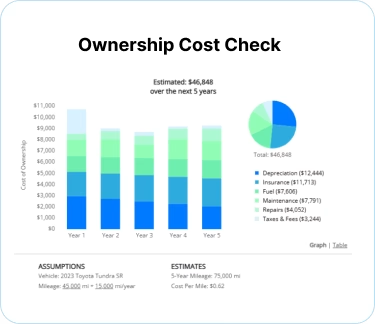
2022 Peterbilt 377 Cost of Ownership

Owning a Peterbilt truck like a 2022 Peterbilt 377 is a significant financial commitment. Insurance premiums will be substantial, reflecting the high value and operational risks associated with heavy-duty trucking. Fuel costs are a major ongoing expense, varying greatly with mileage and diesel prices, though modern engines offer improved efficiency. Maintenance and repair costs can be high, as specialized parts and skilled technicians are required. Routine maintenance is critical to mitigate more expensive repairs. Overall, Peterbilt trucks are costly to own and operate, but their longevity, reliability, and earning potential in commercial applications often justify the investment for businesses and owner-operators.

2022 Peterbilt 377 Fuel Efficiency

Fuel Type Diesel
Fuel Capacity -
City Mileage -
Highway Mileage -

2022 Peterbilt 377 Warranty

Basic
Original warranty 0 months / No data
Estimated remaining Expired
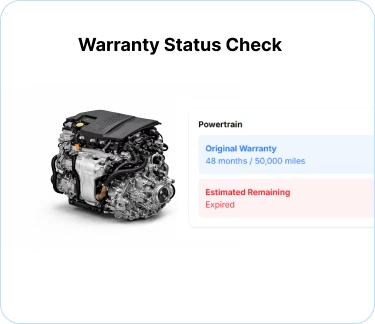
Powertrain
Original warranty 0 months / No data
Estimated remaining Expired
Rust
Original warranty 0 months / No data
Estimated remaining Expired

2022 Peterbilt 377 Insurance

Insurance for a 2022 Peterbilt 377 is moderately priced, reflecting its status as a Truck with strong safety ratings and
reasonable repair costs.

How Does the 2022 Peterbilt 377 Compare to Other Truck?

It's important to clarify that the 2022 Peterbilt 377 as a specific model designation is not in production. The 377 was a model from previous decades known for its aerodynamic styling and vocational versatility. Therefore, comparing it directly to 2022 rivals is not feasible. However, we can compare the *type* of truck a 377 represented and the modern Peterbilt offerings against its key rivals in the Class 8 heavy-duty truck market.

Peterbilt (Modern Offerings): Peterbilt trucks, known for their premium build quality, driver comfort, and distinctive styling, often command a higher price. They excel in reliability, especially with PACCAR's own engines. Features often focus on driver ergonomics and long-haul comfort. Performance is robust and built for demanding tasks.

Key Rivals:

1. Kenworth: As sister brands under PACCAR, Kenworth trucks (e.g., T680, W990) share many underlying components and powertrains with Peterbilt. Kenworth often appeals to drivers who prefer a slightly more traditional aesthetic or specific aerodynamic designs. Reliability and performance are generally on par with Peterbilt. Pricing is also in a similar premium bracket.

2. International (Navistar): International trucks (e.g., LT Series, RH Series) offer a wide range of configurations for vocational and long-haul applications. They often present a more competitive price point than Peterbilt or Kenworth, making them attractive for budget-conscious fleets. While reliability has improved significantly over the years, they may not always carry the same prestige or perceived long-term durability as PACCAR products for some buyers.

3. Freightliner (Daimler Truck North America): Freightliner is the best-selling heavy-duty truck brand in North America. Models like the Cascadia offer excellent aerodynamics and fuel efficiency, often leading the pack in that regard. Freightliner trucks are typically priced competitively and offer a broad spectrum of features and options. Their reliability is generally strong, though some may find the driver's cab less luxurious than a Peterbilt or Kenworth.

4. Volvo Trucks: Volvo (e.g., VNL Series) is known for its strong focus on safety features and fuel efficiency. Their I-Shift automated manual transmission is highly regarded. Volvo trucks often have a distinct European-influenced design and can be a strong contender for fleets prioritizing safety and running costs. Pricing is often in the premium segment, similar to Peterbilt.

Recommendations:
  • For Prestige and Driver Appeal: Peterbilt and Kenworth remain top choices. If the emphasis is on a classic, rugged look with modern amenities, a Peterbilt like the 389 or a Kenworth W990 might be considered modern interpretations of the spirit of the 377.
  • For Value and Fleet Operations: International and Freightliner often provide a better balance of cost and capability, especially for large fleets where initial purchase price and total cost of ownership are paramount.
  • For Safety and Fuel Efficiency Focus: Volvo trucks present a compelling option, particularly with their advanced safety systems and efficient powertrains.

Ultimately, the choice depends on the specific application, budget, and driver preference. For a truck embodying the legacy of the 377's versatility and build quality, modern Peterbilts or Kenworths are the closest spiritual successors, albeit with more advanced technology and emissions controls.

Final Verdict: Is the 2022 Peterbilt 377 a Good Truck?

The concept of a "2022 Peterbilt 377" is a bit of a misnomer, as the 377 model was retired much earlier. However, if we consider a Peterbilt truck built in 2022 with a similar vocational or aerodynamic focus as the original 377, it is ideal for owner-operators and fleets that prioritize a blend of iconic styling, robust construction, driver comfort, and proven reliability. It is absolutely worth buying for those who understand the long-term value of a premium heavy-duty truck and can afford the higher initial investment. Given its likely discontinuation, purchasing a *used* Peterbilt from the era represented by the 377, or a modern Peterbilt with similar specifications, would be the practical approach. For buyers seeking the legendary Peterbilt experience, focusing on well-maintained used models or new trucks configured for specific hauling needs is the way to go.

2022 Peterbilt 377 Owner Reviews

0.00
Consumer Rating, Based on 0 Consumer Reviews
Overall rating
Cancel
Thank You for Your Review!

We truly appreciate the time and effort you took to share your experience with us.

Uh oh!

Something went wrong, please try again later.

Author Image
Jovan

Jovan specializes in interpreting vehicle records and making sense of VIN data. With over 10 years of experience in the automotive data industry, his work ensures that every report is clear, accurate, and useful for car buyers.