The 2002 Skyline Corporation Nomad introduces a popular line of recreational vehicles, specifically known for its travel trailers. Skyline Corporation has a long history in manufactured housing and RVs, offering dependable and family-oriented products. The Nomad series, available in various lengths and floor plans, was designed to provide comfortable and affordable mobile living. It stands out for its practical design and value, making it a popular choice for budget-conscious adventurers.
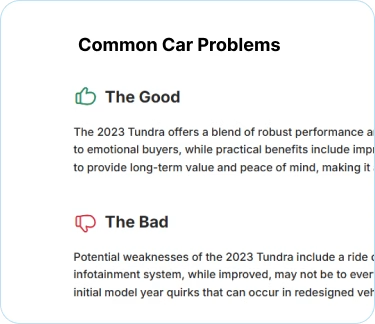
The Good
The 2002 Skyline Nomad offers strong advantages in value and practicality. Its design focuses on comfortable living spaces with diverse floor plans appealing to families. Owners appreciate its overall reliability for a travel trailer when properly maintained, providing a dependable home-away-from-home. This makes it an emotionally appealing choice for creating memories, and practically wise for its affordability and utility.
The Bad
For the 2002 Skyline Nomad, common weaknesses can include typical RV issues such as potential for water intrusion around seals or windows if not regularly maintained. Aging appliances like the refrigerator, water heater, or furnace might require attention. Like any older travel trailer, susceptibility to floor rot or structural degradation from long-term exposure or neglect is a watch-out factor.
2002 SKYLINE CORPORATION Nomad: Quick Overview
The 2002 Skyline Corporation Nomad, being a travel trailer, does not have its own engine, horsepower, fuel economy, or 0-60 times. These specifications pertain to the towing vehicle, not the trailer itself. Instead, its "performance" is measured by its livability and towability.
- Engine Options: Not applicable. The Nomad is a towed recreational vehicle.
- Horsepower: Not applicable.
- Fuel Economy: Not applicable to the trailer itself; this depends entirely on the towing vehicle's engine, weight, and aerodynamics.
- 0-60 Times: Not applicable.
- Towing Capacity: As a trailer, the Nomad has a Gross Vehicle Weight Rating (GVWR) and a Dry Weight. These vary significantly by specific model length and floor plan. For example, smaller 20-foot models might have a GVWR around 4,500-5,500 lbs, while larger 30-foot models could range from 7,000-9,000 lbs. Owners must ensure their towing vehicle's capacity exceeds the Nomad's GVWR and confirm appropriate tongue weight.
- Trim-Level Features:
- Variations: Nomad models came in a wide array of lengths, typically ranging from around 19 feet to over 30 feet, each offering different floor plans.
- Standard Interior Features: Expect a functional kitchen area with a refrigerator, stove, oven, and microwave (often optional or in higher trims). A dinette that converts into a bed, sofa/lounge areas, and sleeping accommodations (bunk beds, queen bed, twin beds) were standard.
- Bathroom Facilities: Most models included a full or partial bathroom with a toilet, sink, and shower.
- Utilities: Equipped with fresh water, grey water, and black water tanks. Propane furnace for heating and an air conditioning unit (often optional or for larger models). Water heater.
- Exterior Features: Manual or power awnings, exterior storage compartments, stabilizer jacks, and a spare tire were common.
- Optional Upgrades: Could include upgraded appliance packages, entertainment systems (TV, stereo), power tongue jacks, larger holding tanks, exterior showers, and upgraded interior finishes. The exact features were highly dependent on the original buyer's choices and the specific sub-model (e.g., Nomad Lite, Nomad Deluxe).
2002 SKYLINE CORPORATION Nomad Specifications
Vehicle Information
| Year | 2002 |
| Make | SKYLINE CORPORATION |
| Model | Nomad |
| Trim | - |
| Style | - |
| Type | Recreational Vehicle |
| Category | Special Purpose Vehicle |
Manufacturing Details
| Made In | United States |
| Manufacturing City | LEOLA |
Dimensions
| Doors | - |
| Curb Weight | - |
| Gross Vehicle Weight Rating | - |
| Overall Height | - |
| Overall Length | - |
| Overall Width | - |
| Wheelbase Length | - |
| Standard Seating | - |
Engine & Performance
| Engine | - |
| Engine Size | - |
| Engine Cylinders | - |
| Transmission | - |
| Transmission Type | Not Applicable |
| Transmission Speeds | - |
| Drivetrain | Not Applicable |
Additional Features
| Anti-Brake System | Not Applicable |
| Steering Type | - |
Pricing
| Manufacturer Suggested Retail Price (MSRP) | - |
| Invoice Price | - |
| Delivery Charges | - |
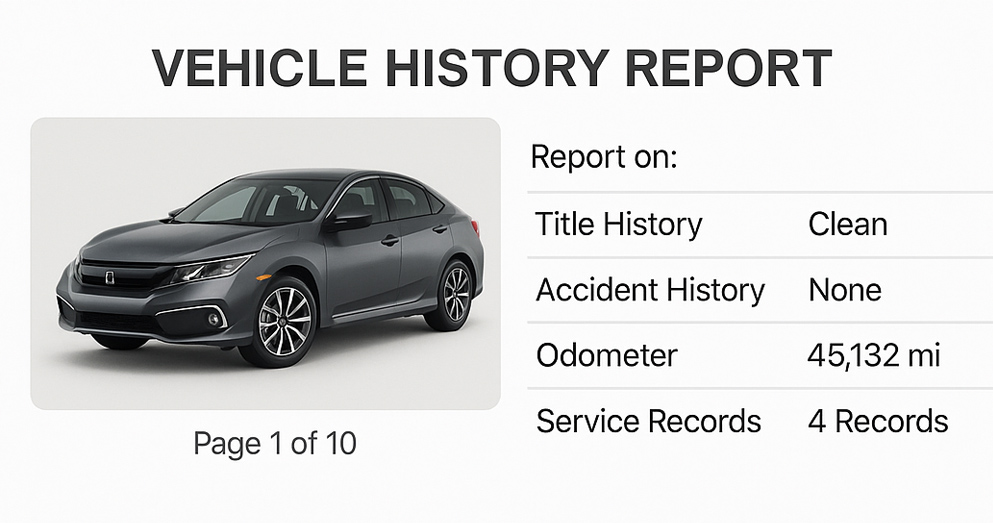
Vehicle History Report
Specifications
History
Events
History Check
Check
Check
Check
Check
Listings
Recalls
Check
Analysis
What Problems Does the 2002 SKYLINE CORPORATION Nomad Have?
Frequently reported problems for a 2002 Skyline Corporation Nomad, as with many travel trailers of its vintage, often center around typical recreational vehicle challenges rather than automotive mechanical issues.
- Water Leaks: This is arguably the most common and damaging issue. Seals around the roof, vents, windows, and exterior seams can degrade over time, leading to water infiltration. Unaddressed leaks can cause significant damage to interior wood framing, flooring, and insulation, leading to rot, mold, and delamination of walls. Regular inspection and resealing are crucial preventative measures.
- Appliance Failures: Components such as the refrigerator, water heater, furnace, and air conditioning unit are often original and nearing or past their expected lifespan. Issues like a refrigerator failing to cool on propane or electric, a water heater not igniting, or an AC unit losing its charge are common. Parts availability for 20-year-old RV appliances can sometimes be a challenge.
- Electrical System Issues: Problems can arise in both the 12-volt DC system (powering lights, fans, pump) and the 120-volt AC system (shore power, outlets). These can range from converter/charger failures to faulty wiring or circuit breakers.
- Plumbing Leaks: Connections, faucets, and the water pump can develop leaks. The toilet seal or fresh/waste water tanks themselves can also be sources of leaks, particularly if the unit was not properly winterized in cold climates.
- Structural Integrity: Over two decades, constant road vibrations and weather exposure can contribute to issues like floor soft spots (especially near the bathroom or entry door due to moisture), wall delamination (separation of exterior skin from interior paneling), and sagging roofs if not properly maintained.
- Tires and Suspension: "Trailer Bomb" or tire blowouts are a common concern for RVs due to underinflation, age (even if tread is good, RV tires "time out" after 5-7 years), or improper load. Axle and leaf spring components can also show wear.
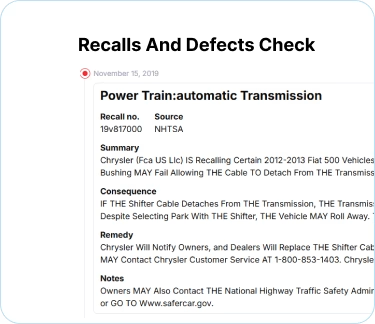
- Recalls: While automotive recalls are common, specific recalls for a 2002 Skyline Corporation Nomad travel trailer are less common or harder to track by specific model year. General RV recalls typically relate to component defects (e.g., specific brand of furnace, refrigerator, or propane regulator) that might span multiple RV manufacturers and years, rather than a design flaw unique to the Nomad itself. Owners should check the NHTSA database for any component-specific recalls that might apply to parts installed in their unit.
How long will the 2002 SKYLINE CORPORATION Nomad last?
The concept of "mileage" doesn't directly apply to a 2002 Skyline Corporation Nomad travel trailer as it's a towed unit. Instead, its lifespan is measured in years of service and the cumulative "miles" it has been towed, combined with the frequency of use and quality of maintenance. With diligent care, a Nomad travel trailer can easily provide 20-30 years of usable service, meaning many are still on the road today.
However, long-term durability significantly hinges on consistent maintenance, particularly preventing water intrusion. Neglected roof seals, window caulking, or minor plumbing leaks can drastically shorten its life due to hidden rot and structural damage. Over time, expect degradation of exterior decals, fading fiberglass, and wear on interior fabrics and flooring. Appliances are also key weaknesses, often requiring replacement within 15-20 years. Proactive sealing, winterization, and addressing small issues promptly are critical for maximizing its service life.
What Technology & Safety Features are Included?
The 2002 Skyline Corporation Nomad, as a travel trailer, features "built-in tech" primarily related to its function as a mobile living space, rather than automotive driver-assistance or advanced safety systems. Driver-assistance features and crash-test ratings are not applicable to a non-motorized towable RV.
- Built-in Tech & Utilities:
- Electrical System: Features a 12-volt DC system powered by a deep-cycle battery (charged via shore power or the tow vehicle) for lights, water pump, and controls, and a 120-volt AC system for outlets, microwave, and air conditioning when plugged into shore power. Includes a power converter/charger.
- Propane System: Equipped with propane tanks and a regulator to fuel the furnace, water heater, stove/oven, and often the refrigerator.
- Plumbing: Fresh water tank, water pump, city water connection, and grey/black water holding tanks with dump valves.
- HVAC: A propane-fired furnace for heating and typically a roof-mounted air conditioning unit (often optional or standard on larger models). A water heater (propane/electric or propane-only).
- Entertainment Features:
- Audio System: Most units would have included a basic AM/FM stereo with a cassette or CD player, often with speakers in the main living area.
- TV Hookups: Pre-wired for television (likely designed for CRT TVs of the era) and an antenna on the roof, possibly with a booster. Satellite pre-wiring was a higher-end option if available at all.
- Driver-Assistance Features: Not applicable. The Nomad is a towed vehicle and does not have its own driving controls or assistance systems.
- Safety Features (Trailer-Specific):
- Brakes: Equipped with electric drum brakes on the axles, requiring a brake controller in the tow vehicle.
- Breakaway Switch: A crucial safety device that applies the trailer brakes automatically if the trailer detaches from the tow vehicle while in motion.
- Fire Safety: Typically included a fire extinguisher and a smoke detector.
- Gas Detection: A carbon monoxide (CO) detector and a propane leak detector were standard or mandatory safety equipment.
- Emergency Exits: At least one emergency exit window.
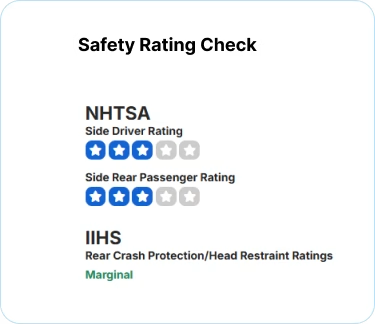
- Crash-Test Ratings: Not applicable. Travel trailers are not subjected to crash-test ratings in the same way passenger vehicles are. Their primary "safety" relates to safe towing practices, structural integrity during travel, and fire/gas safety while stationary.
What Colors Options are Available?
2002 SKYLINE CORPORATION Nomad Prices and Market Value
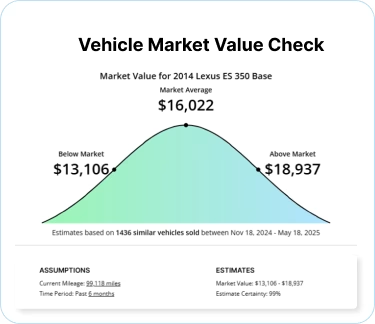
When new in 2002, a Skyline Corporation Nomad travel trailer's price varied significantly based on its size, floor plan, and optional features. Smaller, basic models might have retailed in the range of $10,000 to $15,000 USD, while larger, more amenity-rich models could have easily stretched to $20,000 to $25,000 USD or more. These prices reflect the affordability that made the Nomad line popular.
Today, in the used market, a 2002 Nomad's price is highly dependent on its condition, maintenance history, and geographic location. Prices typically range from as low as $3,000-$6,000 for units requiring significant work or in average condition, up to $8,000-$12,000 or even higher for meticulously maintained or fully renovated examples. Factors significantly affecting resale value include the absence of water damage, working appliances, good tire condition, and a clean title. While RVs generally depreciate, well-cared-for older models like the Nomad retain value for budget-conscious buyers seeking an entry-level RV experience.
2002 SKYLINE CORPORATION Nomad Cost of Ownership
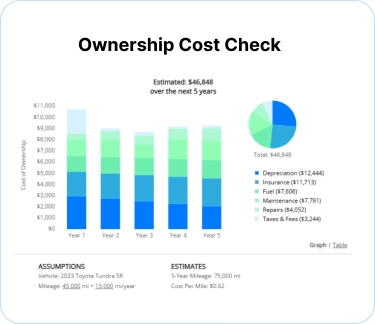
Long-term ownership costs for a 2002 Skyline Corporation Nomad travel trailer can be quite economical for recreational use, though significant age-related repairs can escalate expenses. Insurance for a non-motorized travel trailer is generally much lower than for a motorhome or car, often added as an endorsement to an existing auto policy or as a standalone RV policy covering liability, comprehensive, and collision.
Fuel costs are entirely tied to the towing vehicle's efficiency and the distance traveled; the Nomad itself doesn't consume fuel directly. Maintenance is critical and involves routine tasks like checking and resealing roof and window seams annually, inspecting tires (including age), lubricating moving parts, and performing proper winterization/de-winterization. Repairs can become costly, especially for major appliances like the refrigerator or AC unit, or if extensive water damage remediation is needed. While initially economical, anticipate some investment in repairs and preventative maintenance to keep a 20-year-old unit functional and safe, making it a balance between initial low cost and potential ongoing upkeep.
2002 SKYLINE CORPORATION Nomad Fuel Efficiency
2002 SKYLINE CORPORATION Nomad Warranty
Basic
Powertrain
Rust
2002 SKYLINE CORPORATION Nomad Insurance
reasonable repair costs.
How Does the 2002 SKYLINE CORPORATION Nomad Compare to Other Recreational Vehicle?
The 2002 Skyline Corporation Nomad competed in a crowded market of conventional travel trailers, with key rivals including models from manufacturers like Forest River (e.g., Salem, Wildwood), Jayco (e.g., Jay Flight, Eagle), Coachmen, Keystone RV (e.g., Sprinter, Passport), and Fleetwood (e.g., Prowler). In terms of "performance" (meaning towability and on-site functionality), the Nomad generally offered a comparable experience to its peers.
- Performance (Towability): Like its rivals, the Nomad's towability depended on its specific length and weight, requiring an appropriately sized tow vehicle. It didn't offer unique aerodynamic advantages over other box-shaped travel trailers of the era.
- Features: Most travel trailers in this class and vintage offered a very similar array of features: basic kitchens, dinettes, sleeping areas, and bathrooms. The Nomad's strength lay in its variety of practical floor plans. Some rivals might have offered slightly more upscale interior finishes or a wider range of optional packages, but the core functionality was consistent.
- Reliability: Reliability for a 2002 Nomad is largely on par with its contemporaries. All travel trailers of this age face similar challenges with aging seals, appliances, and potential for water damage if not diligently maintained. There isn't one brand from this era that stands out significantly as being inherently more "reliable" in the long term without proper care. Issues like chassis integrity, axle wear, and appliance longevity are common across the board.
- Price: The Nomad was often positioned as a value-oriented option, making it very competitive on price both new and in the used market. Some rivals, particularly higher-trim models from Jayco or Fleetwood, might have commanded a slightly higher new price due to perceived brand prestige or more extensive standard features.
Recommended Alternatives: For someone considering a 2002 Nomad today, similar alternatives would be any well-maintained travel trailer from the same era from reputable manufacturers (Forest River, Jayco, Keystone, Coachmen). The most important factor is the individual unit's condition, not necessarily the brand. If seeking something with more modern amenities or lighter weight for easier towing, a newer used travel trailer (e.g., 2010s) would be a "better" alternative, albeit at a higher price point. For maximum durability, some might look for older, all-aluminum construction trailers, though these are a different class.
Final Verdict: Is the 2002 SKYLINE CORPORATION Nomad a Good Recreational Vehicle?
The 2002 Skyline Corporation Nomad travel trailer is an ideal choice for budget-conscious individuals or families looking to enter the RV lifestyle without a significant upfront investment. It's well-suited for first-time RV owners, occasional campers, or those seeking a dependable base camp for weekend trips and extended vacations, provided they understand the nuances of owning an older trailer.
Is it worth buying? Absolutely, but under specific conditions. A used 2002 Nomad can offer tremendous value as a functional, spacious, and generally reliable recreational vehicle if it has been well-maintained. The key is a thorough pre-purchase inspection by someone knowledgeable about RVs, focusing on the absence of water damage (roof, walls, floor), the functionality of all appliances (fridge, AC, furnace, water heater), and the condition of the tires and axles. If a unit passes these checks and is priced appropriately for its condition, it represents an excellent opportunity for affordable adventure. Avoid units with extensive water damage or non-functional major systems unless you're prepared for significant repair costs.