
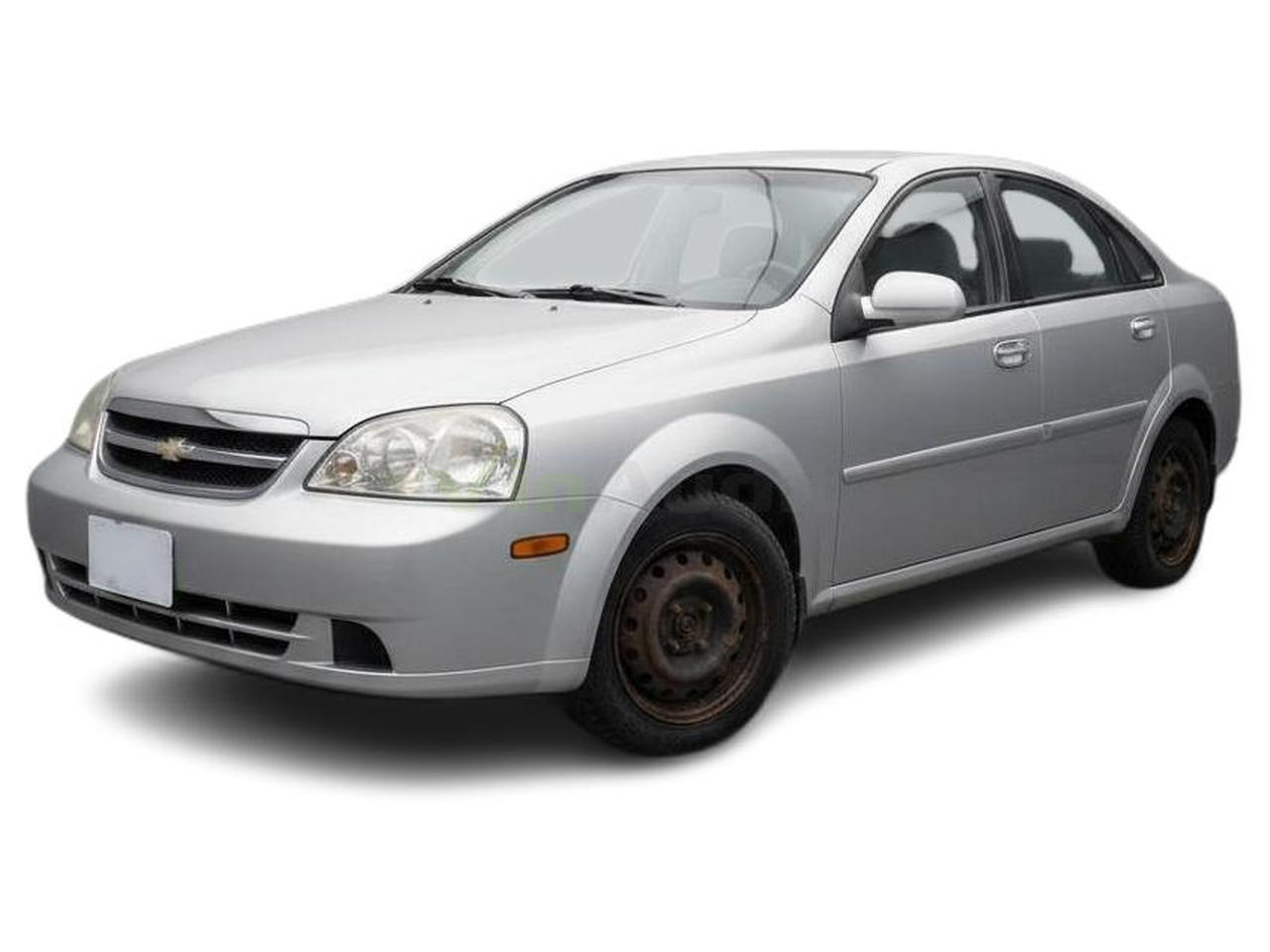
The Good
The 2004 Chevrolet Optra's primary advantage was its exceptional value, offering new car buyers an incredibly low entry price. Practical buyers appreciated its decent fuel efficiency, relatively spacious interior for its class, and straightforward design. While not a performance leader, it provided adequate power for daily commuting. Emotionally, it offered peace of mind as an unpretentious, affordable "get-the-job-done" vehicle, perfect for budget-conscious individuals or first-time car owners.
The Bad
Known weaknesses for the 2004 Chevrolet Optra include questionable long-term reliability, particularly with engine components like head gaskets and timing belts. Owners frequently report automatic transmission issues, electrical glitches, and premature wear of suspension components. The interior quality, while functional, uses hard plastics prone to rattling. Its uninspired performance and significant depreciation are also points to consider before purchase.
2004 Chevrolet Optra: Quick Overview
- Engine Options: The 2004 Chevrolet Optra in North America typically came with a single engine option: a 2.0-liter DOHC (Dual Overhead Cam) 16-valve inline four-cylinder engine. This engine was shared with its platform mates, the Suzuki Forenza and Reno.
- Horsepower: The 2.0L engine produced approximately 119-127 horsepower, depending on the specific market and minor variations. Torque output was around 126 lb-ft, providing adequate power for city driving and highway cruising, though it wasn't a powerhouse.
- Transmissions: A 5-speed manual transmission was standard, with an optional 4-speed automatic transmission available for easier driving.
- Fuel Economy: Fuel economy ratings were competitive for its class at the time, but not outstanding. Estimates were around 22-24 MPG in the city and 29-31 MPG on the highway for the manual transmission, with the automatic slightly lower.
- 0-60 Times: As a budget-oriented compact car, the Optra was not designed for quick acceleration. 0-60 mph times were typically in the 9.5 to 10.5-second range, which was average for its segment.
- Towing Capacity: The 2004 Chevrolet Optra generally was not rated for significant towing. If a rating was provided, it would be minimal, likely under 1,000 pounds, making it unsuitable for anything beyond small utility trailers.
- Trim-Level Features:
- LS (Base Trim): This entry-level trim included essential features such as air conditioning, an AM/FM stereo with CD player, power steering, tilt steering column, and dual front airbags. Power windows and door locks were often optional or bundled into basic convenience packages. Steel wheels with wheel covers were standard.
- LT (Uplevel Trim): The LT trim added more comfort and convenience items. These typically included power windows, power door locks, remote keyless entry, upgraded cloth upholstery, and sometimes a slightly better sound system. Optional features on the LT could include ABS (Anti-lock Braking System), side-impact airbags, a sunroof, and alloy wheels. Fog lights were also a common upgrade on the LT model.
The Optra focused on providing basic, functional transportation without many advanced features common in more expensive vehicles of the era.
2004 Chevrolet Optra Specifications
Vehicle Information
| Year | 2004 |
| Make | Chevrolet |
| Model | Optra |
| Trim | - |
| Style | - |
| Type | Sedan |
| Category | Compact Car |
Manufacturing Details
| Made In | Korea |
| Manufacturing City | KUNSAN |
Dimensions
| Doors | 4-Door |
| Curb Weight | - |
| Gross Vehicle Weight Rating | - |
| Overall Height | - |
| Overall Length | - |
| Overall Width | - |
| Wheelbase Length | - |
| Standard Seating | - |
Engine & Performance
| Engine | L26 |
| Engine Size | 1.6L |
| Engine Cylinders | 4 |
| Transmission | - |
| Transmission Type | - |
| Transmission Speeds | - |
| Drivetrain | Front-Wheel Drive |
Additional Features
| Anti-Brake System | - |
| Steering Type | - |
Pricing
| Manufacturer Suggested Retail Price (MSRP) | - |
| Invoice Price | - |
| Delivery Charges | - |
Vehicle History Report
Specifications
History
Events
History Check
Check
Check
Check
Check
Listings
Recalls
Check
Analysis
What Problems Does the 2004 Chevrolet Optra Have?
Automatic transmission problems are another common complaint. Owners frequently experienced harsh shifting, delayed engagement, or complete transmission failure, often requiring expensive overhauls or replacements. Electrical gremlins also plagued the Optra; issues with power windows, faulty sensors (like oxygen sensors or crank position sensors), and dashboard warning lights illuminating incorrectly were not uncommon.
Regarding suspension and steering components, many owners noted premature wear of bushings, ball joints, and tie rods, leading to clunking noises and reduced handling stability. Brake components, especially rotors, were often reported to warp prematurely, causing vibration during braking.
Recalls for the 2004 Chevrolet Optra were relatively few but did exist. One notable recall involved certain models for a potential issue with the power steering hose, which could rupture and lead to a loss of power steering assist, increasing the risk of a crash. Another recall involved brake lights not illuminating properly, posing a safety risk. It is always advisable for prospective buyers to check the NHTSA recall database for any outstanding recalls by VIN.
In summary, while offering initial affordability, the 2004 Optra's long-term reliability was a significant weakness, primarily due to engine and transmission issues, making consistent and proactive maintenance crucial for its survival.
How long will the 2004 Chevrolet Optra last?
Long-term durability is often compromised by its inherent weaknesses, particularly the propensity for head gasket failure and automatic transmission issues. These costly repairs can often lead owners to scrap the vehicle rather than fix it, especially as the car ages and its market value diminishes. Rust can also become a concern in regions with harsh winters. Without dedicated care, the Optra typically exhibits signs of significant wear and numerous mechanical issues by 100,000 to 120,000 miles, making consistent, thorough maintenance absolutely critical for maximizing its lifespan.
What Technology & Safety Features are Included?
Built-in Tech & Entertainment:
The standard entertainment system typically consisted of an AM/FM stereo with a single-disc CD player. Higher trims (LT) might have offered a slightly better speaker count or a premium sound system option, though "premium" was relative for the class. There was no integrated navigation, Bluetooth connectivity, or advanced infotainment screen. Connectivity was limited to the radio antenna. Basic conveniences like air conditioning, power steering, and a tilt steering wheel were standard across most trims, with power windows and door locks often optional on the base LS and standard on the LT.
Driver-Assistance Features:
Driver-assistance technology, as understood today, was essentially non-existent. There were no features like stability control, traction control (beyond basic braking), cruise control (often optional), lane-keeping assist, or blind-spot monitoring.
Safety Features:
Standard safety equipment included dual front airbags for the driver and passenger. The anti-lock braking system (ABS) was an optional feature, typically available on the LT trim or as part of a safety package. Side-impact airbags for the front occupants were also an optional extra, significantly enhancing side-crash protection when equipped. Three-point seatbelts for all outboard occupants were standard, along with child seat anchors (LATCH system).
Crash-Test Ratings:
For the 2004 Chevrolet Optra (and its identical twin, the Suzuki Forenza), crash test ratings from independent organizations like the Insurance Institute for Highway Safety (IIHS) and the National Highway Traffic Safety Administration (NHTSA) were available:
- NHTSA Frontal Crash: Typically received 4 out of 5 stars for both driver and passenger protection.
- NHTSA Side Crash: Ratings were often 3 stars for the front occupant and 3 stars for the rear occupant without optional side airbags, improving with side airbags.
- IIHS Moderate Overlap Front: Rated "Acceptable" for overall protection, with potential for some lower leg injury risk.
- IIHS Side Impact: Without optional side airbags, the rating was "Poor," indicating significant risk of injury. With optional side airbags, it could improve to "Acceptable" or "Marginal."
- IIHS Rear Crash Protection: Typically rated "Marginal."
These ratings indicate that while the Optra met basic safety standards for its time, it lagged behind competitors, especially when not equipped with all available safety options.
What Colors Options are Available?
2004 Chevrolet Optra Prices and Market Value
In today's used market, the 2004 Optra has experienced significant depreciation, as expected for a budget car of its age with reliability concerns. Current used prices typically range from under $1,000 to around $3,000, heavily dependent on condition, mileage, and maintenance history. Factors severely affecting its resale value include its age, known long-term reliability issues (especially engine and transmission problems), the Daewoo legacy (often perceived as less reliable than Japanese or even some American brands), and the general obsolescence of its technology and safety features. Only examples in exceptional condition with verifiable service records might command higher prices, but they are rare.
2004 Chevrolet Optra Cost of Ownership
2004 Chevrolet Optra Fuel Efficiency
2004 Chevrolet Optra Insurance
reasonable repair costs.
How Does the 2004 Chevrolet Optra Compare to Other Sedan?
Performance: The Optra's 2.0L engine with ~120 hp offered adequate, but uninspiring, performance comparable to base models of its rivals. It couldn't match the sprightliness of a Civic or the more engaging drive of a Focus. Its handling was competent but lacked the refinement of its Japanese competitors.
Features: Feature-wise, the Optra often offered a competitive list for its price. Base models typically included AC and a CD player, with power accessories and keyless entry on higher trims. It generally matched the basic amenities of the Focus and Elantra, but typically lagged behind the optional advanced features or interior refinement found in top-tier Corolla or Civic models.
Reliability: This is where the Optra struggled most significantly against its rivals. While the Toyota Corolla and Honda Civic were legendary for their bulletproof reliability and longevity, the Optra, with its Daewoo roots, was notorious for recurring problems like head gasket failures, transmission issues, and electrical glitches. The Ford Focus and Hyundai Elantra of the same era generally offered better long-term reliability than the Optra, though they also had their own specific issues.
Price: The Optra's strongest selling point was its price. It was consistently among the cheapest new compact cars available, often undercutting similarly equipped Focus or Elantra models, and significantly cheaper than the Civic or Corolla.
Recommended Alternatives:
- Better Alternatives (if budget allows): A 2004 Toyota Corolla or Honda Civic are superior choices for reliability, resale value, and overall ownership experience, albeit at a slightly higher used price. They offer much better long-term durability and fewer unexpected repair costs.
- Similar Alternatives (if budget is strict): A 2004 Hyundai Elantra or Ford Focus (with careful research into specific model year issues) could be considered. They offer similar price points and a generally better reliability track record than the Optra, while still providing practical transportation. The Elantra often had a better warranty and better perceived build quality.
The Optra was primarily a value proposition, but its long-term reliability shortcomings made it a less compelling choice compared to its more robust rivals.
Final Verdict: Is the 2004 Chevrolet Optra a Good Sedan?
Whether it's worth buying today, used, is highly conditional. It is generally not recommended as a primary, reliable vehicle, especially if you depend on it daily and cannot afford significant, potentially frequent repairs. If considering one, it must be purchased for an extremely low price (under $1,500), and only after a thorough, independent pre-purchase inspection by a trusted mechanic. Look for models with verifiable, comprehensive maintenance records, especially regarding the timing belt and cooling system. Avoid models with any signs of transmission issues or engine overheating. The LT trim offers minimal convenience upgrades but doesn't improve core reliability. It's a car to buy cheap, run until it costs too much to fix, and then dispose of.

Drew B
Drew is a seasoned automotive expert and contributor to VinCheck.info. With nearly 15 years of experience as a former Porsche technician, he brings a wealth of hands-on knowledge to his writing. Born in North Carolina, a region renowned for its deep-rooted NASCAR culture, Drew developed a passion for cars early in life, often building and working on vehicles from a young age. At VINCheck, Drew leverages his extensive technical background to provide in-depth analyses of various vehicles. His articles often focus on engine performance, reliability, and maintenance insights, offering readers practical information grounded in real-world experience. Some of his notable contributions include reviews on the Mazda CX-5's longevity and detailed examinations of engine options for models like the 2011 Toyota Camry and Tacoma