
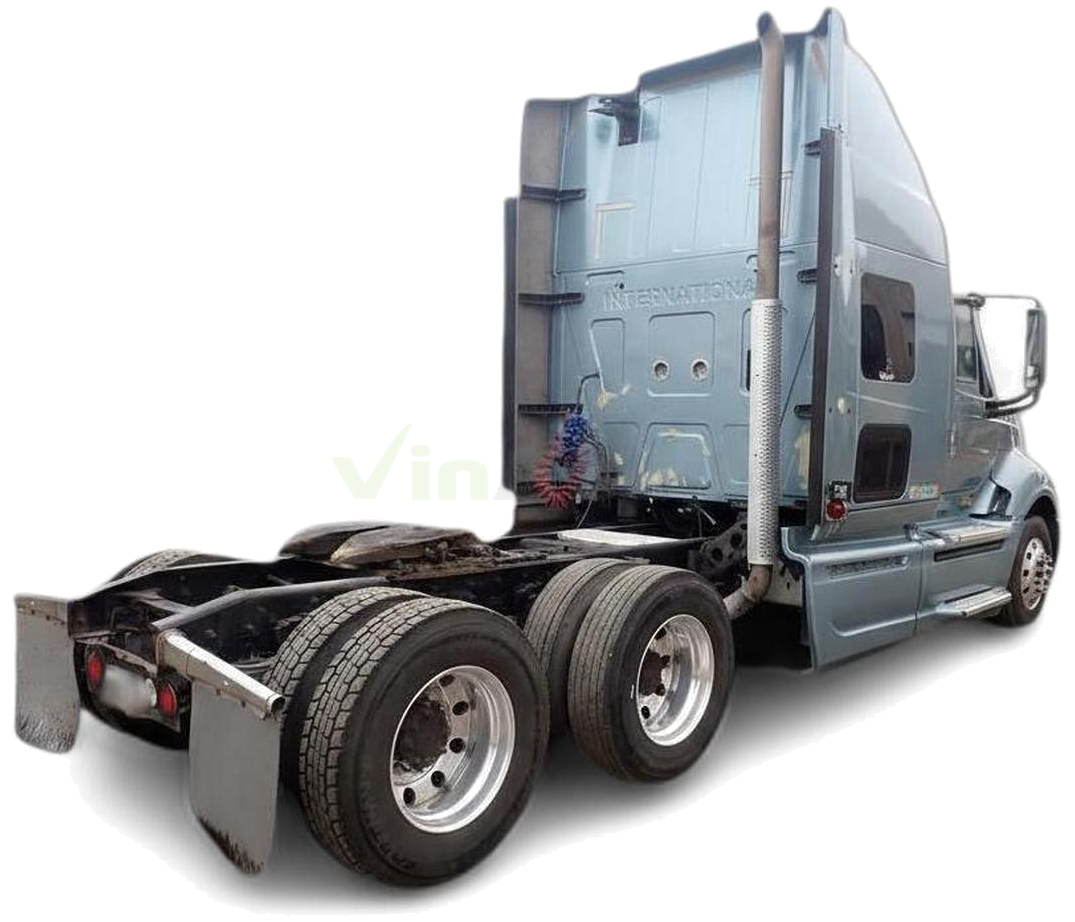
The Good
The 2010 International Prostar Premium boasts a sleek, aerodynamic design that significantly contributes to fuel efficiency, appealing to practical buyers. Its spacious and quiet cabin, coupled with an ergonomic dashboard layout, offers superior driver comfort for long hauls, satisfying emotional needs for a pleasant work environment. With robust engine options, it delivers reliable performance, presenting strong value for money when considering operational savings and driver retention.
The Bad
Known weaknesses for the 2010 International Prostar Premium primarily involve its early emissions systems, particularly the MaxxForce engine's EGR (Exhaust Gas Recirculation) and DPF (Diesel Particulate Filter) components, which could be prone to frequent issues and costly maintenance. Electrical gremlins, sensor failures, and turbocharger problems have also been reported, necessitating thorough inspection of maintenance records.
2010 International Prostar Premium: Quick Overview
- Engine Options: The 2010 International Prostar Premium primarily featured Navistar's own MaxxForce engines, including the MaxxForce 11 (10.5L) and MaxxForce 13 (12.4L). It was also available with Cummins ISX15 (15.0L) engines as an alternative, offering greater reliability for many operators.
- Horsepower: Horsepower ratings varied significantly based on the engine and its tuning. MaxxForce 11 engines typically ranged from 330 to 390 hp, while the MaxxForce 13 offered 410 to 475 hp. Cummins ISX15 options provided a broader range, often from 400 to 600 hp, with high torque output.
- Fuel Economy: Fuel economy for a Class 8 truck like the Prostar depends heavily on load, terrain, driver habits, and maintenance. However, its aerodynamic design aimed for competitive efficiency, often achieving between 5.5 to 7.5 MPG (miles per gallon) for typical long-haul applications, with some drivers reporting higher under optimal conditions.
- 0-60 Times: 0-60 mph times are not a standard performance metric for heavy-duty trucks, as their primary design focus is on hauling heavy loads efficiently rather than acceleration. These vehicles are engineered for torque and sustained pulling power.
- Towing Capacity (GCWR): The Gross Combination Weight Rating (GCWR) for a 2010 International Prostar Premium typically ranged from 80,000 lbs to 110,000 lbs, depending on the specific configuration, engine, transmission, and axle specifications. This capacity makes it suitable for pulling standard 53-foot dry vans, reefers, or other heavy trailers.
- Trim-Level Features (Premium): The "Premium" designation implies a higher level of driver comfort and amenities. Standard features included an air-ride suspension for a smoother ride, power windows and locks, air conditioning, and an ergonomic dashboard. Premium options often added:
- Spacious sleeper cabs (e.g., 56" or 73" high-rise sleepers) with amenities like a double bunk, refrigerator prep, microwave shelf, and ample storage.
- Upgraded interior materials, enhanced sound insulation.
- Advanced climate control systems.
- Integrated stereo systems with CD players and auxiliary inputs.
- Adjustable air-ride driver and passenger seats for maximum comfort.
- Cruise control and sometimes a multi-function steering wheel.
- Enhanced exterior chrome and lighting packages.
2010 International Prostar Premium Specifications
Vehicle Information
| Year | 2010 |
| Make | International |
| Model | Prostar Premium |
| Trim | - |
| Style | - |
| Type | Truck |
| Category | - |
Manufacturing Details
| Made In | Mexico |
| Manufacturing City | CHATHAM |
Dimensions
| Doors | - |
| Curb Weight | - |
| Gross Vehicle Weight Rating | 33001 pounds |
| Overall Height | - |
| Overall Length | - |
| Overall Width | - |
| Wheelbase Length | - |
| Standard Seating | - |
Engine & Performance
| Engine | 13L I6 |
| Engine Size | 10.8L |
| Engine Cylinders | 6 |
| Transmission | - |
| Transmission Type | - |
| Transmission Speeds | - |
| Drivetrain | 6x4 |
Additional Features
| Anti-Brake System | - |
| Steering Type | - |
Pricing
| Manufacturer Suggested Retail Price (MSRP) | - |
| Invoice Price | - |
| Delivery Charges | - |
Vehicle History Report
Specifications
History
Events
History Check
Check
Check
Check
Check
Listings
Recalls
Check
Analysis
What Problems Does the 2010 International Prostar Premium Have?
Other common problems included turbocharger failures, often related to the stress placed on the system by the emissions controls. Electrical issues were also not uncommon, ranging from minor sensor failures that could trigger emissions system errors to more significant wiring harness problems affecting various vehicle functions. Fuel system components, such as injectors and fuel pumps, also saw their share of premature failures.
For the 2010 model year Prostar, specifically, the MaxxForce 11 and 13 engines without SCR technology were the primary source of these long-term reliability concerns. While the Cummins ISX15 option generally offered better reliability, it wasn't immune to issues, though typically fewer and less severe than the MaxxForce counterparts. Recalls for the 2010 Prostar have included issues related to braking systems, steering components, and potential wiring problems, which are standard for heavy-duty trucks and require immediate attention. Prospective buyers should thoroughly investigate service history, particularly concerning emissions system overhauls or engine replacements, which were common modifications or repairs for these early MaxxForce units to improve their long-term viability.
How long will the 2010 International Prostar Premium last?
What Technology & Safety Features are Included?
For entertainment, standard offerings included an AM/FM stereo with a CD player, often with auxiliary inputs for external devices. Premium sound systems with additional speakers were optional, enhancing the driver's experience during long periods on the road. Many sleepers were pre-wired for TV and microwave installation, allowing drivers to customize their living space with personal electronics.
Driver-assistance features were rudimentary compared to today's standards. Standard cruise control was universally present. Some models might have offered basic collision mitigation systems as optional, but these were not widespread in 2010. Anti-lock Braking Systems (ABS) were standard, as mandated. Electronic Stability Control (ESC) was becoming more common as an option or standard on some configurations, providing enhanced safety in adverse conditions.
Safety features included a robust steel cab structure designed to meet industry standards for crashworthiness. Air-ride driver and passenger seats improved ride comfort and reduced fatigue, indirectly contributing to safety. Dual air tanks for the air brake system provided redundancy. However, formal crash-test ratings from agencies like NHTSA are not typically provided for Class 8 heavy-duty trucks in the same manner as passenger vehicles. Instead, these vehicles adhere to various Federal Motor Vehicle Safety Standards (FMVSS) covering braking, lighting, and structural integrity for commercial applications.
What Colors Options are Available?
2010 International Prostar Premium Prices and Market Value
2010 International Prostar Premium Cost of Ownership
2010 International Prostar Premium Fuel Efficiency
2010 International Prostar Premium Warranty
Basic
Powertrain
Rust
2010 International Prostar Premium Insurance
reasonable repair costs.
How Does the 2010 International Prostar Premium Compare to Other Truck?
Performance: The Prostar's aerodynamic design was competitive, aiming for strong fuel efficiency similar to the Cascadia. Engine performance varied; while the MaxxForce 13 offered decent power, the Cummins ISX in rivals (and as an option in the Prostar) was often seen as more robust and responsive, especially for heavy loads.
Features: In terms of driver comfort and interior amenities, the Prostar Premium was strong, offering a spacious and ergonomic cabin comparable to the Cascadia and VNL. However, rivals like Peterbilt and Kenworth often offered more luxurious interior finishings and a wider array of customization options, appealing to owner-operators seeking premium aesthetics. Basic tech and infotainment were similar across the board for this era.
Reliability: This is where the 2010 Prostar with its MaxxForce engine significantly lagged. The MaxxForce's emissions system (EGR/DPF without SCR) issues were well-documented, leading to frequent breakdowns and high repair costs. Rivals, particularly those predominantly using Cummins or Detroit Diesel engines (like the Cascadia with Detroit DD15 or Volvo with Volvo D13), generally had better reliability records for their 2010 emissions systems, largely due to their adoption of SCR technology which proved more robust.
Price: New, their prices were competitive. On the used market today, a 2010 Prostar with a MaxxForce engine is typically among the cheapest, reflecting its reliability concerns. Prostars with Cummins engines command a higher price. Rivals like the 2010 Freightliner Cascadia or Volvo VNL, especially with their OEM engines, usually hold better resale value due to superior perceived reliability.
Recommendations:
- Better Alternatives: For a 2010 model year, a Freightliner Cascadia (with a Detroit DD15) or a Volvo VNL (with a Volvo D13) would generally be a better alternative due to their more reliable emissions systems and typically better long-term durability, leading to lower operating costs and less downtime.
- Similar Alternatives: If considering a 2010 Prostar with a Cummins ISX engine, other trucks from that year with a Cummins ISX, such as some Kenworth T2000s or Peterbilt 386s, would be similar in powertrain reliability, though possibly differing in cab comfort and aerodynamics.
Final Verdict: Is the 2010 International Prostar Premium a Good Truck?

Eugene S
Eugene is an automotive enthusiast with over 15 years of experience in the used car market. As a writer at VINCheck.info, he brings deep industry insight and a passion for cars, helping readers make smart, informed decisions. Eugene has written hundreds of used car reviews and is known for breaking down complex automotive topics into clear, actionable advice. Over the years, he has driven and worked on a wide range of vehicles—starting with tuning street cars in his early days and eventually focusing on performance upgrades and reliability improvements. Today, he specializes in evaluating used vehicles through the lens of real-world ownership and enthusiast needs. A longtime fan of Porsche, Eugene especially appreciates vehicles that blend durability with driving enjoyment.