by VIN, Year, Make, Model by License Plate

2003 Suzuki RM250 Overview, Reviews, Ratings & Specs

Rating: 0.00
Based on 0 Owner Reviews
Cathleen V | September 28, 2025
The 2003 Suzuki RM250 is an iconic two-stroke motocross motorcycle, part of Suzuki's long-running RM series that dates back to the 1970s. It features a lightweight, agile dirt bike body style designed for competitive off-road racing. Produced during a golden era for two-strokes, the 2003 model was highly regarded for its potent engine and excellent handling, making it a popular choice among riders for its aggressive power delivery and sharp cornering capabilities. There were no distinct trims; it was sold as a singular, race-ready package. New, it was priced around $6,000.
The Good

The 2003 Suzuki RM250 excels in performance with its explosive two-stroke power and superb handling, offering an exhilarating ride for emotional buyers. Practically, its robust build offers good reliability for a race machine, and parts availability remains decent. Its lightweight design and straightforward mechanics also contribute to easier maintenance and a strong value proposition in the used market.

The Bad

Known weaknesses for the 2003 Suzuki RM250 include its somewhat finicky carburation, which can require precise tuning, especially with elevation changes. The stock suspension, while good, can be pushed to its limits by heavier or faster riders. Also, like all two-strokes, it demands diligent top-end maintenance to sustain performance and prevent costly failures.

2003 Suzuki RM250: Quick Overview

  • Engine: Liquid-cooled, 249cc, two-stroke, single-cylinder, crankcase reed valve. Features Suzuki's Automatic Exhaust Control (SAEC) for optimized power delivery across the rev range. Bore and stroke typically 66.4mm x 72.0mm.
  • Horsepower: While specific manufacturer figures varied and weren't always officially published, the 2003 RM250 was generally regarded as producing approximately 45-50 horsepower at the crank, making it one of the most powerful 250cc two-strokes of its era.
  • Fuel Economy: As a high-performance competition motocross bike, fuel economy is not a primary design metric. It consumes premium gasoline mixed with two-stroke oil. Riders typically measure run time per tank rather than miles per gallon, with a full tank (approximately 2.0 gallons or 7.5 liters) lasting a couple of hours of aggressive riding, depending on conditions and throttle usage.
  • 0-60 Times: Not applicable for a motocross bike in the traditional sense. Its acceleration is blistering, designed for immediate power out of corners and over jumps. It can achieve very high speeds quickly off the line, but straight-line acceleration figures are not measured or relevant to its intended use.
  • Towing Capacity: Not applicable. The Suzuki RM250 is a pure motocross competition machine and is not designed nor equipped for towing.
  • Trim-Level Features: The 2003 RM250 was offered as a single, race-ready model without distinct trim levels. Key standard features included:
    • Lightweight twin-spar aluminum frame, providing excellent rigidity and handling.
    • Fully adjustable Showa suspension components (47mm inverted front forks with 12.2 inches of travel, and a Showa piggyback rear shock with 12.4 inches of travel), designed for aggressive motocross conditions.
    • Disc brakes front and rear for strong stopping power.
    • Five-speed constant mesh transmission.
    • Keihin PWK38S carburetor.
    • Strong, lightweight wheels and high-performance tires suitable for dirt.
    • Ergonomic design focused on rider mobility and control during aggressive riding.
    • High-capacity radiators for efficient engine cooling.

2003 Suzuki RM250 Specifications

Vehicle Information
Year 2003
Make Suzuki
Model RM250
Trim -
Style -
Type Motorcycle
Category Motorcycle
Manufacturing Details
Made In Japan
Manufacturing City TOYOKAWA
Dimensions
Doors -
Curb Weight -
Gross Vehicle Weight Rating -
Overall Height -
Overall Length -
Overall Width -
Wheelbase Length -
Standard Seating -
Engine & Performance
Engine 249CC
Engine Size 249L
Engine Cylinders 1
Transmission -
Transmission Type -
Transmission Speeds -
Drivetrain -
Additional Features
Anti-Brake System -
Steering Type -
Pricing
Manufacturer Suggested Retail Price (MSRP) -
Invoice Price -
Delivery Charges -

Vehicle History Report

Vehicle
Specifications
Ownership
History
All History
Events
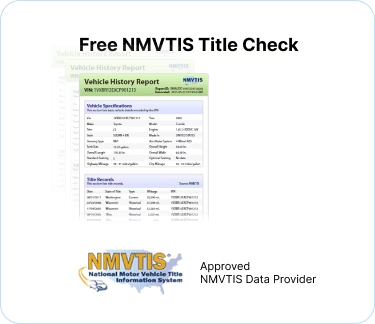
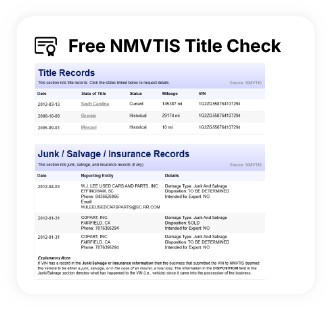
NMVTIS Title
History Check
Salvage/Rebuilt
Check
Accident
Check
Theft
Check
Open Lien
Check
Past Sale
Listings
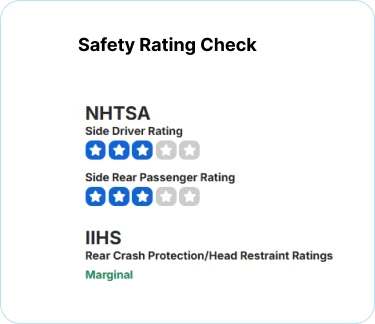
Safety
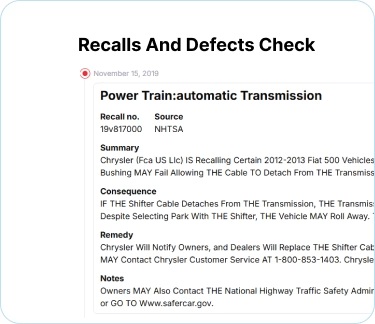
Recalls
Odometer
Check
Market Price
Analysis

What Problems Does the 2003 Suzuki RM250 Have?

The 2003 Suzuki RM250, while a robust and competitive machine, did have its share of frequently reported issues, largely stemming from its high-performance nature and the demands placed upon it. One common concern for owners was the stock clutch. While adequate for recreational riding, aggressive racers often found the clutch to fade under heavy abuse, leading to quicker wear of plates and springs compared to some rivals. Upgrading to aftermarket components was a common solution.

Another recurring theme was related to carburation. The Keihin PWK38S carburetor, while capable of delivering strong power, was often described as being sensitive to tuning. Many riders reported needing to spend considerable time jetting the bike correctly, especially when facing changes in altitude, temperature, or humidity. An improperly jetted bike could exhibit bogging, fouled spark plugs, or inconsistent power delivery.

Suspension components, specifically the Showa forks, were generally good but some riders found them to be on the softer side for professional-level racing or for heavier riders, leading to "bottoming out" on large jumps. Re-valving or stiffer springs were common modifications. The rear shock linkage bearings also required regular maintenance and greasing to prevent premature wear, a common issue on many motocross bikes of that era.

As with all two-stroke engines, top-end wear (piston, rings, cylinder plating) is a critical long-term reliability concern. The RM250 engine demands consistent and timely top-end rebuilds (typically every 20-40 hours of aggressive riding, depending on use) to maintain peak performance and prevent catastrophic failures. Neglecting this maintenance is the leading cause of major engine problems. Crankshaft bearings and seals also have a lifespan and should be inspected during major engine overhauls.

There were no major widely reported recalls for the 2003 Suzuki RM250 that impacted safety or widespread functionality. Most "issues" were performance characteristics or maintenance requirements inherent to a high-strung, competition-oriented two-stroke motorcycle rather than manufacturing defects.

How long will the 2003 Suzuki RM250 last?

For a competition motocross bike like the 2003 Suzuki RM250, "mileage" is less relevant than engine hours or the number of top-end rebuilds. With diligent maintenance, including regular oil changes (transmission), air filter cleaning, and timely top-end rebuilds (every 20-40 hours), an RM250 engine can last for many years and hundreds of hours of riding. However, the lifespan of components like the crank, main bearings, and chassis bearings (swingarm, linkage, wheel) is finite and depends heavily on rider aggression, track conditions, and maintenance frequency.

Long-term durability is high for the frame and major components, but wear items accumulate over time. Expect frame wear at footpeg mounts, swingarm pivot, and chain slider areas. The plastics will show age, and exhaust pipes can dent. Neglecting maintenance, particularly engine rebuilds, significantly shortens its service life. A well-maintained 2003 RM250 can still be a strong performer today, but an abused one will be a money pit.

What Technology & Safety Features are Included?

The 2003 Suzuki RM250, being a purpose-built motocross racing machine from the early 2000s, has a very different interpretation of "tech" and "safety features" compared to modern road vehicles. Entertainment and driver-assistance systems are entirely absent, as they do not align with its competitive, minimalist design philosophy.

Built-in Tech:
  • Automatic Exhaust Control (SAEC): This is a mechanical power valve system designed to optimize exhaust port timing, enhancing power delivery across the entire RPM range. It's a crucial piece of engine technology for a two-stroke, allowing for both strong low-end torque and explosive top-end power.
  • Adjustable Suspension: The Showa front forks and rear shock offer full adjustability for compression and rebound damping, allowing riders to fine-tune the suspension characteristics to suit their weight, riding style, and track conditions. This "tech" is vital for competitive performance.
  • CDI Ignition System: A solid-state Capacitor Discharge Ignition system provides reliable spark for combustion, a standard but critical piece of technology for engine operation.
  • Liquid Cooling System: Essential for maintaining optimal engine temperature during high-stress operation, consisting of radiators, hoses, and a water pump.

Safety Features:
Safety on a motocross bike primarily comes from its inherent design, component quality, and the rider's protective gear. Electronic safety aids, ABS, or traction control are non-existent.
  • Strong Chassis Design: The aluminum twin-spar frame provides a rigid and predictable platform, crucial for handling stability and rider control, which directly contributes to safety by allowing the rider to maintain command.
  • Powerful Braking System: Front and rear disc brakes offer strong, reliable stopping power under aggressive conditions.
  • Ergonomics: The bike's layout, including handlebar bend, footpeg position, and seat shape, is designed to allow the rider maximum control and mobility, which is fundamental to safe operation at speed.
  • High-Quality Tires: Designed to provide maximum grip in various off-road conditions.

Optional Features:
Suzuki offered no factory "optional features" in the traditional sense. Any enhancements were aftermarket modifications such as exhaust systems, different handlebars, suspension re-valving, or stronger clutch components, chosen by individual riders.

Crash-Test Ratings:
Motorcycles, especially off-road competition models, do not undergo formal crash-test ratings like passenger cars. Their safety is assessed through racing performance, rider feedback, and component durability, with rider safety relying heavily on personal protective equipment.

What Colors Options are Available?

We’re working on this section!
In the meantime, feel free to explore the other sections for more content.

2003 Suzuki RM250 Prices and Market Value

When new, the 2003 Suzuki RM250 had an MSRP of approximately $6,000 to $6,199. Like most competition motorcycles, it experienced significant depreciation immediately after purchase due to its intended use and rapid model year updates. However, its value has seen a complex trajectory in the used market.

Currently, used market prices for a 2003 RM250 vary wildly based on condition. A well-maintained, ready-to-ride example might fetch between $2,500 and $4,500. Highly original, low-hour, or meticulously restored bikes can command premium prices, sometimes exceeding their original MSRP, reaching $5,000 to $7,000+. Conversely, project bikes needing major engine work or extensive repairs can be found for under $1,500. Factors affecting resale value include engine condition (especially top-end status), overall cosmetic appearance, suspension condition, frame integrity, and the presence of desirable aftermarket upgrades. The recent resurgence in popularity of two-stroke dirt bikes has also positively impacted the resale value of well-preserved examples.

2003 Suzuki RM250 Cost of Ownership

Owning a 2003 Suzuki RM250 is moderately costly, primarily due to its nature as a high-performance competition machine. Insurance costs are generally low as it's not street legal and often covered under recreational vehicle policies. Fuel costs involve premium gasoline mixed with two-stroke oil, which is more expensive than straight gasoline, and consumption is high during aggressive riding.

Maintenance is demanding: frequent air filter cleaning, transmission oil changes (every 5-10 hours), and critical top-end rebuilds (piston/rings every 20-40 hours). These rebuilds, along with eventual crank/main bearing replacements, constitute the most significant repair costs. Chassis bearings (swingarm, linkage, wheels) also require regular greasing and eventual replacement. Therefore, while initial purchase might be reasonable, long-term ownership is not economical if ridden hard, but reflects the cost of competitive performance.

2003 Suzuki RM250 Fuel Efficiency

Fuel Type -
Fuel Capacity -
City Mileage -
Highway Mileage -

2003 Suzuki RM250 Warranty

Basic
Original warranty 0 months / No data
Estimated remaining Expired
Powertrain
Original warranty 0 months / No data
Estimated remaining Expired
Rust
Original warranty 0 months / No data
Estimated remaining Expired

2003 Suzuki RM250 Insurance

Insurance for a 2003 Suzuki RM250 is moderately priced, reflecting its status as a Motorcycle with strong safety ratings and
reasonable repair costs.

How Does the 2003 Suzuki RM250 Compare to Other Motorcycle?

The 2003 Suzuki RM250 competed fiercely against formidable rivals like the Yamaha YZ250, Honda CR250R, Kawasaki KX250, and KTM 250 SX, all vying for supremacy in the highly competitive 250cc two-stroke class.

Performance: The RM250 was renowned for its strong, aggressive engine with excellent mid-range power, allowing it to pull hard out of corners. Its handling was also a major strong suit, often praised for its quick turn-in and agile feel, making it a favorite for tight, technical tracks. The Yamaha YZ250 was often lauded for its broader, more tractable powerband and arguably superior suspension (Kayaba SSS forks in later years, though 2003 was still cartridge style). The Honda CR250R (particularly the 2002-2003 models with the electronic power valve) was known for its innovative, strong engine but sometimes criticized for a "pingy" power delivery. The Kawasaki KX250 was generally a solid contender, offering good power and decent handling. KTMs were known for their strong engines and higher-spec components, but sometimes had a stiffer feel.

Features: All bikes in this class offered similar core features: liquid-cooled 250cc two-stroke engines, adjustable suspension, and disc brakes. The RM250's twin-spar aluminum frame was a significant feature that contributed to its handling prowess. Honda also had an aluminum frame, while Yamaha and Kawasaki still utilized steel frames in 2003, which had different flex characteristics. KTM was known for its hydraulic clutch, a premium feature not found on the Japanese bikes.

Reliability: All these race-bred two-strokes require diligent maintenance. The RM250 was generally reliable when maintained, similar to its Japanese counterparts. Yamaha YZ250s are often cited for their exceptional reliability and durability, particularly their engines. Honda CR250Rs had a reputation for robust engines but some chassis components needed attention. Kawasaki KX250s were solid, but clutch and suspension wear could be factors. KTMs, while powerful, sometimes had a reputation for requiring more frequent maintenance on specific engine components.

Price: New prices were very similar across all Japanese brands, generally in the $6,000-$6,200 range. KTMs were typically slightly more expensive. In the used market today, the YZ250 often commands the highest prices due to its enduring popularity and continued production, followed closely by well-maintained RMs and CRs. KXs tend to be slightly less.

Alternatives: For a similar aggressive two-stroke experience, the 2003-2005 Yamaha YZ250 is an excellent alternative, offering arguably superior suspension and a slightly more user-friendly power delivery. The Honda CR250R of the same era is also a strong choice if one is prepared for its unique power characteristics. For those seeking modern components and more power, later model KTM 250 SXs (2004 onwards) are also strong contenders.

Final Verdict: Is the 2003 Suzuki RM250 a Good Motorcycle?

The 2003 Suzuki RM250 is an ideal motorcycle for experienced riders, motocross enthusiasts, and those looking to re-live the glory days of two-stroke racing. Its aggressive powerband and sharp handling make it a formidable machine on the track, best suited for riders who appreciate a potent, responsive engine and precise cornering.

It is absolutely worth buying, but only as a used vehicle, as new models are no longer available. There are no specific trims to consider, as it was a single model offering. The key condition for purchase is the bike's maintenance history and current mechanical condition. A well-maintained example, even if it requires a fresh top-end, is a fantastic value. However, a neglected RM250 can quickly become a money pit. It's also an excellent platform for restoration projects due to its iconic status. It's not recommended for absolute beginners due to its aggressive nature and the specific maintenance requirements of a two-stroke competition engine.

2003 Suzuki RM250 Owner Reviews

0.00
Consumer Rating, Based on 0 Consumer Reviews
Overall rating
Cancel
Thank You for Your Review!

We truly appreciate the time and effort you took to share your experience with us.

Uh oh!

Something went wrong, please try again later.

Author Image
Cathleen V

Cathleen is an exceptional freelance writer covering hot topics in the automotive world from a gearhead's perspective. Her articles delve into various aspects of automotive technology and history, offering readers detailed insights into engine performance, reliability, and maintenance. Through her engaging and informative writing, Cathleen provides valuable information to automotive enthusiasts and consumers alike, helping them make informed decisions about vehicle maintenance and purchases.