The 2003 BMW R1200C is a distinctive cruiser motorcycle, produced from 1997 to 2004. Its unique "flying brick" boxer engine, exposed on either side, and Telelever front suspension set it apart. Key trims included the standard R1200C and the sportier Independent. New prices ranged from approximately $15,000 to $17,000. It gained popularity for its unconventional styling and appearance in a James Bond film, offering a European take on the traditional cruiser.
The Good
The R1200C boasts a torque-rich boxer engine, smooth shaft drive, and a comfortable, ergonomic design ideal for long cruises. Its iconic, polarizing aesthetic appeals to emotional buyers seeking a unique statement, while practical owners appreciate its shaft drive's low maintenance and BMW's generally robust build quality, offering distinctive value in the used market.
The Bad
Potential weaknesses include the costly failure of the optional ABS module, relatively high parts prices, and a design that isn't universally appealing. Owners should watch out for final drive issues, minor oil leaks from valve covers, and electrical gremlins common on older BMWs, requiring diligent maintenance.
2003 BMW R1200C: Quick Overview
- Engine: The 2003 BMW R1200C features a single engine option: an 1170cc, air/oil-cooled, flat-twin (Boxer) four-stroke engine. This distinctive horizontally opposed engine is a hallmark of BMW motorcycles.
- Horsepower: It produces approximately 61 horsepower (hp) at 5000 rpm, providing ample power for comfortable cruising and highway speeds without being overtly aggressive.
- Torque: Torque output is around 72 lb-ft (98 Nm) at a low 3000 rpm, ensuring strong acceleration from a standstill and robust passing power.
- Fuel Economy: Riders can expect fuel economy figures in the range of 45-55 miles per gallon (MPG), depending on riding style and conditions, making it reasonably efficient for a large cruiser.
- 0-60 Times: While not designed for drag racing, the R1200C typically achieves 0-60 mph acceleration in an estimated 5-6 seconds, which is respectable for its class.

- Transmission: Power is delivered via a smooth 5-speed manual transmission coupled with BMW's low-maintenance shaft drive system.
- Brakes: The braking system consists of dual disc brakes at the front and a single disc brake at the rear, with an optional Anti-lock Braking System (ABS) available for enhanced safety.
- Suspension: It employs BMW's innovative Telelever front suspension, which reduces brake dive, and a Paralever rear suspension, both contributing to stable and comfortable handling.
- Weight: The motorcycle weighs approximately 520 pounds (wet), giving it a solid road presence.
- Fuel Tank Capacity: A 4.5-gallon fuel tank provides a decent range for extended rides.
- Towing Capacity: As a motorcycle, towing capacity is not applicable.

- Trim-Level Features (2003): The primary trims for 2003 were the standard R1200C and the R1200C Independent. The standard model offered classic cruiser aesthetics with chrome accents and ergonomic seating. The Independent trim presented a sportier, more aggressive look, often featuring alloy wheels, specific color schemes, a "flying fender" front, and a different handlebar for a more assertive riding position. Optional features across trims included heated grips, saddlebags, various windshield options, and the critical ABS braking system, which was a premium safety addition for the era.
2003 BMW R1200C Specifications
Vehicle Information
| Year | 2003 |
| Make | BMW |
| Model | R1200C |
| Trim | - |
| Style | - |
| Type | Motorcycle |
| Category | Motorcycle |
Manufacturing Details
| Made In | Germany |
| Manufacturing City | BERLIN |
Dimensions
| Doors | - |
| Curb Weight | - |
| Gross Vehicle Weight Rating | - |
| Overall Height | - |
| Overall Length | - |
| Overall Width | - |
| Wheelbase Length | - |
| Standard Seating | - |
Engine & Performance
| Engine | 1170CC |
| Engine Size | 1170L |
| Engine Cylinders | 4 |
| Transmission | - |
| Transmission Type | - |
| Transmission Speeds | - |
| Drivetrain | - |
Additional Features
| Anti-Brake System | - |
| Steering Type | - |
Pricing
| Manufacturer Suggested Retail Price (MSRP) | - |
| Invoice Price | - |
| Delivery Charges | - |
Vehicle History Report
Vehicle
Specifications
Specifications
Ownership
History
History
All History
Events
Events
NMVTIS Title
History Check
History Check
Salvage/Rebuilt
Check
Check
Accident
Check
Check
Theft
Check
Check
Open Lien
Check
Check
Past Sale
Listings
Listings
Safety
Recalls
Recalls
Odometer
Check
Check
Market Price
Analysis
Analysis
What Problems Does the 2003 BMW R1200C Have?
The 2003 BMW R1200C, while generally robust, does have several frequently reported problems and long-term reliability concerns, primarily stemming from its age and specific BMW components.
One of the most significant and expensive issues is the potential for ABS module failure. This integrated ABS system, common across many BMW motorcycles of this era, can malfunction, leading to warning lights, loss of ABS function, and in some cases, even compromised braking. Repair or replacement of the module is notoriously costly, often running into thousands of dollars, making it a critical pre-purchase inspection point for any potential buyer of a 2003 R1200C.
Another area of concern is the final drive. While not as prone to failure as on some other BMW models, leaks or bearing wear in the final drive unit can occur over time. Regular inspection and proper lubrication are essential to mitigate these issues.
Fuel system problems are also reported, particularly regarding the fuel strip sender unit, which can fail and cause inaccurate fuel gauge readings. Less commonly, the fuel pump itself might experience issues.
Aging electrical systems can lead to electrical gremlins, such as intermittent switch failures, wiring harness issues, or sensor malfunctions. These often manifest as dashboard warning lights or minor functional disruptions.
Minor oil leaks, especially from the valve cover gaskets of the boxer engine, are common as the rubber seals age and harden. While typically not severe, they indicate a need for replacement.
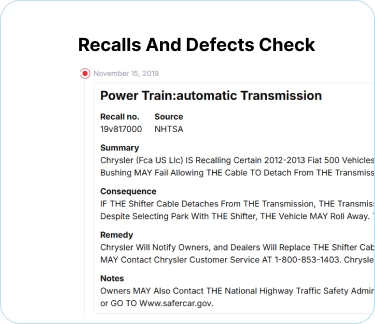
Regarding recalls, a thorough search of the NHTSA database for the 2003 BMW R1200C specifically does not reveal widespread, major safety recalls unique to this model year. However, older BMW motorcycles can be subject to broader recalls affecting multiple models for components like braking systems or minor electrical faults. Any potential buyer should always check the VIN against recall databases. Overall, while the R1200C's boxer engine is renowned for its durability, these specific component failures can make long-term ownership more costly if not addressed proactively.
One of the most significant and expensive issues is the potential for ABS module failure. This integrated ABS system, common across many BMW motorcycles of this era, can malfunction, leading to warning lights, loss of ABS function, and in some cases, even compromised braking. Repair or replacement of the module is notoriously costly, often running into thousands of dollars, making it a critical pre-purchase inspection point for any potential buyer of a 2003 R1200C.
Another area of concern is the final drive. While not as prone to failure as on some other BMW models, leaks or bearing wear in the final drive unit can occur over time. Regular inspection and proper lubrication are essential to mitigate these issues.
Fuel system problems are also reported, particularly regarding the fuel strip sender unit, which can fail and cause inaccurate fuel gauge readings. Less commonly, the fuel pump itself might experience issues.
Aging electrical systems can lead to electrical gremlins, such as intermittent switch failures, wiring harness issues, or sensor malfunctions. These often manifest as dashboard warning lights or minor functional disruptions.
Minor oil leaks, especially from the valve cover gaskets of the boxer engine, are common as the rubber seals age and harden. While typically not severe, they indicate a need for replacement.
Regarding recalls, a thorough search of the NHTSA database for the 2003 BMW R1200C specifically does not reveal widespread, major safety recalls unique to this model year. However, older BMW motorcycles can be subject to broader recalls affecting multiple models for components like braking systems or minor electrical faults. Any potential buyer should always check the VIN against recall databases. Overall, while the R1200C's boxer engine is renowned for its durability, these specific component failures can make long-term ownership more costly if not addressed proactively.
How long will the 2003 BMW R1200C last?
With proper maintenance, the 2003 BMW R1200C can achieve impressive longevity. Many owners report their bikes easily exceeding 70,000 to 100,000 miles, with examples running strong for 15-20 years or more. The boxer engine itself is exceptionally durable, and the shaft drive system contributes to reliability and lower maintenance compared to chain-driven bikes.
However, long-term durability is heavily influenced by owner care. Over time, certain weaknesses emerge: the expensive ABS module is a known failure point, rubber components like hoses and seals will degrade, and electrical connections can become corroded. Suspension components, particularly the shocks, will eventually require rebuilding or replacement. Cosmetic issues like chrome pitting and paint fade are also common on aging motorcycles, especially if stored outdoors.
What Technology & Safety Features are Included?
For a 2003 motorcycle, the BMW R1200C featured a relatively basic, yet functional, set of built-in technologies. Its instrumentation included traditional analog gauges for speedometer and tachometer, complemented by a small digital display providing essential information such as odometer, dual trip meters, and a clock. Standard warning lights for oil pressure, neutral, high beam, and turn signals were also present, along with a fuel gauge.
Entertainment features were minimal on the standard R1200C; it did not come with an integrated audio system. While its touring variant, the R1200CL, offered more creature comforts including an audio system, the R1200C focused purely on the riding experience without complex infotainment.
Driver-assistance features, by modern standards, were virtually non-existent. There was no traction control, ride modes, or electronic suspension adjustment. The advanced suspension design itself—the Telelever front and Paralever rear—could be considered an early form of rider aid, enhancing stability and comfort by reducing brake dive and shaft-drive reactions.
Safety features were more prominent for its time. The most significant was the optional Anti-lock Braking System (ABS). This was a pioneering safety advancement for motorcycles, helping to prevent wheel lock-up during emergency braking and significantly improving rider control on slippery surfaces. The bike also featured a robust braking system with dual front disc brakes and a single rear disc. Other safety aspects included good rider ergonomics for control and visibility, and effective headlights/taillights. Optional features often included heated grips for comfort in colder weather, an alarm system for security, and various luggage and windshield options for practicality.
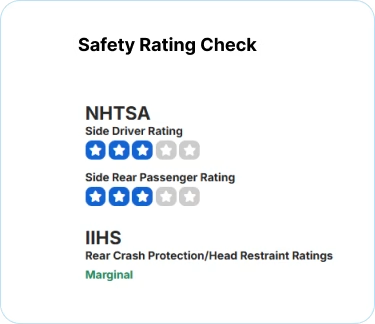
Crash-test ratings for motorcycles are not conducted in the same standardized manner as automobiles by organizations like NHTSA or IIHS. Motorcycle safety is more commonly assessed through accident statistics, rider training, and protective gear. Therefore, specific crash-test ratings for the 2003 BMW R1200C are not available.
Entertainment features were minimal on the standard R1200C; it did not come with an integrated audio system. While its touring variant, the R1200CL, offered more creature comforts including an audio system, the R1200C focused purely on the riding experience without complex infotainment.
Driver-assistance features, by modern standards, were virtually non-existent. There was no traction control, ride modes, or electronic suspension adjustment. The advanced suspension design itself—the Telelever front and Paralever rear—could be considered an early form of rider aid, enhancing stability and comfort by reducing brake dive and shaft-drive reactions.
Safety features were more prominent for its time. The most significant was the optional Anti-lock Braking System (ABS). This was a pioneering safety advancement for motorcycles, helping to prevent wheel lock-up during emergency braking and significantly improving rider control on slippery surfaces. The bike also featured a robust braking system with dual front disc brakes and a single rear disc. Other safety aspects included good rider ergonomics for control and visibility, and effective headlights/taillights. Optional features often included heated grips for comfort in colder weather, an alarm system for security, and various luggage and windshield options for practicality.
Crash-test ratings for motorcycles are not conducted in the same standardized manner as automobiles by organizations like NHTSA or IIHS. Motorcycle safety is more commonly assessed through accident statistics, rider training, and protective gear. Therefore, specific crash-test ratings for the 2003 BMW R1200C are not available.
What Colors Options are Available?
2003 BMW R1200C Prices and Market Value
When new in 2003, the BMW R1200C typically retailed for approximately $15,000 to $17,000, depending on the trim level (standard or Independent) and optional features like ABS and heated grips.
Today, current used market prices vary significantly, generally ranging from $4,000 for well-used examples to over $9,000 for low-mileage, meticulously maintained bikes with complete service records. Special editions or those with fully functional ABS and desirable accessories tend to command higher prices. Depreciation insights show that the R1200C experienced a typical steep initial depreciation from its new price. However, its unique design, association with pop culture, and status as a discontinued BMW model have helped it settle into a more stable used market, appealing to a niche of enthusiasts. Factors affecting resale value include overall cosmetic and mechanical condition, mileage, the presence and functionality of the optional ABS, and documentation of regular maintenance.
2003 BMW R1200C Cost of Ownership
Insurance costs for the 2003 BMW R1200C are generally moderate, comparable to other cruisers of its displacement, varying by rider history. Fuel economy is decent at 45-55 MPG, but it requires premium fuel, slightly increasing fuel costs. Maintenance can be on the higher side if performed by a BMW dealer; however, many common tasks are DIY-friendly for mechanically inclined owners. Repair costs can be significant, especially for specific BMW components like the ABS module or final drive, where parts are expensive. Long-term ownership is moderately costly due to potential for these specific high-priced repairs. Overall, it's not an economical bike to own, but its unique character justifies the investment for enthusiasts.
2003 BMW R1200C Fuel Efficiency
Fuel Type
Gasoline
Fuel Capacity
-
City Mileage
-
Highway Mileage
-
2003 BMW R1200C Warranty
Basic
Original warranty
0 months / No data
Estimated remaining
Expired
Powertrain
Original warranty
0 months / No data
Estimated remaining
Expired
Rust
Original warranty
0 months / No data
Estimated remaining
Expired
2003 BMW R1200C Insurance
Insurance for a 2003 BMW R1200C is moderately priced, reflecting its status as a Motorcycle with strong safety ratings and
reasonable repair costs.
How Does the 2003 BMW R1200C Compare to Other Motorcycle?
The 2003 BMW R1200C occupies a unique space, challenging traditional cruiser norms. Key rivals from its era include Harley-Davidson Softail models, Moto Guzzi California, and various large-displacement Japanese cruisers like the Honda Shadow Sabre 1100 or Kawasaki Vulcan 1500.
In terms of Performance, the R1200C's air/oil-cooled boxer engine offers smooth, tractable power and excellent handling for a cruiser, thanks to its Telelever front suspension and low center of gravity. It feels more agile than many American V-twins. Harley-Davidsons of the time offered more raw character and a distinct exhaust note but generally had less sophisticated suspension and were heavier. Japanese cruisers often provided liquid-cooled smoothness but could feel less "connected" or characterful.
Features are where the R1200C often stood out. Optional ABS was a significant safety advantage that few rivals offered in 2003. Its shaft drive was also a low-maintenance boon compared to chain or belt-driven competitors. Harley-Davidsons focused more on heritage and customization, while Japanese cruisers prioritized value and reliability over cutting-edge tech.
Reliability of the R1200C is generally good, built with BMW's renowned engineering. However, it's plagued by potential costly issues like ABS module failure and final drive concerns, which can be expensive to rectify. Japanese cruisers are often considered bulletproof for their mechanical reliability. Harleys had their own set of common issues, though often less expensive than BMW's electronic component failures. Moto Guzzi, while also European, shares some similar quirks but is generally considered robust.
Regarding Price, a used 2003 R1200C falls into a mid-to-high range for older premium cruisers ($4,000-$9,000+). Harleys from the same era often hold their value better, commanding higher prices due to brand loyalty. Japanese cruisers typically offer the best value, available for less, while Moto Guzzi often trades in a similar range to BMW.
Similar Alternatives include the Moto Guzzi California, offering a distinct European cruiser experience with a V-twin engine and shaft drive. For a more classic British take, the Triumph Bonneville America or Speedmaster could be considered. For those prioritizing sheer Reliability and Value over unique character, Japanese alternatives like a Honda Shadow 1100 or Kawasaki Vulcan 1500 are often "better" in a practical sense, though lacking the R1200C's distinctive flair.
In terms of Performance, the R1200C's air/oil-cooled boxer engine offers smooth, tractable power and excellent handling for a cruiser, thanks to its Telelever front suspension and low center of gravity. It feels more agile than many American V-twins. Harley-Davidsons of the time offered more raw character and a distinct exhaust note but generally had less sophisticated suspension and were heavier. Japanese cruisers often provided liquid-cooled smoothness but could feel less "connected" or characterful.
Features are where the R1200C often stood out. Optional ABS was a significant safety advantage that few rivals offered in 2003. Its shaft drive was also a low-maintenance boon compared to chain or belt-driven competitors. Harley-Davidsons focused more on heritage and customization, while Japanese cruisers prioritized value and reliability over cutting-edge tech.
Reliability of the R1200C is generally good, built with BMW's renowned engineering. However, it's plagued by potential costly issues like ABS module failure and final drive concerns, which can be expensive to rectify. Japanese cruisers are often considered bulletproof for their mechanical reliability. Harleys had their own set of common issues, though often less expensive than BMW's electronic component failures. Moto Guzzi, while also European, shares some similar quirks but is generally considered robust.
Regarding Price, a used 2003 R1200C falls into a mid-to-high range for older premium cruisers ($4,000-$9,000+). Harleys from the same era often hold their value better, commanding higher prices due to brand loyalty. Japanese cruisers typically offer the best value, available for less, while Moto Guzzi often trades in a similar range to BMW.
Similar Alternatives include the Moto Guzzi California, offering a distinct European cruiser experience with a V-twin engine and shaft drive. For a more classic British take, the Triumph Bonneville America or Speedmaster could be considered. For those prioritizing sheer Reliability and Value over unique character, Japanese alternatives like a Honda Shadow 1100 or Kawasaki Vulcan 1500 are often "better" in a practical sense, though lacking the R1200C's distinctive flair.
Final Verdict: Is the 2003 BMW R1200C a Good Motorcycle?
The 2003 BMW R1200C is ideal for riders seeking a truly unique cruiser experience, one that stands out from the typical American V-twin crowd. It appeals to those who appreciate distinctive European engineering, comfortable ergonomics for touring or city riding, and a bike with character and a touch of Hollywood history. This motorcycle is perfect for someone who isn't afraid of potentially higher maintenance costs or the challenge of finding specialized parts and is either mechanically adept or willing to invest in professional BMW servicing.
Is it worth buying? Absolutely, if you go into ownership with open eyes. It offers a fantastic, engaging ride and undeniable presence. It's unequivocally a used purchase; buying new is no longer an option. When considering a purchase, prioritize examples with a clear service history, and crucially, get a pre-purchase inspection by a BMW specialist to assess the condition of the ABS module and final drive. Opting for a well-maintained Independent trim can offer a slightly sportier aesthetic, but the core riding experience remains excellent across variants. It's a rewarding bike for the right enthusiast.