
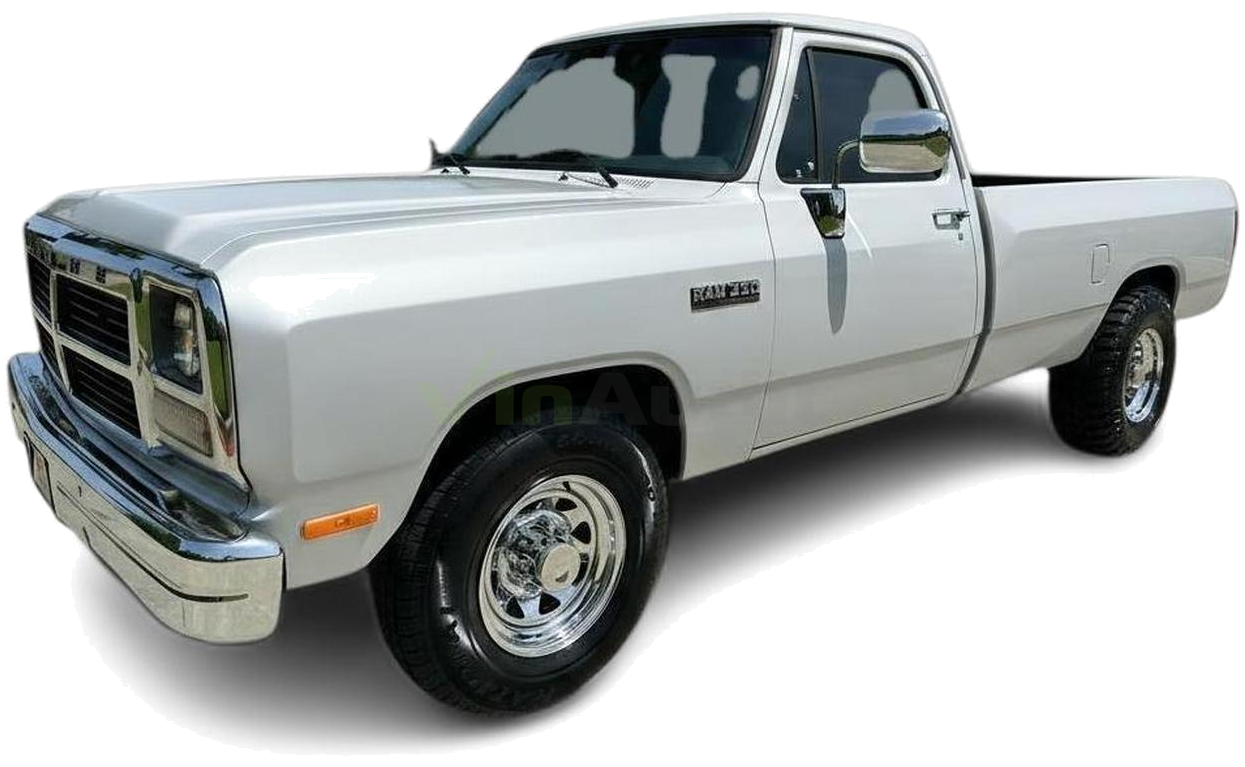
The Good
The 1992 Dodge D250 boasts exceptional towing with the Cummins diesel, offering legendary engine reliability and a rugged, classic design. It provides practical value as a durable, low-maintenance work truck, while emotionally appealing with its iconic diesel rumble and a "built-tough" character that resonates with enthusiasts and those seeking a no-nonsense, capable vehicle.
The Bad
Known weaknesses for the 1992 Dodge D250 include pervasive rust issues on body panels and frame, prone-to-cracking interior plastics, and electrical gremlins. The automatic transmission can be a weak point, especially when paired with the Cummins diesel, and suspension components often require attention due to age and heavy use.
1992 Dodge D250: Quick Overview
- Engine Options:
- 3.9L V6 (Magnum)
- 5.2L V8 (Magnum)
- 5.9L V8 (Magnum)
- 5.9L I6 Cummins Turbo Diesel (12-valve)
- Horsepower:
- 3.9L V6: Approximately 180 hp
- 5.2L V8: Approximately 230 hp
- 5.9L V8: Approximately 230 hp
- 5.9L Cummins Diesel: 160 hp
- Fuel Economy (Estimated Combined):
- Gas V8s: ~10-14 mpg
- 5.9L Cummins Diesel: ~15-20 mpg (often better on highway with manual transmission)
- 0-60 Times:
- Gas V8s: ~9-11 seconds
- 5.9L Cummins Diesel: ~10-12 seconds (emphasis on torque, not speed)
- Towing Capacity (Highly dependent on configuration, gearing, and engine):
- Gas V8s: ~5,000-8,000 lbs
- 5.9L Cummins Diesel: ~8,000-10,000+ lbs (with proper setup and equipment)
- Transmission Options:
- 5-speed manual (Getrag G360 for diesel, NV3500/NV4500 for gas)
- 4-speed automatic (TorqueFlite A518 / 46RH)
- Trim-level Features:
- S (Base): Basic vinyl bench seat, manual windows and locks, rubber floor mat, steel wheels, minimal amenities for pure work.
- SE: Adds cloth upholstery, carpeting, AM/FM radio, and typically more chrome exterior trim. A step up in comfort for general use.
- LE (Luxury Edition): Top-tier trim featuring power windows and door locks, air conditioning, cruise control, tilt steering wheel, upgraded cloth seating, full gauge instrumentation, and better sound systems. Externally, more chrome accents and often aluminum wheels were standard or optional, providing a more refined experience for the era.
1992 Dodge D250 Specifications
Vehicle Information
| Year | 1992 |
| Make | Dodge |
| Model | D250 |
| Trim | - |
| Style | Club Cab 2WD 5-Speed |
| Type | Pickup Truck |
| Category | Standard Pickup Truck |
Manufacturing Details
| Made In | Mexico |
| Manufacturing City | MEXICO CITY |
Dimensions
| Doors | 2-Door |
| Curb Weight | 4411 pounds |
| Gross Vehicle Weight Rating | 7400 pounds |
| Overall Height | 74.40 inches |
| Overall Length | 231.80 inches |
| Overall Width | 79.50 inches |
| Wheelbase Length | 149.00 inches |
| Standard Seating | - |
Engine & Performance
| Engine | 5.9L V8 |
| Engine Size | 5.9L |
| Engine Cylinders | 8 |
| Transmission | 5-Speed Manual |
| Transmission Type | Manual |
| Transmission Speeds | 5-Speed |
| Drivetrain | Rear-Wheel Drive |
Additional Features
| Anti-Brake System | Non-ABS |
| Steering Type | Recirculating |
Pricing
| Manufacturer Suggested Retail Price (MSRP) | - |
| Invoice Price | - |
| Delivery Charges | - |
Vehicle History Report
Specifications
History
Events
History Check
Check
Check
Check
Check
Listings
Recalls
Check
Analysis
What Problems Does the 1992 Dodge D250 Have?
The most pervasive issue is rust. Body panels, cab corners, rocker panels, bed supports, and frame rails are highly susceptible, especially in regions exposed to salt and moisture. This significantly impacts structural integrity and cosmetic appeal over time.
Another major concern, particularly for diesel models, is the automatic transmission (A518/46RH). It's often considered the weakest link when paired with the Cummins' substantial torque, with failures common under heavy towing or aggressive driving, necessitating rebuilds or upgrades. Manual transmissions (Getrag G360) are generally more robust but can suffer from input shaft wear.
Electrical gremlins are common as the wiring ages. Owners frequently report issues with faulty grounds, intermittent gauge operation, failing headlight switches, and power window motors. The plastic dash is notorious for cracking due to sun exposure, and other interior plastics can become brittle and break.
Front suspension components (kingpins on 2WD, ball joints/steering linkage on 4WD W250) are wear items that require periodic replacement.
For the Cummins diesel, while robust, lift pump failures and fuel heater element shorts are known issues.
Regarding recalls, like many vehicles of its era, the 1992 D-series had various campaigns, typically addressing brake system components (e.g., brake light switches, master cylinder), steering components, and fuel system concerns. Owners should consult the NHTSA database for specific recalls pertaining to their VIN.
Long-term, while the Cummins engine is incredibly durable and capable of hundreds of thousands of miles, the truck's aging ancillary systems and body structure require diligent maintenance to match the engine's lifespan. Rust management, proactive electrical repairs, and transmission care are crucial for enduring ownership.
How long will the 1992 Dodge D250 last?
Long-term durability is predominantly due to the Cummins engine's "million-mile" reputation. However, weaknesses emerge over time: rust on the body and frame becomes a primary structural and cosmetic concern. Electrical systems degrade, leading to intermittent failures. Automatic transmissions often require rebuilding or upgrading to withstand the Cummins' torque over decades. Suspension and steering components are wear items needing regular replacement. Despite these, the core powertrain's robustness ensures that, with diligent maintenance, these trucks are incredibly durable and long-lasting.
What Technology & Safety Features are Included?
Driver-assistance features were non-existent. Modern concepts like blind-spot monitoring, lane-keeping assist, or adaptive cruise control were decades away from consumer automotive application, especially for heavy-duty trucks. The closest aid was power steering and power brakes.
Safety features were also rudimentary by today's standards. The 1992 D250 did not come with airbags; these became more common in trucks later in the decade. Occupant protection relied on three-point lap/shoulder belts for outboard passengers and a lap belt for the center passenger on bench seats. The braking system featured power-assisted front discs and rear drums, with rear-wheel anti-lock brakes (RWAL) available as an option to improve stability during braking, particularly when unloaded. The vehicle's full ladder frame construction provided inherent robustness.
Official crash-test ratings (from organizations like NHTSA or IIHS) for heavy-duty pickup trucks of this vintage are generally not available or were not conducted to modern standards. The design prioritized strength for hauling and towing over passenger crumple zones, a concept that was still developing for light-duty passenger vehicles and even less so for work trucks at the time. Safety was primarily passive, relying on the sheer mass and solid build of the truck.
What Colors Options are Available?
1992 Dodge D250 Prices and Market Value
Today, current used market prices vary drastically. Gasoline D250 models typically fetch $3,000-$8,000 depending on condition. However, the Cummins diesel-equipped D250 commands significantly higher prices, ranging from $8,000 to $25,000+, with exceptional examples sometimes exceeding original MSRP.
Depreciation insights highlight a unique trend: while gas D250s depreciated like typical older trucks, the Cummins diesel models have shown remarkable depreciation resistance and even appreciation. The legendary reliability and power of the 5.9L 12-valve Cummins engine are the primary drivers of this exceptional resale value. Factors affecting resale include engine type (diesel is king), overall condition (rust-free commands a premium), mileage (less crucial for Cummins than for gas), transmission (manual diesels are often more sought after), and specific configurations like Club Cab 4WD.
1992 Dodge D250 Cost of Ownership
1992 Dodge D250 Fuel Efficiency
1992 Dodge D250 Safety Rating
NHTSA
IIHS
1992 Dodge D250 Warranty
Basic
Powertrain
Rust
1992 Dodge D250 Insurance
reasonable repair costs.
How Does the 1992 Dodge D250 Compare to Other Pickup Truck?
In terms of Performance, the D250 with the 5.9L Cummins diesel often had a significant edge in raw torque and towing power compared to its diesel rivals from the era. The Cummins provided superior low-end grunt. Dodge's gas V8s were competitive with Ford's 460 and Chevy's 454.
Features across all three brands were quite basic for work trucks. The Dodge's interior, while functional, often felt less refined than comparable Ford or Chevy models, which sometimes offered slightly more contemporary cabin designs on their higher trims, though all offered similar power amenities.
Reliability is where the D250 (diesel) truly shone. The 5.9L Cummins engine is legendary for its durability, often outlasting the rest of the truck. The Ford 7.3L IDI was also a reliable engine, but less powerful than the Cummins. The Chevy 6.5L Detroit Diesel, however, developed a reputation for reliability issues like head gasket failures and cracking blocks, placing it behind its rivals. Other aspects of the Dodge (body rust, automatic transmission) were generally on par or slightly behind competitors.
In the Used Price market today, the Cummins-powered D250/W250 commands significantly higher prices than comparable diesel Ford F-250 (IDI) or Chevy K2500 (6.5L diesel) models, reflecting its superior engine and durability. Gas versions are more evenly priced across brands.
For alternatives, if similar heavy-duty work and diesel reliability are paramount, a Ford F-250 with the 7.3L Power Stroke diesel (1994.5 and later) is a more powerful and refined diesel option. For a more budget-friendly approach to substantial capability without the premium diesel cost, older **Ford F-250s with the 460 V8 or Chevy K2500s with the 454 V8** are solid choices. For improved comfort and safety in an older diesel, the 1994-2002 "second generation" Ram trucks with the 12-valve or 24-valve Cummins are a direct and popular evolution.
Final Verdict: Is the 1992 Dodge D250 a Good Pickup Truck?
It is absolutely worth buying used, but under specific conditions. Focus on finding a well-maintained, rust-free Cummins-equipped model, as these hold exceptional value and longevity. Be prepared for potential automatic transmission work and general upkeep inherent to a 30-year-old vehicle. Gas versions are more affordable alternatives if extreme towing isn't a priority. This truck is a rewarding purchase for DIY mechanics or those with access to experienced technicians for older vehicles. It's less suited for someone expecting a trouble-free daily driver without any mechanical inclination. For the right buyer, it's a timeless workhorse that keeps on giving.

Drew B
Drew is a seasoned automotive expert and contributor to VinCheck.info. With nearly 15 years of experience as a former Porsche technician, he brings a wealth of hands-on knowledge to his writing. Born in North Carolina, a region renowned for its deep-rooted NASCAR culture, Drew developed a passion for cars early in life, often building and working on vehicles from a young age. At VINCheck, Drew leverages his extensive technical background to provide in-depth analyses of various vehicles. His articles often focus on engine performance, reliability, and maintenance insights, offering readers practical information grounded in real-world experience. Some of his notable contributions include reviews on the Mazda CX-5's longevity and detailed examinations of engine options for models like the 2011 Toyota Camry and Tacoma