by VIN, Year, Make, Model by License Plate

1990 MCI 102C3 Intercity Overview, Reviews, Ratings & Specs

Rating: 0.00
Based on 0 Owner Reviews
Simon A | September 30, 2025
The 1990 MCI 102C3 Intercity represents a stalwart of American long-distance travel, a product of Motor Coach Industries (MCI). This high-floor intercity coach was a dominant force, known for its rugged, utilitarian body style. While not having "trims" in the automotive sense, configurations varied for passenger seating and luggage. Originally priced well into the six figures, its enduring popularity stems from its exceptional durability and robust construction, making it a favorite for both commercial operators and later, RV conversions. It's a testament to reliable, heavy-duty engineering.
The Good

The 1990 MCI 102C3 boasts legendary reliability and exceptional long-term durability, a major practical advantage for operators. Its robust build, coupled with an air-ride suspension, provided a remarkably comfortable and stable ride for passengers. The classic, functional design evokes a nostalgic road-trip feeling. Economically, its longevity offered great value, making it a sound investment for commercial fleets and appealing emotionally to those seeking a powerful, dependable platform for unique projects like RV conversions.

The Bad

Potential weaknesses for the 1990 MCI 102C3 include its age, leading to parts obsolescence and the need for specialized heavy-duty maintenance. Fuel economy is not its strong suit by modern standards, and emissions can be a concern depending on local regulations. Rust in the undercarriage and frame, especially in salt-belt regions, requires careful inspection. The complexity of its air systems and large diesel powertrain can be intimidating for novice owners.

1990 MCI 102C3 Intercity: Quick Overview

  • Engine Options: The 1990 MCI 102C3 Intercity was predominantly powered by heavy-duty diesel engines designed for continuous highway operation. The most common powerplant was the Detroit Diesel 8V92TA, a legendary two-stroke, turbocharged, and aftercooled V8 diesel engine. Some units might also have been equipped with Cummins L10 or M11 engines, though less frequently for this specific model year and series.
  • Horsepower: For the Detroit Diesel 8V92TA, horsepower ratings typically ranged from approximately 300 to 450 horsepower, depending on the specific tuning and configuration for the operator's needs. This provided ample power for maintaining highway speeds even with a full load of passengers and luggage.
  • Fuel Economy: Given its substantial size and weight, the fuel economy of the 102C3 was utilitarian. Owners could expect mileage in the range of 4 to 7 miles per U.S. gallon, heavily influenced by load, terrain, and the driver's habits.
  • 0-60 Times: This metric is largely irrelevant for an intercity coach. Buses of this type are engineered for sustained highway cruising and torque, not rapid acceleration. A 0-60 mph time, if measured, would likely exceed 30 seconds.
  • Towing Capacity: The 102C3 was not designed with conventional towing capacity in mind, unlike a truck. While its powerful engine and heavy chassis could technically pull a significant load, there are no official "towing capacity" ratings for typical applications.
  • Features (not "trims"): Standard features included a high-capacity climate control system, full air-ride suspension for passenger comfort, and robust air brakes. Seating capacity typically ranged from 47 to 57 high-back reclining passenger seats. Large under-floor luggage bays provided extensive storage, complemented by overhead parcel racks inside. Most intercity models featured an on-board lavatory and a driver's area with an air-ride seat and basic, durable instrumentation. Optional equipment often included multi-monitor video entertainment systems with VCRs (common for the era), a public address system, and sometimes mini-galleys for long-haul charter services. Its construction featured aircraft-grade aluminum skin over a rigid steel frame.

1990 MCI 102C3 Intercity Specifications

Vehicle Information
Year 1990
Make MCI
Model 102C3 Intercity
Trim -
Style -
Type Bus
Category Bus
Manufacturing Details
Made In United States
Manufacturing City PEMBINA
Dimensions
Doors -
Curb Weight -
Gross Vehicle Weight Rating 33001 pounds
Overall Height -
Overall Length -
Overall Width -
Wheelbase Length -
Standard Seating -
Engine & Performance
Engine 12.1L V8
Engine Size 12.1L
Engine Cylinders 8
Transmission -
Transmission Type -
Transmission Speeds -
Drivetrain -
Additional Features
Anti-Brake System -
Steering Type -
Pricing
Manufacturer Suggested Retail Price (MSRP) -
Invoice Price -
Delivery Charges -

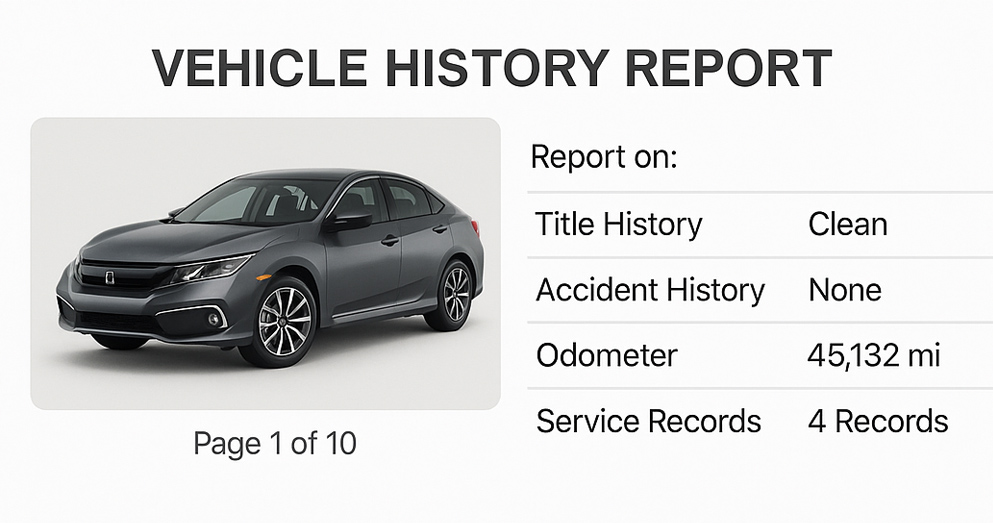
Vehicle History Report

Vehicle
Specifications
Ownership
History
All History
Events
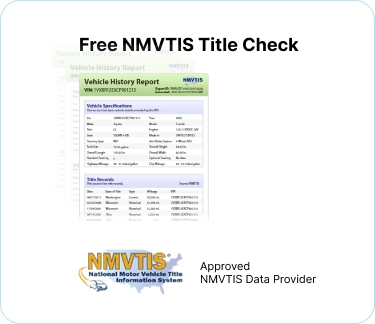
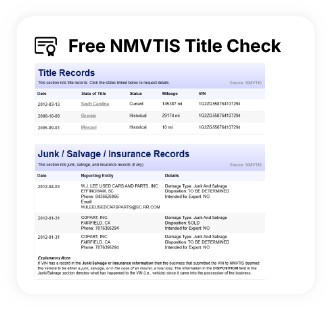
NMVTIS Title
History Check
Salvage/Rebuilt
Check
Accident
Check
Theft
Check
Open Lien
Check
Past Sale
Listings
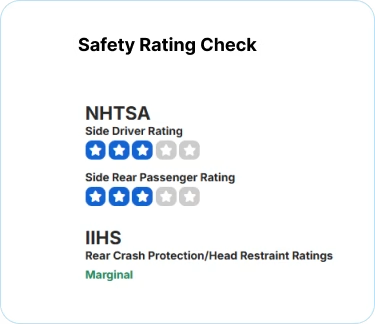
Safety
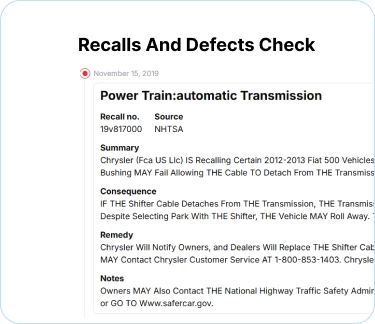
Recalls
Odometer
Check
Market Price
Analysis

What Problems Does the 1990 MCI 102C3 Intercity Have?

The 1990 MCI 102C3 Intercity, despite its robust build, is susceptible to several age-related and heavy-duty use problems that prospective owners should be aware of. A primary concern revolves around its extensive air system; leaks in air lines, valves, and suspension air bags are very common, impacting braking efficiency and ride height. Engine overheating, particularly with the powerful Detroit Diesel 8V92TA, is another frequently reported issue, often stemming from neglected cooling system maintenance which can lead to catastrophic engine failure if not addressed promptly. The older Allison automatic transmissions, like the HT740D, are incredibly durable but will eventually require costly rebuilds after hundreds of thousands of miles, often exhibiting delayed shifts or fluid leaks.
Electrical "gremlins" are almost a given with a vehicle of this age, manifesting as intermittent issues with lights, gauges, HVAC controls, or various accessories due to degraded wiring, corroded connections, and failing relays. Rust is a significant long-term reliability concern, particularly affecting the steel chassis, frame members, and baggage bay floors, especially in vehicles that operated in regions with road salt. The large and complex HVAC system itself is prone to failures of compressors, condensers, evaporators, and fan motors. Suspension components, such as bushings and kingpins, will wear over time, necessitating replacement to maintain safe handling. As for recalls, specific campaigns for individual model years of heavy-duty coaches like the 102C3 are not as commonly publicized as passenger cars; however, potential buyers should check the NHTSA database using the vehicle's VIN for any open safety recalls on specific components. Long-term, parts availability for MCI-specific body or trim pieces can be challenging, though powertrain components generally have better support. Overall ownership demands significant financial commitment for heavy-duty maintenance and repairs.

How long will the 1990 MCI 102C3 Intercity last?

The 1990 MCI 102C3 Intercity was engineered for extreme longevity, routinely serving commercial fleets for 15-20 years or more. It's not uncommon for these coaches to accumulate well over 1,000,000 miles in their original service life, with some even reaching 2 million miles before retirement. Their robust Detroit Diesel engines are famously rebuildable, extending their operational lifespan significantly. This long-term durability is a core strength, reflecting heavy-duty construction meant for constant use.
However, weaknesses emerge with extreme age. Rubber components like air springs, hoses, and suspension bushings inevitably degrade, requiring replacement. Electrical wiring can become brittle, leading to intermittent failures. While the steel frame is incredibly strong, rust can become a serious issue over decades, especially in critical structural areas if neglected. Interior components will show significant wear. Overall, their core mechanical systems are built to last, but everything else requires continuous attention and eventual overhaul to maintain peak condition.

What Technology & Safety Features are Included?

The 1990 MCI 102C3 Intercity reflects the technology prevalent in commercial coaches of its era, meaning built-in tech and driver-assistance features are minimal by contemporary standards. The driver's cockpit was characterized by a straightforward layout with analog gauges for critical functions, simple toggle switches, and robust air-operated controls. Standard "tech" included a powerful climate control system providing heating and air conditioning for both the cabin and driver, power steering, and a full air-ride suspension system ensuring a smooth ride. While full ABS (Anti-lock Braking System) was becoming available or optional, it wasn't universally standard on all coaches of this vintage, so its presence depends on the specific unit.
For entertainment, a public address (PA) system was standard for driver announcements. Many coaches were optionally equipped with overhead CRT or early LCD monitors paired with a VCR player, allowing passengers to watch movies on long journeys, often with individual audio outputs for headphones. A basic AM/FM radio was typically provided for the driver.
Driver-assistance features were non-existent in the modern sense; there was no adaptive cruise control, lane-keeping assist, or blind-spot monitoring. Driver assistance was primarily limited to powerful air brakes and large, effective mirrors for visibility.
Safety features focused on robust passive protection. The coach was designed with a strong, integrated steel frame and aluminum skin, meeting federal standards for structural integrity and rollover protection. Essential safety equipment included a redundant air brake system, multiple emergency exits (windows and roof hatches), and often an engine bay fire suppression system. A driver's seatbelt was standard, but passenger seatbelts were less common in intercity configurations of this period, often being an optional extra or not mandated for this vehicle class. Crash-test ratings, as understood for passenger vehicles (e.g., NHTSA star ratings), are not applicable or publicly available for commercial buses like the 102C3; they adhere to a different set of stringent Federal Motor Vehicle Safety Standards (FMVSS) concerning commercial vehicle safety.

What Colors Options are Available?

We’re working on this section!
In the meantime, feel free to explore the other sections for more content.

1990 MCI 102C3 Intercity Prices and Market Value

When new in 1990, an MCI 102C3 Intercity coach represented a substantial investment, with prices typically ranging from $250,000 to $350,000 USD, depending on configuration and optional features. These were commercial assets, not consumer vehicles.

Today, the used market prices vary significantly. An operational, non-converted 102C3 can typically be found for $10,000 to $30,000. Exceptionally well-maintained examples with documented major overhauls might command up to $40,000-$50,000. Converted RVs, however, have a much wider price spectrum, from $20,000 for a basic shell to over $100,000 for high-quality, professional conversions.
Depreciation for commercial coaches like the 102C3 is steep initially but stabilizes after about 10-15 years, reaching a "floor" where its value is primarily driven by its mechanical health and conversion potential. For the 1990 model, the rapid depreciation phase is long over. Resale value is heavily influenced by engine and transmission condition (especially recent rebuilds), overall structural integrity, absence of significant rust, and the condition of tires. A strong maintenance history greatly enhances its value, particularly for the robust "bus conversion" market.

1990 MCI 102C3 Intercity Cost of Ownership

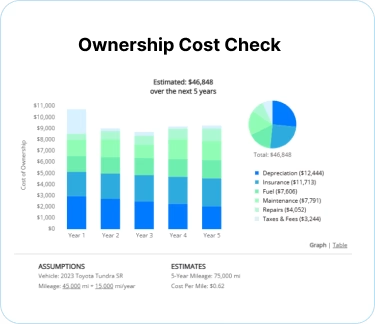
Owning a 1990 MCI 102C3 Intercity is unequivocally a costly endeavor. Insurance can be expensive, especially if operated commercially; even as an RV, specialized coverage is required. Fuel costs are substantial, with its 4-7 MPG rating meaning frequent and large fill-ups. Maintenance is heavy-duty and thus expensive; parts are specialized and labor rates for experienced diesel mechanics are high. Major repairs, like an engine or transmission overhaul, can easily run into tens of thousands of dollars. Long-term ownership demands a significant financial commitment for routine upkeep and inevitable repairs. This vehicle is not economical for personal ownership; its original value was in its capacity to generate commercial revenue.

1990 MCI 102C3 Intercity Fuel Efficiency

Fuel Type Diesel
Fuel Capacity -
City Mileage -
Highway Mileage -

1990 MCI 102C3 Intercity Warranty

Basic
Original warranty 0 months / No data
Estimated remaining Expired
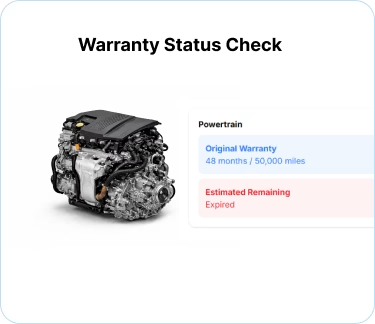
Powertrain
Original warranty 0 months / No data
Estimated remaining Expired
Rust
Original warranty 0 months / No data
Estimated remaining Expired

1990 MCI 102C3 Intercity Insurance

Insurance for a 1990 MCI 102C3 Intercity is moderately priced, reflecting its status as a Bus with strong safety ratings and
reasonable repair costs.

How Does the 1990 MCI 102C3 Intercity Compare to Other Bus?

When stacking the 1990 MCI 102C3 Intercity against its key rivals from the era, such as the Eagle Model 15 and the Prevost LeMirage, distinct characteristics emerge. In terms of performance, the MCI 102C3, often equipped with the powerful Detroit Diesel 8V92TA, was a true workhorse, renowned for its strong highway cruising ability and durability. The Eagle Model 15 offered comparable performance, also often featuring Detroit Diesel or Cummins engines. Prevost models, particularly the LeMirage, often had a reputation for a smoother, quieter ride, sometimes attributed to their more sophisticated chassis design and engine mounting.
Regarding features, the MCI was known for its utilitarian yet robust passenger amenities and vast luggage capacity. Eagle coaches were similarly equipped. Prevost, however, often provided a more premium passenger experience with better sound insulation, more refined interior finishes, and sometimes more advanced (for the time) climate control and entertainment options, making them popular for high-end charter services.
Reliability is a strong suit for all three, as they were built for demanding commercial service. The MCI is legendary for its "iron horse" durability and rebuildable components. Eagle coaches share a similar reputation for longevity. Prevost is widely praised for its exceptional build quality and long operational life, often considered a top-tier choice for reliability.
In terms of price on the used market, the MCI 102C3 often represents a strong value entry point for an intercity coach, typically being slightly more affordable than its direct competitors for a functional unit. Eagle Model 15s are often comparably priced, while Prevost LeMirage and later H-series coaches generally command higher prices due to their premium perception and popularity in the luxury conversion market.
For someone seeking a similar robust build and excellent conversion platform to the MCI, the Eagle Model 15 is a very strong alternative. If a more refined chassis, quieter ride, and a potentially higher-end starting point for a conversion are desired, a Prevost LeMirage (or H3-40/45) would be a superior, albeit pricier, alternative. For those less focused on the classic intercity coach aesthetic and more on budget or simpler maintenance, a school bus conversion (skoolie) offers a more accessible and economical alternative.

Final Verdict: Is the 1990 MCI 102C3 Intercity a Good Bus?

The 1990 MCI 102C3 Intercity is ideal for a specific type of buyer: primarily the ambitious DIY RV converter, a small charter operation seeking an incredibly durable, albeit older, coach, or a dedicated enthusiast of heavy-duty machinery. It's a testament to long-term reliability for those who can maintain it.
Is it worth buying? Absolutely, but only under very specific conditions. Firstly, it must be purchased used, as new models are long gone. Crucially, buyers should seek examples with verifiable maintenance records, particularly for engine and transmission overhauls, and thoroughly inspect for rust. It is not a "turn-key" solution but a significant project. You must possess considerable mechanical aptitude, or have access to affordable, reliable heavy-diesel mechanics, and a substantial budget for ongoing fuel, maintenance, and inevitable repairs. For those who appreciate its robust engineering and are prepared for the commitment, it offers a solid, iconic platform for a custom RV or continued commercial service. It is not suitable for someone seeking low-cost, low-maintenance transportation.

1990 MCI 102C3 Intercity Owner Reviews

0.00
Consumer Rating, Based on 0 Consumer Reviews
Overall rating
Cancel
Thank You for Your Review!

We truly appreciate the time and effort you took to share your experience with us.

Uh oh!

Something went wrong, please try again later.

Author Image
Simon A

Simon is a contributor to VinCheck, where he provides articles and reviews on various automotive topics. His work focuses on delivering accurate and up-to-date information about used cars, helping readers make informed decisions.