The 2020 Kawasaki Ninja 400 Non-ABS is a popular entry-level sportbike, a successor to the well-regarded Ninja 300. Its body style is aggressive and full-faired, mimicking its larger Ninja siblings. This model was available across multiple model years, with the Non-ABS being a standard trim. When new, pricing generally ranged from around $5,000 to $5,500. It stands out due to its accessible performance, lightweight handling, and sporty aesthetics, making it a favorite for new riders and urban commuters.
The Good
The 2020 Ninja 400 Non-ABS offers a thrilling yet manageable performance for new riders, backed by legendary Kawasaki reliability. Its sporty design evokes a sense of freedom, while its accessible ergonomics and impressive fuel efficiency appeal to practical daily use and budget-conscious owners.
The Bad
Potential buyers should be aware that the Non-ABS version lacks advanced braking safety. While generally reliable, some owners have reported minor electrical gremlins or clutch wear over high mileage. Its relatively modest power may also be a limitation for experienced riders seeking more exhilaration.
2020 Kawasaki Ninja 400 Non-ABS: Quick Overview
- Engine: 399cc liquid-cooled, parallel-twin
- Horsepower: Approximately 45 hp at 10,000 rpm
- Torque: Approximately 27 lb-ft at 8,000 rpm
- Fuel Economy: Estimated at 55-60 MPG (city/highway combined)
- 0-60 mph: Approximately 4.5 - 5.0 seconds
- Towing Capacity: Not applicable (motorcycle)
- Transmission: 6-speed constant mesh
- Brakes: Front: 300mm petal disc with dual-piston caliper. Rear: 220mm petal disc with dual-piston caliper. (Non-ABS model lacks ABS system).
- Suspension: Front: 41mm telescopic fork. Rear: Bottom-link Uni-Trak with adjustable preload.
- Tires: Front: 110/70-17. Rear: 150/70-17.
- Wheelbase: 53.9 inches
- Seat Height: 30.9 inches
- Fuel Capacity: 3.7 gallons
- Curb Weight: Approximately 361.6 lbs
- Lighting: LED headlights and taillight
- Instrumentation: Digital LCD instrument cluster displaying speedometer, tachometer, odometer, trip meters, fuel gauge, clock, and gear position indicator.
- Clutch: Assist & Slipper clutch
- Frame: High-tensile steel trellis frame
- Trim-Level Features (Non-ABS): This trim is the base model, focusing on essential sportbike performance and handling without the added safety of ABS. It features the same engine, chassis, and styling as the ABS version but at a slightly lower price point.
2020 Kawasaki Ninja 400 Non-ABS Specifications
Vehicle Information
| Year | 2020 |
| Make | Kawasaki |
| Model | Ninja 400 Non-ABS |
| Trim | - |
| Style | - |
| Type | Motorcycle |
| Category | Motorcycle |
Manufacturing Details
| Made In | Japan |
| Manufacturing City | AMPHUR PLUAK DAENG |
Dimensions
| Doors | - |
| Curb Weight | - |
| Gross Vehicle Weight Rating | - |
| Overall Height | - |
| Overall Length | - |
| Overall Width | - |
| Wheelbase Length | - |
| Standard Seating | - |
Engine & Performance
| Engine | 399CC |
| Engine Size | 399L |
| Engine Cylinders | 2 |
| Transmission | - |
| Transmission Type | - |
| Transmission Speeds | - |
| Drivetrain | - |
Additional Features
| Anti-Brake System | - |
| Steering Type | - |
Pricing
| Manufacturer Suggested Retail Price (MSRP) | - |
| Invoice Price | - |
| Delivery Charges | - |
Vehicle History Report
Vehicle
Specifications
Specifications
Ownership
History
History
All History
Events
Events
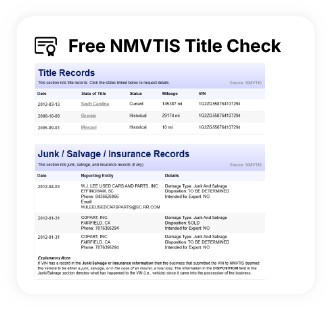
NMVTIS Title
History Check
History Check
Salvage/Rebuilt
Check
Check
Accident
Check
Check
Theft
Check
Check
Open Lien
Check
Check
Past Sale
Listings
Listings
Safety
Recalls
Recalls
Odometer
Check
Check
Market Price
Analysis
Analysis
What Problems Does the 2020 Kawasaki Ninja 400 Non-ABS Have?
The 2020 Kawasaki Ninja 400, including the Non-ABS variant, is generally regarded as a highly reliable motorcycle, especially for its class. However, like any vehicle, some owners have reported specific issues. One recurring theme, though not exclusive to the 2020 model year, involves occasional minor electrical gremlins. These can manifest as intermittent dashboard light flickers or issues with accessories if installed. Another point some riders have noted, particularly with higher mileage bikes or those used aggressively, is premature clutch wear. The slipper clutch is robust, but frequent aggressive downshifts or prolonged clutch slipping can accelerate wear on the friction plates.

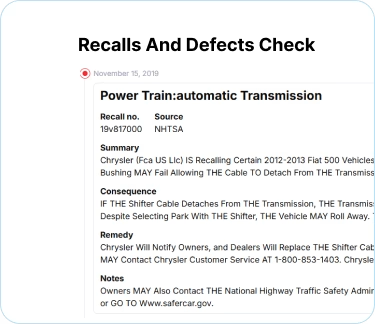
While there haven't been widespread, major recalls specifically targeting the 2020 Ninja 400 Non-ABS for catastrophic failures, it's always prudent for owners to check for any outstanding recalls through Kawasaki's official channels. Some owners have also expressed desires for more robust suspension components, especially if planning for track use or carrying a passenger on rougher roads, though this is more of a performance enhancement desire than a reliability concern. For long-term reliability, consistent and proper maintenance as outlined in the owner's manual is paramount. This includes regular oil changes, chain adjustments and lubrication, brake fluid flushes, and valve checks at the recommended intervals. Addressing small issues promptly, such as minor coolant leaks or unusual noises, can prevent them from escalating into more significant problems. Overall, the Ninja 400's mechanical simplicity and Kawasaki's build quality contribute to its strong reputation for durability when maintained correctly.
How long will the 2020 Kawasaki Ninja 400 Non-ABS last?
Based on owner data and typical riding habits, the 2020 Kawasaki Ninja 400 Non-ABS can comfortably see 50,000 to 70,000 miles or more with diligent maintenance. Many owners use it as a commuter or for recreational riding, accumulating around 5,000-10,000 miles annually. The parallel-twin engine is known for its robustness and longevity when oil changes and valve adjustments are performed on schedule. The frame and chassis are also very durable. The primary areas that might require attention over time are wear items like the clutch, brake pads, chain, and sprockets, which are expected with any motorcycle. Suspension components may also eventually require servicing or replacement, especially if ridden hard. Overall, its long-term durability is excellent for its class, provided it receives regular care and attention.
What Technology & Safety Features are Included?
The 2020 Kawasaki Ninja 400 Non-ABS focuses on core sportbike functionality rather than extensive technological features, which is typical for its entry-level segment.
Built-in Tech: The primary tech feature is its comprehensive digital LCD instrument cluster. This display offers clear readouts for the speedometer, tachometer, odometer, trip meters, fuel gauge, clock, and gear position indicator. While not a touchscreen or equipped with connectivity features like Bluetooth, it provides all the essential information a rider needs in an easy-to-read format. The motorcycle also features LED headlights and taillights, which offer improved brightness and energy efficiency compared to traditional incandescent bulbs, enhancing visibility.
Entertainment: There is no built-in entertainment system on the Ninja 400 Non-ABS, such as radios or audio connectivity. Its purpose is focused on the riding experience itself. Riders looking for music integration would typically opt for aftermarket solutions.
Driver-Assistance Features: As a Non-ABS model, the 2020 Ninja 400 lacks advanced driver-assistance systems. The core safety technology is its responsive braking system and the assist & slipper clutch, which helps prevent rear-wheel lock-up during aggressive downshifts. The absence of ABS is a key differentiator for this specific trim.
Safety Features: Beyond the standard braking and clutch systems, safety is primarily derived from the bike's stable chassis, predictable handling, and rider aids like the assist & slipper clutch. LED lighting contributes to overall safety through better visibility.
Optional Features: Kawasaki often offers accessories such as a taller windscreen for improved wind protection, different seat options for comfort, frame sliders for protection in case of a fall, and luggage solutions. The ABS variant, of course, is an optional feature over the Non-ABS model, providing an added layer of braking safety.
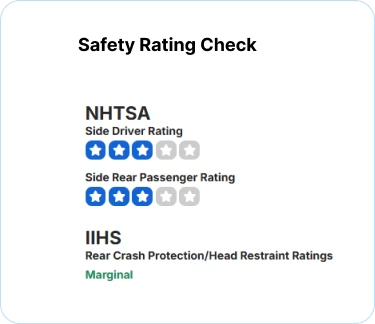
Crash-Test Ratings: Motorcycles typically do not undergo standardized crash-testing in the same way as cars. Safety ratings are more often based on design, engineering, and the effectiveness of safety features like ABS (which this model omits). Industry bodies do not publish crash-test ratings for individual motorcycle models.
Built-in Tech: The primary tech feature is its comprehensive digital LCD instrument cluster. This display offers clear readouts for the speedometer, tachometer, odometer, trip meters, fuel gauge, clock, and gear position indicator. While not a touchscreen or equipped with connectivity features like Bluetooth, it provides all the essential information a rider needs in an easy-to-read format. The motorcycle also features LED headlights and taillights, which offer improved brightness and energy efficiency compared to traditional incandescent bulbs, enhancing visibility.
Entertainment: There is no built-in entertainment system on the Ninja 400 Non-ABS, such as radios or audio connectivity. Its purpose is focused on the riding experience itself. Riders looking for music integration would typically opt for aftermarket solutions.
Driver-Assistance Features: As a Non-ABS model, the 2020 Ninja 400 lacks advanced driver-assistance systems. The core safety technology is its responsive braking system and the assist & slipper clutch, which helps prevent rear-wheel lock-up during aggressive downshifts. The absence of ABS is a key differentiator for this specific trim.
Safety Features: Beyond the standard braking and clutch systems, safety is primarily derived from the bike's stable chassis, predictable handling, and rider aids like the assist & slipper clutch. LED lighting contributes to overall safety through better visibility.
Optional Features: Kawasaki often offers accessories such as a taller windscreen for improved wind protection, different seat options for comfort, frame sliders for protection in case of a fall, and luggage solutions. The ABS variant, of course, is an optional feature over the Non-ABS model, providing an added layer of braking safety.
Crash-Test Ratings: Motorcycles typically do not undergo standardized crash-testing in the same way as cars. Safety ratings are more often based on design, engineering, and the effectiveness of safety features like ABS (which this model omits). Industry bodies do not publish crash-test ratings for individual motorcycle models.
What Colors Options are Available?
2020 Kawasaki Ninja 400 Non-ABS Prices and Market Value
When new, the 2020 Kawasaki Ninja 400 Non-ABS had an MSRP typically ranging from approximately $5,000 to $5,500 USD, depending on color options and dealer fees. Today, the used market sees these bikes holding their value relatively well, with prices generally falling between $3,500 and $4,500, influenced by mileage, condition, and any aftermarket modifications. The Ninja 400 experiences moderate depreciation, which is typical for sportbikes in this segment. Factors significantly affecting resale value include low mileage, excellent maintenance history (with records), absence of cosmetic damage or accident history, and desirable modifications like tasteful aftermarket exhausts or levers. Conversely, high mileage, signs of neglect, or poor-quality modifications can substantially reduce its market appeal and value. The Non-ABS model typically commands a slightly lower price than its ABS counterpart on the used market.
2020 Kawasaki Ninja 400 Non-ABS Cost of Ownership
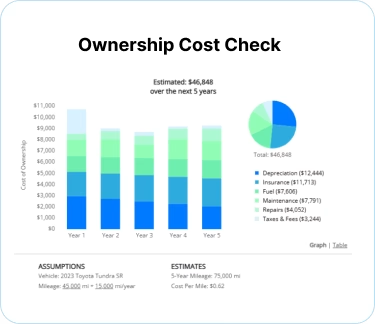
The 2020 Kawasaki Ninja 400 Non-ABS is an exceptionally economical motorcycle to own. Insurance costs are typically low, especially for younger or less experienced riders, due to its modest engine size and power. Fuel costs are minimal, with its impressive 55-60 MPG meaning frequent fill-ups are not necessary. Routine maintenance, including oil changes and chain lubrication, is inexpensive. Repair costs are also generally low due to the bike's reliability and the widespread availability of affordable parts. Even significant repairs are often manageable on the wallet compared to larger, more complex motorcycles. Overall, it is a very budget-friendly machine to own and operate.
2020 Kawasaki Ninja 400 Non-ABS Fuel Efficiency
Fuel Type
Gasoline
Fuel Capacity
-
City Mileage
-
Highway Mileage
-
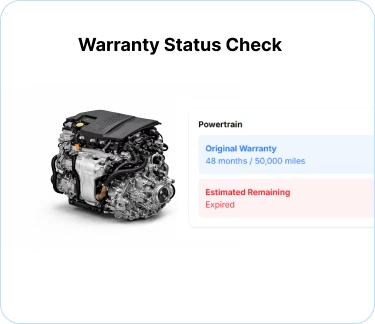
2020 Kawasaki Ninja 400 Non-ABS Warranty
Basic
Original warranty
0 months / No data
Estimated remaining
Expired
Powertrain
Original warranty
0 months / No data
Estimated remaining
Expired
Rust
Original warranty
0 months / No data
Estimated remaining
Expired
2020 Kawasaki Ninja 400 Non-ABS Insurance
Insurance for a 2020 Kawasaki Ninja 400 Non-ABS is moderately priced, reflecting its status as a Motorcycle with strong safety ratings and
reasonable repair costs.
How Does the 2020 Kawasaki Ninja 400 Non-ABS Compare to Other Motorcycle?
The 2020 Kawasaki Ninja 400 Non-ABS competes directly with other entry-level sportbikes and performance-oriented naked bikes. Its closest rivals include the Yamaha YZF-R3, KTM RC 390, and Honda CBR500R (though the CBR500R is a step up in displacement).
Performance: In terms of raw power and acceleration, the Ninja 400 sits comfortably in the middle. The Yamaha R3 often has a slight edge in horsepower, while the KTM RC 390 boasts more aggressive performance with its single-cylinder engine and often higher-spec components, though it can be less refined. The Honda CBR500R offers significantly more power due to its larger engine. The Ninja 400's parallel-twin engine provides a smooth power delivery that's more approachable for beginners.
Features: The Ninja 400's feature set is comparable to the R3 and CBR500R, emphasizing essential riding components. All offer digital instrument clusters, LED lighting (on most), and sporty ergonomics. The KTM RC 390 typically leads in features, often including a TFT display, more adjustable suspension, and sometimes ride modes. The Non-ABS Ninja 400 omits a key safety feature present on most ABS-equipped competitors.
Reliability: Kawasaki has a strong reputation for reliability, and the Ninja 400 is no exception, generally matching or exceeding its competitors in this regard. Yamaha's R3 is also known for its bulletproof reliability. KTMs, while increasingly reliable, have historically had a slightly higher chance of encountering minor issues compared to Japanese counterparts, though this gap is closing.
Price: The Ninja 400 Non-ABS is one of the most competitively priced options, often being the most affordable or on par with the Yamaha R3. The KTM RC 390 is usually priced higher, reflecting its more premium components. The Honda CBR500R is in a higher price bracket due to its larger engine.
Recommendations:
* Similar Alternative: Yamaha YZF-R3. Offers comparable performance, reliability, and price, with a slightly different engine character and design.
* Slightly More Performance/Features (Higher Price): KTM RC 390. If budget allows and you want more aggressive performance and adjustable suspension.
* More Power (Higher Price/Experience Needed): Honda CBR500R. For riders who have outgrown the 300-400cc class and need more highway capability.
Performance: In terms of raw power and acceleration, the Ninja 400 sits comfortably in the middle. The Yamaha R3 often has a slight edge in horsepower, while the KTM RC 390 boasts more aggressive performance with its single-cylinder engine and often higher-spec components, though it can be less refined. The Honda CBR500R offers significantly more power due to its larger engine. The Ninja 400's parallel-twin engine provides a smooth power delivery that's more approachable for beginners.
Features: The Ninja 400's feature set is comparable to the R3 and CBR500R, emphasizing essential riding components. All offer digital instrument clusters, LED lighting (on most), and sporty ergonomics. The KTM RC 390 typically leads in features, often including a TFT display, more adjustable suspension, and sometimes ride modes. The Non-ABS Ninja 400 omits a key safety feature present on most ABS-equipped competitors.
Reliability: Kawasaki has a strong reputation for reliability, and the Ninja 400 is no exception, generally matching or exceeding its competitors in this regard. Yamaha's R3 is also known for its bulletproof reliability. KTMs, while increasingly reliable, have historically had a slightly higher chance of encountering minor issues compared to Japanese counterparts, though this gap is closing.
Price: The Ninja 400 Non-ABS is one of the most competitively priced options, often being the most affordable or on par with the Yamaha R3. The KTM RC 390 is usually priced higher, reflecting its more premium components. The Honda CBR500R is in a higher price bracket due to its larger engine.
Recommendations:
* Similar Alternative: Yamaha YZF-R3. Offers comparable performance, reliability, and price, with a slightly different engine character and design.
* Slightly More Performance/Features (Higher Price): KTM RC 390. If budget allows and you want more aggressive performance and adjustable suspension.
* More Power (Higher Price/Experience Needed): Honda CBR500R. For riders who have outgrown the 300-400cc class and need more highway capability.
Final Verdict: Is the 2020 Kawasaki Ninja 400 Non-ABS a Good Motorcycle?
The 2020 Kawasaki Ninja 400 Non-ABS is an excellent choice for new riders seeking an unintimidating yet engaging sportbike experience. Its lightweight, forgiving nature, and approachable power make it perfect for learning essential riding skills. It's also a fantastic option for urban commuters who desire a stylish, fuel-efficient, and nimble machine. For riders on a tighter budget, the Non-ABS version offers significant value, though it sacrifices a crucial safety net.
It is absolutely worth buying, particularly on the used market, where it represents superb value for money. While buying new is always an option, acquiring a well-maintained used 2020 Ninja 400 Non-ABS can save considerable money. For those prioritizing safety above all else, the ABS trim is a worthwhile upgrade. However, for budget-conscious beginners focused on mastering the fundamentals, the Non-ABS model is a highly recommended and capable entry point into motorcycling.