2004 Honda VTX 1300 Overview, Reviews, Ratings & Specs
The 2004 Honda VTX 1300 is a popular cruiser motorcycle known for its V-twin engine and classic styling. Introduced in 2003, it remained in production through the 2009 model year. Key trims included the VTX1300S (Spoke wheels), VTX1300C (Custom), and VTX1300R (Retro). It was highly regarded for offering substantial V-twin performance and Honda's renowned reliability at an accessible price point, making it a favorite among riders seeking a big-bore cruiser experience without the premium cost.
The Good
The 2004 VTX 1300 impresses with its torquey V-twin power, smooth ride, and legendary Honda reliability. Its classic cruiser aesthetics appeal to emotion, while its comfortable ergonomics and fuel efficiency offer practical benefits for everyday riding and longer journeys.
The Bad
Potential owners should be aware of occasional issues with the fuel pump, especially in older units. Some riders note that the stock suspension can be a bit firm for very rough roads, and the factory seat might lack long-ride comfort for some individuals.
2004 Honda VTX 1300: Quick Overview
- Engine: Liquid-cooled, 52-degree V-twin
- Displacement: 1312 cc
- Bore x Stroke: 89.5 mm x 104.3 mm
- Compression Ratio: 9.2:1
- Fuel System: Single 38mm CV carburetor (for 2004 model)
- Horsepower: Approximately 57 hp at 4,750 rpm
- Torque: Approximately 77 lb-ft at 3,500 rpm
- Fuel Economy: Estimated 45-55 mpg (miles per gallon)
- 0-60 mph: Approximately 4.5 - 5 seconds
- Top Speed: Approximately 105-110 mph (governed)
- Transmission: 5-speed manual
- Final Drive: Shaft drive
- Clutch: Wet, multi-plate
- Frame: Steel, double-cradle
- Suspension (Front): 41mm telescopic fork with 5.5 inches of travel
- Suspension (Rear): Dual shock absorbers with preload adjustment and 3.9 inches of travel
- Brakes (Front): Single 316mm disc with a three-piston caliper
- Brakes (Rear): Single 276mm disc with a two-piston caliper
- Tires (Front): 110/90-18
- Tires (Rear): 170/80-15
- Length: Varies by trim, around 94.7 inches
- Wheelbase: Varies by trim, around 65.4 inches
- Seat Height: Varies by trim, around 27.9 inches
- Fuel Capacity: 4.8 gallons
- Dry Weight: Approximately 571 lbs
- Towing Capacity: Not applicable for motorcycles.
- Trim Features:
- VTX1300S (Spoke): Chrome spoke wheels, classic styling, larger windshield.
- VTX1300C (Custom): Lower profile, drag-style handlebars, cast wheels, minimal bodywork for a more aggressive look.
- VTX1300R (Retro): Polished cast wheels, classic tank styling, often featured more chrome accents.
2004 Honda VTX 1300 Specifications
Vehicle Information
| Year | 2004 |
| Make | Honda |
| Model | VTX 1300 |
| Trim | - |
| Style | - |
| Type | - |
| Category | - |
Manufacturing Details
| Made In | - |
| Manufacturing City | - |
Dimensions
| Doors | - |
| Curb Weight | - |
| Gross Vehicle Weight Rating | - |
| Overall Height | - |
| Overall Length | - |
| Overall Width | - |
| Wheelbase Length | - |
| Standard Seating | - |
Engine & Performance
| Engine | - |
| Engine Size | - |
| Engine Cylinders | - |
| Transmission | - |
| Transmission Type | - |
| Transmission Speeds | - |
| Drivetrain | - |
Additional Features
| Anti-Brake System | - |
| Steering Type | - |
Pricing
| Manufacturer Suggested Retail Price (MSRP) | - |
| Invoice Price | - |
| Delivery Charges | - |
Vehicle History Report
Vehicle
Specifications
Specifications
Ownership
History
History
All History
Events
Events
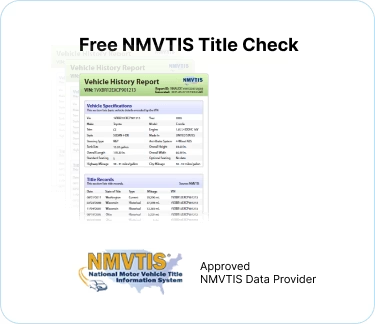
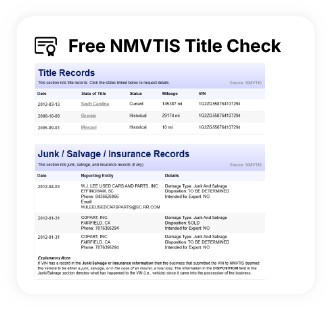
NMVTIS Title
History Check
History Check
Salvage/Rebuilt
Check
Check
Accident
Check
Check
Theft
Check
Check
Open Lien
Check
Check
Past Sale
Listings
Listings
Safety
Recalls
Recalls
Odometer
Check
Check
Market Price
Analysis
Analysis
What Problems Does the 2004 Honda VTX 1300 Have?
The 2004 Honda VTX 1300 is generally praised for its robust Honda engineering, but like any vehicle, it has some commonly reported issues that owners should be aware of. One of the more frequent concerns, particularly as the bikes age, relates to the fuel pump. Failures or weakening performance of the electric fuel pump have been noted, leading to sputtering, loss of power, or difficulty starting, especially under load or when the bike is hot. This is often exacerbated by neglect of regular maintenance, such as not replacing the fuel filter or using stale fuel.
Another area that some owners report as a potential concern is the stock suspension. While adequate for most riding conditions, the front forks and rear shocks can be perceived as a bit stiff or lacking in plushness on rougher pavement or over significant bumps. This is more of a comfort-related issue than a mechanical failure and can often be addressed with aftermarket suspension upgrades, which are popular among VTX owners looking to customize their ride.
The original seat is also a point of discussion for some riders, especially those planning extended tours. While aesthetically pleasing and functional for shorter trips, it can become uncomfortable on longer rides. This has led to a significant aftermarket for replacement seats and seat cushions.
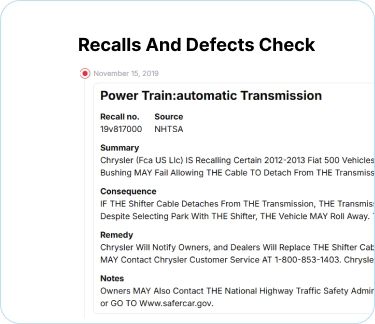
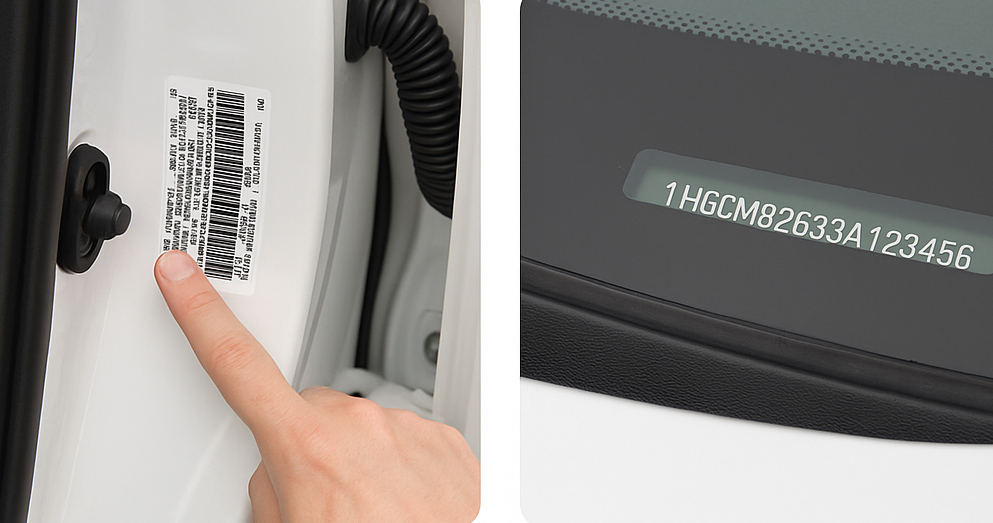
Regarding recalls, Honda has issued recalls for various models over the years, and while there isn't a single overarching recall that plagues the entire 2004 VTX 1300 model year, owners should always check Honda's official recall database using their VIN for any applicable safety advisories. Long-term reliability is typically excellent with proper maintenance. The shaft drive system, a hallmark of the VTX series, is generally very durable and requires less maintenance than a chain drive. However, like any shaft drive, the universal joint and final drive seals should be inspected periodically. Early models, including the 2004, primarily used carburetors, which are generally reliable but can sometimes require synchronization or cleaning if performance degrades. Fuel-injected models came later in the VTX 1300 production run.
Another area that some owners report as a potential concern is the stock suspension. While adequate for most riding conditions, the front forks and rear shocks can be perceived as a bit stiff or lacking in plushness on rougher pavement or over significant bumps. This is more of a comfort-related issue than a mechanical failure and can often be addressed with aftermarket suspension upgrades, which are popular among VTX owners looking to customize their ride.
The original seat is also a point of discussion for some riders, especially those planning extended tours. While aesthetically pleasing and functional for shorter trips, it can become uncomfortable on longer rides. This has led to a significant aftermarket for replacement seats and seat cushions.
Regarding recalls, Honda has issued recalls for various models over the years, and while there isn't a single overarching recall that plagues the entire 2004 VTX 1300 model year, owners should always check Honda's official recall database using their VIN for any applicable safety advisories. Long-term reliability is typically excellent with proper maintenance. The shaft drive system, a hallmark of the VTX series, is generally very durable and requires less maintenance than a chain drive. However, like any shaft drive, the universal joint and final drive seals should be inspected periodically. Early models, including the 2004, primarily used carburetors, which are generally reliable but can sometimes require synchronization or cleaning if performance degrades. Fuel-injected models came later in the VTX 1300 production run.
How long will the 2004 Honda VTX 1300 last?
The 2004 Honda VTX 1300 is known for its exceptional long-term durability, a trait that Honda motorcycles are famous for. With regular and diligent maintenance, it's not uncommon for these bikes to surpass 100,000 miles. Many owners report consistent performance and reliability well into the six-figure mileage range. Key to this longevity is routine servicing, such as oil changes, filter replacements, valve adjustments, and proper care of the shaft drive system. Weaknesses that can emerge over time are primarily related to wear and tear on consumables like brake pads and tires, and as mentioned previously, the fuel pump can be a component to monitor. However, the core engine and drivetrain are remarkably robust, making the VTX 1300 a dependable machine for many years of service.
What Technology & Safety Features are Included?
The 2004 Honda VTX 1300 embodies a philosophy of classic motorcycle design, which means its built-in technology, entertainment, and safety features are intentionally minimalist. As a cruiser from this era, it doesn't boast advanced electronic rider aids, complex infotainment systems, or the array of driver-assistance features found on modern cars or even some newer motorcycles. The focus is on the riding experience and mechanical simplicity.
Technology & Entertainment: The VTX 1300's technological offerings are primarily mechanical. It features a clear analog speedometer and a smaller analog tachometer, along with indicator lights for turn signals, high beam, neutral, and oil pressure. There is no onboard computer, GPS, Bluetooth connectivity, or audio system integrated into the bike. Riders seeking entertainment typically add aftermarket accessories like handlebar-mounted Bluetooth speakers or use their own personal devices for navigation and music.
Driver-Assistance & Safety Features: In terms of driver-assistance, there are none. The VTX 1300 relies entirely on the rider's skill and awareness. Safety features are limited to its effective braking system (dual disc brakes front and rear) and its stable chassis. Honda is known for building well-balanced and predictable machines, contributing to rider confidence. ABS (Anti-lock Braking System) was not a standard or commonly offered optional feature on the 2004 VTX 1300. The motorcycle is equipped with standard lighting (headlight, taillight, turn signals) and mirrors.

Optional Features: Many owners opt to customize their VTX 1300 with accessories that enhance comfort and utility. Common optional additions include windshields for better wind protection, saddlebags for luggage storage, backrests for passenger comfort, custom exhaust systems, and upgraded seating. These are typically dealer-installed or aftermarket additions rather than factory-integrated optional packages.
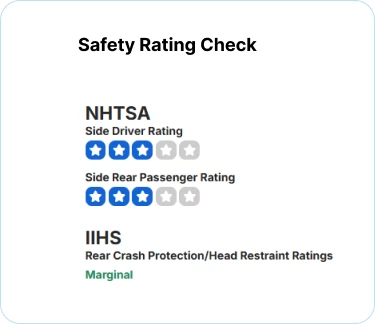
Crash-Test Ratings: Motorcycles, unlike cars, are not subjected to standardized crash-test ratings by organizations like the NHTSA or IIHS. Safety is evaluated based on design, braking performance, and handling characteristics.
Technology & Entertainment: The VTX 1300's technological offerings are primarily mechanical. It features a clear analog speedometer and a smaller analog tachometer, along with indicator lights for turn signals, high beam, neutral, and oil pressure. There is no onboard computer, GPS, Bluetooth connectivity, or audio system integrated into the bike. Riders seeking entertainment typically add aftermarket accessories like handlebar-mounted Bluetooth speakers or use their own personal devices for navigation and music.
Driver-Assistance & Safety Features: In terms of driver-assistance, there are none. The VTX 1300 relies entirely on the rider's skill and awareness. Safety features are limited to its effective braking system (dual disc brakes front and rear) and its stable chassis. Honda is known for building well-balanced and predictable machines, contributing to rider confidence. ABS (Anti-lock Braking System) was not a standard or commonly offered optional feature on the 2004 VTX 1300. The motorcycle is equipped with standard lighting (headlight, taillight, turn signals) and mirrors.


Optional Features: Many owners opt to customize their VTX 1300 with accessories that enhance comfort and utility. Common optional additions include windshields for better wind protection, saddlebags for luggage storage, backrests for passenger comfort, custom exhaust systems, and upgraded seating. These are typically dealer-installed or aftermarket additions rather than factory-integrated optional packages.
Crash-Test Ratings: Motorcycles, unlike cars, are not subjected to standardized crash-test ratings by organizations like the NHTSA or IIHS. Safety is evaluated based on design, braking performance, and handling characteristics.
What Colors Options are Available?
2004 Honda VTX 1300 Prices and Market Value
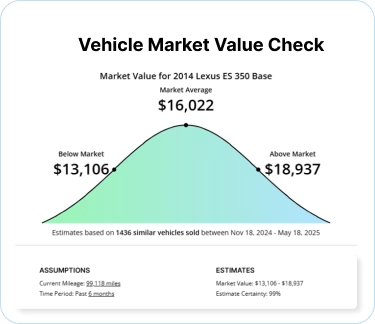
When new, the 2004 Honda VTX 1300 typically retailed in the range of $9,000 to $10,500, depending on the specific trim level (S, C, or R) and any dealer-added accessories. As a used vehicle, the 2004 VTX 1300 has held its value remarkably well, a testament to Honda's reputation for quality and the model's enduring popularity. Current used market prices generally range from $3,500 to $6,500, with variations based on mileage, condition, maintenance history, and the presence of desirable aftermarket modifications. Depreciation has been moderate; these bikes do not plummet in value significantly after their initial purchase. Factors that positively affect resale value include low mileage, excellent maintenance records, original paint and components, and popular upgrades like comfortable seats or quality luggage solutions. Conversely, high mileage, neglected maintenance, or damage will reduce its market price.
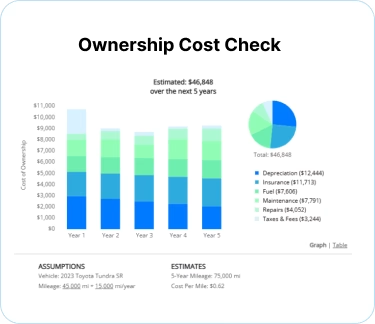
2004 Honda VTX 1300 Cost of Ownership
The 2004 Honda VTX 1300 is generally considered economical to own. Insurance costs are typically moderate for a motorcycle of its class, varying by rider experience, location, and coverage levels. Fuel consumption is good, averaging 45-55 mpg, making it relatively inexpensive to run. Routine maintenance, including oil changes and inspections, is straightforward and affordable, especially if done by the owner. Major repairs are infrequent due to Honda's reliability, but parts can be found readily. Overall, the VTX 1300 offers excellent value, balancing its substantial V-twin performance with manageable ownership costs.
2004 Honda VTX 1300 Fuel Efficiency
Fuel Type
-
Fuel Capacity
-
City Mileage
-
Highway Mileage
-
2004 Honda VTX 1300 Insurance
Insurance for a 2004 Honda VTX 1300 is moderately priced, reflecting its status as a Vehicle with strong safety ratings and
reasonable repair costs.
How Does the 2004 Honda VTX 1300 Compare to Other Vehicle?
The 2004 Honda VTX 1300 entered the competitive cruiser market, facing off against formidable rivals like the Yamaha V-Star 1300 (though the 1300 V-Star came later, the V-Star 1100 was a direct competitor), Kawasaki Vulcan 1500, and Harley-Davidson Sportster and Softail models.
Performance: The VTX 1300's 1312cc V-twin engine delivered strong torque and respectable horsepower, offering a satisfying ride for cruising. It generally offered a good balance, though some might find the power delivery slightly less raw than a comparable Harley-Davidson or the brute force of a larger Kawasaki Vulcan. Its 5-speed transmission and shaft drive were smooth and reliable.
Features: In terms of features, the VTX 1300 was typical for its class and era, emphasizing classic styling over technological bells and whistles. Rivals like the Harley-Davidson might offer more customization options from the factory or a more iconic brand image. However, the VTX 1300 provided solid build quality and functional basic instrumentation. The Honda's shaft drive was a significant advantage over chain-driven competitors, requiring less maintenance.
Reliability: This is where the Honda VTX 1300 truly shines. Honda's reputation for unparalleled reliability is a major selling point. While a Harley-Davidson offers a distinct riding experience and brand loyalty, its maintenance can be more involved and costly. The Yamaha V-Star series also boasts good reliability, but Honda often has a slight edge in overall dependability and longevity. Kawasaki Vulcan models are also known for their robustness.
Price: The VTX 1300 was positioned as a high-value proposition. It offered a large-displacement V-twin cruiser experience at a significantly lower price point than comparable Harley-Davidson models. It competed favorably with Yamaha and Kawasaki in terms of pricing, often providing a bit more displacement for the money or superior build quality.
Alternatives:
Performance: The VTX 1300's 1312cc V-twin engine delivered strong torque and respectable horsepower, offering a satisfying ride for cruising. It generally offered a good balance, though some might find the power delivery slightly less raw than a comparable Harley-Davidson or the brute force of a larger Kawasaki Vulcan. Its 5-speed transmission and shaft drive were smooth and reliable.
Features: In terms of features, the VTX 1300 was typical for its class and era, emphasizing classic styling over technological bells and whistles. Rivals like the Harley-Davidson might offer more customization options from the factory or a more iconic brand image. However, the VTX 1300 provided solid build quality and functional basic instrumentation. The Honda's shaft drive was a significant advantage over chain-driven competitors, requiring less maintenance.
Reliability: This is where the Honda VTX 1300 truly shines. Honda's reputation for unparalleled reliability is a major selling point. While a Harley-Davidson offers a distinct riding experience and brand loyalty, its maintenance can be more involved and costly. The Yamaha V-Star series also boasts good reliability, but Honda often has a slight edge in overall dependability and longevity. Kawasaki Vulcan models are also known for their robustness.
Price: The VTX 1300 was positioned as a high-value proposition. It offered a large-displacement V-twin cruiser experience at a significantly lower price point than comparable Harley-Davidson models. It competed favorably with Yamaha and Kawasaki in terms of pricing, often providing a bit more displacement for the money or superior build quality.
Alternatives:
- Similar: Yamaha V-Star 1100 (older model), Kawasaki Vulcan 1500 Classic. These offer similar cruiser styling and V-twin powerplants with comparable reliability and price points.
- Slightly Different/Higher Spec: If seeking more power or a different brand character, consider a used Honda VTX 1800 (for more power), or a used Harley-Davidson Sportster or Softail (for the iconic American cruiser feel, but expect higher costs). The Yamaha V-Star 1300, when it arrived, also became a strong competitor with modern styling and features.
Final Verdict: Is the 2004 Honda VTX 1300 a Good Vehicle?
The 2004 Honda VTX 1300 is an ideal motorcycle for riders seeking a substantial, comfortable, and reliable V-twin cruiser experience without the premium price tag associated with some competitors. It's perfect for both new riders looking for a manageable big-bore bike and experienced riders who appreciate Honda's legendary build quality and smooth performance. It is absolutely worth buying, especially on the used market, given its excellent long-term durability and affordable ownership costs. Buying used is the only option, as it's no longer manufactured new. Look for well-maintained examples, with the VTX1300S or R trims offering a classic aesthetic, while the VTX1300C appeals to those preferring a more stripped-down look. Prioritize low mileage and a clean maintenance history for the best value.