
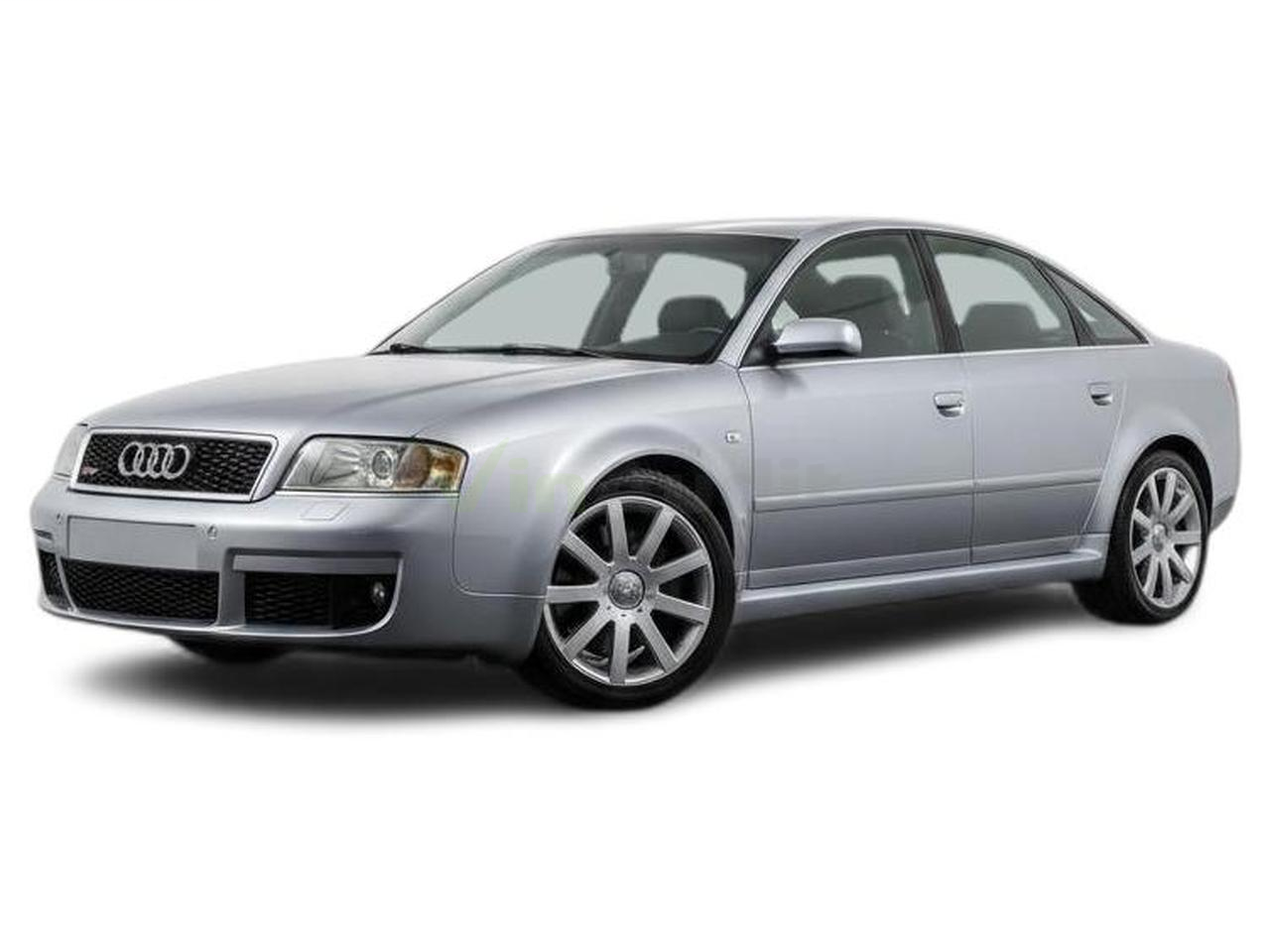
The 2003 Audi RS 6 is a high-performance variant of Audi's executive car, part of the C5 generation. Slotting above the A6, it was produced from 2002 to 2004. This powerhouse sedan (and later wagon, though the wagon wasn't officially sold in the US for this model year) was lauded for its potent twin-turbo V8 engine and all-wheel-drive system, making it a formidable competitor in the sports sedan segment. Its popularity stems from its blend of luxury, blistering acceleration, and understated yet aggressive styling.
The Good
The 2003 Audi RS 6 boasts exhilarating performance with its twin-turbo V8, offering thrilling acceleration. Its Quattro all-wheel drive provides exceptional handling and confidence. Inside, it delivers a luxurious and comfortable experience, wrapped in a sophisticated yet potent design. While not efficient, its value lies in the supercar-rivaling performance it offers at a fraction of the cost of its contemporaries.
The Bad
The 2003 Audi RS 6 is known for its potential for expensive repairs, particularly concerning the twin-turbo V8 engine, transmission, and complex electronics. Owners should be wary of high maintenance costs, potential oil leaks, and aging cooling systems. Fuel economy is also a significant drawback.
2003 Audi RS 6: Quick Overview
- Engine Options: The 2003 Audi RS 6 exclusively features a 4.2-liter twin-turbocharged V8 engine.
- Horsepower: This potent V8 produces 450 horsepower at 5,700-6,400 rpm.
- Torque: It delivers a substantial 400 lb-ft of torque from 1,950-5,500 rpm.
- Fuel Economy: Estimated EPA ratings are around 12 mpg city and 18 mpg highway. Real-world mileage is often lower due to performance driving.
- 0-60 Times: Acceleration is a strong point, with 0-60 mph times typically in the mid-4-second range.
- Towing Capacity: Towing capacity is not a primary feature or typically specified for the RS 6, as it is performance-oriented.
- Trim-Level Features: The 2003 Audi RS 6 was offered in a single, highly equipped trim level, essentially making all available features standard. Key standard features include:
- Quattro all-wheel drive system
- 6-speed manual transmission (very rare in the US market, most were automatic)
- Sport-tuned suspension
- Brembo high-performance brakes
- Bi-Xenon headlights
- 18-inch alloy wheels
- Leather and Alcantara sport seats
- Heated front and rear seats
- Bose premium audio system
- Navigation system
- Sunroof
- Dual-zone automatic climate control
- Power-adjustable front seats with memory
- Front and side airbags
- Traction control and stability control
2003 Audi RS 6 Specifications
Vehicle Information
| Year | 2003 |
| Make | Audi |
| Model | RS 6 |
| Trim | - |
| Style | Sedan |
| Type | Sedan |
| Category | Mid-Size Car |
Manufacturing Details
| Made In | Germany |
| Manufacturing City | NECKARSULM |
Dimensions
| Doors | 4-Door |
| Curb Weight | 4024 pounds |
| Gross Vehicle Weight Rating | - |
| Overall Height | 56.10 inches |
| Overall Length | 191.30 inches |
| Overall Width | 78.40 inches |
| Wheelbase Length | 108.60 inches |
| Standard Seating | 5 |
Engine & Performance
| Engine | 4.2L V8 |
| Engine Size | 4.2L |
| Engine Cylinders | 8 |
| Transmission | 5-Speed Automatic |
| Transmission Type | Automatic |
| Transmission Speeds | 5-Speed |
| Drivetrain | All-Wheel Drive |
Additional Features
| Anti-Brake System | 4-Wheel ABS |
| Steering Type | Rack & Pinion |
Pricing
| Manufacturer Suggested Retail Price (MSRP) | $82,700 |
| Invoice Price | $74,239 |
| Delivery Charges | $660 |
Vehicle History Report
Vehicle
Specifications
Specifications
Ownership
History
History
All History
Events
Events
NMVTIS Title
History Check
History Check
Salvage/Rebuilt
Check
Check
Accident
Check
Check
Theft
Check
Check
Open Lien
Check
Check
Past Sale
Listings
Listings
Safety
Recalls
Recalls
Odometer
Check
Check
Market Price
Analysis
Analysis
What Problems Does the 2003 Audi RS 6 Have?
The 2003 Audi RS 6, while a performance marvel, is not without its reliability concerns, largely stemming from its complex, high-performance nature. One of the most frequently reported issues revolves around the twin-turbocharged V8 engine. Turbocharger failures, oil leaks (especially from the valve covers and oil cooler seals), and premature wear of the timing belt tensioners can be costly to address. The automatic transmission, while robust for its time, can also experience issues, particularly if not properly maintained. Overheating is another concern, often linked to radiator leaks, failing coolant hoses, or a faulty thermostat. The ignition system, including coil packs and spark plugs, can also be a source of misfires and rough running. Electronics can also be a headache; the MMI infotainment system (if equipped and on later C5s), climate control modules, and various sensors are prone to failure. Brake wear is naturally higher due to the car's performance capabilities, and the rotors and pads can be expensive to replace. Suspension components, such as control arms and bushings, can also wear out over time, leading to less precise handling. Recalls for the 2003 model year were not extensive but did include issues like potential fuel leaks from the fuel pump flange. Long-term reliability is heavily dependent on meticulous maintenance. Cars that have been neglected or driven aggressively without proper care are significantly more likely to experience costly repairs. The complexity of the drivetrain and the high-strung nature of the engine mean that regular and diligent servicing, using high-quality parts and fluids, is paramount to keeping this car running optimally.
How long will the 2003 Audi RS 6 last?
Estimating average mileage for a 2003 Audi RS 6 is challenging as these cars were often not daily drivers and were purchased by enthusiasts who might drive them less, or by individuals who used them as intended and put on more miles. However, it's not uncommon to find examples with mileage ranging from 80,000 to 150,000 miles. With diligent maintenance, these vehicles can certainly surpass 200,000 miles. Long-term durability is highly contingent on the owner's commitment to preventative maintenance. The engine and drivetrain are inherently robust if cared for, but neglected maintenance will quickly expose weaknesses in the cooling system, turbochargers, and potentially the transmission. The chassis and body are generally well-built and hold up well against corrosion, but suspension components and various seals will require attention over time. The true measure of its longevity lies in the quality of its upkeep; a well-maintained RS 6 can remain a thrilling and reliable machine for many years.
What Technology & Safety Features are Included?
The 2003 Audi RS 6, as a top-tier performance variant, came equipped with a generous array of technology and safety features for its era. Standard equipment included a premium Bose sound system with AM/FM radio and a CD player, offering respectable audio quality. A sophisticated navigation system was also a common feature, though its interface and mapping are understandably dated by today's standards. Dual-zone automatic climate control ensured comfort for both front occupants. For convenience, power-adjustable front seats with driver memory were standard, along with heated front and rear seats. The vehicle also featured power windows, locks, and mirrors, a sunroof, and automatic bi-Xenon headlights. In terms of safety, the RS 6 was equipped with a suite of airbags, including front and side-curtain airbags. Anti-lock braking system (ABS), electronic brake-force distribution (EBD), traction control (ASR), and an electronic stability program (ESP, or ESC) were standard, leveraging the Quattro all-wheel-drive system for enhanced stability and control. Driver-assistance features were relatively rudimentary by modern standards, focusing on active safety rather than advanced driver aids. Crash-test ratings for the standard Audi A6 C5 platform provided a foundation for the RS 6's safety, though specific RS 6 crash tests are less commonly documented. However, the robust construction and standard safety features suggest a strong occupant protection profile for its time. Optional features were limited as the car was already highly equipped, but minor cosmetic or interior trim variations might have been available. The technology, while impressive for 2003, will feel archaic compared to contemporary vehicles, with no smartphone integration or advanced driver-assistance systems like adaptive cruise control or lane-keeping assist.
What Colors Options are Available?
2003 Audi RS 6 Prices and Market Value
When new, the 2003 Audi RS 6 carried a considerable price tag, typically starting in the vicinity of $80,000 to $85,000 USD, reflecting its exclusive performance and luxury appointments. As with most high-performance vehicles, it experienced significant depreciation in its early years. However, current used market prices for the 2003 RS 6 have stabilized and even seen some appreciation among enthusiasts seeking a classic performance sedan. Well-maintained examples in good condition can now range from $15,000 to $30,000 or more, depending heavily on mileage, condition, service history, and rarity of options (like the manual transmission). Factors affecting resale value include the car's overall condition, the completeness of its service records, originality of parts, and demand from the enthusiast community. Low-mileage, unmolested examples command a significant premium. Conversely, cars with extensive modifications or poor maintenance history will depreciate further.
2003 Audi RS 6 Cost of Ownership
Owning a 2003 Audi RS 6 is undeniably costly. Insurance premiums will be higher than for a standard A6 due to its performance and value. Fuel economy is abysmal, typically averaging around 13-15 MPG combined, making it very expensive to fuel. Maintenance is also significant; regular oil changes with high-quality synthetic oil, filter replacements, and scheduled service are critical and can cost hundreds of dollars per visit. Repair costs are the biggest hurdle. Parts for the specialized twin-turbo V8, transmission, and performance braking system are expensive, and labor rates at specialized shops add to the bill. This is a costly vehicle to own and maintain, not an economical choice by any measure.
2003 Audi RS 6 Fuel Efficiency
Fuel Type
Gasoline
Fuel Capacity
21.70 gallons
City Mileage
15 miles/gallon
Highway Mileage
22 miles/gallon
2003 Audi RS 6 Safety Rating
NHTSA
IIHS
2003 Audi RS 6 Warranty
Basic
Original warranty
48 months / 50,000 miles
Estimated remaining
Expired
Powertrain
Original warranty
48 months / 50,000 miles
Estimated remaining
Expired
Rust
Original warranty
144 months / unlimited miles
Estimated remaining
Expired
2003 Audi RS 6 Insurance
Insurance for a 2003 Audi RS 6 is moderately priced, reflecting its status as a Sedan with strong safety ratings and
reasonable repair costs.
How Does the 2003 Audi RS 6 Compare to Other Sedan?
The 2003 Audi RS 6 competed in a formidable segment of high-performance luxury sedans. Its primary rivals included the BMW M5 (E39 generation), Mercedes-Benz E55 AMG (W211 generation), and perhaps the more aggressively styled Cadillac CTS-V. In terms of performance, the RS 6 stood out with its potent 450-hp twin-turbo V8 and standard Quattro all-wheel drive, offering immense power and all-weather traction that the RWD M5 and E55 AMG couldn't match in slick conditions. The M5, with its naturally aspirated V8 and superb handling, offered a more visceral driving experience for purists, while the E55 AMG was known for its brutish torque from its supercharged V8 and a more comfort-oriented ride. Feature-wise, the RS 6 was generally well-equipped, rivaling the luxury appointments of its competitors. Reliability is where the RS 6 often lags behind its rivals, particularly the famously robust E39 M5. The complexity of the RS 6's twin-turbo setup and electronics can lead to more frequent and costly repairs compared to the Mercedes or BMW. Price-wise, the RS 6 was often positioned competitively, offering similar performance for a comparable or slightly lower price than a similarly optioned M5 or E55 at launch.
Alternatives: For similar performance with potentially better long-term reliability, the BMW M5 (E39) is a strong contender, though it's rear-wheel drive and lacks the all-weather capability. The Mercedes-Benz E55 AMG (W211) offers immense torque and a more comfortable ride, also rear-wheel drive. If outright performance and less concern for luxury are priorities, a later generation Subaru WRX STI or Mitsubishi Lancer Evolution could offer comparable acceleration for less money, albeit in a less refined package. However, for a blend of luxury, all-wheel-drive security, and blistering acceleration, the 2003 RS 6 remains a unique proposition.
Final Verdict: Is the 2003 Audi RS 6 a Good Sedan?

The 2003 Audi RS 6 is ideal for the discerning automotive enthusiast who prioritizes discreet performance and all-weather capability over absolute reliability or low running costs. It's best suited for those with a healthy budget for maintenance and repairs, and who appreciate a potent, luxurious, yet relatively understated sports sedan. Buying one is only recommended if it's a well-maintained, low-mileage example with a comprehensive service history. It is certainly worth buying for the right person who understands its potential pitfalls and has the financial means to mitigate them. Avoid cars with known issues or those that have been poorly maintained. The rarity of the manual transmission model also makes it a more sought-after, albeit potentially more expensive, choice for driving enthusiasts.