by VIN, Year, Make, Model by License Plate

1992 Harley-Davidson FLSTC Overview, Reviews, Ratings & Specs

Rating: 0.00
Based on 0 Owner Reviews
Drew B | October 25, 2025
The 1992 Harley-Davidson FLSTC, a proud member of the iconic Softail family, embodies classic American cruiser styling. Produced across numerous model years, its enduring appeal stems from its retro aesthetics, reminiscent of vintage Harley-Davidsons. The FLSTC, meaning 'Classic,' typically featured wire-spoke wheels, wide whitewall tires, and a generous amount of chrome, making it instantly recognizable and highly desirable among enthusiasts seeking timeless design and a comfortable riding experience. Its popularity is rooted in its ability to offer a vintage look with modern (for its time) engineering.

The Good

The 1992 FLSTC offers a satisfying blend of classic V-twin rumble, dependable touring capability, and undeniable aesthetic charm. Its comfortable riding position and plush seat appeal to touring riders, while its iconic styling and brand prestige resonate deeply with emotional buyers. Practical advantages include its robust build and straightforward mechanics.

The Bad

Potential buyers of a 1992 FLSTC should be aware of common Harley-Davidson issues of the era, including potential carburetor tuning quirks, early Evo engine oil leaks, and the possibility of wear and tear on suspension components and clutch. Brake performance might feel dated by modern standards.

1992 Harley-Davidson FLSTC: Quick Overview

  • Engine Options: The 1992 Harley-Davidson FLSTC was exclusively equipped with the air-cooled, 80 cubic inch (1340cc) Evolution V-twin engine. This was the standard and only engine offered for this model year in the FLSTC.
  • Horsepower: While Harley-Davidson historically did not widely publish exact horsepower figures in this era, estimates for the 80 cubic inch Evolution engine typically range from around 55 to 60 horsepower at the crankshaft.
  • Torque: More indicative of its cruising nature, the engine produced substantial torque, generally in the range of 65-70 lb-ft, delivered at low RPMs, characteristic of Harley-Davidson V-twins.
  • Fuel Economy: Fuel economy for the 1992 FLSTC, with its larger displacement engine and focus on relaxed cruising rather than efficiency, typically falls in the range of 35-45 miles per gallon (MPG), depending heavily on riding style and conditions.
  • 0-60 Times: Due to its cruiser design and focus on torque, acceleration is strong from a standstill, but it is not a sportbike. 0-60 mph times are generally estimated to be in the 5-6 second range.
  • Towing Capacity: The 1992 Harley-Davidson FLSTC is not designed or equipped for towing. It does not have a towing capacity.
  • Trim-Level Features (FLSTC - Classic):
    • Iconic Softail Design: Hidden rear suspension that mimics the rigid look of a vintage hardtail frame.
    • Chrome Accents: Extensive use of chrome on the engine, exhaust, wheels, handlebars, and other components.
    • Wire-Spoke Wheels: Typically fitted with chrome wire-spoke wheels.
    • Whitewall Tires: Often came standard with wide whitewall tires, enhancing its classic aesthetic.
    • Large Chrome Headlight Nacelle: A prominent, chrome-shrouded headlight is a signature styling element.
    • Two-Up Seating: Comfortable seating for both rider and passenger, often with a leather-covered seat and passenger backrest option.
    • Fenders: Full-coverage fenders with chrome trim.
    • Tank Badging: Distinctive Harley-Davidson tank emblems.
    • Saddlebags: Often equipped with leather saddlebags for storage, though sometimes an option.

1992 Harley-Davidson FLSTC Specifications

Vehicle Information
Year 1992
Make Harley-Davidson
Model FLSTC
Trim -
Style -
Type Motorcycle
Category Motorcycle
Manufacturing Details
Made In United States
Manufacturing City YORK
Dimensions
Doors -
Curb Weight -
Gross Vehicle Weight Rating -
Overall Height -
Overall Length -
Overall Width -
Wheelbase Length -
Standard Seating -
Engine & Performance
Engine 1340CC
Engine Size 1340L
Engine Cylinders 2
Transmission -
Transmission Type -
Transmission Speeds -
Drivetrain -
Additional Features
Anti-Brake System -
Steering Type -
Pricing
Manufacturer Suggested Retail Price (MSRP) -
Invoice Price -
Delivery Charges -

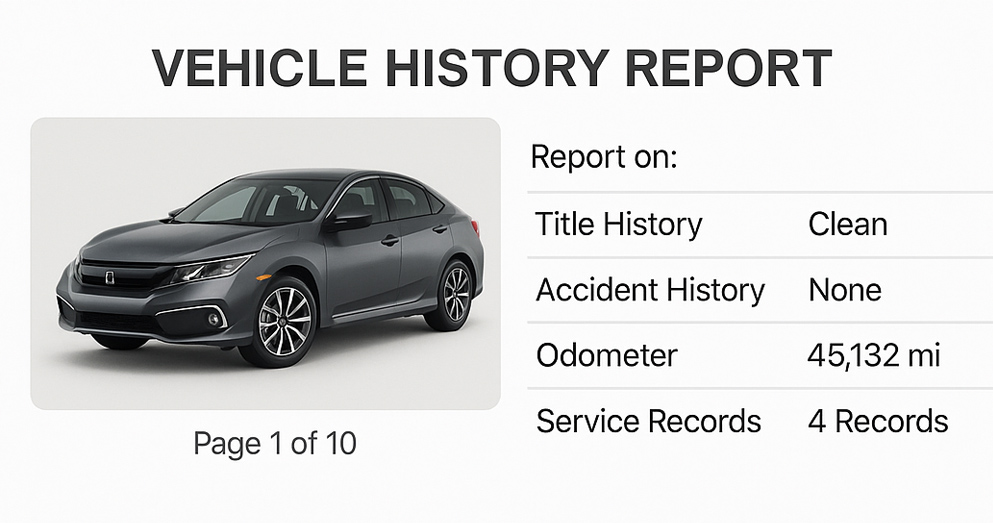
Vehicle History Report

Vehicle
Specifications
Ownership
History
All History
Events
NMVTIS Title
History Check
Salvage/Rebuilt
Check
Accident
Check
Theft
Check
Open Lien
Check
Past Sale
Listings
Safety
Recalls
Odometer
Check
Market Price
Analysis

What Problems Does the 1992 Harley-Davidson FLSTC Have?

The 1992 Harley-Davidson FLSTC, powered by the Evolution (Evo) engine, is generally regarded as a robust and reliable motorcycle, especially when well-maintained. However, like any machine of this age, there are common areas to be aware of.

One frequently reported concern for Evo engines, including those in the 1992 FLSTC, relates to oil leaks. These can occur at various points, such as the primary cover, transmission seals, and cylinder base gaskets. While often minor and manageable with regular checks and occasional seal replacements, persistent leaks can be a sign of aging gaskets and seals that may require more involved attention.

Carburetor tuning can also be a point of attention. The Keihin CV carburetor, while functional, can sometimes require adjustment or cleaning, especially if the motorcycle has been sitting or if older fuel has been used. Issues like rough idling, hesitation, or difficulty starting can often be traced back to the carburetor needing a tune-up or rebuild.

Another area to consider is the charging system. Components like the stator and voltage regulator can wear over time, leading to battery charging issues. Monitoring battery voltage while riding is a good practice to ensure the system is functioning correctly.

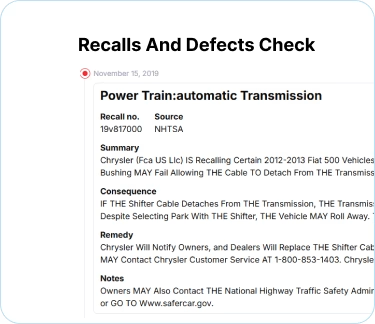
While specific recalls for the 1992 model year FLSTC related to catastrophic failures are not widely publicized, it's always prudent for owners to check with Harley-Davidson or NHTSA for any outstanding service bulletins or safety recalls that might apply. Wear and tear on components like the clutch, brake pads, and suspension bushings are also common maintenance items that will need attention on a motorcycle of this age, regardless of specific model year issues.

Long-term reliability is generally high for the Evo engine, known for its durability and torque. However, the overall lifespan and reliability are directly tied to the quality and consistency of maintenance. Motorcycles that have been regularly serviced with quality fluids and parts, and ridden consistently, tend to be more reliable than those that have been neglected or stored improperly for extended periods.

How long will the 1992 Harley-Davidson FLSTC last?

With proper and consistent maintenance, the 1992 Harley-Davidson FLSTC is capable of accumulating significant mileage, often well over 100,000 miles, and many owners report theirs exceeding 150,000 miles. The Evolution engine is renowned for its longevity and durability. Long-term owners often find that the primary areas requiring attention over time are routine maintenance items like seals, gaskets (especially for oil leaks), brake components, and suspension bushings. The electrical system, particularly the charging components, can also be a point of wear. However, the core engine and transmission are built to last. Weaknesses that can emerge over decades include cosmetic wear on chrome and paint, and potential degradation of rubber components. Overall, its long-term durability is a strong suit, provided it receives regular care.

What Technology & Safety Features are Included?

The 1992 Harley-Davidson FLSTC, in keeping with its retro styling and the technology prevalent in the early 1990s, is a motorcycle that prioritizes the riding experience over advanced electronic features. It does not boast built-in tech, entertainment systems, or driver-assistance features as we understand them today.

Technology: The primary technological interface for the rider is the analog instrumentation cluster. This typically includes a speedometer, tachometer (often as an optional or integrated gauge), fuel gauge, oil pressure warning light, and a neutral indicator. There are no digital displays, navigation systems, or connectivity options. The ignition system is a standard key-operated setup, and the engine management is primarily handled by the mechanical carburetor.

Entertainment: Entertainment on the 1992 FLSTC is derived solely from the mechanical symphony of the V-twin engine and the open road. There are no built-in audio systems, speakers, or auxiliary inputs. Riders seeking music would typically add aftermarket stereo systems, which were not a factory option in this era.

Driver-Assistance Features: This motorcycle has no driver-assistance features. Systems like ABS, traction control, or advanced rider modes were not present on bikes of this vintage. The rider is fully responsible for controlling the motorcycle's performance.

Safety Features: Standard safety features are limited to the expected for a motorcycle of its time. This includes reliable (for the era) dual disc front brakes and a single disc rear brake, providing adequate stopping power. Lighting is handled by a Halogen headlight and standard tail/brake lights and turn signals. There are no airbags or advanced active safety systems.

Optional Features: Optional accessories common for the FLSTC would include windshields for added weather protection, various exhaust system upgrades for enhanced sound and performance, passenger backrests and sissy bars for improved passenger comfort, and different styles of saddlebags for storage. Many owners also opted for custom paintwork and chrome accessories to personalize their machines.

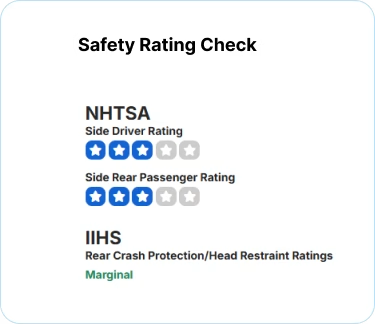
Crash-Test Ratings: Motorcycles are not subjected to standardized crash-test ratings in the same way that automobiles are. Therefore, there are no crash-test ratings available for the 1992 Harley-Davidson FLSTC.

What Colors Options are Available?

We’re working on this section!
In the meantime, feel free to explore the other sections for more content.

1992 Harley-Davidson FLSTC Prices and Market Value

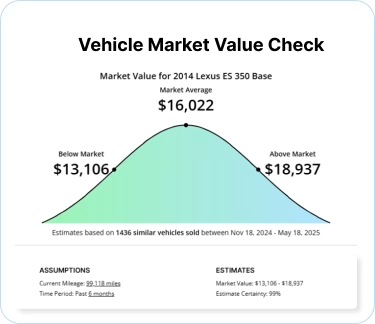
When new, the 1992 Harley-Davidson FLSTC likely had an MSRP in the range of $12,000 to $14,000, depending on options and dealer pricing. Today, the used market prices for a 1992 FLSTC can vary significantly, typically ranging from $6,000 to $12,000. Factors heavily influencing resale value include overall condition, mileage, originality of parts, maintenance history, and any desirable factory or reputable aftermarket additions. Motorcycles that have been meticulously maintained, kept in stock or period-correct condition, and have lower mileage tend to command higher prices. While the initial depreciation from new was substantial, like many classic Harley-Davidsons, the FLSTC has proven to hold its value reasonably well, especially as a desirable model from the Evo era, often appreciating in value if well-preserved.

1992 Harley-Davidson FLSTC Cost of Ownership

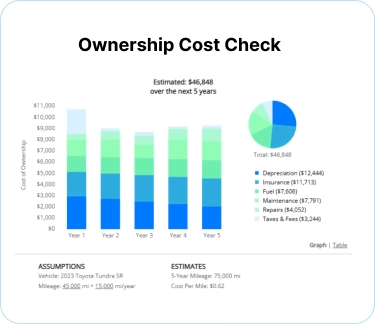
Owning a 1992 Harley-Davidson FLSTC is generally considered moderately costly, rather than economical. Insurance rates can vary widely based on rider age, location, and coverage, but expect it to be higher than for many smaller motorcycles. Fuel costs are typical for a large V-twin, offering around 35-45 MPG. Maintenance is straightforward but requires specific Harley-Davidson fluids and parts, which can be pricier. Repairs, especially for specialized components or if seeking OEM parts, can also add up. While not prohibitively expensive, its ownership costs are more aligned with a luxury cruiser than a budget-friendly commuter.

1992 Harley-Davidson FLSTC Fuel Efficiency

Fuel Type Gasoline
Fuel Capacity -
City Mileage -
Highway Mileage -

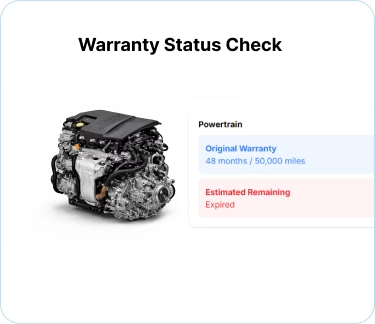
1992 Harley-Davidson FLSTC Warranty

Basic
Original warranty 0 months / No data
Estimated remaining Expired
Powertrain
Original warranty 0 months / No data
Estimated remaining Expired
Rust
Original warranty 0 months / No data
Estimated remaining Expired

1992 Harley-Davidson FLSTC Insurance

Insurance for a 1992 Harley-Davidson FLSTC is moderately priced, reflecting its status as a Motorcycle with strong safety ratings and
reasonable repair costs.

How Does the 1992 Harley-Davidson FLSTC Compare to Other Motorcycle?

The 1992 Harley-Davidson FLSTC primarily competed against other large-displacement cruisers of its era, focusing on comfort, style, and V-twin character. Key rivals included models from Honda (like the Magna series for power, though less classic styling), Kawasaki (Vulcan series), Yamaha (Virago/Road Star), and Suzuki (Intruder/Boulevard).

Performance: The FLSTC's 80 cubic inch Evolution engine offered strong, low-end torque for relaxed cruising, ideal for open roads. Its performance was characterized by effortless pulling power rather than outright speed. Rivals might have offered more horsepower or sharper acceleration, but often at the expense of the characteristic Harley rumble and feel.

Features: The FLSTC was rich in classic styling and chrome, which was its main draw. Features were minimal by modern standards, focusing on analog gauges and a comfortable riding position. Competitors might have offered more bells and whistles like shaft drive (less maintenance than the FLSTC's belt drive) or more sophisticated suspension, but often lacked the iconic American aesthetic that defined the Harley.

Reliability: The Evolution engine was a significant step forward in reliability for Harley-Davidson and is generally considered very dependable. Some Japanese competitors might have had a reputation for even greater bulletproof reliability and fewer leaks straight from the factory, but the FLSTC's mechanical simplicity also meant easier maintenance for owners.

Price: New, the FLSTC was often priced at the higher end of the spectrum compared to comparable Japanese cruisers, reflecting the Harley-Davidson brand premium. Used, its value holds strongly due to its iconic status and Evo engine.

Alternatives:
* Similar: For those seeking a classic American cruiser feel, a 1992 Indian Chief (if one could be found) would be a direct stylistic and ethos competitor. Some later model Honda Shadow models might offer a more modern take with similar comfort.
* Better (depending on priorities): If outright performance and Japanese engineering refinement were prioritized over classic American mystique, a Yamaha Road Star or Kawasaki Vulcan 1500 would offer robust engines and good value. For those desiring similar styling but perhaps with less perceived maintenance, a belt-driven Japanese cruiser could be considered. However, for the specific blend of iconic styling, V-twin character, and the Harley-Davidson ownership experience, the FLSTC remains in a class of its own.

Final Verdict: Is the 1992 Harley-Davidson FLSTC a Good Motorcycle?

The 1992 Harley-Davidson FLSTC is ideal for riders who appreciate classic American motorcycle aesthetics, enjoy the soulful rumble of a V-twin engine, and prioritize comfortable, relaxed cruising over aggressive performance. It's perfect for those who value heritage, iconic styling, and the Harley-Davidson brand experience.

It is absolutely worth buying for the right person, especially on the used market. Look for bikes with a solid maintenance history and in good overall condition. While not equipped with modern tech or safety features, its enduring style and the robust Evolution engine ensure it remains a desirable machine. Buying used is the only option now, and focusing on well-maintained examples with lower mileage will yield the best long-term satisfaction. The FLSTC trim offers the quintessential classic Softail experience.

1992 Harley-Davidson FLSTC Owner Reviews

0.00
Consumer Rating, Based on 0 Consumer Reviews
Overall rating
Cancel
Thank You for Your Review!

We truly appreciate the time and effort you took to share your experience with us.

Uh oh!

Something went wrong, please try again later.

Author Image
Drew B

Drew is a seasoned automotive expert and contributor to VinCheck.info. With nearly 15 years of experience as a former Porsche technician, he brings a wealth of hands-on knowledge to his writing. Born in North Carolina, a region renowned for its deep-rooted NASCAR culture, Drew developed a passion for cars early in life, often building and working on vehicles from a young age. At VINCheck, Drew leverages his extensive technical background to provide in-depth analyses of various vehicles. His articles often focus on engine performance, reliability, and maintenance insights, offering readers practical information grounded in real-world experience. Some of his notable contributions include reviews on the Mazda CX-5's longevity and detailed examinations of engine options for models like the 2011 Toyota Camry and Tacoma