The 2002 Yamaha YZ400 is a high-performance motocross motorcycle, not a car. It was part of Yamaha's YZ line, known for its aggressive styling and potent two-stroke engines. While the YZ400 designation specifically refers to earlier models, the 2002 iteration typically refers to the YZ250F or YZ426F, marking a significant shift in Yamaha's off-road lineup towards four-stroke technology. These bikes are prized by racing enthusiasts for their raw power and handling.

The Good
The 2002 Yamaha YZ400 (likely referring to the YZ426F) offers exhilarating performance with its potent four-stroke engine, renowned for its torque. Its race-bred design appeals to the thrill-seeker, while its robust build and Yamaha's reputation suggest good long-term value for dedicated riders.
The Bad
Potential weaknesses for the 2002 Yamaha YZ400 (YZ426F) can include a stiff clutch pull, which can be fatiguing during long rides. Some owners report issues with carburetor tuning, especially at different altitudes, and the kick-start-only operation might be a hurdle for some.
2002 Yamaha YZ400: Quick Overview
- Engine Options: The 2002 Yamaha YZ400 designation is a bit of a misnomer as Yamaha transitioned to four-strokes around this time. The most relevant model for 2002 would be the Yamaha YZ426F, which featured a 426cc liquid-cooled, four-stroke, single-cylinder engine. Previous YZ400 models were two-stroke.
- Horsepower: Exact horsepower figures can vary depending on dyno tests and specific tuning, but the YZ426F was known to produce approximately 50-55 horsepower.
- Fuel Economy: Fuel economy is not a primary consideration for motocross bikes and is typically measured in hours of operation rather than miles per gallon. Expect to refuel frequently during extended riding sessions.
- 0-60 Times: Motocross bikes are not designed for 0-60 mph acceleration in the traditional sense, and such metrics are rarely tested or relevant for their intended use on off-road tracks or trails.
- Towing Capacity: As a motocross motorcycle, the 2002 Yamaha YZ400/YZ426F has no towing capacity.
- Trim-Level Features (YZ426F for 2002):
- Aluminum frame for light weight and rigidity.
- Long-travel, high-performance suspension (Kayaba USD forks and monoshock rear).
- Powerful disc brakes front and rear.
- Wide-ratio gearbox for versatile power delivery.
- Large-diameter exhaust system.
- High-grip tires suited for off-road conditions.
- Plastic skid plate to protect the engine.
- Quick-release air filter for easy maintenance.
- Digitally mapped ignition (CDI) for optimized performance.
- Durable clutch system.
2002 Yamaha YZ400 Specifications
Vehicle Information
| Year | 2002 |
| Make | Yamaha |
| Model | YZ400 |
| Trim | - |
| Style | - |
| Type | Motorcycle |
| Category | Motorcycle |
Manufacturing Details
| Made In | Japan |
| Manufacturing City | HAMAMATSU |
Dimensions
| Doors | - |
| Curb Weight | - |
| Gross Vehicle Weight Rating | - |
| Overall Height | - |
| Overall Length | - |
| Overall Width | - |
| Wheelbase Length | - |
| Standard Seating | - |
Engine & Performance
| Engine | 400CC |
| Engine Size | 400L |
| Engine Cylinders | 1 |
| Transmission | - |
| Transmission Type | - |
| Transmission Speeds | - |
| Drivetrain | - |
Additional Features
| Anti-Brake System | - |
| Steering Type | - |
Pricing
| Manufacturer Suggested Retail Price (MSRP) | - |
| Invoice Price | - |
| Delivery Charges | - |
Vehicle History Report
Vehicle
Specifications
Specifications
Ownership
History
History
All History
Events
Events
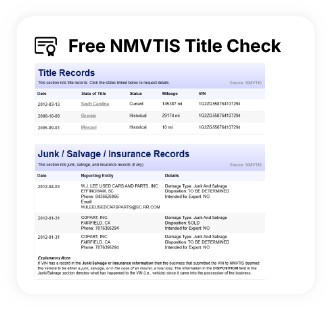
NMVTIS Title
History Check
History Check
Salvage/Rebuilt
Check
Check
Accident
Check
Check
Theft
Check
Check
Open Lien
Check
Check
Past Sale
Listings
Listings
Safety
Recalls
Recalls
Odometer
Check
Check
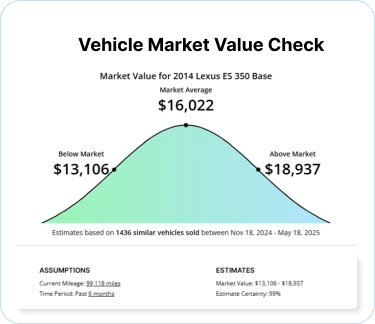
Market Price
Analysis
Analysis
What Problems Does the 2002 Yamaha YZ400 Have?
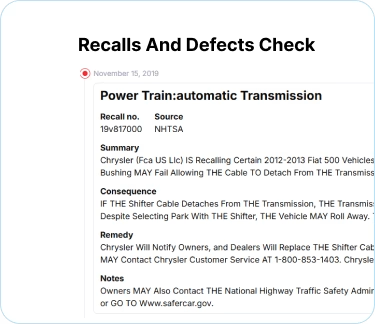
The 2002 Yamaha YZ400 designation, if referring to the YZ426F, generally boasts good reliability for a performance motocross machine, but like any high-strung off-road bike, it requires diligent maintenance. Frequently reported issues and points of concern often revolve around wear and tear associated with aggressive riding. One common area is the clutch, which can become stiff or wear out prematurely if ridden hard or not adjusted properly. The carburetor, while capable of great performance, can be finicky to tune, especially when exposed to changes in altitude or temperature, leading to bogging or poor throttle response. Overheating can also be a concern, particularly during prolonged, demanding use, though the liquid-cooling system is generally effective when functioning correctly. Some owners have reported issues with the kick-starter mechanism, though this is often related to user error or lack of proper lubrication. Valve adjustments are crucial for maintaining optimal performance and longevity, and neglecting them can lead to more significant engine problems. Regarding specific model year issues for 2002, Yamaha was refining their four-stroke motocross technology, and while the YZ426F was a capable machine, it shared some characteristics with its predecessors that required rider attention. Recalls on dirt bikes of this era are less common than on production street vehicles, but it's always advisable to check with Yamaha or reputable motorcycle forums for any service bulletins or safety campaigns that may have been issued. Long-term reliability hinges heavily on how the bike was ridden and maintained. A well-cared-for YZ426F, with regular oil changes, filter cleanings, valve checks, and proper pre-ride inspections, can endure many riding seasons. Conversely, a bike that has been thrashed without proper maintenance will likely exhibit accelerated wear in components like the piston, rings, and transmission.
How long will the 2002 Yamaha YZ400 last?
Estimating average mileage for a 2002 Yamaha YZ400 (YZ426F) is challenging as these are not typically used for daily commuting or long-distance travel; usage is often measured in hours of riding. However, a well-maintained machine can last for hundreds of riding hours, which translates to many years of service for recreational riders. For those who ride intensely, a top-end rebuild (piston, rings) might be needed every 50-100 hours. The crankcase and transmission are generally very durable and can last well over 500 hours if the oil is changed regularly and the clutch is treated with care. Weaknesses over time often appear in consumables like suspension components, bearings, and spokes due to the harsh environments they operate in. The inherent design of a high-performance motocross bike means that some components are designed for lighter weight and performance over extreme longevity, so regular inspection and replacement of worn parts are key to long-term durability.
What Technology & Safety Features are Included?
The 2002 Yamaha YZ400 (typically the YZ426F) is a purebred motocross machine, and as such, it is devoid of the technology, entertainment, driver-assistance, and safety features found in modern street motorcycles or cars. Its focus is entirely on performance and rider control in off-road conditions.
Built-in Tech: The technology present is purely mechanical and performance-oriented. This includes a liquid-cooled engine, a digitally mapped ignition system (CDI) for optimized spark timing across the rev range, and a performance-oriented exhaust system. The suspension is advanced for its time, featuring fully adjustable Kayaba upside-down forks and a rear monoshock with multiple adjustment points, allowing riders to fine-tune for different track conditions.
Entertainment: There is no entertainment system. The auditory experience is the raw, powerful sound of the four-stroke engine and the roar of the exhaust.
Driver-Assistance Features: None. The rider is entirely responsible for controlling the motorcycle. Features like traction control, ABS, or stability control are non-existent.
Safety Features: Safety in a motocross bike is primarily passive and relies on the rider's skill and the bike's handling capabilities. The bike is equipped with robust hydraulic disc brakes front and rear for effective stopping power. A sturdy aluminum frame provides rigidity and stability. The tires are designed for maximum grip on dirt and mud. However, there are no active safety features like airbags, anti-lock braking systems, or advanced lighting systems.
Optional Features: Options are typically limited to aftermarket performance parts such as different exhaust systems, fuel controllers (though not common on carb-equipped bikes of this era), different gearing, or upgraded suspension components. Protective accessories like handguards and skid plates are also common additions.
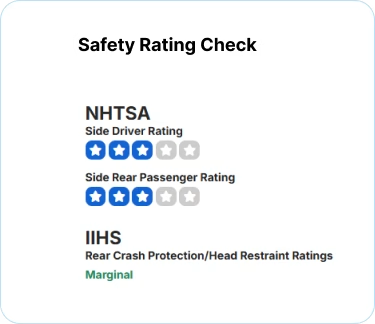
Crash-Test Ratings: Motocross motorcycles do not undergo crash-testing in the same way as road vehicles. Their design prioritizes strength and the ability to withstand the rigors of off-road riding and competition, not passenger safety in a collision scenario. The rider's protection is dependent on their protective gear (helmet, boots, body armor).
Built-in Tech: The technology present is purely mechanical and performance-oriented. This includes a liquid-cooled engine, a digitally mapped ignition system (CDI) for optimized spark timing across the rev range, and a performance-oriented exhaust system. The suspension is advanced for its time, featuring fully adjustable Kayaba upside-down forks and a rear monoshock with multiple adjustment points, allowing riders to fine-tune for different track conditions.
Entertainment: There is no entertainment system. The auditory experience is the raw, powerful sound of the four-stroke engine and the roar of the exhaust.
Driver-Assistance Features: None. The rider is entirely responsible for controlling the motorcycle. Features like traction control, ABS, or stability control are non-existent.
Safety Features: Safety in a motocross bike is primarily passive and relies on the rider's skill and the bike's handling capabilities. The bike is equipped with robust hydraulic disc brakes front and rear for effective stopping power. A sturdy aluminum frame provides rigidity and stability. The tires are designed for maximum grip on dirt and mud. However, there are no active safety features like airbags, anti-lock braking systems, or advanced lighting systems.
Optional Features: Options are typically limited to aftermarket performance parts such as different exhaust systems, fuel controllers (though not common on carb-equipped bikes of this era), different gearing, or upgraded suspension components. Protective accessories like handguards and skid plates are also common additions.
Crash-Test Ratings: Motocross motorcycles do not undergo crash-testing in the same way as road vehicles. Their design prioritizes strength and the ability to withstand the rigors of off-road riding and competition, not passenger safety in a collision scenario. The rider's protection is dependent on their protective gear (helmet, boots, body armor).
What Colors Options are Available?
2002 Yamaha YZ400 Prices and Market Value
When new, the 2002 Yamaha YZ426F (the likely successor to the YZ400 name) would have retailed for approximately $6,000 to $6,500 USD, depending on specific options and dealer pricing. These were high-performance, competition-oriented machines, priced accordingly.
Currently, the used market prices for a 2002 Yamaha YZ426F can vary significantly. Expect to see them listed anywhere from $1,500 to $3,500 or more, heavily influenced by condition, mileage (or hours), maintenance history, and any modifications.
Depreciation on motocross bikes is steep initially but stabilizes once they are several years old. A 2002 model has already experienced the bulk of its depreciation. Factors affecting resale value include the overall condition of the engine, suspension, and plastics. Bikes with a complete and well-documented maintenance history, especially those that have been raced responsibly, tend to hold their value better than heavily abused or neglected examples. Original parts and fewer aftermarket modifications can also contribute to a higher resale value for collectors or purists.
Currently, the used market prices for a 2002 Yamaha YZ426F can vary significantly. Expect to see them listed anywhere from $1,500 to $3,500 or more, heavily influenced by condition, mileage (or hours), maintenance history, and any modifications.
Depreciation on motocross bikes is steep initially but stabilizes once they are several years old. A 2002 model has already experienced the bulk of its depreciation. Factors affecting resale value include the overall condition of the engine, suspension, and plastics. Bikes with a complete and well-documented maintenance history, especially those that have been raced responsibly, tend to hold their value better than heavily abused or neglected examples. Original parts and fewer aftermarket modifications can also contribute to a higher resale value for collectors or purists.
2002 Yamaha YZ400 Cost of Ownership
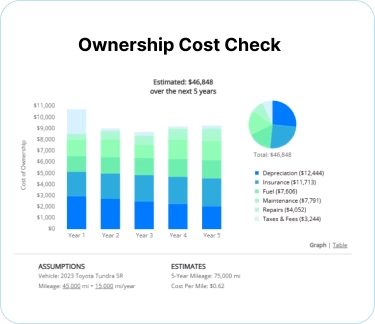
Owning a 2002 Yamaha YZ400 (YZ426F) is generally considered moderately to costly, not economical. Insurance can be relatively inexpensive if you opt for limited liability, but comprehensive coverage for a dirt bike is often not feasible or cost-effective. Fuel costs will be higher than a street bike due to its performance-oriented engine and frequent refueling needs. Maintenance is the biggest factor; regular oil changes, filter cleanings, valve adjustments, and chain/sprocket replacements are essential and add up. Repair costs can be significant if major engine work or suspension rebuilds are required. This is a performance machine built for abuse, and such components have a finite lifespan, making it a more expensive ownership proposition than a utilitarian vehicle.
2002 Yamaha YZ400 Fuel Efficiency
Fuel Type
Gasoline
Fuel Capacity
-
City Mileage
-
Highway Mileage
-
2002 Yamaha YZ400 Warranty
Basic
Original warranty
0 months / No data
Estimated remaining
Expired
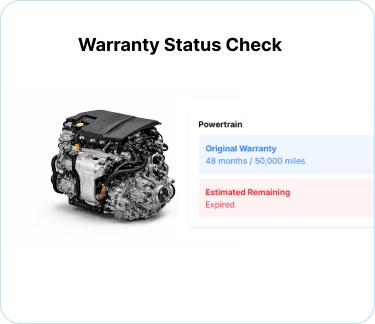
Powertrain
Original warranty
0 months / No data
Estimated remaining
Expired
Rust
Original warranty
0 months / No data
Estimated remaining
Expired
2002 Yamaha YZ400 Insurance
Insurance for a 2002 Yamaha YZ400 is moderately priced, reflecting its status as a Motorcycle with strong safety ratings and
reasonable repair costs.
How Does the 2002 Yamaha YZ400 Compare to Other Motorcycle?
The 2002 Yamaha YZ400, primarily represented by the YZ426F in that model year, competed in the highly competitive 4-stroke open class motocross segment. Its key rivals included:
Features: All these bikes offered similar core features: powerful four-stroke engines, advanced suspension, strong disc brakes, and lightweight frames. Yamaha's aluminum frame was a strong point.
Reliability: Yamaha has a strong reputation for reliability, and the YZ426F was generally robust, though any high-performance dirt bike requires diligent maintenance. Honda and Suzuki also had good reliability records in this era.
Price: New prices were comparable across the top manufacturers. On the used market, condition dictates value, but they generally sit in a similar bracket.
Recommendations:
For a similar experience to the 2002 YZ426F, consider other 2002-2005 Yamaha YZ426Fs or the successor YZ450F. If performance is paramount and you're looking for arguably the most refined package of that era, the 2002 Honda CRF450R is an excellent alternative. For those who appreciate a slightly different feel or are partial to the brand, the Suzuki RM-Z models from the same period are also worth investigating. If raw power and a more visceral experience are key, the Yamaha YZ426F remains a strong contender, but thorough inspection is crucial when buying used.
- Honda CRF450R: Often considered the benchmark, the CRF450R was known for its potent engine, excellent handling, and reliable build. In 2002, the Honda was a formidable competitor, often praised for its smoother power delivery compared to some rivals.
- KTM 450 SX (or similar displacement): KTM was rapidly gaining traction in motocross with their powerful, no-nonsense machines. They were typically strong performers, though sometimes perceived as having slightly less refined ergonomics or suspension out-of-the-box compared to the Japanese offerings.
- Suzuki RM-Z450 (or previous RM-Z generation): Suzuki offered competitive 4-stroke options as well, often characterized by their sharp handling and potent engines.
Features: All these bikes offered similar core features: powerful four-stroke engines, advanced suspension, strong disc brakes, and lightweight frames. Yamaha's aluminum frame was a strong point.
Reliability: Yamaha has a strong reputation for reliability, and the YZ426F was generally robust, though any high-performance dirt bike requires diligent maintenance. Honda and Suzuki also had good reliability records in this era.
Price: New prices were comparable across the top manufacturers. On the used market, condition dictates value, but they generally sit in a similar bracket.
Recommendations:
For a similar experience to the 2002 YZ426F, consider other 2002-2005 Yamaha YZ426Fs or the successor YZ450F. If performance is paramount and you're looking for arguably the most refined package of that era, the 2002 Honda CRF450R is an excellent alternative. For those who appreciate a slightly different feel or are partial to the brand, the Suzuki RM-Z models from the same period are also worth investigating. If raw power and a more visceral experience are key, the Yamaha YZ426F remains a strong contender, but thorough inspection is crucial when buying used.
Final Verdict: Is the 2002 Yamaha YZ400 a Good Motorcycle?
The 2002 Yamaha YZ400 (YZ426F) is ideal for experienced off-road riders and motocross enthusiasts seeking a powerful, torquey four-stroke machine from a reputable brand. It is worth buying if you prioritize raw engine performance and are comfortable with the demands of maintaining a high-performance dirt bike. This bike is strictly for off-road use and competition; it is not suitable for street riding.
Buying this vehicle is best done on the used market, as it is a vintage model. Look for well-maintained examples with clear maintenance records. Avoid bikes that appear heavily raced without proper upkeep. If you are mechanically inclined or have access to a trusted mechanic, the YZ426F can offer a rewarding experience. It's a great option for someone looking for a classic four-stroke motocross bike that provides a thrilling ride, provided they understand and accept the maintenance requirements and limitations of a nearly two-decade-old performance machine.