by VIN, Year, Make, Model by License Plate

2017 Peterbilt 377 Overview, Reviews, Ratings & Specs

Rating: 0.00
Based on 0 Owner Reviews
Cathleen V | October 28, 2025
The 2017 Peterbilt 377 is a legendary Class 8 truck, known for its distinctive aerodynamic styling and robust construction. While the 377 model's primary production run ended around 2007, Peterbilt trucks of this era, including those that might still be in service in 2017, are highly regarded. It's a conventional cab tractor designed for long-haul trucking and heavy-duty applications. Popular trims focused on driver comfort and operational efficiency. Due to its discontinued status, 2017 models are exclusively pre-owned, with pricing varying significantly based on condition and mileage.

The Good

The 2017 Peterbilt 377 offers exceptional durability and a commanding presence, appealing to those who value a truck built to last. Its proven performance, comfortable cabin for long hauls, and iconic design ensure it remains a practical and desirable choice for owner-operators and fleets alike.

The Bad

As a model not produced in 2017, finding a 2017 Peterbilt 377 means purchasing a used truck. Potential weaknesses include wear and tear from previous use, potential for outdated technology compared to newer models, and the need for thorough pre-purchase inspections to identify any hidden mechanical issues.

2017 Peterbilt 377: Quick Overview

  • Engine Options: The 2017 Peterbilt 377, being a pre-owned model from its production era, typically featured robust PACCAR engines. Common options included the PACCAR MX-13, Cummins ISX series, and Detroit Diesel DD15. These engines were engineered for heavy-duty applications and long-haul reliability.
  • Horsepower: Horsepower ratings varied widely depending on the specific engine and configuration chosen by the original owner. For the PACCAR MX-13, ranges typically started around 400 hp and could go up to 500 hp or more. Cummins and Detroit Diesel options offered similar powerful output, suitable for demanding tasks.
  • Fuel Economy: Fuel economy for heavy-duty trucks like the Peterbilt 377 is highly dependent on factors such as the engine, transmission, axle ratios, load weight, driving habits, and terrain. While specific MPG figures are not standardized like passenger cars, a well-maintained 377 with an efficient powertrain could achieve between 5.5 to 7.0 miles per gallon (MPG) under optimal highway conditions.
  • 0-60 Times: 0-60 mph times are not a primary metric for heavy-duty trucks. Their focus is on torque and pulling power, not rapid acceleration. When empty, a Peterbilt 377 could reach highway speeds reasonably quickly, but fully loaded, acceleration would be significantly slower, prioritizing smooth and controlled movement.
  • Towing Capacity: As a Class 8 tractor, the Peterbilt 377 is designed for substantial towing capacity. Configurations could vary, but it was commonly rated to haul Gross Combination Weights (GCW) of 80,000 lbs up to well over 100,000 lbs, depending on the specific chassis, drivetrain, and regulations.
  • Trim-Level Features: While Peterbilt doesn't use traditional trim levels like passenger cars, customization was extensive. Key features that owners could specify included various aerodynamic packages, different axle configurations, transmission choices (manual or automatic), sleeper cabin sizes (e.g., 70-inch or 80-inch), premium interior materials, advanced climate control systems, and enhanced braking and suspension systems. Higher-spec models often included more creature comforts for extended driver comfort on long routes.

2017 Peterbilt 377 Specifications

Vehicle Information
Year 2017
Make Peterbilt
Model 377
Trim -
Style -
Type Truck
Category Medium Truck
Manufacturing Details
Made In United States
Manufacturing City DENTON
Dimensions
Doors -
Curb Weight -
Gross Vehicle Weight Rating -
Overall Height -
Overall Length -
Overall Width -
Wheelbase Length -
Standard Seating -
Engine & Performance
Engine 14.9-L L-6 Diesel
Engine Size 14.9L
Engine Cylinders 6
Transmission -
Transmission Type -
Transmission Speeds -
Drivetrain 6x4
Additional Features
Anti-Brake System -
Steering Type -
Pricing
Manufacturer Suggested Retail Price (MSRP) -
Invoice Price -
Delivery Charges -

Vehicle History Report

Vehicle
Specifications
Ownership
History
All History
Events
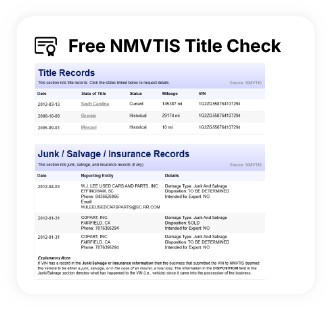
NMVTIS Title
History Check
Salvage/Rebuilt
Check
Accident
Check
Theft
Check
Open Lien
Check
Past Sale
Listings
Safety
Recalls
Odometer
Check
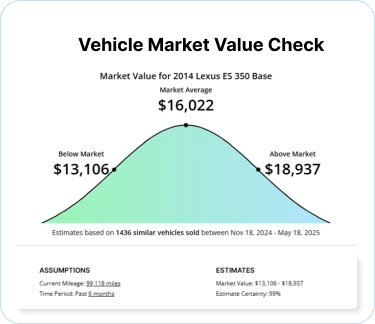
Market Price
Analysis

What Problems Does the 2017 Peterbilt 377 Have?

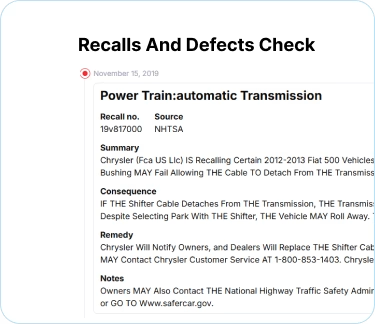
As the 2017 Peterbilt 377 was not manufactured in 2017, discussions around problems and recalls pertain to models produced during its original run, typically ending around 2007. However, these trucks are known for their robustness, and many are still in service. When considering a used 2017 Peterbilt 377, it is crucial to understand potential issues common to trucks of that vintage and make.

One area that can require attention on older heavy-duty trucks is the emissions control system. Depending on the specific engine and the emissions standards in place during the truck's original production year, components like the Diesel Particulate Filter (DPF) or Selective Catalytic Reduction (SCR) systems might require maintenance or repair. These systems, while crucial for compliance, can be complex and costly if they malfunction.

Electrical systems are another point to watch. Over time, wiring harnesses can degrade, connectors can corrode, and sensors can fail, leading to various dashboard warning lights or system malfunctions. Regular inspection and maintenance of the electrical system are vital. This can range from minor issues like faulty lights to more significant problems affecting engine controls or safety systems.

Powertrain components, while generally robust, are subject to wear and tear. Clutches in manual transmissions can wear out, and automatic transmissions may eventually require rebuilding. Rear axle seals, drive shaft U-joints, and suspension components are also subject to regular maintenance and eventual replacement due to the high mileage and heavy loads these trucks typically endure. For engines, while PACCAR, Cummins, and Detroit Diesel engines are known for their longevity, issues such as turbocharger problems, injector failures, or head gasket leaks can occur, especially in high-mileage units that haven't received consistent maintenance.

Corrosion can be an issue, particularly in regions with harsh winters and where road salt is used. The frame rails, body panels, and undercarriage can be susceptible to rust, which can compromise structural integrity if left unaddressed. Regular washing and undercoating can mitigate this.

It's important to note that Peterbilt as a brand is highly regarded for its build quality and the availability of parts, even for older models. However, any used truck, especially a heavy-duty one, should undergo a thorough inspection by a qualified mechanic familiar with Peterbilt trucks before purchase. This inspection should specifically look for signs of abuse, poor maintenance, or impending component failures.

How long will the 2017 Peterbilt 377 last?

Given that the 2017 Peterbilt 377 is a model from its production era (not a 2017 model year), its operational lifespan is substantial. A well-maintained Peterbilt 377 can easily accumulate over 1 million miles. Owner data and typical maintenance schedules for these trucks suggest that an average annual mileage of 100,000 to 150,000 miles is common for long-haul applications. This means a truck from the mid-2000s, still operational in 2017, would likely have well over 700,000 miles. The long-term durability is a hallmark of Peterbilt, thanks to their robust chassis, quality components, and the emphasis on driver comfort which can reduce fatigue and encourage better care. Weaknesses that emerge over time typically relate to wear and tear on high-mileage components, such as the drivetrain, suspension, and exhaust systems, rather than inherent design flaws. Regular preventative maintenance is the key to maximizing its service life.

What Technology & Safety Features are Included?

The 2017 Peterbilt 377, as a model from its production run, represents a blend of practical functionality and evolving technology for its time. Built-in tech and safety features were geared towards driver productivity and operational efficiency rather than the extensive infotainment systems found in modern passenger vehicles.

Standard Features:
  • Instrumentation: A comprehensive suite of analog gauges provided real-time information on engine performance, fuel levels, air pressure, and other critical operational parameters. This focus on clear, easily readable data was paramount for drivers.
  • HVAC System: Robust heating, ventilation, and air conditioning systems were standard to ensure driver comfort during long hauls in various climates.
  • Basic Audio: AM/FM radios and CD players were common options, providing essential entertainment for drivers on extended trips.

Optional and Advanced Features (for its era):
  • Navigation Systems: While not as integrated as today's GPS, aftermarket or factory-optional GPS navigation units could be installed.
  • Telematics: Some models could be equipped with telematics systems for fleet management, tracking, and diagnostics, particularly for commercial fleets.
  • Premium Sleepers: For over-the-road trucks, optional sleeper cabs offered amenities like comfortable beds, storage compartments, and sometimes even small refrigerators or entertainment systems, turning the truck into a mobile living space.
  • Enhanced Lighting: Options for auxiliary lighting and brighter headlights were available to improve visibility during nighttime operations.

Driver-Assistance and Safety:
  • Braking Systems: Advanced air brake systems with features like automatic slack adjusters and anti-lock braking systems (ABS) were standard or readily available, crucial for controlling heavy loads.
  • Visibility: Large windshields, well-positioned mirrors, and optional fog lights contributed to good all-around visibility.
  • Structural Integrity: Peterbilt trucks are known for their robust chassis and cab construction, designed to withstand the rigors of commercial trucking.

Crash-Test Ratings:
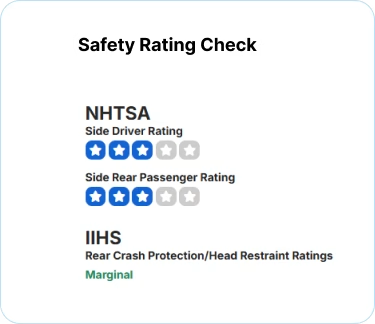
Standardized crash-test ratings like those from the NHTSA or IIHS are not typically performed or published for heavy-duty commercial trucks such as the Peterbilt 377 in the same way they are for passenger cars. The design focus for these vehicles is on occupant protection in a different context, emphasizing strength, stability under load, and the prevention of rollovers or severe impacts during operational use rather than side-impact or frontal-offset collision scenarios common in passenger car testing. The durability of the frame and cab is a primary safety consideration for these workhorses.

What Colors Options are Available?

We’re working on this section!
In the meantime, feel free to explore the other sections for more content.

2017 Peterbilt 377 Prices and Market Value

As a model not produced in 2017, a "new" price for a 2017 Peterbilt 377 is non-existent. During its production years (ending around 2007), a new Peterbilt 377, depending on its configuration, engine, and options, could range from approximately $100,000 to $180,000 or more. Current used market prices for a 2017 Peterbilt 377 (meaning a truck of that vintage that may be inspected in 2017) vary dramatically. You might find them ranging from $30,000 to $80,000 or higher, heavily influenced by mileage, condition, engine hours, maintenance history, and overall wear.

Peterbilt trucks are known for their strong resale value due to their durability and reputation. Depreciation is significant in the initial years, but it plateaus for well-maintained trucks. Factors affecting resale value include the truck's overall condition, engine and transmission health, tire condition, interior wear, and whether it has been used for specialized or harsh applications. Trucks with lower mileage and comprehensive service records will command higher prices.

2017 Peterbilt 377 Cost of Ownership

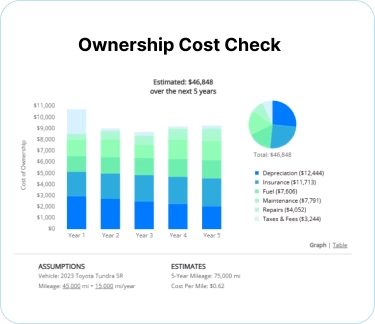
Owning a 2017 Peterbilt 377 involves considerable costs. Insurance for a heavy-duty truck can be substantial, depending on the operator's record, radius of operation, and coverage levels. Fuel costs are the largest ongoing expense, driven by the large diesel engines and high mileage. Maintenance and repair are critical; while Peterbilt is durable, components on a truck of this age will eventually need attention, from oil changes and filter replacements to potential engine, transmission, or brake work. These trucks are not economical in the way a light-duty vehicle is; they are costly to own but offer a return on investment through their hauling capacity and reliability when properly managed.

2017 Peterbilt 377 Fuel Efficiency

Fuel Type Diesel
Fuel Capacity -
City Mileage -
Highway Mileage -

2017 Peterbilt 377 Warranty

Basic
Original warranty 0 months / No data
Estimated remaining Expired
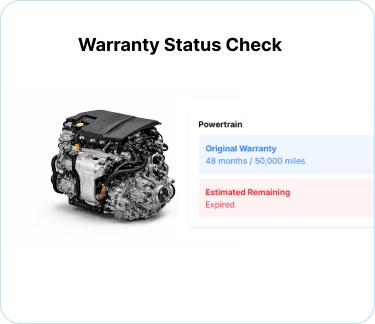
Powertrain
Original warranty 0 months / No data
Estimated remaining Expired
Rust
Original warranty 0 months / No data
Estimated remaining Expired

2017 Peterbilt 377 Insurance

Insurance for a 2017 Peterbilt 377 is moderately priced, reflecting its status as a Truck with strong safety ratings and
reasonable repair costs.

How Does the 2017 Peterbilt 377 Compare to Other Truck?

When comparing the 2017 Peterbilt 377 to its contemporaries, it stands out due to its iconic design and robust engineering. Key rivals in the Class 8 conventional tractor segment around that era would include models like the Kenworth T680/T880, Freightliner Cascadia, and Volvo VNL series.

Performance: Peterbilt, often equipped with powerful PACCAR, Cummins, or Detroit Diesel engines, offered performance on par with or exceeding most rivals. These trucks were designed for hauling heavy loads over long distances, with ample torque and horsepower. In terms of raw power and reliability, the 377 held its own.

Features: Compared to newer models from rivals like the Freightliner Cascadia or Volvo VNL, a 377 might have less advanced integrated technology and driver-assistance features, as its primary production ended earlier. However, Peterbilt's focus on driver comfort, cab ergonomics, and build quality was consistently high. Optional features could make it competitive, but base models might feel simpler than the latest offerings.

Reliability: Peterbilt has a stellar reputation for reliability and durability, and the 377 is a prime example. While any used truck requires careful inspection, Peterbilts are known for lasting hundreds of thousands of miles with proper maintenance. Rivals like Kenworth share a similar reputation for longevity. Freightliner and Volvo also offer reliable trucks, but Peterbilt and Kenworth often have a slight edge in perceived build quality and chassis robustness among owner-operators.

Price: As a pre-owned vehicle, the price of a 2017 Peterbilt 377 is highly variable. Generally, Peterbilt trucks tend to hold their value well, meaning they might be priced similarly or slightly higher than comparable models from other brands with similar mileage and condition. However, the premium often reflects the perceived quality and longevity.

Alternatives:
  • Similar: Kenworth T680/T880: Often considered the closest sibling to Peterbilt (both are PACCAR brands), offering similar build quality, performance, and reliability.
  • Similar: Volvo VNL Series: Known for fuel efficiency and a comfortable ride, Volvo trucks are a strong contender, though some may find their styling less traditional than Peterbilt.
  • Consider If Prioritizing Modern Tech: Freightliner Cascadia (newer generations): If advanced driver-assistance systems and more integrated tech are paramount, a newer Freightliner Cascadia might be a better fit, though potentially with a different feel in terms of driver connection to the machine.

Overall, the 2017 Peterbilt 377 remains a highly desirable truck for those who prioritize proven performance, legendary durability, and iconic styling over the very latest in digital tech. Its value proposition lies in its long-term operational life and strong resale potential.

Final Verdict: Is the 2017 Peterbilt 377 a Good Truck?

The 2017 Peterbilt 377 is ideal for experienced owner-operators and fleet managers who value proven durability, iconic styling, and robust performance over cutting-edge technology. It is absolutely worth buying for those seeking a reliable workhorse built to last for many more miles. This truck is exclusively available on the used market, so buying conditions are critical. It's a strong contender if you can find one with a well-documented maintenance history, lower mileage for its age, and in good mechanical condition. Prioritize trucks that have been well cared for, perhaps in less demanding vocational applications or long-haul highway use rather than severe vocational duty. A thorough pre-purchase inspection by a Peterbilt specialist is non-negotiable to ensure you're investing in a truck that will continue to deliver value.

2017 Peterbilt 377 Owner Reviews

0.00
Consumer Rating, Based on 0 Consumer Reviews
Overall rating
Cancel
Thank You for Your Review!

We truly appreciate the time and effort you took to share your experience with us.

Uh oh!

Something went wrong, please try again later.

Author Image
Cathleen V

Cathleen is an exceptional freelance writer covering hot topics in the automotive world from a gearhead's perspective. Her articles delve into various aspects of automotive technology and history, offering readers detailed insights into engine performance, reliability, and maintenance. Through her engaging and informative writing, Cathleen provides valuable information to automotive enthusiasts and consumers alike, helping them make informed decisions about vehicle maintenance and purchases.