
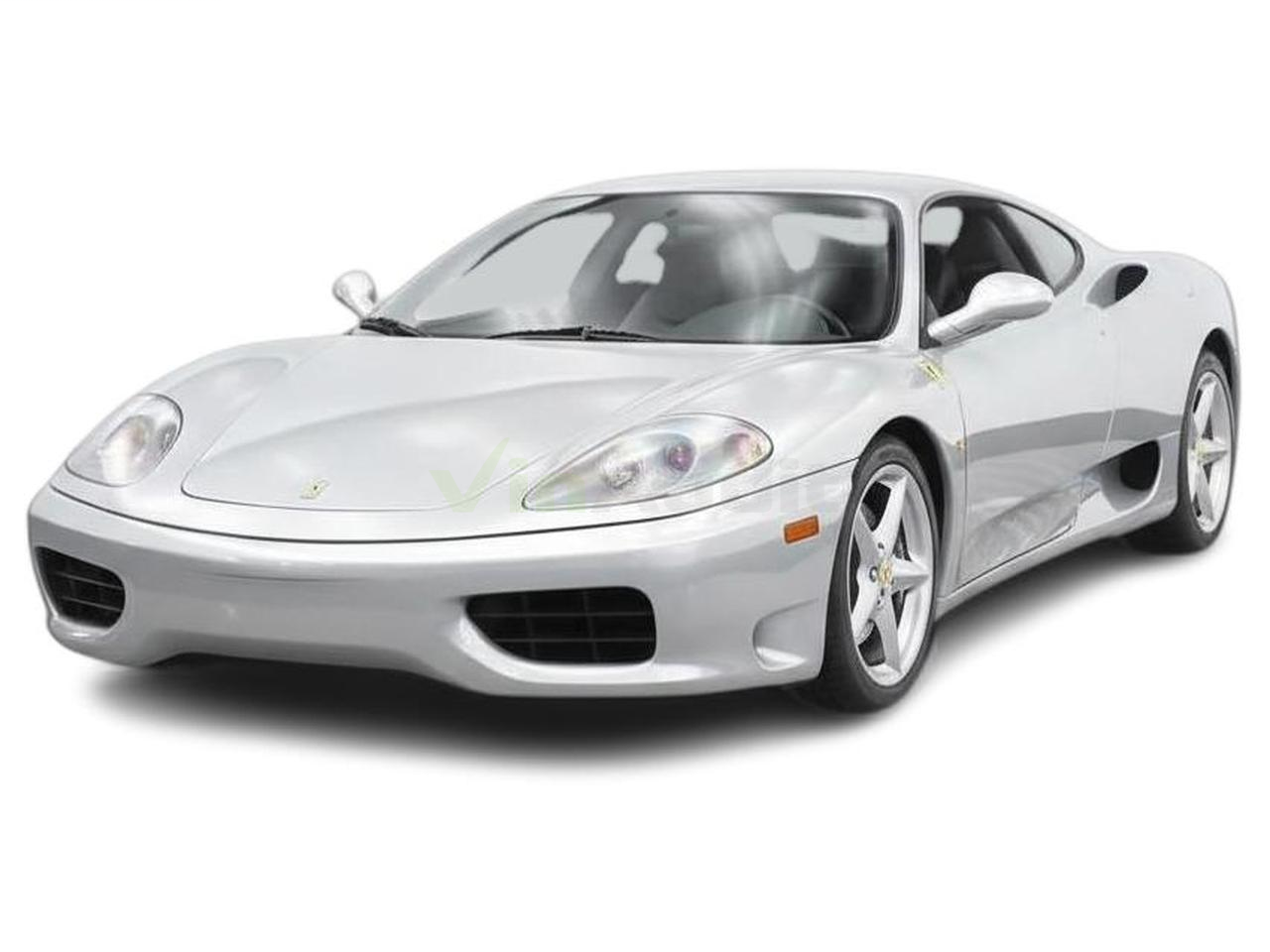
The 2000 Ferrari 360 Modena, a mid-engine V8-powered sports car, debuted in 1999 and was produced until 2004. Known for its stunning Pininfarina design and exhilarating performance, it replaced the F355. Available primarily as a coupe, with a spider convertible variant also offered, the 360 Modena was celebrated for its accessible supercar experience and a more modern approach compared to its predecessors. Its popularity stems from its evocative Ferrari DNA and the thrilling driving dynamics it provides.
The Good
The 2000 Ferrari 360 Modena excels with its sublime V8 soundtrack, exquisite handling, and timeless Italian design. It offers a surprisingly comfortable ride for a supercar, making it more usable daily. While exotic, its relative mechanical simplicity compared to earlier Ferraris appeals to practical buyers, while its emotional pull is undeniable.
The Bad
Known weaknesses for the 2000 Ferrari 360 Modena include potential sticky interior plastics, costly clutch replacements (especially for the F1 automated manual transmission), and the possibility of valve cover gasket leaks. Early models sometimes had minor electrical gremlins. Regular, specialized maintenance is crucial.
2000 Ferrari 360 Modena: Quick Overview
- Engine: 3.6-liter naturally aspirated V8
- Horsepower: 400 hp @ 7,500 rpm
- Torque: 275 lb-ft @ 4,750 rpm
- Transmission: 6-speed manual or 6-speed F1 electro-hydraulic automated manual
- Fuel Economy: Approximately 10-13 MPG combined (EPA estimates are often unavailable or unreliable for such vehicles; real-world figures vary significantly with driving style)
- 0-60 mph: Approximately 3.9 - 4.2 seconds (depending on transmission and driver)
- Top Speed: Approximately 183 mph
- Drivetrain: Rear-wheel drive
- Brakes: Ventilated discs with ABS
- Suspension: Double wishbone, front and rear
- Towing Capacity: Not applicable
- Body Styles: Coupe (Modena), Convertible (Spider)
- Key Trims/Features:
- Standard Modena: Alcantara and leather interior, power-adjustable seats, climate control, power windows, power locks, premium sound system, Xenon headlights.
- F1 Transmission: Offered an automated manual gearbox with paddle shifters, providing quicker shifts and a more race-car-like experience, albeit at a higher cost and potential maintenance complexity.
- Optional Features: Carbon ceramic brakes (later models), Challenge Stradale-inspired aero enhancements (rare), upgraded exhaust systems, navigation system (basic by today's standards).
- Chassis: Aluminum spaceframe chassis, contributing to a relatively light weight for its class.
- Exhaust Note: Famous for its distinct, high-pitched V8 symphony.
2000 Ferrari 360 Modena Specifications
Vehicle Information
| Year | 2000 |
| Make | Ferrari |
| Model | 360 Modena |
| Trim | - |
| Style | - |
| Type | Coupe |
| Category | Compact Car |
Manufacturing Details
| Made In | Italy |
| Manufacturing City | MARANELLO |
Dimensions
| Doors | 2-Door |
| Curb Weight | - |
| Gross Vehicle Weight Rating | - |
| Overall Height | 47.80 inches |
| Overall Length | 176.40 inches |
| Overall Width | 75.70 inches |
| Wheelbase Length | 102.40 inches |
| Standard Seating | 2 |
Engine & Performance
| Engine | 3.6L V8 |
| Engine Size | 3.6L |
| Engine Cylinders | 8 |
| Transmission | 6-Speed Manual |
| Transmission Type | Manual |
| Transmission Speeds | 6-Speed |
| Drivetrain | Rear-Wheel Drive |
Additional Features
| Anti-Brake System | 4-Wheel ABS |
| Steering Type | Rack & Pinion |
Pricing
| Manufacturer Suggested Retail Price (MSRP) | $145,925 |
| Invoice Price | - |
| Delivery Charges | - |
Vehicle History Report
Specifications
History
Events
History Check
Check
Check
Check
Check
Listings
Recalls
Check
Analysis
What Problems Does the 2000 Ferrari 360 Modena Have?
The 2000 Ferrari 360 Modena, while generally more reliable than some of its predecessors, is not without its potential issues. One of the most commonly reported concerns is the degradation of the interior plastics, particularly the dashboard and door panel coatings, which can become sticky and peel. This is a cosmetic issue but can be costly to rectify professionally.
Mechanically, the F1 automated manual transmission, while offering rapid gear changes, is a significant point of attention. The hydraulic system can develop leaks, and the clutch has a finite lifespan, with replacements being a substantial expense. Manual transmission cars are generally considered more reliable in this regard, but clutch wear is still a factor in any performance car.
Another area to watch is the valve cover gaskets. Over time, these can degrade and leak oil, which can drip onto the exhaust manifold, causing smoke and a potential fire hazard. Early model year 360s (around 1999-2001) might be slightly more prone to certain electrical quirks or minor sensor issues, though these are often resolved with proper diagnostics and maintenance. Engine mounts can also wear out over time, leading to increased vibration.
While there haven't been widespread major recalls impacting all 360 Modenas, individual cars may have had specific recalls addressed. Long-term reliability is heavily dependent on how the car was maintained. A documented history of regular, specialist servicing is paramount. Neglected maintenance can lead to significantly more expensive problems down the line. The aluminum spaceframe construction is robust, but corrosion can be an issue in certain climates if not properly protected.
How long will the 2000 Ferrari 360 Modena last?
The 2000 Ferrari 360 Modena, being a performance exotic, typically accumulates lower mileage than standard vehicles. Many owners treat them as weekend or special occasion cars. A well-maintained 360 Modena can comfortably see service for well over 100,000 miles, though finding examples with such mileage is rare. The engine and chassis are generally robust and capable of long service life. However, the long-term durability is heavily dictated by meticulous maintenance, particularly concerning the F1 transmission, clutch wear, and the aforementioned sticky interior plastics. Weaknesses emerge primarily from the cost and complexity of maintaining specialized components over extended periods and higher mileage scenarios.
What Technology & Safety Features are Included?
The 2000 Ferrari 360 Modena represents a period where automotive technology was rapidly advancing, but it was still relatively basic compared to today's standards. Built-in tech was focused on enhancing the driving experience rather than extensive digital integration.
Entertainment: Standard features typically included a premium sound system with AM/FM radio and a CD player. While functional, it was not a state-of-the-art entertainment system by modern benchmarks. Optional upgrades might have included a more sophisticated audio setup or, in some later models, a rudimentary navigation system that was basic and often unreliable.
Driver-Assistance Features: Driver-assistance systems were virtually non-existent in the modern sense. There were no electronic aids like adaptive cruise control, lane-keeping assist, or blind-spot monitoring. The focus was on driver engagement and the machine itself. Traction control (ASR - Anti-Slip Regulation) was available and was a significant safety feature for its time, helping to manage power delivery on slippery surfaces.
Safety Features: Standard safety equipment included anti-lock brakes (ABS), which were crucial for managing braking forces in high-performance situations. Airbags for the driver and front passenger were also standard. The aluminum spaceframe chassis provided a rigid structure, contributing to occupant protection. However, comprehensive crash-test ratings from organizations like NHTSA or IIHS for such low-production exotics are generally not available or publicly disclosed. Ferrari's internal engineering standards would have been high, but direct comparative data is scarce.
Optional Features: As mentioned, some later models might have featured carbon ceramic brakes, which offered superior stopping power and fade resistance. The F1 transmission itself could be considered a technological feature, offering a faster shifting experience than a traditional manual for many drivers.
What Colors Options are Available?
2000 Ferrari 360 Modena Prices and Market Value
When new in 2000, the Ferrari 360 Modena carried a price tag typically in the range of $150,000 to $170,000, depending on options and transmission choice. As a supercar, its depreciation curve has been relatively gentle compared to mass-produced luxury vehicles. Current used market prices for a 2000 360 Modena often range from $80,000 to $130,000, with prices significantly influenced by mileage, condition, service history, and specification (e.g., manual vs. F1 transmission, color, and rare options). Well-maintained, low-mileage examples command a premium. Resale value is positively affected by a complete and documented service history from reputable Ferrari specialists, original documentation, and desirable color combinations.
2000 Ferrari 360 Modena Cost of Ownership
Owning a 2000 Ferrari 360 Modena is undeniably costly. Insurance premiums will be substantial due to the vehicle's value and performance. Fuel costs are high, with the V8 engine demanding premium fuel and achieving relatively low MPG. Maintenance is where costs escalate significantly; expect annual services at a Ferrari specialist to run into the thousands of dollars. Major services, like belt changes or F1 clutch replacements, can easily cost tens of thousands. Repair costs for exotic components are extremely high. The 360 Modena is a costly vehicle to own and operate.
2000 Ferrari 360 Modena Fuel Efficiency
2000 Ferrari 360 Modena Recalls & Defects
Power Train:clutch Assembly
2000 Ferrari 360 Modena Warranty
Basic
Powertrain
Rust
2000 Ferrari 360 Modena Insurance
reasonable repair costs.
How Does the 2000 Ferrari 360 Modena Compare to Other Coupe?
The 2000 Ferrari 360 Modena entered a competitive segment against rivals like the Porsche 911 (996 generation), Lamborghini Gallardo (first generation), and Aston Martin DB7 Vantage. In terms of performance, the 360 Modena offered a sublime V8 soundtrack and sharp handling, with a 0-60 time around 4 seconds, competitive with its peers. The Porsche 911 (996) offered similar performance and arguably better everyday usability and reliability at a lower price point, though it lacked the exotic allure. The Lamborghini Gallardo, when it arrived a few years later, offered more brute force and aggressive styling but was also considerably more expensive. The Aston Martin DB7 Vantage provided a more luxurious and grand touring experience with its V12 engine but was less focused on outright track performance.
Features were generally focused on the driving experience; the 360 Modena's Pininfarina design was a major draw. Reliability is where the 360 Modena is often debated. While an improvement over some older Ferraris, it still requires diligent, specialized maintenance, which is more costly and less accessible than for a Porsche 911. The 996 911 is generally considered more reliable and cheaper to maintain. The Gallardo had its own set of reliability concerns, often attributed to its Audi roots.
Alternatives:
- Porsche 911 (996 generation): For a more practical, reliable, and cost-effective supercar experience, the 996 911 (especially the Carrera 4S or Turbo models) is an excellent alternative.
- Maserati 3200 GT / 4200 GT: Sharing some Ferrari DNA but often more affordable and offering a different character, these are good choices for those seeking Italian flair with potentially less extreme ownership costs.
- Lamborghini Murciélago (early models): If outright exotic presence and power are paramount, an early Murciélago could be considered, though it's a step up in price and complexity.
The 360 Modena strikes a fine balance between outright performance, exotic appeal, and a degree of daily usability that its more hardcore rivals sometimes lack, but at a premium ownership cost.
Final Verdict: Is the 2000 Ferrari 360 Modena a Good Coupe?
The 2000 Ferrari 360 Modena is ideal for the discerning enthusiast who desires the quintessential Ferrari experience without the astronomical price tag of earlier or later models. It's for someone who appreciates breathtaking design, a glorious V8 soundtrack, and spirited performance, and is prepared for the associated ownership costs. This car is not for the budget-conscious or those seeking trouble-free, low-maintenance transportation. Buying a 360 Modena is absolutely worth it for the right person, but only under specific conditions: primarily as a used purchase, with a strong emphasis on obtaining a meticulously maintained example with a comprehensive service history from a reputable Ferrari specialist. Manual transmission examples are often preferred by purists and may hold value better. It's a passion purchase, not a practical one.

Jovan
Jovan specializes in interpreting vehicle records and making sense of VIN data. With over 10 years of experience in the automotive data industry, his work ensures that every report is clear, accurate, and useful for car buyers.