1987 Ford CT8000 Overview, Reviews, Ratings & Specs
The 1987 Ford CT8000 is a heavy-duty commercial truck, part of Ford's long-standing lineup of robust vehicles designed for demanding tasks. Primarily offered as a chassis cab or complete truck, it served commercial fleets and vocational users throughout the late 1980s. Its popularity stemmed from its straightforward, workhorse nature and Ford's reputation for reliability in the commercial sector. Pricing varied significantly based on configuration and options.
The Good
The 1987 Ford CT8000 offered rugged durability and strong performance for its class. Its practical design prioritized functionality, while its solid construction resonated with buyers seeking a dependable work partner that promised long-term value and minimal downtime.

The Bad
Potential weaknesses for the 1987 Ford CT8000 include age-related wear on components like the transmission and engine, particularly if maintenance has been neglected. Electrical system issues and corrosion on the chassis are also common concerns for vehicles of this vintage.
1987 Ford CT8000: Quick Overview
- Engine Options: The 1987 Ford CT8000 was available with a range of powerful diesel engines. Common options included the Ford 8.3L turbocharged diesel (often referred to as the 500 series engine) and potentially larger displacement engines depending on the specific configuration and vocational application. Some models might have featured Cummins or Caterpillar engines through Ford's partnerships at the time.

- Horsepower: Horsepower ratings varied significantly based on the chosen engine. The 8.3L diesel typically produced between 200 to 250 horsepower. Higher-spec engines could exceed this.
- Fuel Economy: Fuel economy for a vehicle of this class is highly dependent on load, terrain, and driving style. Expect figures in the range of 6-10 miles per gallon (MPG) for diesel variants.
- 0-60 Times: 0-60 mph times are not a standard metric for commercial trucks like the CT8000, as they are designed for load hauling and sustained operation rather than rapid acceleration. These vehicles would be significantly slower than passenger cars, likely taking 20-30 seconds or more to reach 60 mph when unloaded, and considerably longer under load.
- Towing/Payload Capacity: The CT8000 is a Class 7 truck, designed for substantial hauling. Its towing and payload capacities were rated for very heavy loads, often in the tens of thousands of pounds. Specific ratings depended on the chassis configuration, axle ratios, and suspension, but it was built for work up to 33,000 lbs Gross Vehicle Weight Rating (GVWR) and beyond for certain applications.
- Trim-Level Features: As a commercial vehicle, "trims" were less about luxury and more about functionality and vocational packages. Standard features would have included a basic instrument cluster, durable vinyl or cloth seating, manual windows, and basic heating. Optional features could include air conditioning, upgraded suspension, specialized transmissions (e.g., automatic options or multi-speed manual), power steering, and various body configurations like flatbeds, box trucks, or dump beds.
1987 Ford CT8000 Specifications
Vehicle Information
| Year | 1987 |
| Make | Ford |
| Model | CT8000 |
| Trim | - |
| Style | - |
| Type | Truck |
| Category | Heavy Truck |
Manufacturing Details
| Made In | United States |
| Manufacturing City | JEFFERSON COUNTY |
Dimensions
| Doors | - |
| Curb Weight | - |
| Gross Vehicle Weight Rating | 33001 pounds |
| Overall Height | - |
| Overall Length | - |
| Overall Width | - |
| Wheelbase Length | - |
| Standard Seating | - |
Engine & Performance
| Engine | 10.4L V8 |
| Engine Size | 10.4L |
| Engine Cylinders | 8 |
| Transmission | - |
| Transmission Type | - |
| Transmission Speeds | - |
| Drivetrain | Rear-Wheel Drive |
Additional Features
| Anti-Brake System | - |
| Steering Type | - |
Pricing
| Manufacturer Suggested Retail Price (MSRP) | - |
| Invoice Price | - |
| Delivery Charges | - |
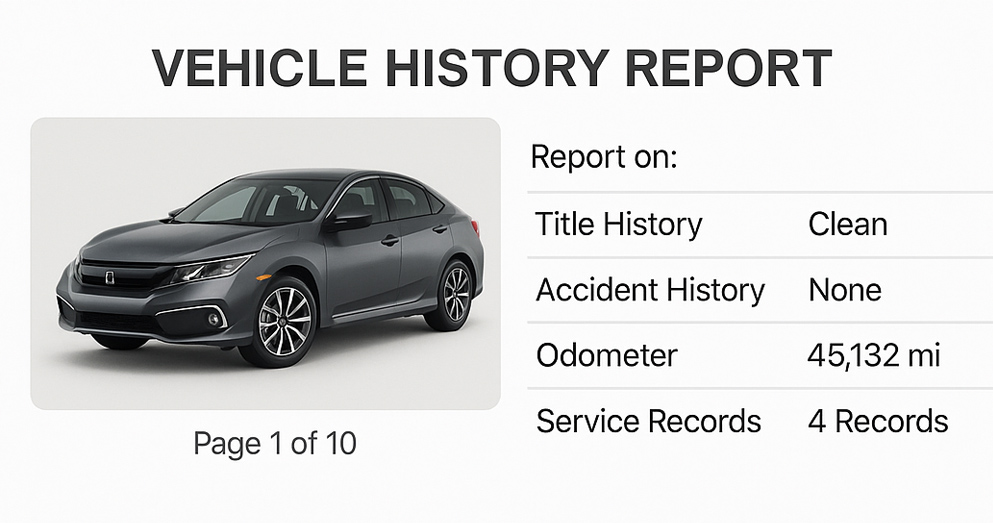
Vehicle History Report
Vehicle
Specifications
Specifications
Ownership
History
History
All History
Events
Events
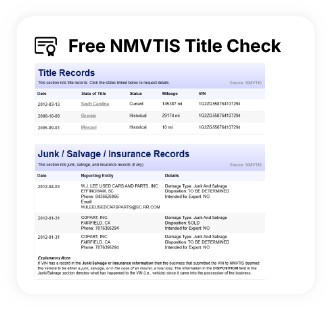
NMVTIS Title
History Check
History Check
Salvage/Rebuilt
Check
Check
Accident
Check
Check
Theft
Check
Check
Open Lien
Check
Check
Past Sale
Listings
Listings
Safety
Recalls
Recalls
Odometer
Check
Check
Market Price
Analysis
Analysis
What Problems Does the 1987 Ford CT8000 Have?
The 1987 Ford CT8000, being a robust commercial vehicle, generally possessed a reputation for solid mechanical components, especially its diesel powertrains. However, like any vehicle approaching 30-40 years of age, specific issues tend to emerge. Frequently reported problems often revolve around age-related wear and tear rather than inherent design flaws.
One common area of concern for older heavy-duty trucks is the cooling system. Radiators can develop leaks, hoses can become brittle and crack, and water pumps may fail over time, leading to overheating. Proper maintenance and timely replacement of these components are crucial.
The transmission, whether manual or automatic, is another component that can experience issues with age and mileage. Clutch wear in manual transmissions is common, and older automatic transmissions might develop leaks or shifting problems if fluid changes have been neglected. Rebuilding or replacing a heavy-duty transmission can be a significant expense.
Electrical systems on older vehicles can also be problematic. Wiring harnesses can degrade, leading to intermittent issues with lights, gauges, or other electrical accessories. Starter motors and alternators are also wear items that will eventually need replacement.
Given the nature of commercial use, suspension and braking systems are subject to heavy loads and constant use. Worn leaf springs, damaged bushings, and issues with brake components (pads, rotors, drums, and hydraulic lines) are not uncommon and require regular inspection and maintenance.
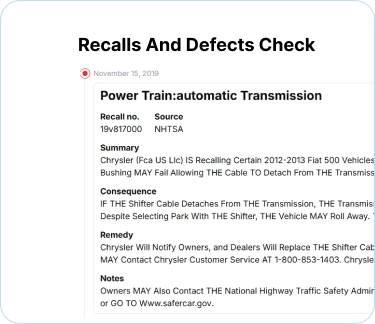
Regarding recalls, specific recall information for a 1987 Ford CT8000 would need to be checked against Ford's official recall database using its Vehicle Identification Number (VIN). However, for trucks of this era, recalls often pertained to safety-related issues such as brake system components, steering components, or fuel system integrity.
Long-term reliability is highly dependent on the vehicle's initial build quality, its intended use, and, most importantly, its maintenance history. A CT8000 that has been regularly serviced, greased, and had fluid changes will far outlast one that has been neglected. The chassis itself, particularly if exposed to harsh weather or road salt, can be susceptible to rust and corrosion, which can compromise structural integrity over many years.
One common area of concern for older heavy-duty trucks is the cooling system. Radiators can develop leaks, hoses can become brittle and crack, and water pumps may fail over time, leading to overheating. Proper maintenance and timely replacement of these components are crucial.
The transmission, whether manual or automatic, is another component that can experience issues with age and mileage. Clutch wear in manual transmissions is common, and older automatic transmissions might develop leaks or shifting problems if fluid changes have been neglected. Rebuilding or replacing a heavy-duty transmission can be a significant expense.
Electrical systems on older vehicles can also be problematic. Wiring harnesses can degrade, leading to intermittent issues with lights, gauges, or other electrical accessories. Starter motors and alternators are also wear items that will eventually need replacement.
Given the nature of commercial use, suspension and braking systems are subject to heavy loads and constant use. Worn leaf springs, damaged bushings, and issues with brake components (pads, rotors, drums, and hydraulic lines) are not uncommon and require regular inspection and maintenance.
Regarding recalls, specific recall information for a 1987 Ford CT8000 would need to be checked against Ford's official recall database using its Vehicle Identification Number (VIN). However, for trucks of this era, recalls often pertained to safety-related issues such as brake system components, steering components, or fuel system integrity.
Long-term reliability is highly dependent on the vehicle's initial build quality, its intended use, and, most importantly, its maintenance history. A CT8000 that has been regularly serviced, greased, and had fluid changes will far outlast one that has been neglected. The chassis itself, particularly if exposed to harsh weather or road salt, can be susceptible to rust and corrosion, which can compromise structural integrity over many years.
How long will the 1987 Ford CT8000 last?
The 1987 Ford CT8000, designed for heavy-duty commercial applications, typically sees service lives measured in hundreds of thousands of miles, often exceeding 300,000 to 500,000 miles with diligent maintenance. Owner data suggests that vehicles used in lighter vocational duties or for occasional hauling can achieve even greater longevity. The core powertrain components, especially the diesel engines and robust transmissions, are built for durability. However, weaknesses emerge over time, primarily related to corrosion on the frame and body, especially in rust-belt regions, and the gradual wear of ancillary systems like suspension, brakes, and electrical components. Regular preventative maintenance is the key determinant of its long-term serviceability.
What Technology & Safety Features are Included?
The 1987 Ford CT8000 represents a period when technology in commercial vehicles was largely focused on functionality and durability rather than advanced features. Consequently, its built-in technology, entertainment, driver-assistance, and safety features are relatively basic by modern standards.
Technology & Entertainment: Standard technology would have been minimal. This typically included an analog gauge cluster displaying essential information like speed, engine RPM, oil pressure, coolant temperature, and fuel level. An AM/FM radio might have been an optional upgrade, with perhaps a cassette player if a premium package was selected. There were no integrated navigation systems, touchscreens, or advanced infotainment options. Climate control would have been a basic heater, with air conditioning likely being an optional feature.
Driver-Assistance Features: Driver-assistance systems as we know them today were non-existent in 1987. Features like cruise control might have been available as an option for highway driving, but advanced aids such as lane departure warning, blind-spot monitoring, or adaptive cruise control were not part of the vehicle's offering.
Safety Features: Safety features were primarily passive and structural. The CT8000 would have featured seat belts for the driver and any passengers. Its robust frame and chassis construction were its primary safety attribute, designed to withstand heavy loads and impacts. Hydraulic disc or drum brakes provided stopping power, with power assist being standard for improved braking performance. Reflective markers and lighting systems were designed to improve visibility to other road users. However, modern safety advancements like airbags, anti-lock braking systems (ABS) for heavy trucks, or electronic stability control were not standard, and may not have even been available as options for this specific model year.
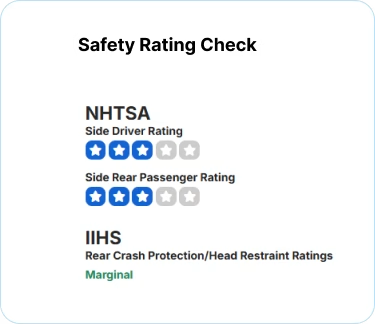
Crash-Test Ratings: Official crash-test ratings from organizations like the National Highway Traffic Safety Administration (NHTSA) for commercial trucks of this vintage, especially for specific model variants like the CT8000, are often not readily available in the same way they are for passenger vehicles. The focus for these heavy-duty trucks was on operational safety and durability rather than standardized crash testing protocols applied to light-duty vehicles. Its inherent construction was engineered for heavy-duty compliance and load-bearing safety.
Technology & Entertainment: Standard technology would have been minimal. This typically included an analog gauge cluster displaying essential information like speed, engine RPM, oil pressure, coolant temperature, and fuel level. An AM/FM radio might have been an optional upgrade, with perhaps a cassette player if a premium package was selected. There were no integrated navigation systems, touchscreens, or advanced infotainment options. Climate control would have been a basic heater, with air conditioning likely being an optional feature.
Driver-Assistance Features: Driver-assistance systems as we know them today were non-existent in 1987. Features like cruise control might have been available as an option for highway driving, but advanced aids such as lane departure warning, blind-spot monitoring, or adaptive cruise control were not part of the vehicle's offering.
Safety Features: Safety features were primarily passive and structural. The CT8000 would have featured seat belts for the driver and any passengers. Its robust frame and chassis construction were its primary safety attribute, designed to withstand heavy loads and impacts. Hydraulic disc or drum brakes provided stopping power, with power assist being standard for improved braking performance. Reflective markers and lighting systems were designed to improve visibility to other road users. However, modern safety advancements like airbags, anti-lock braking systems (ABS) for heavy trucks, or electronic stability control were not standard, and may not have even been available as options for this specific model year.
Crash-Test Ratings: Official crash-test ratings from organizations like the National Highway Traffic Safety Administration (NHTSA) for commercial trucks of this vintage, especially for specific model variants like the CT8000, are often not readily available in the same way they are for passenger vehicles. The focus for these heavy-duty trucks was on operational safety and durability rather than standardized crash testing protocols applied to light-duty vehicles. Its inherent construction was engineered for heavy-duty compliance and load-bearing safety.
What Colors Options are Available?
1987 Ford CT8000 Prices and Market Value
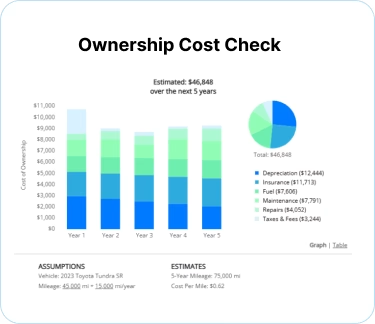
Owning a 1987 Ford CT8000 is generally considered costly, reflecting its heavy-duty nature. Insurance premiums will be higher due to its commercial classification and value for hauling. Fuel costs will be significant, with diesel consumption in the 6-10 MPG range. Maintenance and repair costs are substantial; parts can be expensive, and specialized labor is often required. While it offers value in its work capability, its overall ownership cost is not economical for the average consumer, but rather a necessary investment for commercial operations.
1987 Ford CT8000 Cost of Ownership
Insurance for a 1987 Ford CT8000 is typically higher than for a light-duty vehicle, reflecting its commercial purpose and potential for cargo value. Fuel costs are significant, with diesel engines consuming substantial amounts, typically yielding 6-10 MPG. Maintenance and repair costs are also considerable; parts for heavy-duty trucks are expensive, and specialized mechanics are often required. While its upfront purchase price may have been competitive for its class, the ongoing expenses for fuel, maintenance, and repairs make the 1987 Ford CT8000 a costly vehicle to own and operate, rather than an economical one.
1987 Ford CT8000 Fuel Efficiency
Fuel Type
Diesel
Fuel Capacity
-
City Mileage
-
Highway Mileage
-
1987 Ford CT8000 Warranty
Basic
Original warranty
0 months / No data
Estimated remaining
Expired
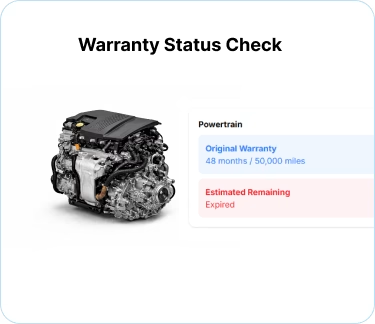
Powertrain
Original warranty
0 months / No data
Estimated remaining
Expired
Rust
Original warranty
0 months / No data
Estimated remaining
Expired
1987 Ford CT8000 Insurance
Insurance for a 1987 Ford CT8000 is moderately priced, reflecting its status as a Truck with strong safety ratings and
reasonable repair costs.
How Does the 1987 Ford CT8000 Compare to Other Truck?
The 1987 Ford CT8000 competed in the Class 7 heavy-duty truck segment against formidable rivals such as the International 4000 and 7000 series, GMC TopKick/Chevrolet Kodiak, and various models from manufacturers like Peterbilt and Kenworth (though Peterbilt and Kenworth often occupied the heavier Class 8 market).
Performance: In terms of raw power and hauling capability, the CT8000 was generally on par with its contemporaries, offering robust diesel engines capable of handling significant loads. Engine options and horsepower ratings were competitive across the board, with manufacturers differentiating themselves through specific engine tunes and transmission choices.
Features: As a commercial truck, features were utilitarian. The Ford CT8000 offered a functional, no-nonsense interior focused on driver comfort for long hours. Rivals offered similar basic amenities, with optional upgrades like air conditioning, better seating, and improved radio systems. Ford's advantage might have been its established dealer network for parts and service.
Reliability: Reliability was a strong suit for most trucks in this class, as they were designed for demanding work. Ford's diesel engines were generally robust. However, specific reliability can depend heavily on the engine manufacturer (e.g., if Ford used Cummins or Caterpillar engines in some configurations, their reliability would be assessed independently) and how well the vehicle was maintained. International, in particular, had a strong reputation for durable powertrains during this era.
Price: Pricing for these heavy-duty trucks was highly variable based on chassis configuration, engine, transmission, and vocational body. The Ford CT8000 likely offered competitive pricing within the Class 7 segment, aiming for a balance of capability and cost for fleet buyers and businesses. Premium brands like Peterbilt and Kenworth often commanded higher prices.
Alternatives:
Performance: In terms of raw power and hauling capability, the CT8000 was generally on par with its contemporaries, offering robust diesel engines capable of handling significant loads. Engine options and horsepower ratings were competitive across the board, with manufacturers differentiating themselves through specific engine tunes and transmission choices.
Features: As a commercial truck, features were utilitarian. The Ford CT8000 offered a functional, no-nonsense interior focused on driver comfort for long hours. Rivals offered similar basic amenities, with optional upgrades like air conditioning, better seating, and improved radio systems. Ford's advantage might have been its established dealer network for parts and service.
Reliability: Reliability was a strong suit for most trucks in this class, as they were designed for demanding work. Ford's diesel engines were generally robust. However, specific reliability can depend heavily on the engine manufacturer (e.g., if Ford used Cummins or Caterpillar engines in some configurations, their reliability would be assessed independently) and how well the vehicle was maintained. International, in particular, had a strong reputation for durable powertrains during this era.
Price: Pricing for these heavy-duty trucks was highly variable based on chassis configuration, engine, transmission, and vocational body. The Ford CT8000 likely offered competitive pricing within the Class 7 segment, aiming for a balance of capability and cost for fleet buyers and businesses. Premium brands like Peterbilt and Kenworth often commanded higher prices.
Alternatives:
- Similar Alternatives: The International 4000 series (e.g., the 4700 or 4800 models) would be a very direct competitor, offering similar performance, durability, and vocational flexibility. The GMC TopKick or Chevrolet Kodiak of the era also presented comparable options for businesses seeking a heavy-duty chassis.
- Potentially Better Alternatives (depending on need): For applications demanding extreme durability and specific vocational needs, some might look at entry-level models from Peterbilt or Kenworth, though these typically pushed into Class 8 territory and higher price points. If seeking slightly newer technology and potentially more refined ergonomics, a slightly later model year (late 80s to early 90s) from any of these manufacturers could offer incremental improvements.
Final Verdict: Is the 1987 Ford CT8000 a Good Truck?
The 1987 Ford CT8000 is ideal for businesses or individuals requiring a capable, no-nonsense heavy-duty truck for vocational purposes such as hauling, construction, or specialized upfitting. It is worth buying if the need is for a reliable workhorse and the buyer possesses mechanical knowledge or access to affordable repairs. It is definitely a used-vehicle proposition, as new models are long out of production. Buyers should prioritize well-maintained examples, ideally with service records, focusing on the integrity of the powertrain and chassis. Specific vocational trims or configurations are paramount, depending on the intended application.