The 2011 Yamaha YZF-R1 is a flagship supersport motorcycle, a model year that received significant updates. Part of the R1 lineage dating back to 1998, this iteration boasts a radical crossplane crankshaft engine. It's a pure sportbike, available in standard and ABS trims, with original pricing around $13,200 to $13,700. Its popularity stems from its race-bred performance and cutting-edge technology, making it a desirable machine for track enthusiasts and performance-oriented riders.
The Good
The 2011 YZF-R1 excels in thrilling performance with its potent crossplane engine and advanced electronics. Its aggressive styling appeals emotionally, while its surprising reliability and potential for long-term service offer practical value. While comfort is secondary, its precise handling and robust engineering make it a compelling choice.
The Bad
Potential owners of the 2011 Yamaha YZF-R1 should be aware of its stiff suspension for everyday riding and potentially high insurance costs. Some riders report a slightly snatchy throttle response at low RPMs, and a relatively small fuel tank may require frequent stops on longer journeys.
2011 Yamaha YZF-R1: Quick Overview
- Engine: 998cc liquid-cooled inline four-cylinder
- Engine Technology: Crossplane Crankshaft
- Horsepower: Approximately 180 hp at 12,500 rpm (claimed)
- Torque: Approximately 84 lb-ft at 10,000 rpm (claimed)
- Fuel Economy: Estimated around 25-30 mpg combined, varying significantly with riding style.
- 0-60 mph: Approximately 2.9 seconds (highly dependent on rider skill and conditions).
- Top Speed: Electronically limited to around 180 mph.
- Transmission: 6-speed constant mesh
- Clutch: Wet, multi-plate
- Brakes:
- Front: Dual 310mm hydraulic disc brakes with 6-piston calipers
- Rear: 220mm hydraulic disc brake with 2-piston caliper
- ABS: Optional (Anti-lock Braking System) available on specific trims.
- Suspension:
- Front: Fully adjustable 43mm inverted telescopic fork
- Rear: Fully adjustable monoshock
- Towing Capacity: Not applicable for this type of vehicle. Motorcycles are not designed for towing.
- Frame: Deltabox aluminum frame
- Fuel Capacity: 4.5 gallons
- Dry Weight: Approximately 379 lbs (401 lbs with ABS)
- Trim-Level Features: The primary difference between trims was the availability of ABS. Both trims offered Yamaha's Chip Controlled Throttle (YCCT) and other electronic aids derived from MotoGP technology.
- Wheels: Lightweight cast aluminum
- Tires: High-performance sport tires
2011 Yamaha YZF-R1 Specifications
Vehicle Information
| Year | 2011 |
| Make | Yamaha |
| Model | YZF-R1 |
| Trim | - |
| Style | - |
| Type | Motorcycle |
| Category | Motorcycle |
Manufacturing Details
| Made In | Japan |
| Manufacturing City | HAMAMATSU |
Dimensions
| Doors | - |
| Curb Weight | - |
| Gross Vehicle Weight Rating | - |
| Overall Height | - |
| Overall Length | - |
| Overall Width | - |
| Wheelbase Length | - |
| Standard Seating | - |
Engine & Performance
| Engine | 998CC |
| Engine Size | 998L |
| Engine Cylinders | 4 |
| Transmission | - |
| Transmission Type | - |
| Transmission Speeds | - |
| Drivetrain | - |
Additional Features
| Anti-Brake System | - |
| Steering Type | - |
Pricing
| Manufacturer Suggested Retail Price (MSRP) | - |
| Invoice Price | - |
| Delivery Charges | - |
Vehicle History Report
Vehicle
Specifications
Specifications
Ownership
History
History
All History
Events
Events
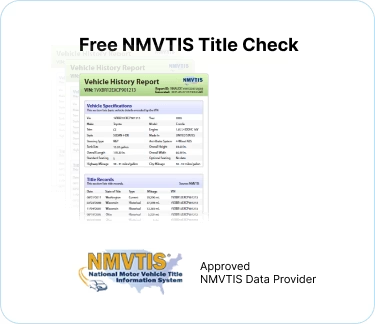
NMVTIS Title
History Check
History Check
Salvage/Rebuilt
Check
Check
Accident
Check
Check
Theft
Check
Check
Open Lien
Check
Check
Past Sale
Listings
Listings
Safety
Recalls
Recalls
Odometer
Check
Check
Market Price
Analysis
Analysis
What Problems Does the 2011 Yamaha YZF-R1 Have?
The 2011 Yamaha YZF-R1 is generally considered a very reliable motorcycle, reflecting Yamaha's strong reputation for build quality. However, like any high-performance machine, some owners have reported specific issues. One commonly mentioned point is a slightly snatchy throttle response at very low RPMs, particularly noticeable in stop-and-go traffic or during slow maneuvering. This can be mitigated with rider skill or sometimes through aftermarket fuel management tuning.
Some riders have also noted that the stock suspension can feel quite stiff for street use, making it less forgiving on rough roads. This is often addressed by adjusting the suspension settings or opting for aftermarket components for improved comfort.
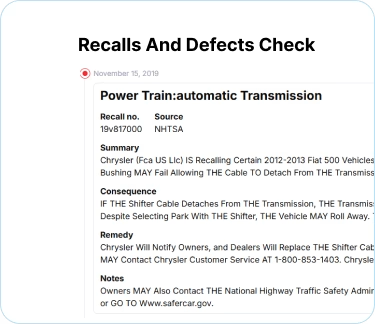
In terms of recalls, it's crucial for any potential buyer to check the National Highway Traffic Safety Administration (NHTSA) website for any issued recalls specific to the 2011 model year. As of my last update, there haven't been widespread, persistent mechanical failures reported for this specific year that would indicate a significant design flaw.
Long-term reliability is typically excellent, provided the motorcycle has been maintained according to Yamaha's recommended schedule. Regular oil changes, chain maintenance, and proper storage are key. The engine and gearbox are robust. Owners who track their R1s will naturally experience more wear on components like tires, brakes, and clutch, but the core mechanicals are built to endure demanding use. The electrical system is also generally well-sorted. Overall, mechanical issues are rare, with most concerns revolving around setup, rider preference, and routine wear and tear.
Some riders have also noted that the stock suspension can feel quite stiff for street use, making it less forgiving on rough roads. This is often addressed by adjusting the suspension settings or opting for aftermarket components for improved comfort.
In terms of recalls, it's crucial for any potential buyer to check the National Highway Traffic Safety Administration (NHTSA) website for any issued recalls specific to the 2011 model year. As of my last update, there haven't been widespread, persistent mechanical failures reported for this specific year that would indicate a significant design flaw.
Long-term reliability is typically excellent, provided the motorcycle has been maintained according to Yamaha's recommended schedule. Regular oil changes, chain maintenance, and proper storage are key. The engine and gearbox are robust. Owners who track their R1s will naturally experience more wear on components like tires, brakes, and clutch, but the core mechanicals are built to endure demanding use. The electrical system is also generally well-sorted. Overall, mechanical issues are rare, with most concerns revolving around setup, rider preference, and routine wear and tear.
How long will the 2011 Yamaha YZF-R1 last?
Based on owner data and typical maintenance habits for a sportbike of this caliber, a well-maintained 2011 Yamaha YZF-R1 can realistically expect to see 50,000 to 75,000 miles or more of service life. Many owners use these bikes for spirited riding, track days, and weekend excursions, which can contribute to mileage accumulation.
Long-term durability is a strong suit for Yamaha. The engine, gearbox, and chassis are built to withstand high stresses. Weaknesses that may emerge over time are typically related to wear and tear on consumables like the clutch, brakes, and suspension components, especially if subjected to aggressive use. Routine maintenance, such as timely oil changes, coolant flushes, and proper chain lubrication, is paramount. Owners who neglect these can shorten the lifespan of various parts. With diligent care, the 2011 R1 is a machine that can provide exhilarating performance for many years.
What Technology & Safety Features are Included?
The 2011 Yamaha YZF-R1 is equipped with a suite of advanced electronic features focused on performance and rider control, rather than traditional entertainment systems. The standout technology is the Yamaha Chip Controlled Throttle (YCCT), which provides a ride-by-wire system for precise throttle response. This system allows for sophisticated engine management and traction control.
Safety Features:
Technology:
Entertainment:
Motorcycles of this era, especially supersports like the R1, do not typically feature built-in entertainment systems like radios or infotainment screens. The focus is purely on the riding experience.
Driver-Assistance:
The primary driver-assistance feature is the optional ABS. There are no other advanced driver-assistance systems (ADAS) found on modern cars, such as adaptive cruise control or lane departure warnings.
Crash-Test Ratings:
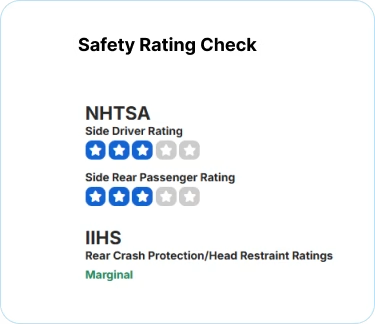
Motorcycles are not subjected to standardized crash-test ratings in the same way cars are. Safety is primarily judged by the effectiveness of braking systems, chassis integrity, and the availability of electronic aids like ABS. The R1 is designed with a robust frame and high-quality components to withstand the rigors of performance riding.
Safety Features:
- Optional ABS: The most significant safety feature available is the Anti-lock Braking System (ABS), offered as an option on certain trims. This system helps prevent wheel lock-up during hard braking, significantly enhancing safety and stability, especially in emergency situations or on less-than-ideal surfaces.
- High-Performance Brakes: The standard dual front disc brakes and single rear disc brake offer substantial stopping power.
- Integrated Lighting: Standard headlights, taillights, and turn signals for visibility.
Technology:
- Yamaha Chip Controlled Throttle (YCCT): As mentioned, this is a core feature, using electronic signals to control the throttle plates, allowing for a more refined power delivery and integration with other electronic systems.
- Multi-Function Instrumentation: The digital instrument cluster provides riders with essential information, including speed, RPM, gear position, fuel level, trip meters, and various warning lights.
- Engine Maps: While not explicit engine maps like in some other vehicles, the YCCT system effectively manages power delivery.
Entertainment:
Motorcycles of this era, especially supersports like the R1, do not typically feature built-in entertainment systems like radios or infotainment screens. The focus is purely on the riding experience.
Driver-Assistance:
The primary driver-assistance feature is the optional ABS. There are no other advanced driver-assistance systems (ADAS) found on modern cars, such as adaptive cruise control or lane departure warnings.
Crash-Test Ratings:
Motorcycles are not subjected to standardized crash-test ratings in the same way cars are. Safety is primarily judged by the effectiveness of braking systems, chassis integrity, and the availability of electronic aids like ABS. The R1 is designed with a robust frame and high-quality components to withstand the rigors of performance riding.
What Colors Options are Available?
2011 Yamaha YZF-R1 Prices and Market Value
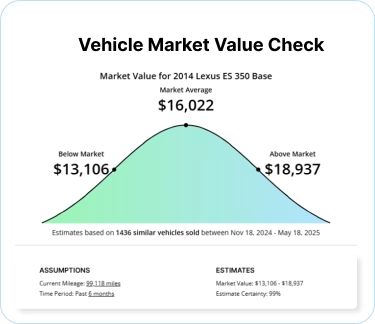
When new, the 2011 Yamaha YZF-R1 had an MSRP ranging from approximately $13,200 for the standard model to $13,700 for the ABS version. The motorcycle segment, especially supersports, experiences significant depreciation in its first few years.
Currently, the used market prices for a 2011 Yamaha YZF-R1 typically range from $6,000 to $9,000, heavily dependent on mileage, condition, maintenance history, and whether it has the ABS option. Bikes with lower mileage, pristine condition, and a documented service history will command higher prices.
Factors affecting resale value include the overall condition of the bike (cosmetic and mechanical), any modifications made (stock is often preferred by a wider audience), tire wear, and the presence of any accident history. A well-cared-for R1 with regular maintenance can retain a respectable portion of its value compared to poorly maintained examples.
Currently, the used market prices for a 2011 Yamaha YZF-R1 typically range from $6,000 to $9,000, heavily dependent on mileage, condition, maintenance history, and whether it has the ABS option. Bikes with lower mileage, pristine condition, and a documented service history will command higher prices.
Factors affecting resale value include the overall condition of the bike (cosmetic and mechanical), any modifications made (stock is often preferred by a wider audience), tire wear, and the presence of any accident history. A well-cared-for R1 with regular maintenance can retain a respectable portion of its value compared to poorly maintained examples.
2011 Yamaha YZF-R1 Cost of Ownership
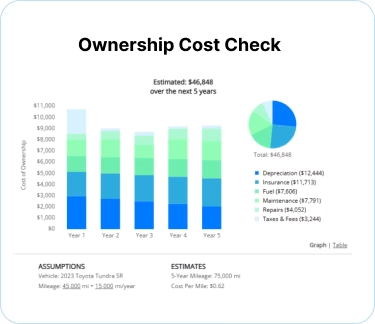
Owning a 2011 Yamaha YZF-R1 can be moderately costly, particularly for younger riders or those with a less-than-perfect driving record, as insurance premiums for supersport motorcycles are typically high. Fuel costs will depend on riding style, but expect around 25-30 mpg. Routine maintenance, including oil changes, chain care, and tire replacements, is essential and adds to the annual cost. Repairs for high-performance components can be expensive, especially if specialized parts are needed. Overall, the R1 is not an economical choice for commuting or budget-conscious ownership, but rather a performance-oriented machine where ownership costs are commensurate with its capabilities.
2011 Yamaha YZF-R1 Fuel Efficiency
Fuel Type
Gasoline
Fuel Capacity
-
City Mileage
-
Highway Mileage
-
2011 Yamaha YZF-R1 Warranty
Basic
Original warranty
0 months / No data
Estimated remaining
Expired
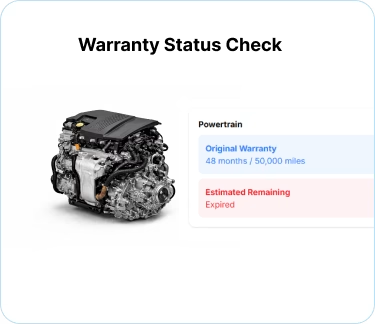
Powertrain
Original warranty
0 months / No data
Estimated remaining
Expired
Rust
Original warranty
0 months / No data
Estimated remaining
Expired
2011 Yamaha YZF-R1 Insurance
Insurance for a 2011 Yamaha YZF-R1 is moderately priced, reflecting its status as a Motorcycle with strong safety ratings and
reasonable repair costs.
How Does the 2011 Yamaha YZF-R1 Compare to Other Motorcycle?
The 2011 Yamaha YZF-R1 competes in the highly contested liter-class supersport segment. Its primary rivals include the Honda CBR1000RR, Suzuki GSX-R1000, Kawasaki Ninja ZX-10R, and Ducati 1098/1198 (though Ducati is in a different price bracket).
Performance: The R1's 998cc crossplane crank engine offered a unique torque character and exhilarating top-end power, often lauded for its character and sound. The 2011 model year saw significant updates to its electronics and chassis. In terms of outright power, it was competitive, often trading blows with the ZX-10R and GSX-R1000. The CBR1000RR was known for its refined, linear power delivery and user-friendliness.

Features: Yamaha's YCCT ride-by-wire system was a key technological differentiator for the 2011 R1, providing advanced electronic control. Optional ABS was also a significant safety feature. Rivals offered comparable braking, suspension, and instrumentation. The ZX-10R in particular introduced advanced traction control early on.
Reliability: Yamaha, Honda, and Suzuki generally lead this class in terms of bulletproof reliability. The 2011 R1 is known for its robustness. The CBR1000RR is also exceptionally reliable. The GSX-R1000 is a workhorse. The ZX-10R, while powerful, sometimes had minor electrical gremlins reported in earlier iterations, though the 2011 model improved.

Price: At launch, the R1 was priced competitively with its Japanese counterparts. Used prices for the 2011 R1 are generally in line with similarly aged GSX-R1000s and CBR1000RRs, often slightly higher than a comparable ZX-10R. Ducatis were significantly more expensive.

Alternatives:
Performance: The R1's 998cc crossplane crank engine offered a unique torque character and exhilarating top-end power, often lauded for its character and sound. The 2011 model year saw significant updates to its electronics and chassis. In terms of outright power, it was competitive, often trading blows with the ZX-10R and GSX-R1000. The CBR1000RR was known for its refined, linear power delivery and user-friendliness.
Features: Yamaha's YCCT ride-by-wire system was a key technological differentiator for the 2011 R1, providing advanced electronic control. Optional ABS was also a significant safety feature. Rivals offered comparable braking, suspension, and instrumentation. The ZX-10R in particular introduced advanced traction control early on.
Reliability: Yamaha, Honda, and Suzuki generally lead this class in terms of bulletproof reliability. The 2011 R1 is known for its robustness. The CBR1000RR is also exceptionally reliable. The GSX-R1000 is a workhorse. The ZX-10R, while powerful, sometimes had minor electrical gremlins reported in earlier iterations, though the 2011 model improved.
Price: At launch, the R1 was priced competitively with its Japanese counterparts. Used prices for the 2011 R1 are generally in line with similarly aged GSX-R1000s and CBR1000RRs, often slightly higher than a comparable ZX-10R. Ducatis were significantly more expensive.
Alternatives:
- Similar: If you're looking for comparable performance and reliability in the same price range, the Honda CBR1000RR (2008-2011) is an excellent choice for its refinement and rider-friendliness. The Suzuki GSX-R1000 (2009-2011) is another strong contender, offering blistering performance and renowned reliability. The Kawasaki Ninja ZX-10R (2011) is a potent machine that can feel more raw and aggressive.
- Consider if budget allows: Later model years of any of these Japanese rivals, or a used Ducati Panigale if exotic character and premium components are a priority.
Final Verdict: Is the 2011 Yamaha YZF-R1 a Good Motorcycle?
The 2011 Yamaha YZF-R1 is ideal for experienced sportbike riders who appreciate a unique engine character, cutting-edge technology for its time, and exhilarating performance. It's perfect for those who enjoy spirited riding on twisty roads or occasional track days.
Whether it's worth buying depends heavily on the specific used example. A well-maintained, low-mileage unit, especially with ABS, represents a strong value proposition for a high-performance motorcycle. It's definitely worth buying if you can find one with a complete service history and no accident damage.
Buying used is the only realistic option now. The ABS trim is preferable for added safety. Riders should be prepared for the associated costs of insurance and maintenance typical of a liter-class supersport. For those seeking a thrilling, technologically advanced sportbike from its era, the 2011 R1 is a compelling choice.
Whether it's worth buying depends heavily on the specific used example. A well-maintained, low-mileage unit, especially with ABS, represents a strong value proposition for a high-performance motorcycle. It's definitely worth buying if you can find one with a complete service history and no accident damage.
Buying used is the only realistic option now. The ABS trim is preferable for added safety. Riders should be prepared for the associated costs of insurance and maintenance typical of a liter-class supersport. For those seeking a thrilling, technologically advanced sportbike from its era, the 2011 R1 is a compelling choice.