The 2012 Kawasaki Ninja ZX-10R is a prominent sportbike in the supersport category, known for its aggressive styling and exhilarating performance. Building on a rich lineage of Ninja sportbikes, this model year represents a significant evolution. It features a cutting-edge naked sportbike body style. While specific trims are generally limited for the ZX-10R, variations might exist in color schemes or minor package inclusions. New pricing in its era was in the $13,000-$15,000 range. It stands out due to its track-bred engineering, advanced electronics for its time, and a reputation for raw power, making it a favorite among track enthusiasts and performance-minded riders.
The Good
The 2012 ZX-10R boasts phenomenal performance with its potent engine and advanced chassis, appealing to thrill-seekers. Its aggressive, race-inspired design evokes pure sportbike passion. For practical buyers, it offers surprising agility and a relatively refined ride for its class, contributing to a solid overall value proposition in the used market.
The Bad
Known weaknesses for the 2012 ZX-10R include a sensitive throttle, especially at low RPMs, which can be jarring for less experienced riders. Some owners report a firm seat, making longer rides less comfortable. The advanced electronics, while beneficial, can be complex for basic maintenance. Overheating in stop-and-go traffic has also been a reported concern.
2012 Kawasaki Ninja ZX-10R: Quick Overview
- Engine: 998cc liquid-cooled, four-stroke, DOHC, four-valve per cylinder inline-four. This is the sole engine option for the 2012 model year, representing Kawasaki's pinnacle of sportbike engineering for that generation.
- Horsepower: Approximately 200 hp (147 kW) at 13,000 rpm (with ram air). This figure places it among the most powerful production motorcycles of its time.
- Fuel Economy: Estimated around 30-35 mpg (miles per gallon). This can vary significantly based on riding style, with aggressive riding drastically reducing fuel efficiency.
- 0-60 mph: Typically in the low to mid 3-second range. This blistering acceleration is a hallmark of its supersport class.
- Towing Capacity: Not applicable. The ZX-10R is a high-performance sportbike designed for solo riding and track use; it does not have provisions for towing.
- Trim-Level Features: For 2012, the ZX-10R primarily came in one main configuration, often referred to as the standard model or with ABS as an optional add-on. Key features include:
- Advanced Aerodynamics: Sharply styled fairings designed for optimal wind deflection and cooling.
- SFF (Separate Function front Forks): Showa Big Piston front forks offering excellent damping control and adjustability for track and street performance.
- BFRC (Balance Free Rear Cushion) Shock: A sophisticated rear suspension unit providing superior ride quality and feedback.
- Power Modes: Selectable engine power modes allowing riders to tailor engine output to conditions or preferences (often two modes: full power and a reduced power setting).
- Traction Control (S-KTRC): Kawasaki's Sport-Traction Control system with multiple modes to assist the rider in maintaining grip under acceleration.
- ABS (Anti-lock Braking System): An optional safety feature available on certain models, enhancing braking stability.
- Digital Instrumentation: A comprehensive LCD display showing speed, RPM, gear position, fuel level, clock, trip meters, and various electronic system settings.
- Lightweight Chassis: An aluminum twin-spar frame and intelligent chassis geometry for exceptional handling and agility.

- High-Performance Brakes: Dual 310mm petal-style discs with radial-mount calipers at the front and a single 220mm petal disc at the rear.
2012 Kawasaki Ninja ZX-10R Specifications
Vehicle Information
| Year | 2012 |
| Make | Kawasaki |
| Model | Ninja ZX-10R |
| Trim | - |
| Style | - |
| Type | Motorcycle |
| Category | Motorcycle |
Manufacturing Details
| Made In | Japan |
| Manufacturing City | AKASHI |
Dimensions
| Doors | - |
| Curb Weight | - |
| Gross Vehicle Weight Rating | - |
| Overall Height | - |
| Overall Length | - |
| Overall Width | - |
| Wheelbase Length | - |
| Standard Seating | - |
Engine & Performance
| Engine | 998CC |
| Engine Size | 998L |
| Engine Cylinders | 4 |
| Transmission | - |
| Transmission Type | - |
| Transmission Speeds | - |
| Drivetrain | - |
Additional Features
| Anti-Brake System | - |
| Steering Type | - |
Pricing
| Manufacturer Suggested Retail Price (MSRP) | - |
| Invoice Price | - |
| Delivery Charges | - |
Vehicle History Report
Vehicle
Specifications
Specifications
Ownership
History
History
All History
Events
Events
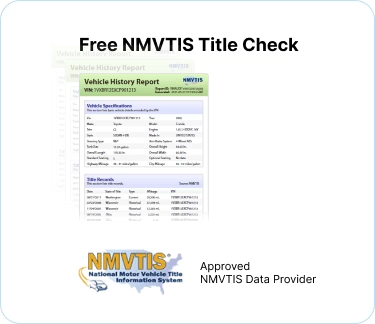
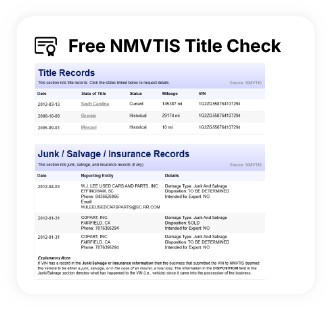
NMVTIS Title
History Check
History Check
Salvage/Rebuilt
Check
Check
Accident
Check
Check
Theft
Check
Check
Open Lien
Check
Check
Past Sale
Listings
Listings
Safety
Recalls
Recalls
Odometer
Check
Check
Market Price
Analysis
Analysis
What Problems Does the 2012 Kawasaki Ninja ZX-10R Have?
The 2012 Kawasaki Ninja ZX-10R, while generally lauded for its performance, has had a few points of concern reported by owners over the years. One of the most frequently mentioned issues relates to its **throttle response**, particularly at low RPMs and in first gear. Riders have described it as being somewhat snatchy or abrupt, which can make smooth low-speed maneuvering or exiting tight corners challenging, especially for those less experienced with liter-class sportbikes. This can sometimes lead to unintentional wheelies or jerky acceleration. While not a widespread recall issue for the 2012 model, some owners have experienced concerns with the **clutch**, with reports of it feeling slightly grabby or requiring precise lever control.
Another area of discussion revolves around **engine heat**. Like many high-performance sportbikes, the ZX-10R can generate significant heat, especially when ridden in slow traffic or in hot weather conditions. This can lead to rider discomfort and may necessitate longer cool-down periods. While not a common failure, some owners have noted that the **instrument cluster** can occasionally display erratic readings or have minor electronic glitches, though these are typically resolved with software updates or by the dealer.
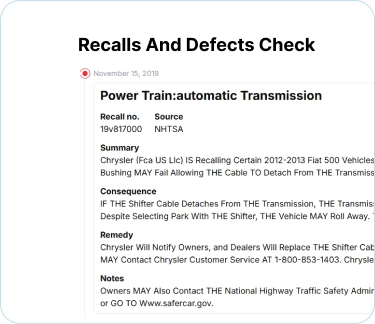
Regarding long-term reliability, the core mechanical components of the engine and transmission are generally robust, as is typical for Kawasaki's Ninja line. However, the advanced electronic systems, such as the traction control and ABS (if equipped), are complex and, like any electronic system, can be susceptible to failure over time, though this is not a widespread problem for the 2012 model. There were no major recalls specifically targeting catastrophic failures for the 2012 ZX-10R across all markets. However, as with any performance motorcycle, consistent and meticulous maintenance is crucial. Neglecting oil changes, chain maintenance, or coolant flushes can exacerbate wear on components and lead to premature issues. Owners who track their bikes frequently should pay extra attention to brake fluid, clutch fluid, and tire wear, as these are high-stress components. In summary, while the 2012 ZX-10R is a mechanically sound motorcycle, riders should be aware of its sensitive throttle and be diligent with maintenance to ensure its longevity.
Another area of discussion revolves around **engine heat**. Like many high-performance sportbikes, the ZX-10R can generate significant heat, especially when ridden in slow traffic or in hot weather conditions. This can lead to rider discomfort and may necessitate longer cool-down periods. While not a common failure, some owners have noted that the **instrument cluster** can occasionally display erratic readings or have minor electronic glitches, though these are typically resolved with software updates or by the dealer.
Regarding long-term reliability, the core mechanical components of the engine and transmission are generally robust, as is typical for Kawasaki's Ninja line. However, the advanced electronic systems, such as the traction control and ABS (if equipped), are complex and, like any electronic system, can be susceptible to failure over time, though this is not a widespread problem for the 2012 model. There were no major recalls specifically targeting catastrophic failures for the 2012 ZX-10R across all markets. However, as with any performance motorcycle, consistent and meticulous maintenance is crucial. Neglecting oil changes, chain maintenance, or coolant flushes can exacerbate wear on components and lead to premature issues. Owners who track their bikes frequently should pay extra attention to brake fluid, clutch fluid, and tire wear, as these are high-stress components. In summary, while the 2012 ZX-10R is a mechanically sound motorcycle, riders should be aware of its sensitive throttle and be diligent with maintenance to ensure its longevity.
How long will the 2012 Kawasaki Ninja ZX-10R last?
Based on owner data and typical usage patterns for a high-performance sportbike, the 2012 Kawasaki Ninja ZX-10R can reasonably be expected to serve its owner for 50,000 to 75,000 miles or more, provided it receives diligent maintenance. Many owners use these bikes for spirited street riding and occasional track days. Long-term durability of the engine and transmission is generally excellent; Kawasaki engines are known for their robust construction. However, components that experience higher wear rates, such as the clutch, chain and sprockets, and brake pads, will require more frequent replacement. The advanced electronics are generally reliable but can be a concern if neglected. Weaknesses over time, if maintenance is neglected, can include increased wear on the engine from poor lubrication or cooling, and potential issues with the electrical system. Regular servicing, including timely oil changes, coolant flushes, and valve adjustments, will be critical to achieving high mileage.
What Technology & Safety Features are Included?
The 2012 Kawasaki Ninja ZX-10R was at the forefront of sportbike technology for its era, focusing on performance-enhancing electronics rather than traditional entertainment systems. The primary tech feature is its sophisticated rider assistance suite designed to improve control and safety. This includes the Kawasaki Traction Control (S-KTRC) system, which monitors wheel speed and adjusts engine output to optimize acceleration and prevent rear-wheel spin. It typically offers multiple modes, allowing riders to select a level of intervention suited to their skill and riding conditions. Another key electronic feature is the select-mode engine power management system, which allows riders to choose between full power and a reduced power setting, offering more manageable power delivery in less-than-ideal conditions or for rider preference.
For braking, the ZX-10R featured high-performance petal-style discs. An optional feature, and a significant safety upgrade, was the Anti-lock Braking System (ABS). The ABS system was designed to prevent wheel lock-up during hard braking, enhancing stability and reducing the risk of falls, particularly on less-than-perfect surfaces. While not a typical entertainment system, the digital LCD instrument panel is comprehensive and informative, displaying essential riding data like speed, RPM, gear position, fuel level, and settings for the electronic aids. It provides a clear interface for managing the bike's performance characteristics.
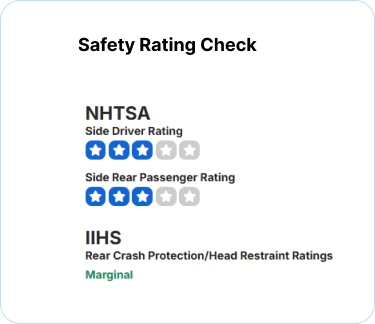
The ZX-10R does not have any form of traditional entertainment features like audio systems or navigation, as its design prioritizes rider focus and performance. There are no dedicated driver-assistance features in the automotive sense (like adaptive cruise control or lane departure warnings). Crash-test ratings are not typically assigned to motorcycles in the same way they are for cars, as testing methodologies and regulatory bodies differ significantly. Safety is primarily addressed through the bike's design, handling dynamics, and the electronic rider aids. The advanced chassis and suspension contribute to overall stability, and the powerful brakes, especially with the optional ABS, are crucial safety components.
For braking, the ZX-10R featured high-performance petal-style discs. An optional feature, and a significant safety upgrade, was the Anti-lock Braking System (ABS). The ABS system was designed to prevent wheel lock-up during hard braking, enhancing stability and reducing the risk of falls, particularly on less-than-perfect surfaces. While not a typical entertainment system, the digital LCD instrument panel is comprehensive and informative, displaying essential riding data like speed, RPM, gear position, fuel level, and settings for the electronic aids. It provides a clear interface for managing the bike's performance characteristics.
The ZX-10R does not have any form of traditional entertainment features like audio systems or navigation, as its design prioritizes rider focus and performance. There are no dedicated driver-assistance features in the automotive sense (like adaptive cruise control or lane departure warnings). Crash-test ratings are not typically assigned to motorcycles in the same way they are for cars, as testing methodologies and regulatory bodies differ significantly. Safety is primarily addressed through the bike's design, handling dynamics, and the electronic rider aids. The advanced chassis and suspension contribute to overall stability, and the powerful brakes, especially with the optional ABS, are crucial safety components.
What Colors Options are Available?
2012 Kawasaki Ninja ZX-10R Prices and Market Value
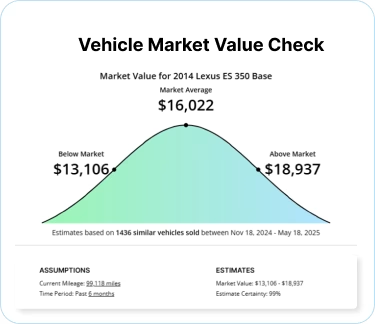
When new, the 2012 Kawasaki Ninja ZX-10R typically retailed in the United States between $13,000 and $15,000, depending on optional ABS and color schemes. As with most high-performance sportbikes, the ZX-10R experiences significant depreciation in its initial years. Currently, the used market prices for a 2012 model in good condition with average mileage (around 10,000-20,000 miles) can range from $7,000 to $10,000. Factors affecting resale value include mileage, overall condition, maintenance history (documented service records are a major plus), the presence and functionality of the optional ABS, and any aftermarket modifications. Bikes that have been meticulously maintained, kept stock, or have tasteful, high-quality modifications tend to hold their value better. Bikes with excessive wear, track-only modifications, or poor maintenance records will fetch lower prices.
2012 Kawasaki Ninja ZX-10R Cost of Ownership
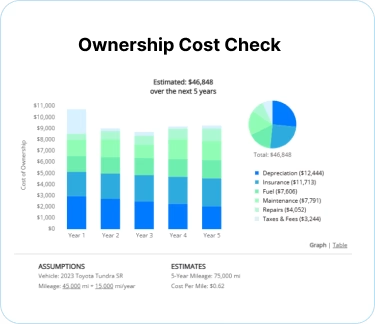
Owning a 2012 Kawasaki Ninja ZX-10R is generally considered costly rather than economical. Insurance premiums for liter-class sportbikes are typically high due to their performance and theft risk, varying significantly by rider profile and location. Fuel costs will be moderate, around 30-35 mpg, but high-octane fuel is recommended. Maintenance is crucial and includes regular oil changes, filter replacements, chain adjustments, and potentially valve checks, adding to recurring costs. Repairs, especially for the advanced electronics or engine internals, can be expensive. Tire replacement is also a significant expense due to their performance demands. Overall, expect higher-than-average ownership costs associated with a premium performance machine.
2012 Kawasaki Ninja ZX-10R Fuel Efficiency
Fuel Type
-
Fuel Capacity
-
City Mileage
-
Highway Mileage
-
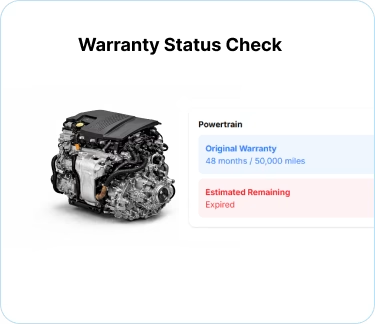
2012 Kawasaki Ninja ZX-10R Warranty
Basic
Original warranty
0 months / No data
Estimated remaining
Expired
Powertrain
Original warranty
0 months / No data
Estimated remaining
Expired
Rust
Original warranty
0 months / No data
Estimated remaining
Expired
2012 Kawasaki Ninja ZX-10R Insurance
Insurance for a 2012 Kawasaki Ninja ZX-10R is moderately priced, reflecting its status as a Motorcycle with strong safety ratings and
reasonable repair costs.
How Does the 2012 Kawasaki Ninja ZX-10R Compare to Other Motorcycle?
The 2012 Kawasaki Ninja ZX-10R competed fiercely in the hyperbike segment against formidable rivals such as the Yamaha YZF-R1, Suzuki GSX-R1000, Honda CBR1000RR, and BMW S1000RR.
Performance: The ZX-10R was renowned for its potent engine output and advanced chassis, often considered one of the most track-focused and aggressive machines. Its horsepower and acceleration were generally on par with or slightly ahead of the R1 and GSX-R1000, and competitive with the CBR1000RR. The BMW S1000RR was often seen as a direct benchmark for its technological advancements and blistering speed.
Features: Kawasaki equipped the 2012 ZX-10R with impressive electronic aids for its time, including S-KTRC traction control and selectable power modes. This put it on par with or slightly ahead of some rivals who might have offered simpler electronics or less sophisticated traction control systems. The R1 and CBR1000RR were also well-equipped, while the GSX-R1000 was typically more mechanically focused with fewer electronic rider aids. The S1000RR often led in terms of cutting-edge electronics and performance tuning options.
Reliability: Kawasaki generally has a strong reputation for reliability, and the ZX-10R from this era is no exception. While it has specific points to watch out for (like throttle sensitivity), its core mechanicals are robust, often rivaling the perceived bulletproof nature of Honda and Suzuki. Yamaha also has a good track record. The BMW S1000RR, while incredibly fast, sometimes carried a slightly higher reputation for more complex maintenance or potential electronic quirks compared to its Japanese counterparts.
Price: When new, the ZX-10R was typically priced competitively, often slightly less than the R1 or CBR1000RR, and significantly less than the premium-priced BMW S1000RR. In the used market, the 2012 ZX-10R generally offers excellent value, often being more affordable than comparable Yamaha, Suzuki, or Honda models of the same year, while providing comparable or superior performance and electronics.
Alternatives:
Performance: The ZX-10R was renowned for its potent engine output and advanced chassis, often considered one of the most track-focused and aggressive machines. Its horsepower and acceleration were generally on par with or slightly ahead of the R1 and GSX-R1000, and competitive with the CBR1000RR. The BMW S1000RR was often seen as a direct benchmark for its technological advancements and blistering speed.
Features: Kawasaki equipped the 2012 ZX-10R with impressive electronic aids for its time, including S-KTRC traction control and selectable power modes. This put it on par with or slightly ahead of some rivals who might have offered simpler electronics or less sophisticated traction control systems. The R1 and CBR1000RR were also well-equipped, while the GSX-R1000 was typically more mechanically focused with fewer electronic rider aids. The S1000RR often led in terms of cutting-edge electronics and performance tuning options.
Reliability: Kawasaki generally has a strong reputation for reliability, and the ZX-10R from this era is no exception. While it has specific points to watch out for (like throttle sensitivity), its core mechanicals are robust, often rivaling the perceived bulletproof nature of Honda and Suzuki. Yamaha also has a good track record. The BMW S1000RR, while incredibly fast, sometimes carried a slightly higher reputation for more complex maintenance or potential electronic quirks compared to its Japanese counterparts.
Price: When new, the ZX-10R was typically priced competitively, often slightly less than the R1 or CBR1000RR, and significantly less than the premium-priced BMW S1000RR. In the used market, the 2012 ZX-10R generally offers excellent value, often being more affordable than comparable Yamaha, Suzuki, or Honda models of the same year, while providing comparable or superior performance and electronics.
Alternatives:
- Similar: Yamaha YZF-R1 (known for its crossplane crank character), Suzuki GSX-R1000 (legendary for its straightforward performance and reliability), Honda CBR1000RR (often praised for its refinement and rider-friendliness).
- Better (depending on priority): If ultimate track performance and a more refined electronic suite are paramount, a used BMW S1000RR from a slightly later year might be considered, though it will likely be more expensive. If a more raw, less intrusive riding experience is desired, a GSX-R1000 could be preferred. For overall balance of sport and everyday usability, the CBR1000RR is a strong contender. The 2012 ZX-10R remains a compelling choice for those seeking exhilarating performance and advanced tech at a competitive price point.
Final Verdict: Is the 2012 Kawasaki Ninja ZX-10R a Good Motorcycle?
The 2012 Kawasaki Ninja ZX-10R is ideal for experienced sportbike riders who crave exhilarating performance, sharp handling, and advanced electronic aids without breaking the bank. It's a fantastic machine for track days and spirited canyon carving. It is absolutely worth buying, especially on the used market, as it offers exceptional value for its performance capabilities. Buying used is the primary condition for this vehicle, as new models from that year are no longer available. When purchasing used, prioritize bikes with a thorough maintenance history and in good overall condition. The optional ABS version is recommended for added safety, especially if the bike will see any street use. It's not ideal for brand-new riders due to its potent power and sensitive throttle, but for those with a few seasons of riding experience under their belt, it provides an incredible thrill and a rewarding riding experience.