
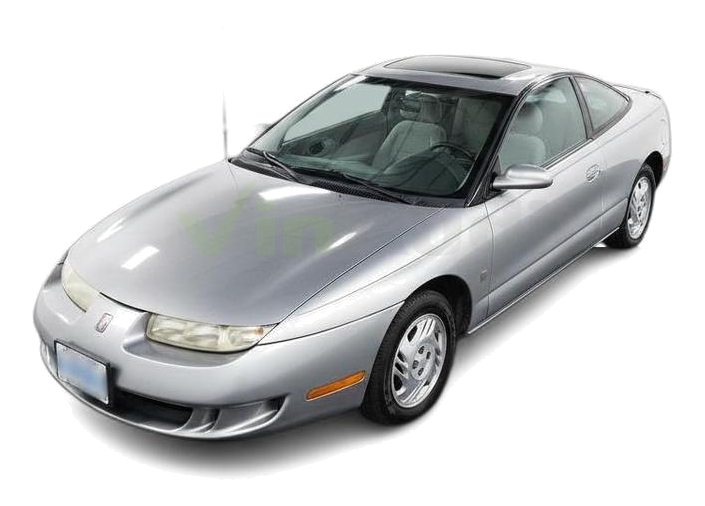
The Good
The 1999 Saturn SL offered good fuel efficiency and a comfortable ride, appealing to practical buyers. Emotionally, its unique dent-resistant polymer body panels provided peace of mind and a distinctive look, adding to its charm and value proposition.
The Bad
Potential buyers should watch out for issues like oil leaks, particularly from the oil pan gasket, and potential transmission problems. The polymer body panels, while dent-resistant, can be susceptible to scratching and fading over time. Engine mount wear is also a common concern.
1999 Saturn SL: Quick Overview
- Engine Options: The 1999 Saturn SL was primarily offered with two different 4-cylinder engines. The base model SL typically came with a 1.9-liter (1898 cc) SOHC (Single Overhead Cam) engine. The higher trims, SL1 and SL2, featured a more powerful 1.9-liter DOHC (Double Overhead Cam) engine.
- Horsepower: The SOHC engine in the base SL produced approximately 100 horsepower. The DOHC engine found in the SL1 and SL2 trims offered a more robust output of around 124 horsepower.
- Fuel Economy: Fuel economy was a strong suit for the Saturn SL. With the SOHC engine, estimates often ranged from 27-29 MPG in the city and 36-39 MPG on the highway. The DOHC engine, while more powerful, still delivered competitive fuel economy, typically in the range of 25-27 MPG city and 33-36 MPG highway, depending on transmission and driving conditions.
- 0-60 Times: Acceleration figures varied between the engine options. The base SL with the SOHC engine would typically reach 60 mph in around 10-12 seconds. The more powerful DOHC engine in the SL1 and SL2 models could achieve 0-60 mph in approximately 8.5-9.5 seconds.
- Towing Capacity: The Saturn SL was not designed for towing. As a compact passenger car, it did not have a designated towing capacity or factory-installed towing equipment.
- Trim-Level Features:
SL: This base model typically included essential features like power steering, tilt steering wheel, air conditioning, and a basic AM/FM stereo system. Steel wheels with hubcaps were standard.
SL1: Building upon the SL, the SL1 often added features like power windows, power door locks, and cruise control. It also received the more powerful DOHC engine.
SL2: The top-tier SL2 often included premium amenities such as alloy wheels, a more advanced sound system, and sometimes a sunroof as an option. It also utilized the DOHC engine and might have included sportier suspension tuning.
1999 Saturn SL Specifications
Vehicle Information
| Year | 1999 |
| Make | Saturn |
| Model | S-Series |
| Trim | - |
| Style | - |
| Type | Wagon |
| Category | Small Station Wagon |
Manufacturing Details
| Made In | United States |
| Manufacturing City | WILMINGTON |
Dimensions
| Doors | 4-Door |
| Curb Weight | 2388 pounds |
| Gross Vehicle Weight Rating | - |
| Overall Height | 54.50 inches |
| Overall Length | 176.80 inches |
| Overall Width | 66.70 inches |
| Wheelbase Length | 102.40 inches |
| Standard Seating | 5 |
Engine & Performance
| Engine | 1.9L I4 |
| Engine Size | 1.9L |
| Engine Cylinders | 4 |
| Transmission | 4-Speed Automatic |
| Transmission Type | Automatic |
| Transmission Speeds | 4-Speed |
| Drivetrain | Front-Wheel Drive |
Additional Features
| Anti-Brake System | Non-ABS 4-Wheel ABS |
| Steering Type | Rack & Pinion |
Pricing
| Manufacturer Suggested Retail Price (MSRP) | $12,295 |
| Invoice Price | $10,697 |
| Delivery Charges | - |
Vehicle History Report
Specifications
History
Events
History Check
Check
Check
Check
Check
Listings
Recalls
Check
Analysis
What Problems Does the 1999 Saturn SL Have?
Another area of concern for many 1999 Saturn SL owners revolves around the transmission. Both automatic and manual transmissions have been known to experience issues, including premature failure, rough shifting, and slipping. Regular fluid changes and proper maintenance are crucial to prolonging the life of the transmission, but some units may still develop problems.
Engine mounts are also a frequent point of failure. Worn engine mounts can cause excessive vibration to be felt inside the cabin, particularly when the engine is at idle or under acceleration. Replacing these mounts can significantly improve the driving experience.
While there were no widespread, major recalls specifically for the 1999 model year that dramatically impacted long-term reliability across the board, it's always advisable to check for any outstanding safety recalls with GM. Minor issues like faulty door lock actuators, power window regulators, and the degradation of interior plastics are also commonly encountered.
The polymer body panels, a defining feature, are generally durable against minor impacts but can be susceptible to fading, cracking, or becoming brittle over time, especially in harsh climates. The electrical system can also present minor gremlins, such as issues with the alternator or various sensors.
Overall, while the 1999 Saturn SL is not plagued by a single catastrophic failure mode, it requires diligent maintenance to mitigate the accumulation of smaller, yet persistent, issues that can affect its long-term reliability and appeal.
How long will the 1999 Saturn SL last?
What Technology & Safety Features are Included?
In terms of driver-assistance features, the 1999 Saturn SL was quite basic. It did not feature advanced electronic aids common in today's vehicles, such as adaptive cruise control, lane departure warnings, or blind-spot monitoring. The focus was on mechanical functionality and basic driver control.
Safety features were also more rudimentary compared to contemporary standards. Standard safety equipment typically included front airbags for the driver and front passenger, along with seatbelts. Anti-lock braking system (ABS) was often an optional feature, particularly on higher trims, providing an added layer of control during emergency braking situations. Side-impact airbags were not commonly available or standard on this model.
Regarding crash-test ratings, the 1999 Saturn SL, like other vehicles from that era, was tested by organizations like the National Highway Traffic Safety Administration (NHTSA) and the Insurance Institute for Highway Safety (IIHS). While specific ratings for the 1999 model year can vary depending on the exact test and criteria, earlier Saturn S-Series models generally received mixed to decent results. For instance, some frontal impact tests showed good structural integrity for the occupants, while side-impact protection might have been less robust compared to modern standards. It's recommended to consult historical NHTSA and IIHS data for precise crashworthiness information for this specific model year, but it generally performed acceptably for its time, especially considering its affordability.
What Colors Options are Available?
1999 Saturn SL Prices and Market Value
1999 Saturn SL Cost of Ownership
1999 Saturn SL Fuel Efficiency
1999 Saturn SL Safety Rating
NHTSA
IIHS
1999 Saturn SL Recalls & Defects
Seat Belts:front:anchorage
Exterior Lighting
1999 Saturn SL Warranty
Basic
Powertrain
Rust
1999 Saturn SL Insurance
reasonable repair costs.
How Does the 1999 Saturn SL Compare to Other Wagon?
Features on the Saturn SL were often basic, especially on lower trims. While it offered essentials like power steering and A/C, rivals like the Civic and Corolla often provided more advanced optional features, such as climate control and more sophisticated infotainment systems, even in their base forms. The Saturn's unique polymer body panels were a standout design feature, offering dent resistance but sometimes looking dated.
Reliability is where the Saturn SL often faced challenges compared to its Japanese counterparts. While the engines were generally robust, transmission issues and oil leaks were more frequently reported than on the Honda Civic or Toyota Corolla, which are renowned for their long-term dependability. The Ford Focus, a newer competitor, offered a more modern design and decent handling but also had its own set of reliability concerns.
Price was a strong point for the Saturn SL, often being more affordable both new and used than comparable models from Honda or Toyota. This made it an attractive option for budget-conscious buyers.
Alternatives:
For buyers prioritizing long-term reliability and refinement, the 1999 Honda Civic or 1999 Toyota Corolla are excellent alternatives. They typically offer better build quality, more refined driving experiences, and a stronger track record for dependability, though they may command slightly higher used prices.
If a bit more driving fun is desired and reliability is still a concern, the 2000 Ford Focus is worth considering, offering a more modern platform and European-inspired handling, though its early models had some early kinks to work out.
For those seeking ultimate affordability and simplicity, the 1999 Chevrolet Cavalier is a comparable domestic option, though it generally offers a less refined experience and potentially similar reliability concerns to the Saturn.
Final Verdict: Is the 1999 Saturn SL a Good Wagon?

Simon A
Simon is a contributor to VinCheck, where he provides articles and reviews on various automotive topics. His work focuses on delivering accurate and up-to-date information about used cars, helping readers make informed decisions.