
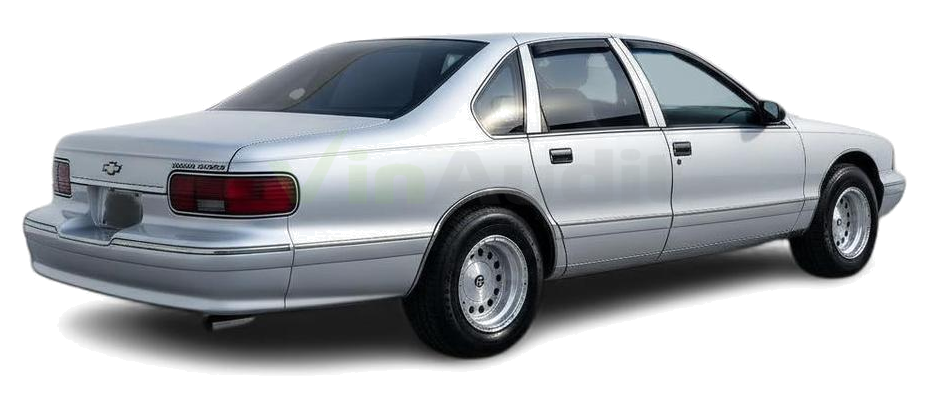
The Good
The 1995 Caprice Classic offers a spacious and comfortable ride, appealing to practicality with its robust V8 performance and strong value proposition. Its imposing design evokes a sense of classic American automotive luxury, while its solid construction promises reliability for those seeking dependable transport. This makes it a compelling choice for both budget-conscious and nostalgia-driven buyers.
The Bad
Potential buyers of the 1995 Caprice Classic should be aware of common issues such as aging electrical components, potential for transmission problems, and interior wear and tear. Fuel economy is also a significant concern for many. Rust, especially in the lower body panels and wheel wells, is another frequent weakness to inspect carefully.
1995 Chevrolet Caprice Classic: Quick Overview
- Engine Options: The primary engine for the 1995 Chevrolet Caprice Classic was the 5.7L LT1 V8. A smaller 4.3L V8 was also available in some configurations, though less common.
- Horsepower: The 5.7L LT1 V8 typically produced around 260 horsepower. The 4.3L V8 offered approximately 180 horsepower.
- Fuel Economy: Expect relatively low fuel economy due to the V8 engines and the vehicle's size. Official EPA estimates were often in the range of 15-17 MPG city and 19-23 MPG highway for the 5.7L, varying with driving conditions.
- 0-60 Times: With the 5.7L LT1 engine, 0-60 mph times were generally in the mid-to-high 7-second range, offering respectable acceleration for a large sedan of its era. The 4.3L would be significantly slower.
- Towing Capacity: While not primarily designed as a tow vehicle, the Caprice Classic, particularly with the V8, could handle light towing duties. Specific towing capacities varied but were generally in the 5,000-7,000 lb range when properly equipped with a trailering package.
- Trim-Level Features (Classic): The Caprice Classic trim typically included features such as power windows and door locks, cruise control, air conditioning, an AM/FM stereo with cassette player, velour upholstery, a tilt steering wheel, and 15-inch aluminum wheels. Optional features could include leather seats, a power driver's seat, a power passenger's seat, a premium sound system, and anti-lock brakes. Higher trims might also offer upgraded suspension components.
1995 Chevrolet Caprice Classic Specifications
Vehicle Information
| Year | 1995 |
| Make | Chevrolet |
| Model | Caprice Classic |
| Trim | - |
| Style | - |
| Type | Sedan |
| Category | Large Car |
Manufacturing Details
| Made In | United States |
| Manufacturing City | ARLINGTON |
Dimensions
| Doors | 4-Door |
| Curb Weight | 4061 pounds |
| Gross Vehicle Weight Rating | - |
| Overall Height | 55.70 inches |
| Overall Length | 214.10 inches |
| Overall Width | 77.50 inches |
| Wheelbase Length | 115.90 inches |
| Standard Seating | 6 |
Engine & Performance
| Engine | 4.3L V8 |
| Engine Size | 4.3L |
| Engine Cylinders | 8 |
| Transmission | 4-Speed Automatic |
| Transmission Type | Automatic |
| Transmission Speeds | 4-Speed |
| Drivetrain | Rear-Wheel Drive |
Additional Features
| Anti-Brake System | 4-Wheel ABS |
| Steering Type | Recirculating |
Pricing
| Manufacturer Suggested Retail Price (MSRP) | $20,610 |
| Invoice Price | - |
| Delivery Charges | - |
Vehicle History Report
Specifications
History
Events
History Check
Check
Check
Check
Check
Listings
Recalls
Check
Analysis
What Problems Does the 1995 Chevrolet Caprice Classic Have?
Transmission problems are another area to watch. While the 4L60-E automatic transmission is generally durable, neglect or high mileage can lead to issues like slipping gears, delayed engagement, or complete failure. Torque converter issues have also been reported.
Regarding long-term reliability, the aging of rubber components is a significant factor. Suspension bushings, brake lines, and fuel lines can degrade over time, leading to noise, reduced handling, and potential leaks. Rust is a considerable concern, especially in areas with harsh winters or high humidity. Look for corrosion on the frame rails, rocker panels, wheel wells, and around the rear differential.
While specific recalls for the 1995 model year are less prevalent than for some other years, it's always advisable to check the NHTSA website for any outstanding recalls or technical service bulletins that may apply. Generally, the 1995 Caprice Classic exhibits good long-term reliability if properly maintained. However, the complexity of the LT1 engine and its associated electronics can make repairs more costly than simpler older vehicles. Interior components, such as seat upholstery and dashboard plastics, can also show wear and tear, especially in higher mileage examples.
How long will the 1995 Chevrolet Caprice Classic last?
What Technology & Safety Features are Included?
Built-in Tech & Entertainment: Standard entertainment in the 1995 Caprice Classic typically included an AM/FM radio with a cassette player. Higher trim levels or optional packages could upgrade this to a more sophisticated stereo system, sometimes with a CD player. Features like power windows, power door locks, and cruise control were common, enhancing driver convenience. Climate control, usually manual, was standard. The dashboard layout was functional, with clear analog gauges for speed, RPM, fuel level, and engine temperature.
Driver-Assistance Features: Driver-assistance technology as we know it today was virtually nonexistent in 1995. Features such as anti-lock braking systems (ABS) were available as an option, offering enhanced stopping power and control during hard braking. Traction control was not widely offered on this model.
Safety Features: Standard safety equipment included driver and front passenger airbags, seat belts with shoulder belts, and crumple zones designed into the vehicle's structure. Side-impact door beams were also incorporated for enhanced protection in side collisions. The large, sturdy frame of the Caprice Classic inherently contributed to a sense of safety and occupant protection.
Crash-Test Ratings: Specific crash-test ratings for the 1995 model year from organizations like the NHTSA or IIHS are not as readily available or detailed as modern standards. However, vehicles of this era, particularly full-size sedans, generally performed reasonably well in frontal and side impact tests for their time, benefiting from their substantial mass and robust construction. The design aimed to absorb impact energy effectively. The availability of optional ABS would have further contributed to safety by preventing wheel lock-up during emergency braking.
What Colors Options are Available?
1995 Chevrolet Caprice Classic Prices and Market Value
1995 Chevrolet Caprice Classic Cost of Ownership
1995 Chevrolet Caprice Classic Fuel Efficiency
1995 Chevrolet Caprice Classic Safety Rating
NHTSA
IIHS
1995 Chevrolet Caprice Classic Warranty
Basic
Powertrain
Rust
1995 Chevrolet Caprice Classic Insurance
reasonable repair costs.
How Does the 1995 Chevrolet Caprice Classic Compare to Other Sedan?
Performance: The Caprice Classic, especially with the LT1 V8, offered strong performance with good acceleration, often outperforming its direct competitors in this regard. The Crown Victoria and Grand Marquis offered competent V8 power but generally felt a bit more refined and less raw than the Caprice. The Roadmaster shared much of its platform with the Caprice, so performance was similar.
Features: In 1995, features were broadly comparable across these American sedans. All offered power amenities, air conditioning, and comfortable interiors. The Caprice Classic was known for its spacious cabin and trunk. Optional features like leather upholstery and premium sound systems were available on all models, making it difficult to declare a clear winner based solely on features.
Reliability: Reliability is a mixed bag. The LT1 engine in the Caprice was powerful but could have electrical gremlins. Older designs like the Crown Victoria/Grand Marquis might have had fewer complex electronic issues, though both platforms shared common aging vehicle problems like suspension wear and rust. The Roadmaster, being a sibling to the Caprice, shared many of its reliability characteristics.
Price: New, these vehicles were similarly priced. On the used market, the Caprice Classic often represents excellent value, typically being more affordable than a comparable Crown Victoria or Grand Marquis in similar condition.
Alternatives: If seeking similar V8 power and RWD, the Ford Crown Victoria or Mercury Grand Marquis are strong contenders, often praised for their longevity and slightly more modern feel in later years. For a more luxury-oriented experience with similar underpinnings, the Buick Roadmaster is a direct alternative. If V8 power isn't the absolute priority and a more modern, fuel-efficient sedan is desired, consider late 1990s to early 2000s Japanese sedans like the Toyota Avalon or Honda Accord, though they offer a completely different driving experience.
Final Verdict: Is the 1995 Chevrolet Caprice Classic a Good Sedan?

Cathleen V
Cathleen is an exceptional freelance writer covering hot topics in the automotive world from a gearhead's perspective. Her articles delve into various aspects of automotive technology and history, offering readers detailed insights into engine performance, reliability, and maintenance. Through her engaging and informative writing, Cathleen provides valuable information to automotive enthusiasts and consumers alike, helping them make informed decisions about vehicle maintenance and purchases.