1984 Chevrolet C/K 30 Series Overview, Reviews, Ratings & Specs
The 1984 Chevrolet C/K 30 Series represents the heavy-duty end of Chevrolet's popular pickup truck line, part of the third generation (1973-1987) known for its ruggedness. Available as a regular cab or chassis cab, it served as a workhorse. Key trims included the Cheyenne and Silverado. Its popularity stems from its robust construction and formidable towing/hauling capabilities, making it a reliable choice for demanding tasks.

The Good
The 1984 C/K 30 Series excels in raw capability and legendary durability. Its straightforward engineering ensures reliable performance for tough jobs, appealing to practicality. Emotionally, its classic, imposing design evokes a sense of strength and dependability, a true American workhorse.
The Bad
Common concerns for the 1984 C/K 30 Series include rust, especially on the frame, cab corners, and wheel wells. Older examples may suffer from carburetor issues, potential transmission problems, and worn suspension components due to heavy use. Electrical gremlins can also surface.
1984 Chevrolet C/K 30 Series: Quick Overview
- Engine Options: The 1984 Chevrolet C/K 30 Series offered a range of robust V8 gasoline engines. The standard engine was typically the 350 cubic inch (5.7L) V8. Optional and more powerful choices often included the 454 cubic inch (7.4L) V8, providing significant torque for heavy-duty applications. Diesel options, such as the 6.2L V8 Detroit Diesel, were also available for enhanced fuel efficiency and towing power.
- Horsepower: Horsepower figures varied depending on the specific engine and its configuration. The 350 V8 generally produced around 150-170 horsepower, while the larger 454 V8 could deliver upwards of 200-240 horsepower. The 6.2L diesel typically offered around 130-140 horsepower but compensated with substantial torque.
- Fuel Economy: As a heavy-duty truck from this era, fuel economy was not a primary focus and was generally poor by modern standards. Expect figures in the single digits to low teens miles per gallon (MPG), especially when under load or when equipped with larger engines.
- 0-60 Times: 0-60 mph times were not a significant metric for this class of vehicle. Performance was geared towards torque and pulling power, not acceleration. Estimates would place these trucks in the 12-18 second range, depending heavily on the engine, transmission, and load.
- Towing Capacity: The C/K 30 Series was built for towing. Depending on the configuration (axle ratio, engine, transmission, wheelbase), towing capacities could range from approximately 10,000 lbs to well over 15,000 lbs, making it suitable for fifth-wheel trailers, large campers, and heavy equipment.
- Trim-Level Features:
- Custom Deluxe/Custom: Often the base models, focusing on functionality and durability.
- Cheyenne: A step up, offering more comfort and convenience features like improved seat coverings, better sound insulation, and more interior trim.
- Silverado: The top-tier trim, providing the most luxurious amenities for the time, including upgraded upholstery, power windows and locks (if equipped), enhanced interior and exterior trim, and often more sophisticated audio systems.
1984 Chevrolet C/K 30 Series Specifications
Vehicle Information
| Year | 1984 |
| Make | Chevrolet |
| Model | C/K 30 Series |
| Trim | - |
| Style | - |
| Type | Pickup Truck |
| Category | Medium Truck |
Manufacturing Details
| Made In | United States |
| Manufacturing City | JANESVILLE |
Dimensions
| Doors | 2-Door |
| Curb Weight | - |
| Gross Vehicle Weight Rating | 10000 pounds |
| Overall Height | - |
| Overall Length | - |
| Overall Width | - |
| Wheelbase Length | - |
| Standard Seating | - |
Engine & Performance
| Engine | 7.4L V8 |
| Engine Size | 7.4L |
| Engine Cylinders | 8 |
| Transmission | 6-Speed Automatic |
| Transmission Type | Automatic |
| Transmission Speeds | 6-Speed |
| Drivetrain | Rear-Wheel Drive |
Additional Features
| Anti-Brake System | - |
| Steering Type | - |
Pricing
| Manufacturer Suggested Retail Price (MSRP) | - |
| Invoice Price | - |
| Delivery Charges | - |
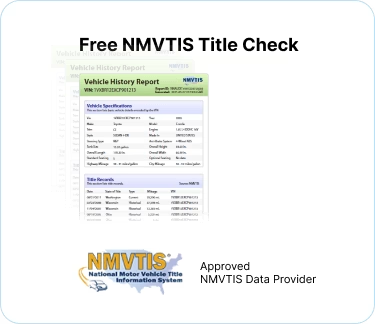
Vehicle History Report
Vehicle
Specifications
Specifications
Ownership
History
History
All History
Events
Events
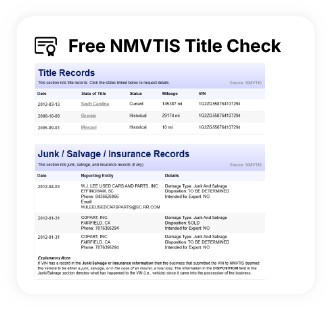
NMVTIS Title
History Check
History Check
Salvage/Rebuilt
Check
Check
Accident
Check
Check
Theft
Check
Check
Open Lien
Check
Check
Past Sale
Listings
Listings
Safety
Recalls
Recalls
Odometer
Check
Check
Market Price
Analysis
Analysis
What Problems Does the 1984 Chevrolet C/K 30 Series Have?
The 1984 Chevrolet C/K 30 Series, like many vehicles of its era, is prone to certain issues that owners should be aware of. One of the most pervasive problems is rust. Due to the age and materials used, rust can significantly affect the frame, especially near the rear axle and suspension mounting points. The cab corners, rocker panels, and wheel wells are also common areas for corrosion. Addressing rust early is crucial for maintaining structural integrity and safety.
Powertrain reliability is generally good, but some specific components can be problematic. Carburetor issues are not uncommon with the gasoline V8 engines; they can become clogged or develop vacuum leaks, leading to poor idle quality, stalling, and reduced performance. For those with the 454 engine, overheating can be an issue if the cooling system is not meticulously maintained.
Transmission problems can also arise. Automatic transmissions, particularly the TH400 (3-speed heavy-duty), can experience wear in the clutch packs or torque converter over time, leading to slipping or harsh shifting. Manual transmissions are generally more robust but can suffer from worn synchronizers or clutch issues.
Electrical systems of this vintage can be temperamental. Fuses can blow, wiring harnesses can degrade, and grounds can corrode, leading to intermittent issues with lights, gauges, or accessories. The ignition system, especially the distributor and coil, can also be a source of unreliability if not maintained.
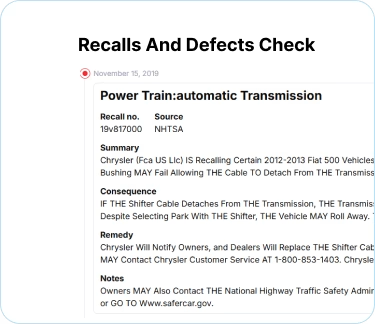
While specific recalls for the 1984 model year concerning major safety defects are not widely documented for the C/K 30 Series, it is always advisable to check with the NHTSA for any outstanding recalls that might apply. Long-term reliability heavily depends on the vehicle's history of maintenance and how it was used. Trucks that were consistently overloaded or subjected to harsh working conditions will naturally show more wear and tear than those used for lighter duties or as personal vehicles.
Powertrain reliability is generally good, but some specific components can be problematic. Carburetor issues are not uncommon with the gasoline V8 engines; they can become clogged or develop vacuum leaks, leading to poor idle quality, stalling, and reduced performance. For those with the 454 engine, overheating can be an issue if the cooling system is not meticulously maintained.
Transmission problems can also arise. Automatic transmissions, particularly the TH400 (3-speed heavy-duty), can experience wear in the clutch packs or torque converter over time, leading to slipping or harsh shifting. Manual transmissions are generally more robust but can suffer from worn synchronizers or clutch issues.
Electrical systems of this vintage can be temperamental. Fuses can blow, wiring harnesses can degrade, and grounds can corrode, leading to intermittent issues with lights, gauges, or accessories. The ignition system, especially the distributor and coil, can also be a source of unreliability if not maintained.
While specific recalls for the 1984 model year concerning major safety defects are not widely documented for the C/K 30 Series, it is always advisable to check with the NHTSA for any outstanding recalls that might apply. Long-term reliability heavily depends on the vehicle's history of maintenance and how it was used. Trucks that were consistently overloaded or subjected to harsh working conditions will naturally show more wear and tear than those used for lighter duties or as personal vehicles.
How long will the 1984 Chevrolet C/K 30 Series last?
With diligent maintenance, a 1984 Chevrolet C/K 30 Series can easily surpass 200,000 miles, with many examples reaching 300,000 miles or more. These trucks are renowned for their inherent durability and robust construction. However, weaknesses manifest over time, primarily in the form of rust, which can compromise structural integrity if left unchecked. Suspension components like ball joints and bushings will wear, as will the exhaust system. Regular fluid changes, attention to cooling system health, and addressing minor issues promptly are key to maximizing their service life. Those that have been babied will last significantly longer than those used as dedicated workhorses.
What Technology & Safety Features are Included?
The 1984 Chevrolet C/K 30 Series is a product of its time, meaning its technology, entertainment, and safety features are decidedly basic by modern standards. Built for utility and ruggedness, it prioritizes function over digital amenities.
Built-in Tech & Entertainment: The core technology revolves around essential gauges for monitoring engine function: speedometer, tachometer (often optional), fuel level, engine temperature, oil pressure, and battery voltage. Entertainment typically consisted of an AM/FM radio, with an optional cassette player being a premium feature for the era. Speakers were usually limited to two in the dash. Air conditioning was a common, though not standard, option on higher trims. Power windows and door locks were also optional and a mark of luxury for the period.
Driver-Assistance Features: Driver-assistance features as we know them today were virtually non-existent. The primary driver aids were power steering, which made maneuvering easier, and power brakes, which improved stopping performance. Cruise control was an available option on some models. ABS (Anti-lock Braking System) was not a feature found in this generation of C/K trucks.
Safety Features: Safety features were rudimentary. Seat belts (lap and shoulder belts were becoming standard) were the primary passive safety system. The robust steel construction provided a degree of passive safety. There were no airbags.
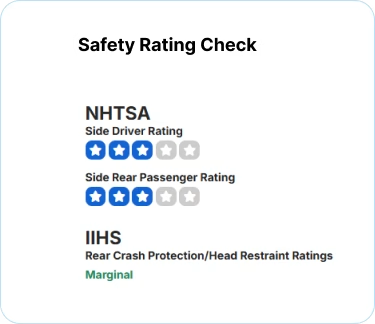
Crash-Test Ratings: Formal crash-test ratings from organizations like the NHTSA or IIHS were not as comprehensive or publicly disseminated in 1984 as they are today. Due to its heavy-duty construction, the C/K 30 Series would likely perform reasonably well in frontal impacts compared to smaller vehicles of the era, but without modern crumple zones or advanced restraint systems, occupant protection would be limited. The focus was on the truck's ability to withstand hard work and external forces rather than on sophisticated occupant safety in high-speed collisions.
Built-in Tech & Entertainment: The core technology revolves around essential gauges for monitoring engine function: speedometer, tachometer (often optional), fuel level, engine temperature, oil pressure, and battery voltage. Entertainment typically consisted of an AM/FM radio, with an optional cassette player being a premium feature for the era. Speakers were usually limited to two in the dash. Air conditioning was a common, though not standard, option on higher trims. Power windows and door locks were also optional and a mark of luxury for the period.
Driver-Assistance Features: Driver-assistance features as we know them today were virtually non-existent. The primary driver aids were power steering, which made maneuvering easier, and power brakes, which improved stopping performance. Cruise control was an available option on some models. ABS (Anti-lock Braking System) was not a feature found in this generation of C/K trucks.
Safety Features: Safety features were rudimentary. Seat belts (lap and shoulder belts were becoming standard) were the primary passive safety system. The robust steel construction provided a degree of passive safety. There were no airbags.
Crash-Test Ratings: Formal crash-test ratings from organizations like the NHTSA or IIHS were not as comprehensive or publicly disseminated in 1984 as they are today. Due to its heavy-duty construction, the C/K 30 Series would likely perform reasonably well in frontal impacts compared to smaller vehicles of the era, but without modern crumple zones or advanced restraint systems, occupant protection would be limited. The focus was on the truck's ability to withstand hard work and external forces rather than on sophisticated occupant safety in high-speed collisions.
What Colors Options are Available?
1984 Chevrolet C/K 30 Series Prices and Market Value
When new in 1984, the Chevrolet C/K 30 Series, being a heavy-duty model, would have had a starting price significantly higher than its light-duty counterparts, likely in the range of $15,000 to $25,000+ depending on configuration and options. Due to their age and the inherent wear and tear associated with trucks, these vehicles have experienced substantial depreciation from their original MSRP.
Current used market prices vary wildly based on condition, mileage, engine, and overall originality. Well-maintained, low-mileage examples, especially with desirable engine options like the 454 or diesel, can fetch anywhere from $5,000 to $15,000 or even more for pristine, highly original examples. Heavily used or rusty trucks might be available for under $3,000. Factors affecting resale value include the presence of rust, the condition of the engine and transmission, interior wear, and the overall mechanical soundness. Restored or highly collectible models can command premium prices.



1984 Chevrolet C/K 30 Series Cost of Ownership
Ownership costs for a 1984 C/K 30 Series are moderate to high, leaning towards costly. Insurance can be relatively inexpensive for liability if considered a classic or work vehicle, but comprehensive coverage might be harder to obtain and more costly for older vehicles. Fuel costs will be significant due to poor MPG. Maintenance is generally straightforward and parts are available but can add up, especially for wear items. Repairs, particularly for rust mitigation or major powertrain issues, can be substantial. While not economical to own in terms of running costs, its long-term durability can offer value if well-maintained.
1984 Chevrolet C/K 30 Series Fuel Efficiency
Fuel Type
Gasoline
Fuel Capacity
-
City Mileage
-
Highway Mileage
-
1984 Chevrolet C/K 30 Series Warranty
Basic
Original warranty
0 months / No data
Estimated remaining
Expired
Powertrain
Original warranty
0 months / No data
Estimated remaining
Expired
Rust
Original warranty
0 months / No data
Estimated remaining
Expired
1984 Chevrolet C/K 30 Series Insurance
Insurance for a 1984 Chevrolet C/K 30 Series is moderately priced, reflecting its status as a Pickup Truck with strong safety ratings and
reasonable repair costs.
How Does the 1984 Chevrolet C/K 30 Series Compare to Other Pickup Truck?
The 1984 Chevrolet C/K 30 Series competed primarily against its domestic rivals, the Ford F-350 and Dodge Ram 350.
Performance: In terms of raw towing and hauling grunt, all three were designed for similar heavy-duty tasks. The C/K 30 Series, with its available 454 V8 and robust chassis, offered formidable power. Ford's F-350 often boasted strong engine options and payload capacities, while Dodge's offerings provided competitive torque with their available V8s and diesel engines. Performance for all was about brute strength, not speed or agility.
Features: The C/K 30 Series, like its competitors, offered a basic interior focused on functionality. Higher trims like the Silverado provided some creature comforts, but advanced tech was absent across the board. Ford and Dodge also offered comparable trim levels with similar amenities. Features were generally comparable, with minor differences in interior design and optional equipment availability.
Reliability: All three American heavy-duty trucks of this era were known for their robust mechanicals, designed to withstand hard work. However, they also shared common weaknesses like rust susceptibility and potential for wear-and-tear on powertrains and suspension over many years and miles. No single manufacturer had a definitive reliability advantage; maintenance history is paramount for all.
Price: New prices were competitive within the heavy-duty segment. Used, the 1984 C/K 30 Series often falls into a similar price bracket as comparable Ford F-350 and Dodge Ram 350 models, heavily influenced by condition and rarity.
Alternatives: If a buyer prioritizes slightly more modern comfort and features while retaining heavy-duty capability, a later model year (e.g., 1990s or early 2000s) Ford F-350/Super Duty, Dodge Ram 2500/3500, or even a Chevrolet Silverado 2500HD would offer better safety, potentially better fuel economy, and more refined driving dynamics. However, for those seeking the vintage appeal, simplicity, and mechanical straightforwardness of a classic heavy-duty truck, the 1984 C/K 30 Series remains a strong contender alongside its direct contemporaries.
Performance: In terms of raw towing and hauling grunt, all three were designed for similar heavy-duty tasks. The C/K 30 Series, with its available 454 V8 and robust chassis, offered formidable power. Ford's F-350 often boasted strong engine options and payload capacities, while Dodge's offerings provided competitive torque with their available V8s and diesel engines. Performance for all was about brute strength, not speed or agility.
Features: The C/K 30 Series, like its competitors, offered a basic interior focused on functionality. Higher trims like the Silverado provided some creature comforts, but advanced tech was absent across the board. Ford and Dodge also offered comparable trim levels with similar amenities. Features were generally comparable, with minor differences in interior design and optional equipment availability.
Reliability: All three American heavy-duty trucks of this era were known for their robust mechanicals, designed to withstand hard work. However, they also shared common weaknesses like rust susceptibility and potential for wear-and-tear on powertrains and suspension over many years and miles. No single manufacturer had a definitive reliability advantage; maintenance history is paramount for all.
Price: New prices were competitive within the heavy-duty segment. Used, the 1984 C/K 30 Series often falls into a similar price bracket as comparable Ford F-350 and Dodge Ram 350 models, heavily influenced by condition and rarity.
Alternatives: If a buyer prioritizes slightly more modern comfort and features while retaining heavy-duty capability, a later model year (e.g., 1990s or early 2000s) Ford F-350/Super Duty, Dodge Ram 2500/3500, or even a Chevrolet Silverado 2500HD would offer better safety, potentially better fuel economy, and more refined driving dynamics. However, for those seeking the vintage appeal, simplicity, and mechanical straightforwardness of a classic heavy-duty truck, the 1984 C/K 30 Series remains a strong contender alongside its direct contemporaries.
Final Verdict: Is the 1984 Chevrolet C/K 30 Series a Good Pickup Truck?
The 1984 Chevrolet C/K 30 Series is ideal for enthusiasts, mechanics, or those requiring a no-nonsense, rugged workhorse that prioritizes capability over modern amenities. It's a truck for someone who appreciates classic American automotive engineering and isn't afraid of basic maintenance or potential repairs.
It is worth buying if you find a well-maintained example, preferably with less rust and a strong, functioning powertrain. Avoid trucks with extensive rust, especially on the frame, as repairs can be costly. It's a solid choice as a used vehicle for towing, hauling, or as a project truck. Buying new is not an option, and even then, its limitations in modern safety and comfort features should be considered. Higher trims like the Silverado offer more comfort, but the core functionality remains the same across the 30 Series lineup.