by VIN, Year, Make, Model by License Plate

2019 Freightliner Cascadia 132 Overview, Reviews, Ratings & Specs

Rating: 0.00
Based on 0 Owner Reviews
Eugene S | January 10, 2026
The 2019 Freightliner Cascadia 132 is a Class 8 semi-truck, a staple in the North American trucking industry since its introduction. Known for its aerodynamic design and driver-centric features, it falls within the heavy-duty truck category. Key trims often revolve around engine configurations and cab sizes. New pricing could range significantly based on options, often starting in the six figures, while used prices vary. Its popularity stems from its blend of fuel efficiency, driver comfort, and robust performance, making it a go-to for fleets and owner-operators alike.
The Good

The 2019 Cascadia 132 boasts impressive fuel efficiency, robust reliability, and a comfortable, modern cabin. Its advanced aerodynamics and powerful engine options ensure strong performance. This truck offers exceptional value for its durability and operational cost savings, appealing to both the pragmatic need for efficiency and the driver's desire for a premium work environment.

The Bad

Some owners have reported issues with the DEF (Diesel Exhaust Fluid) system, potential electrical glitches, and occasional premature wear on certain components. While generally reliable, vigilance regarding these specific areas and consistent maintenance are advised to mitigate potential downtime.

2019 Freightliner Cascadia 132: Quick Overview

  • Engine Options: The 2019 Freightliner Cascadia 132 typically offered Detroit Diesel engines, primarily the DD13 and DD15. These are known for their durability and efficiency in heavy-duty applications. Some models might have also been available with Cummins ISX15 engines, depending on the specific configuration and buyer preference.
  • Horsepower: Horsepower ratings for the Detroit DD13 usually range from 370 to 470 hp, while the DD15 can offer between 400 and 505 hp. The specific horsepower selected directly impacts performance and fuel economy.
  • Fuel Economy: Fuel economy for a Class 8 truck like the Cascadia is not measured by traditional MPG figures. Instead, it's often discussed in terms of miles per gallon (MPG) or gallons per mile. The 2019 Cascadia, with its aerodynamic design and efficient engines, aimed for class-leading fuel economy, often achieving figures in the 6-8 MPG range, though this is heavily dependent on load, terrain, driving habits, and axle ratios.
  • 0-60 Times: 0-60 mph times are generally not a relevant metric for heavy-duty semi-trucks. Their purpose is not rapid acceleration but sustained power for hauling heavy loads over long distances.
  • Towing Capacity: The towing capacity is exceptionally high, as this is a Class 8 truck designed for hauling heavy freight. The Gross Combination Weight Rating (GCWR) can exceed 80,000 lbs, and often reaches up to 140,000 lbs or more, depending on the specific configuration, trailer type, and local regulations.
  • Trim-Level Features: The 2019 Cascadia 132 offered various cab configurations, including day cabs and multiple sleeper options (e.g., 48-inch, 60-inch, 72-inch). Key features available across trims, often as optional, included: advanced telematics systems for fleet management, premium driver seats with heating and ventilation, improved insulation for noise reduction, enhanced lighting systems, integrated navigation, power inverters, and various safety features like lane departure warning and adaptive cruise control.

2019 Freightliner Cascadia 132 Specifications

Vehicle Information
Year 2019
Make Freightliner
Model Cascadia 132
Trim -
Style -
Type Truck
Category Medium Truck
Manufacturing Details
Made In Mexico
Manufacturing City SALTILLO
Dimensions
Doors -
Curb Weight -
Gross Vehicle Weight Rating -
Overall Height -
Overall Length -
Overall Width -
Wheelbase Length -
Standard Seating -
Engine & Performance
Engine 12.8L I6
Engine Size 12.8L
Engine Cylinders 6
Transmission -
Transmission Type -
Transmission Speeds -
Drivetrain Rear-Wheel Drive
Additional Features
Anti-Brake System -
Steering Type -
Pricing
Manufacturer Suggested Retail Price (MSRP) -
Invoice Price -
Delivery Charges -

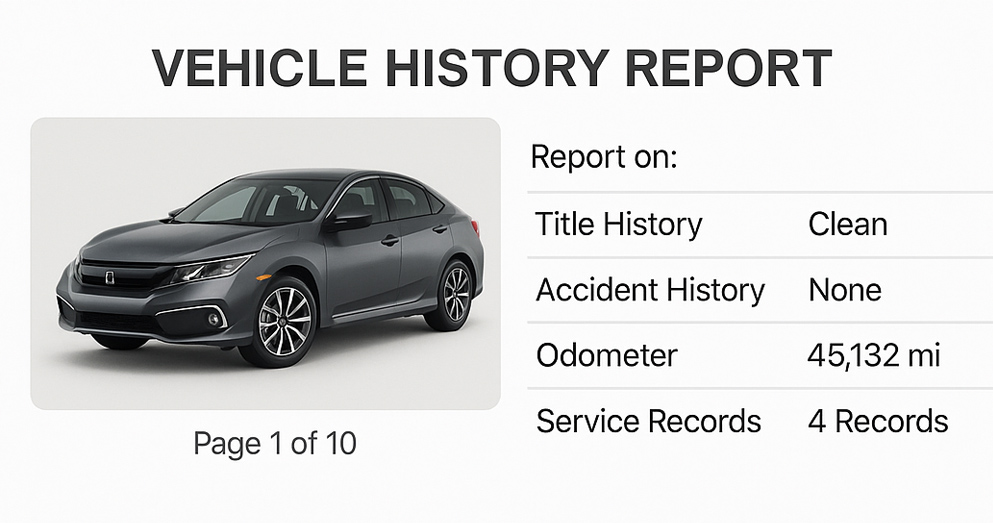
Vehicle History Report

Vehicle
Specifications
Ownership
History
All History
Events
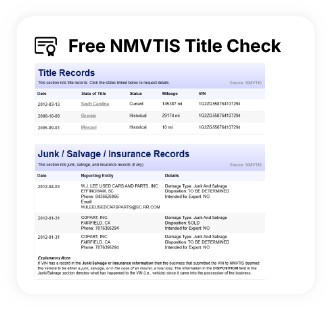
NMVTIS Title
History Check
Salvage/Rebuilt
Check
Accident
Check
Theft
Check
Open Lien
Check
Past Sale
Listings
Safety
Recalls
Odometer
Check
Market Price
Analysis

What Problems Does the 2019 Freightliner Cascadia 132 Have?

The 2019 Freightliner Cascadia 132, while generally regarded as a reliable workhorse, has had its share of reported issues and recalls, typical for complex heavy-duty vehicles. One of the more frequently mentioned concerns across various model years, including 2019, revolves around the Diesel Exhaust Fluid (DEF) system. Issues can include malfunctioning sensors, clogged injectors, or problems with the DEF pump, leading to reduced engine performance or engine shutdown warnings. This is a common point of attention for modern diesel engines adhering to strict emissions standards.

Another area that has seen some reports pertains to electrical gremlins. This can manifest as intermittent dashboard warning lights, issues with cabin electronics, or problems with sensors that affect various vehicle functions. While not always indicative of a systemic failure, these can be frustrating and lead to diagnostic downtime.

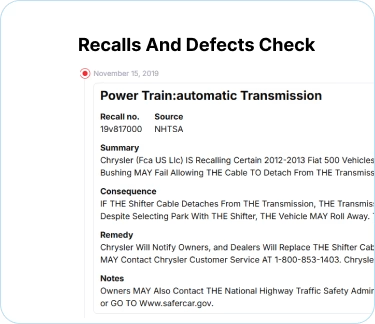
Recalls for the 2019 Cascadia have touched upon several systems. For example, there have been recalls related to potential issues with the steering system, specifically involving the steering shaft or components that could lead to a loss of steering control. Other recalls have addressed concerns with the braking system, such as potential issues with ABS components or brake actuators that could compromise braking effectiveness. There have also been recalls concerning the fuel system, with potential leaks or component failures that require immediate attention.

Long-term reliability, beyond the initial few years, often depends heavily on the maintenance regimen. Trucks that undergo regular, scheduled maintenance using quality parts tend to fare better. However, some components, like DPF (Diesel Particulate Filter) systems, can require specialized cleaning or replacement over time due to the nature of their operation. The sheer complexity of modern truck systems means that while individual components are robust, the interconnectedness of these systems can sometimes lead to cascading issues if not properly addressed. It is always advisable for owners to stay informed about any manufacturer service bulletins or recalls pertinent to their specific vehicle.

How long will the 2019 Freightliner Cascadia 132 last?

A well-maintained 2019 Freightliner Cascadia 132 can realistically achieve anywhere from 700,000 to over 1 million miles of service life. This longevity is a hallmark of Freightliner's robust engineering and the durability of its core components, particularly the Detroit Diesel engines. With diligent adherence to recommended maintenance schedules, including regular oil changes, filter replacements, and proactive attention to potential issues like DEF system health, owners can expect extended operational periods. While the powertrain is built for endurance, over time, components such as turbochargers, fuel injectors, and exhaust after-treatment systems may require refurbishment or replacement. The chassis and suspension are also designed for heavy use, but regular inspections are crucial to catch any wear before it becomes a major problem. The primary weakness over time, as with many modern diesels, can be the complexity of emissions systems, but these are manageable with proper care.

What Technology & Safety Features are Included?

The 2019 Freightliner Cascadia 132 was designed with an emphasis on driver comfort, productivity, and safety, incorporating a range of technology, driver-assistance, and safety features, many of which were optional. The cabin technology focused on making long-haul driving more efficient and less fatiguing. Standard features often included a digital driver display that provided critical vehicle information at a glance. An integrated infotainment system was typically available, offering AM/FM radio, CD player, and connectivity options like Bluetooth for hands-free calls and audio streaming.

Driver-assistance systems were a significant area of advancement for the 2019 model. Optional features included **Detroit Assurance**, a suite of safety technologies. This encompassed features such as **Active Brake Assist** (ABA), which could automatically apply brakes to mitigate or avoid frontal collisions, and **Lane Departure Warning** (LDW), which alerted the driver if the vehicle began to drift out of its lane. Adaptive Cruise Control (ACC) was also an available option, allowing the truck to maintain a set speed and distance from the vehicle ahead, reducing driver workload in traffic.

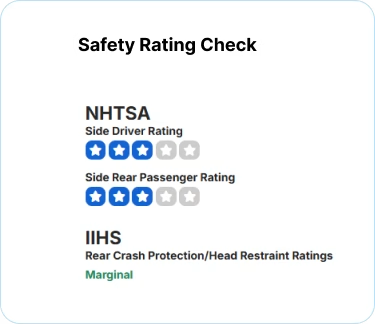
Safety was further enhanced by the robust construction of the Cascadia's cab, designed to protect occupants in the event of a collision. While formal NHTSA or IIHS crash-test ratings are not typically published for heavy-duty commercial trucks in the same way they are for passenger vehicles, manufacturers conduct rigorous internal testing to meet stringent safety standards. The Cascadia's design prioritizes occupant protection through reinforced structures and advanced restraint systems. Optional features could also include enhanced visibility aids like blind-spot monitoring and advanced lighting systems for improved nighttime driving. Telematics systems were also a key technological offering, providing fleet managers with real-time data on vehicle performance, location, and driver behavior, aiding in operational efficiency and safety management.

What Colors Options are Available?

We’re working on this section!
In the meantime, feel free to explore the other sections for more content.

2019 Freightliner Cascadia 132 Prices and Market Value

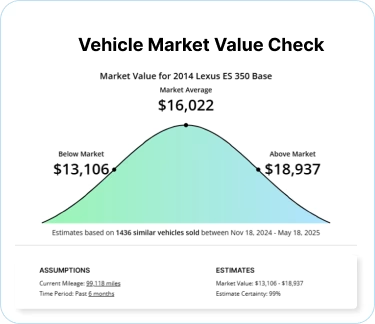
When new, the 2019 Freightliner Cascadia 132 had a substantial price tag, typically ranging from $120,000 to over $200,000 depending heavily on engine choice, transmission, cab configuration (day cab vs. various sleeper lengths), and numerous optional features. The used market for a 2019 Cascadia varies considerably. Currently, you can expect prices to range anywhere from $50,000 to $120,000 or more, contingent on mileage, overall condition, age, and specific specifications. Trucks with lower mileage, desirable engine/transmission combinations, and well-maintained sleeper cabs tend to hold their value better. Depreciation is significant in the first few years, but after the initial drop, Class 8 trucks like the Cascadia tend to depreciate more slowly, maintaining a solid resale value due to their inherent durability and ongoing demand in the freight industry. Factors like maintenance history, tire wear, and any past major repairs critically impact resale value.

2019 Freightliner Cascadia 132 Cost of Ownership

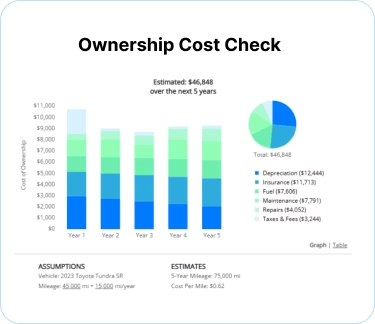
Owning a 2019 Freightliner Cascadia 132 involves considerable costs. Insurance premiums for Class 8 trucks are substantial, influenced by coverage levels, driver history, and operating radius. Fuel is a major ongoing expense, with MPG heavily dependent on load, route, and driving style, though the Cascadia is designed for efficiency. Maintenance, including regular oil changes, filter replacements, and potential DEF system upkeep, is critical and adds up. Repairs can be costly due to the complexity and size of the components. Overall, while the Cascadia aims for economy through fuel efficiency and durability, the upfront investment and ongoing operational expenses position it as a significant financial commitment rather than an economical vehicle for personal use. It is designed for profitable commercial operation.

2019 Freightliner Cascadia 132 Fuel Efficiency

Fuel Type Diesel
Fuel Capacity -
City Mileage -
Highway Mileage -

2019 Freightliner Cascadia 132 Warranty

Basic
Original warranty 0 months / No data
Estimated remaining Expired
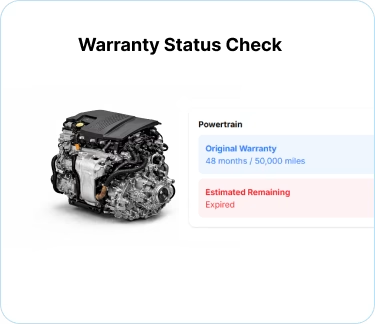
Powertrain
Original warranty 0 months / No data
Estimated remaining Expired
Rust
Original warranty 0 months / No data
Estimated remaining Expired

2019 Freightliner Cascadia 132 Insurance

Insurance for a 2019 Freightliner Cascadia 132 is moderately priced, reflecting its status as a Truck with strong safety ratings and
reasonable repair costs.

How Does the 2019 Freightliner Cascadia 132 Compare to Other Truck?

The 2019 Freightliner Cascadia 132 competes in the highly contested Class 8 heavy-duty truck market. Its primary rivals include models from Kenworth (e.g., T680, T880), Peterbilt (e.g., Model 579, Model 567), Volvo Trucks (e.g., VNL), and International (e.g., LT Series).

Performance: The Cascadia, often powered by robust Detroit Diesel engines, generally offers competitive performance, known for strong pulling power and good fuel efficiency thanks to its aerodynamic design. Kenworth and Peterbilt trucks, often equipped with PACCAR engines or Cummins options, also provide excellent performance and efficiency, with some drivers preferring their specific engine characteristics. Volvo trucks are known for their smooth ride and often advanced powertrain integration.

Features: Freightliner has historically focused on driver comfort and advanced technology. The 2019 Cascadia offered a well-appointed cabin with optional advanced safety and telematics features, aligning well with competitors. Kenworth and Peterbilt are also strong contenders in cabin comfort and technology offerings, often providing highly customizable interiors. Volvo is renowned for its driver-focused ergonomics and premium interior options.

Reliability: Freightliner Cascadias have a reputation for solid reliability, particularly their powertrains. However, like all complex trucks, they can experience issues. Kenworth and Peterbilt also have strong reliability reputations, often cited for their durability and fewer major issues. Volvo trucks generally score well in reliability but can sometimes have higher parts costs.

Price: Pricing is highly variable based on configuration. Freightliner trucks are often seen as offering a good balance of features and cost-effectiveness, potentially being slightly more accessible than some premium Kenworth or Peterbilt models, depending on specifications. Volvo trucks can sometimes command a higher price due to their perceived premium status.

Recommendations:
- Similar Alternatives: For a very similar experience in terms of performance, features, and reliability, consider the Kenworth T680 or the Peterbilt Model 579. These trucks offer comparable fuel efficiency, driver comfort, and advanced technology.
- Slightly Different Focus: If a premium, highly driver-centric interior and ride quality are paramount, the Volvo VNL is an excellent alternative. If ruggedness and on- and off-highway versatility are key, the Peterbilt Model 567 or Kenworth T880 might be considered, though they might sacrifice some aerodynamic efficiency compared to the Cascadia.

Ultimately, the 'best' choice often comes down to specific operational needs, driver preference, and dealer support in a given region. The 2019 Cascadia remains a strong contender, but thoroughly comparing these rivals based on a specific build sheet is crucial.

Final Verdict: Is the 2019 Freightliner Cascadia 132 a Good Truck?

The 2019 Freightliner Cascadia 132 is ideal for owner-operators and fleet managers seeking a highly efficient, reliable, and comfortable Class 8 truck. It excels in long-haul vocational applications where fuel economy and driver productivity are paramount. It is certainly worth buying, especially on the used market where it offers significant value compared to its new price. Buying used is often the most economical approach, provided the truck has a thorough maintenance history and has been inspected for known issues like DEF system problems. Specific trims with desirable sleeper configurations and proven engine/transmission pairings are generally the most sought-after. For businesses prioritizing a balance of performance, durability, and operational cost savings, the 2019 Cascadia remains a strong and practical choice.

2019 Freightliner Cascadia 132 Owner Reviews

0.00
Consumer Rating, Based on 0 Consumer Reviews
Overall rating
Cancel
Thank You for Your Review!

We truly appreciate the time and effort you took to share your experience with us.

Uh oh!

Something went wrong, please try again later.

Author Image
Eugene S

Eugene is an automotive enthusiast with over 15 years of experience in the used car market. As a writer at VINCheck.info, he brings deep industry insight and a passion for cars, helping readers make smart, informed decisions. Eugene has written hundreds of used car reviews and is known for breaking down complex automotive topics into clear, actionable advice. Over the years, he has driven and worked on a wide range of vehicles—starting with tuning street cars in his early days and eventually focusing on performance upgrades and reliability improvements. Today, he specializes in evaluating used vehicles through the lens of real-world ownership and enthusiast needs. A longtime fan of Porsche, Eugene especially appreciates vehicles that blend durability with driving enjoyment.