
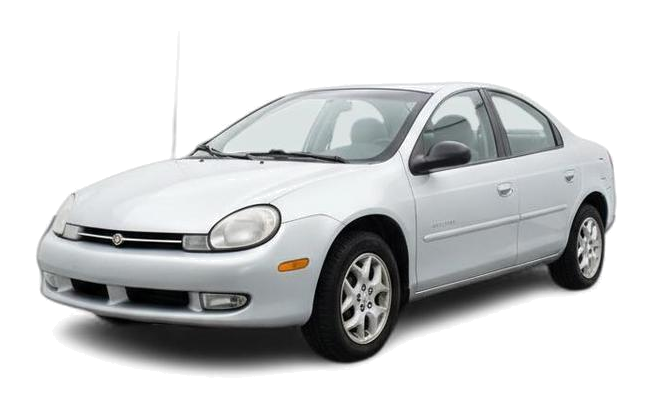
The Good
The 2000 Neon offered a spirited driving experience and sharp styling that appealed to enthusiasts. For practical buyers, its fuel efficiency and surprisingly spacious interior for its class, combined with an affordable price, made it an attractive value proposition.
The Bad
Potential buyers should be aware of common issues such as automatic transmission problems, head gasket failures, and electrical gremlins. Rust, especially in colder climates, can also be a significant concern, impacting structural integrity and appearance.
2000 Chrysler Neon: Quick Overview
- Engine Options: The 2000 Chrysler Neon primarily featured a 2.0-liter inline-4 engine.
- Horsepower: Standard models typically produced around 132 horsepower. Performance-oriented trims like the ACR and R/T offered slightly higher output, often around 150 horsepower with the High Output version of the 2.0L engine.
- Fuel Economy: EPA estimates for the 2000 Neon were generally around 24 MPG city and 31 MPG highway, though this could vary slightly with transmission type and driving conditions.
- 0-60 Times: Stock 2000 Neon models could achieve 0-60 mph in the mid-8 to low-9 second range, making them relatively quick for their class. Performance trims were quicker.
- Towing Capacity: As a compact car, the 2000 Chrysler Neon was not designed for towing and did not have an official towing capacity.
- Trim-Level Features:
- Base/ES: Included basic amenities like power steering, intermittent wipers, and an AM/FM stereo.
- SE: Added air conditioning, a tilt steering wheel, and power windows and locks (often optional or part of packages).
- R/T: Featured sport suspension, performance exhaust, upgraded interior trim, fog lights, and 16-inch alloy wheels.
- ACR (American Club Racer): Focused on performance with stiffer suspension, larger brakes, lighter wheels, and aerodynamic enhancements. It often had fewer creature comforts to save weight.
2000 Chrysler Neon Specifications
Vehicle Information
| Year | 2000 |
| Make | Chrysler |
| Model | Neon |
| Trim | - |
| Style | 3-Speed |
| Type | Sedan |
| Category | Compact Car |
Manufacturing Details
| Made In | United States |
| Manufacturing City | BELVIDERE |
Dimensions
| Doors | 4-Door |
| Curb Weight | 2617 pounds |
| Gross Vehicle Weight Rating | - |
| Overall Height | 56.00 inches |
| Overall Length | 174.40 inches |
| Overall Width | 67.40 inches |
| Wheelbase Length | 105.00 inches |
| Standard Seating | 5 |
Engine & Performance
| Engine | 2L I4 |
| Engine Size | 2L |
| Engine Cylinders | 4 |
| Transmission | 5-Speed Manual |
| Transmission Type | Manual |
| Transmission Speeds | 5-Speed |
| Drivetrain | Front-Wheel Drive |
Additional Features
| Anti-Brake System | Non-ABS 4-Wheel ABS |
| Steering Type | Rack & Pinion |
Pricing
| Manufacturer Suggested Retail Price (MSRP) | $12,640 |
| Invoice Price | $11,661 |
| Delivery Charges | - |
Vehicle History Report
Specifications
History
Events
History Check
Check
Check
Check
Check
Listings
Recalls
Check
Analysis
What Problems Does the 2000 Chrysler Neon Have?
Electrical problems were also not uncommon. Owners reported issues with power windows, door locks, and dashboard warning lights malfunctioning. The cooling system could also be a weak point, with leaks from hoses or the radiator leading to overheating. Rust is a pervasive problem, particularly in regions with harsh winters and road salt usage. Areas like the wheel wells, rocker panels, and subframes are susceptible to significant corrosion, which can compromise the vehicle's structural integrity and lead to costly repairs.
While specific recalls for the 2000 model year might exist, they generally addressed safety-related issues rather than the common mechanical wear-and-tear problems. Long-term reliability is often directly tied to how well the vehicle has been maintained. Neglecting regular fluid changes, especially transmission and coolant, significantly increases the risk of major component failure. Due to these known issues, a thorough pre-purchase inspection by a trusted mechanic is highly recommended for any used 2000 Chrysler Neon.
How long will the 2000 Chrysler Neon last?
What Technology & Safety Features are Included?
In terms of driver-assistance features, the 2000 Neon was quite basic. Anti-lock brakes (ABS) were often optional, especially on lower trims, but became more common on higher-end models like the R/T. Power steering was standard, and some models might have featured power windows and door locks as optional equipment, particularly on the SE and higher trims. Cruise control was also an option.
Safety features included front airbags as standard equipment. Side airbags were generally not offered on the 2000 model year. Seatbelt pretensioners were also included.
Crash-test ratings for the second-generation Neon (which includes the 2000 model) were mixed. The National Highway Traffic Safety Administration (NHTSA) gave the Neon four out of five stars for driver and passenger protection in frontal impacts. However, side-impact ratings were generally lower, often receiving three stars for side-impact driver and rear passenger. These ratings reflect the safety standards and vehicle designs of the era. For a car in its class at the time, it offered a reasonable safety package, but it's important to note that modern vehicles offer significantly more advanced safety technologies and higher crash protection.
What Colors Options are Available?
2000 Chrysler Neon Prices and Market Value
Factors significantly affecting resale value include the presence of rust, the condition of the engine and transmission, and overall maintenance history. Vehicles with fewer miles and a documented service record will command higher prices. However, the general reputation for some mechanical issues and the age of the vehicle mean that resale value remains relatively low, making them more of an economy purchase than an investment. Well-maintained performance trims like the ACR or R/T might hold slightly better value among enthusiasts.
2000 Chrysler Neon Cost of Ownership
2000 Chrysler Neon Fuel Efficiency
2000 Chrysler Neon Warranty
Basic
Powertrain
Rust
2000 Chrysler Neon Insurance
reasonable repair costs.
How Does the 2000 Chrysler Neon Compare to Other Sedan?
Performance: The Neon, particularly in R/T and ACR trims, often offered more spirited performance and better handling than many of its rivals, providing a more engaging driving experience. The standard engines were competitive, but the Neon's sporty demeanor was a key differentiator.
Features: In terms of features, the Neon was generally comparable to its peers. While it offered essential amenities, it wasn't typically a leader in advanced technology or luxury appointments compared to segment stalwarts like the Civic or Corolla, which often had better reputations for interior refinement and feature availability.
Reliability: This is where the Neon often fell short of its Japanese competitors. The Honda Civic and Toyota Corolla have long-standing reputations for superior reliability and durability, with fewer recurring mechanical issues. The Ford Focus and Chevrolet Cavalier had their own sets of problems, but the Neon was particularly known for specific issues like transmission failures and head gasket problems that impacted long-term ownership.
Price: The Neon was competitively priced when new and remains very affordable on the used market. This was a significant draw for budget-conscious buyers.
Alternatives: For buyers prioritizing reliability above all else, the Honda Civic and Toyota Corolla from the same era are significantly better choices, despite potentially being slightly more expensive on the used market. They offer legendary dependability and lower long-term repair costs. The Ford Focus offered a good blend of handling and practicality, often with better reliability than the Neon, though still not reaching Honda/Toyota levels. The Chevrolet Cavalier was a more basic and less engaging option, often competing on price and perceived simplicity rather than performance or refinement.
Final Verdict: Is the 2000 Chrysler Neon a Good Sedan?
It is overwhelmingly a used car purchase; new models are no longer available. If considering one, look for well-maintained examples, preferably with manual transmissions, as they tend to be more reliable than the automatics. Performance-oriented trims like the R/T or ACR might appeal to enthusiasts seeking a project car or an affordable track-day vehicle, provided they are in good condition. However, for daily transportation where dependability is paramount, better alternatives exist in the used market, even at a slightly higher price point.

Cathleen V
Cathleen is an exceptional freelance writer covering hot topics in the automotive world from a gearhead's perspective. Her articles delve into various aspects of automotive technology and history, offering readers detailed insights into engine performance, reliability, and maintenance. Through her engaging and informative writing, Cathleen provides valuable information to automotive enthusiasts and consumers alike, helping them make informed decisions about vehicle maintenance and purchases.