
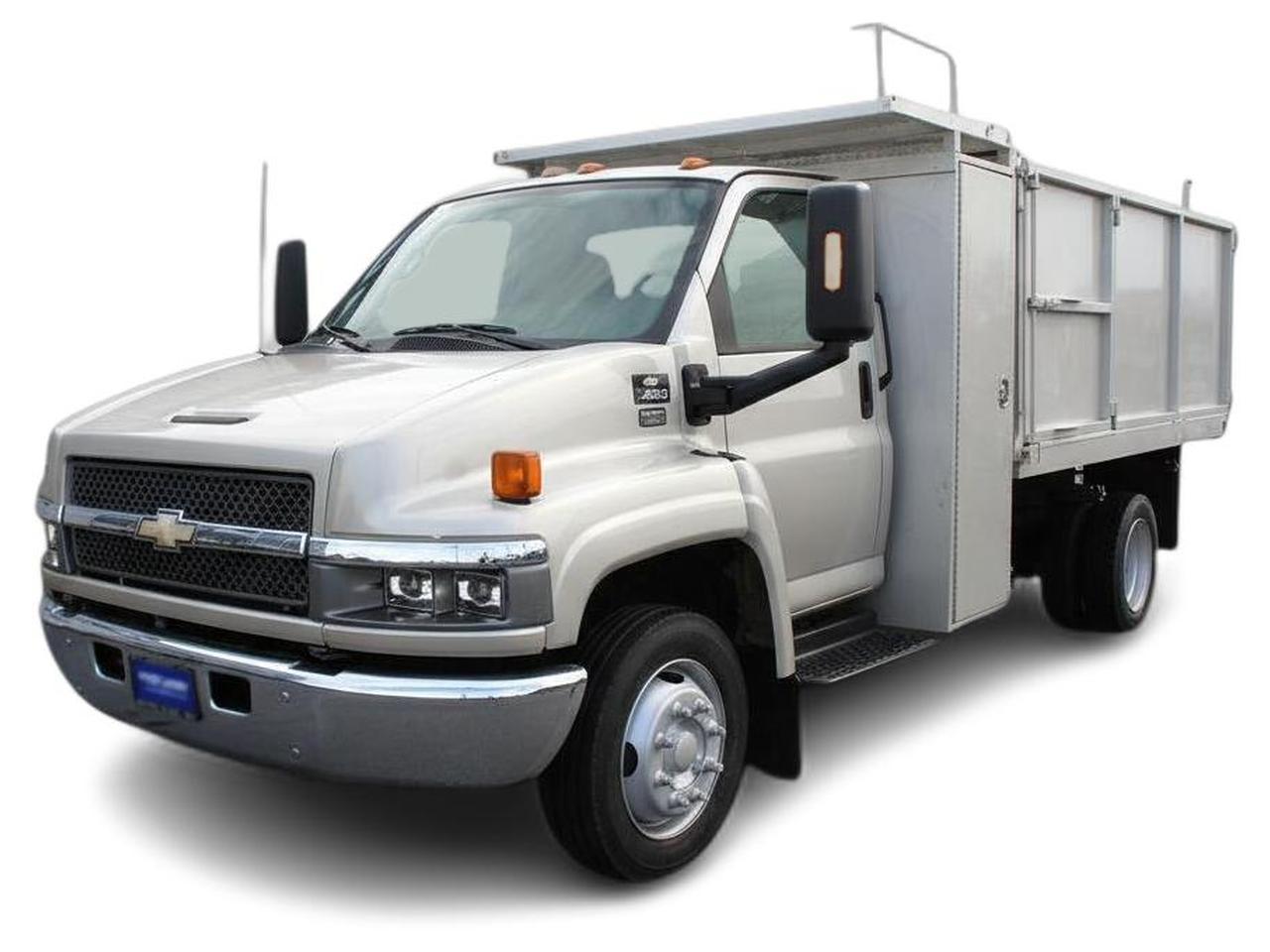
The 2006 Chevrolet Kodiak C4500 is a heavy-duty pickup truck that was part of Chevrolet's Silverado family. While the Kodiak name was previously used for a medium-duty truck, the C4500 designation signifies its position within the commercial-grade segment. Available as a chassis cab and various vocational body styles, it shared production with the GMC TopKick. It was popular for its robust construction and potent powertrains, making it a capable workhorse.
The Good
The 2006 Kodiak C4500 excels in raw capability and durability, offering immense towing and hauling power. Its commanding presence appeals to those who value presence and strength, while its sturdy construction provides peace of mind for demanding tasks, making it a practical choice for businesses and serious enthusiasts.
The Bad
Owners should be aware of potential issues with the exhaust gas recirculation (EGR) system, particularly on diesel models. Transmission issues can also arise, and the overall fuel economy is inherently poor due to its size and purpose. Rust can be a concern in certain climates.
2006 Chevrolet Kodiak C4500: Quick Overview
- Engine Options:
- 6.6L Duramax V8 Turbo Diesel
- 8.1L Vortec V8 Gasoline
- Horsepower:
- 6.6L Duramax: Approximately 300-330 hp (depending on specific tune)
- 8.1L Vortec: Approximately 325 hp
- Fuel Economy: Due to its heavy-duty nature and large engines, fuel economy is significantly low. Expect single-digit to low-teen miles per gallon, heavily dependent on load, driving conditions, and engine. Official EPA estimates are not typically published for these commercial-grade vehicles.
- 0-60 Times: Not a primary metric for this vehicle. Expect very slow acceleration, likely in the 15-20+ second range, depending on configuration and load.
- Towing Capacity: Very high, designed for substantial loads. Gross Vehicle Weight Ratings (GVWR) can exceed 20,000 lbs, with towing capacities reaching well over 15,000 lbs, often significantly higher when properly equipped with gooseneck or fifth-wheel hitches. Specific ratings vary greatly by configuration and axle ratios.
- Trim-Level Features: The C4500 was primarily offered as a chassis cab, meaning the 'trim' was largely dictated by the vocational body added. Standard features on the cab itself often included:
- Power windows and locks
- Air conditioning
- AM/FM stereo with CD player
- Cruise control
- Various seating configurations (bench or individual seats)
- Optional luxury packages might include leather seating and upgraded sound systems.
2006 Chevrolet Kodiak C4500 Specifications
Vehicle Information
| Year | 2006 |
| Make | Chevrolet |
| Model | Kodiak C4500 |
| Trim | - |
| Style | Regular Cab 2WD |
| Type | Truck |
| Category | Heavy Truck |
Manufacturing Details
| Made In | United States |
| Manufacturing City | FLINT |
Dimensions
| Doors | 2-Door |
| Curb Weight | - |
| Gross Vehicle Weight Rating | - |
| Overall Height | - |
| Overall Length | - |
| Overall Width | - |
| Wheelbase Length | - |
| Standard Seating | - |
Engine & Performance
| Engine | 6.6L V8 |
| Engine Size | 6.6L |
| Engine Cylinders | 8 |
| Transmission | Automatic |
| Transmission Type | Automatic |
| Transmission Speeds | - |
| Drivetrain | Rear-Wheel Drive |
Additional Features
| Anti-Brake System | - |
| Steering Type | - |
Pricing
| Manufacturer Suggested Retail Price (MSRP) | - |
| Invoice Price | - |
| Delivery Charges | - |
Vehicle History Report
Vehicle
Specifications
Specifications
Ownership
History
History
All History
Events
Events
NMVTIS Title
History Check
History Check
Salvage/Rebuilt
Check
Check
Accident
Check
Check
Theft
Check
Check
Open Lien
Check
Check
Past Sale
Listings
Listings
Safety
Recalls
Recalls
Odometer
Check
Check
Market Price
Analysis
Analysis
What Problems Does the 2006 Chevrolet Kodiak C4500 Have?
The 2006 Chevrolet Kodiak C4500, particularly those equipped with the 6.6L Duramax diesel engine, frequently exhibit issues related to the exhaust gas recirculation (EGR) system. Clogged EGR coolers and valves are common, leading to reduced engine performance, rough idling, and check engine lights. This is a known Achilles' heel for many Duramax-equipped trucks of this era. Another area of concern is the transmission, especially with heavy use. Failures or premature wear can occur, often requiring costly repairs or rebuilds. For gasoline 8.1L Vortec engines, intake manifold gaskets can be a source of coolant leaks. Body rust, especially around wheel wells and frame rails, is also a prevalent long-term concern, particularly in areas with harsh winters and road salt. While specific recalls for the 2006 model year might vary, general recalls affecting this platform often revolve around braking systems or potential fire hazards, so it's crucial to check for any outstanding recalls. Long-term reliability hinges heavily on consistent and thorough maintenance, especially oil changes with quality fluids and regular inspection of the EGR system. Failure to address these common issues can significantly shorten the lifespan of the drivetrain and exacerbate repair costs. Owners often report that while the core engine and chassis are robust, supporting systems like emissions control and transmissions require vigilance.
How long will the 2006 Chevrolet Kodiak C4500 last?
With diligent maintenance, the 2006 Chevrolet Kodiak C4500 can achieve well over 200,000 miles, with many examples exceeding 300,000 miles. The robust chassis and core engine components are built for longevity. However, the lifespan is significantly impacted by the frequency and quality of maintenance, particularly concerning the EGR system and transmission. Weaknesses that emerge over time often involve suspension components, brake wear, and, as mentioned, potential EGR and transmission issues. Proper fluid changes and proactive checks of these common problem areas are vital for maximizing its service life. Owners who prioritize maintenance can expect a durable truck capable of many years of service, while neglect will lead to premature and costly failures.
What Technology & Safety Features are Included?
The 2006 Chevrolet Kodiak C4500 was designed with functionality and work capability as its primary focus, meaning its technology, entertainment, and driver-assistance features are relatively basic compared to modern vehicles. Standard equipment in the cabin typically included an AM/FM stereo with a CD player, offering basic audio entertainment. Air conditioning was standard for occupant comfort, and power windows and locks were often included. Cruise control was also a common feature for easier highway driving. Advanced infotainment systems, touchscreens, or navigation were not available. Driver-assistance features were virtually nonexistent; the focus was on mechanical robustness. Safety features were limited to essential systems like airbags for the driver and front passenger and a three-point seatbelt system. ABS (Anti-lock Braking System) was standard, enhancing braking control. Due to its commercial nature and chassis-cab configuration, formal crash-test ratings from organizations like the NHTSA or IIHS are not readily available or applicable in the same way as for passenger vehicles. The vehicle's sheer mass and heavy-duty construction inherently provide a significant degree of passive safety. Optional features would have been largely dependent on the specific upfitter or vocational body installed, rather than Chevrolet's factory options. These might have included more robust lighting, specialized mirrors, or auxiliary power outlets for equipment. Overall, the technology suite was utilitarian, prioritizing essential functions over creature comforts or advanced safety aids.
What Colors Options are Available?
2006 Chevrolet Kodiak C4500 Prices and Market Value
When new, the 2006 Chevrolet Kodiak C4500 had a substantial price tag, often starting in the $50,000-$60,000 range and climbing significantly higher depending on engine choice, drivetrain, and vocational body configuration. As a heavy-duty commercial vehicle, its depreciation curve is different from a typical consumer pickup. While it depreciates from its original high price, it holds value relatively well in the used market due to its durability and capability. Current used market prices can range widely from $15,000 to $40,000+, heavily influenced by mileage, condition, the specific engine (Duramax diesel models command a premium), and the type of vocational body it possesses. Factors affecting resale value include maintenance history, rust, and the presence of desirable equipment for work purposes.
2006 Chevrolet Kodiak C4500 Cost of Ownership
Owning a 2006 Chevrolet Kodiak C4500 is generally costly. Insurance premiums will be higher than for standard pickups due to its commercial classification and weight. Fuel costs are exceptionally high, with the diesel engine achieving poor MPG and the gasoline engine being even less efficient. Maintenance, while crucial for longevity, involves expensive fluids and parts for its heavy-duty systems. Repairs, especially for the Duramax's EGR system or transmission, can be very expensive. Therefore, this vehicle is not economical to own; it is a significant investment primarily suited for those who require its specific heavy-duty capabilities and can factor these substantial operating costs into their budget.
2006 Chevrolet Kodiak C4500 Fuel Efficiency
Fuel Type
Diesel
Fuel Capacity
-
City Mileage
-
Highway Mileage
-
2006 Chevrolet Kodiak C4500 Warranty
Basic
Original warranty
0 months / No data
Estimated remaining
Expired
Powertrain
Original warranty
0 months / No data
Estimated remaining
Expired
Rust
Original warranty
0 months / No data
Estimated remaining
Expired
2006 Chevrolet Kodiak C4500 Insurance
Insurance for a 2006 Chevrolet Kodiak C4500 is moderately priced, reflecting its status as a Truck with strong safety ratings and
reasonable repair costs.
How Does the 2006 Chevrolet Kodiak C4500 Compare to Other Truck?
The 2006 Chevrolet Kodiak C4500 competed in a niche segment of heavy-duty commercial trucks, with its closest rivals being the 2006 GMC TopKick (its corporate sibling) and offerings from Ford like the F-650. In terms of performance, the Kodiak's Duramax diesel offered strong torque for towing and hauling, comparable to the TopKick. Ford's F-650 often offered more powertrain choices and customization for specialized upfits, sometimes at a higher price point. Features were generally utilitarian across all these heavy-duty trucks; creature comforts were secondary to function. The Kodiak's reliability, particularly with the Duramax engine, was generally good for its core components but had known weaknesses in the EGR system, which also plagued its rivals. Price-wise, the Kodiak was positioned competitively within its class. For those seeking similar capability but perhaps a slightly more consumer-friendly package, a heavily optioned 3500 series pickup from Chevrolet or GMC (like the Silverado HD or Sierra HD) with the Duramax diesel could be an alternative, though they would lack the C4500's true medium-duty chassis and GVWR. However, if pure, unadulterated work capacity is the goal, the Kodiak remains a solid choice. Another consideration could be a used International or Freightliner business class truck, which might offer even greater robustness but at a potentially higher running cost and complexity. For a similar utilitarian purpose with potentially better long-term emission system reliability, exploring later model years of the Kodiak or TopKick with updated emission controls might be beneficial, but this also comes with a higher price tag.
Final Verdict: Is the 2006 Chevrolet Kodiak C4500 a Good Truck?
The 2006 Chevrolet Kodiak C4500 is ideal for individuals or businesses needing extreme towing and hauling capacity, such as for RVs, heavy equipment, or specialized vocational applications. It is worth buying for those who prioritize brute strength and durability over fuel efficiency and luxury. Given its age, purchasing a used model is the only option. Prospective buyers should prioritize models with well-documented maintenance history, particularly concerning the EGR system and transmission. A Duramax diesel engine is generally preferred for its torque and efficiency over the gasoline option, despite the potential EGR issues. It is a capable, albeit demanding, vehicle to own, best suited for those who understand and can manage its operational costs and potential maintenance needs.
