The 2001 Jayco RV Trailer represents a segment of recreational vehicles known for their accessibility and widespread use in the early 2000s. As a travel trailer, it's designed to be towed by a separate vehicle. While specific trims vary greatly by model and floor plan, Jayco offered a range of towable RVs, including travel trailers and fifth wheels, throughout its extensive model years. These were popular for their balance of features and affordability, making camping trips attainable for many families.

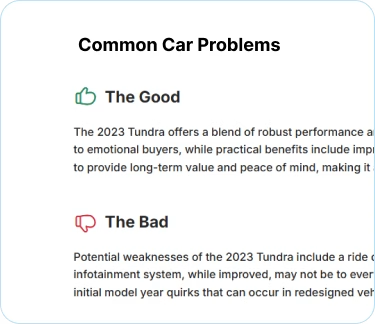
The Good
The 2001 Jayco RV Trailer offers a compelling blend of value and practicality. Its straightforward design ensures reliable performance for adventures, while comfortable living spaces provide a welcoming retreat. For those seeking an affordable entry into RVing, it represents excellent value, promising memorable experiences and freedom.
The Bad
When considering a 2001 Jayco RV Trailer, potential buyers should watch out for signs of water damage, particularly around seals and roof penetrations. Older appliances may require servicing or replacement, and the general wear and tear of a 20-year-old vehicle is expected. Thorough inspections are crucial.
2001 JAYCO RV Trailer: Quick Overview
- Engine Options: As a towable RV trailer, the 2001 Jayco RV Trailer does not have its own engine. The performance characteristics are dictated by the towing vehicle.
- Horsepower: Not applicable.
- Fuel Economy: Not applicable.
- 0-60 Times: Not applicable.
- Towing Capacity: This varies significantly based on the specific Jayco model and its Gross Vehicle Weight Rating (GVWR). Jayco produced a wide range of travel trailers, from lightweight models suitable for smaller SUVs to larger units requiring heavy-duty trucks. Typical towing capacities for trailers of this era could range from approximately 3,000 lbs for smaller units to upwards of 7,000-10,000 lbs or more for larger fifth wheels or travel trailers. It is imperative to check the specific trailer's GVWR and the towing vehicle's maximum towing capacity.
- Trim-Level Features: Jayco RVs from 2001 often featured a range of floor plans and amenities designed for comfort and convenience. Common features across various trims could include:
- Sleeping Arrangements: Queen or double beds, convertible dinettes, sofa beds.
- Kitchen Facilities: Refrigerator, stove/oven, microwave, sink, ample cabinet storage.
- Bathroom: Toilet, sink, shower (some models may have a wet bath or a separate shower stall).
- Living Area: Dinette table, lounge area, entertainment center.
- Plumbing: Fresh water tank, grey water tank, black water tank, water heater.
- Electrical: 12V and 110V electrical systems, battery, shore power hookup, interior lighting.
- Exterior: Awning, exterior storage compartments, entry steps, stabilizing jacks.
- Climate Control: Furnace and air conditioning (often optional or standard on higher trims).
- Construction: Wood or aluminum framing, fiberglass or aluminum exterior, asphalt shingle or TPO roofing.
2001 JAYCO RV Trailer Specifications
Vehicle Information
| Year | 2001 |
| Make | JAYCO |
| Model | RV Trailer |
| Trim | - |
| Style | - |
| Type | Recreational Vehicle |
| Category | Special Purpose Vehicle |
Manufacturing Details
| Made In | United States |
| Manufacturing City | LAGRANGE |
Dimensions
| Doors | - |
| Curb Weight | - |
| Gross Vehicle Weight Rating | - |
| Overall Height | - |
| Overall Length | - |
| Overall Width | - |
| Wheelbase Length | - |
| Standard Seating | - |
Engine & Performance
| Engine | - |
| Engine Size | - |
| Engine Cylinders | - |
| Transmission | - |
| Transmission Type | Not Applicable |
| Transmission Speeds | - |
| Drivetrain | Not Applicable |
Additional Features
| Anti-Brake System | Not Applicable |
| Steering Type | - |
Pricing
| Manufacturer Suggested Retail Price (MSRP) | - |
| Invoice Price | - |
| Delivery Charges | - |
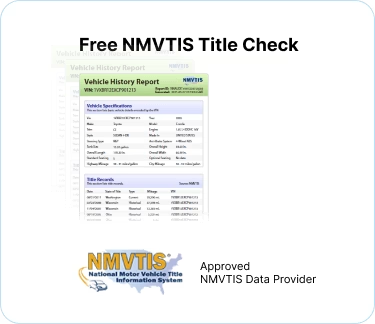
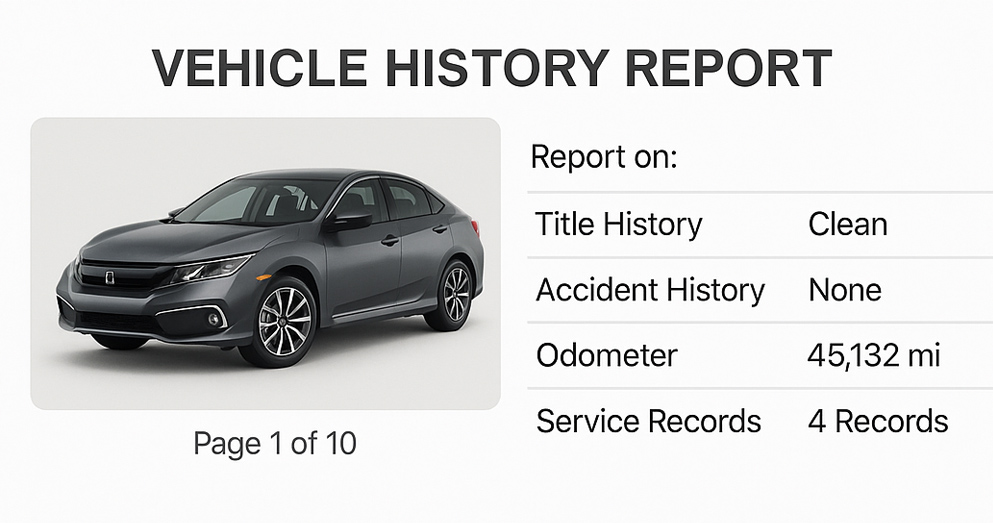
Vehicle History Report
Vehicle
Specifications
Specifications
Ownership
History
History
All History
Events
Events
NMVTIS Title
History Check
History Check
Salvage/Rebuilt
Check
Check
Accident
Check
Check
Theft
Check
Check
Open Lien
Check
Check
Past Sale
Listings
Listings
Safety
Recalls
Recalls
Odometer
Check
Check
Market Price
Analysis
Analysis
What Problems Does the 2001 JAYCO RV Trailer Have?
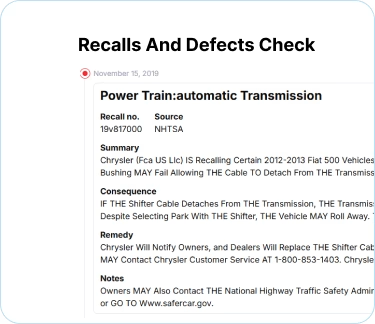
While specific recalls for the 2001 Jayco RV Trailer model year are not broadly publicized in a centralized database without further model specification, general concerns for RVs of this vintage often revolve around age-related wear and tear and potential for water intrusion. The most frequently reported issues tend to be:
- Water Damage and Leaks: This is a pervasive concern for RVs of any age, but particularly those over two decades old. The seals around windows, doors, roof vents, skylights, and the roof itself can degrade over time, allowing water to seep in. This can lead to delamination of the exterior walls, rot in the subfloor and framing, mold and mildew growth, and damage to interior furnishings and appliances. Thorough inspection of the roof, walls, and undercarriage for any signs of moisture is paramount.
- Appliance Malfunctions: Refrigerators, water heaters, furnaces, and air conditioners are all subject to wear. Components can fail due to age, lack of maintenance, or electrical issues. For a 2001 model, it's highly likely that some original appliances may need repair or replacement.
- Plumbing Issues: The rubber and plastic components of plumbing systems can become brittle over time, leading to leaks in pipes, seals, or connections. Water pumps can also fail.
- Tire and Axle Wear: Tires have a limited lifespan and should be replaced based on age (typically 5-7 years), regardless of tread depth. Axle components, bearings, and brakes also require regular inspection and maintenance and can wear out over time.
- Awning Deterioration: RV awnings, especially fabric ones, can fade, tear, or become moldy. The support arms can also seize or break.
- Interior Wear and Tear: Upholstery can become faded and worn, flooring can peel or crack, and cabinetry can show signs of use.
How long will the 2001 JAYCO RV Trailer last?
Estimating average mileage for an RV is different from a car, as usage varies greatly. However, for a 2001 Jayco RV Trailer, years of service are a more relevant metric. With diligent maintenance, including regular checks of seals, roof, tires, and appliances, these trailers can offer 15-20 years of service or more. Their long-term durability is generally considered good, particularly in their structural integrity when properly cared for. However, the key weaknesses that emerge over time are water damage, appliance failures, and the natural degradation of materials like seals and upholstery. Owners who perform preventative maintenance and address minor issues promptly can significantly extend the usable life and enjoyment of their Jayco RV.
What Technology & Safety Features are Included?
The 2001 Jayco RV Trailer, being an older model, will have a significantly more basic set of built-in technology, entertainment, driver-assistance, and safety features compared to modern vehicles.
Technology & Entertainment:
Standard entertainment systems were typically limited. You might find an AM/FM radio with a cassette or CD player. Some higher-end trims or optional packages could have included a built-in television (often a CRT model), a VCR, or even early DVD players. Speaker systems were usually basic, with internal and sometimes external RV speakers. Modern connectivity like USB ports, Bluetooth, or Wi-Fi capabilities would not have been standard.
Driver-Assistance Features:
As a trailer, there are no driver-assistance features inherent to the RV itself. The towing vehicle would be responsible for all driving aids. Features like adaptive cruise control, lane departure warnings, or blind-spot monitoring were not relevant to the trailer.
Safety Features:
Safety features would have been primarily focused on the structure of the trailer and basic life-safety equipment. This typically included:
Optional features that enhanced comfort and convenience, and sometimes perceived safety, could have included a more robust air conditioning system, a generator for off-grid power, a satellite dish for television, or upgraded interior finishes.
Crash-Test Ratings:
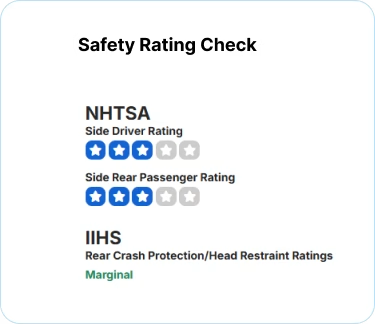
It is important to note that traditional crash-test ratings, like those provided by the NHTSA or IIHS for passenger vehicles, do not apply to RV trailers. These are not self-propelled vehicles and are not subjected to the same types of impact testing. The safety of the trailer is related to its construction, proper towing setup, and the capabilities of the towing vehicle.
Technology & Entertainment:
Standard entertainment systems were typically limited. You might find an AM/FM radio with a cassette or CD player. Some higher-end trims or optional packages could have included a built-in television (often a CRT model), a VCR, or even early DVD players. Speaker systems were usually basic, with internal and sometimes external RV speakers. Modern connectivity like USB ports, Bluetooth, or Wi-Fi capabilities would not have been standard.
Driver-Assistance Features:
As a trailer, there are no driver-assistance features inherent to the RV itself. The towing vehicle would be responsible for all driving aids. Features like adaptive cruise control, lane departure warnings, or blind-spot monitoring were not relevant to the trailer.
Safety Features:
Safety features would have been primarily focused on the structure of the trailer and basic life-safety equipment. This typically included:
- Brakes: Electric trailer brakes, which are activated by the towing vehicle's brake controller.
- Lights: Standard trailer lighting (brake lights, turn signals, running lights) for visibility and signaling to other vehicles.
- Propane and Carbon Monoxide Detectors: These are essential safety devices in RVs and were often installed as standard or optional equipment to detect leaks and dangerous fumes from combustion appliances.
- Smoke Detector: A standard safety feature for detecting fires.
- Emergency Exits: Windows designed to function as emergency exits.
- Fire Extinguisher: Often included as a safety measure.
Optional features that enhanced comfort and convenience, and sometimes perceived safety, could have included a more robust air conditioning system, a generator for off-grid power, a satellite dish for television, or upgraded interior finishes.
Crash-Test Ratings:
It is important to note that traditional crash-test ratings, like those provided by the NHTSA or IIHS for passenger vehicles, do not apply to RV trailers. These are not self-propelled vehicles and are not subjected to the same types of impact testing. The safety of the trailer is related to its construction, proper towing setup, and the capabilities of the towing vehicle.
What Colors Options are Available?
2001 JAYCO RV Trailer Prices and Market Value
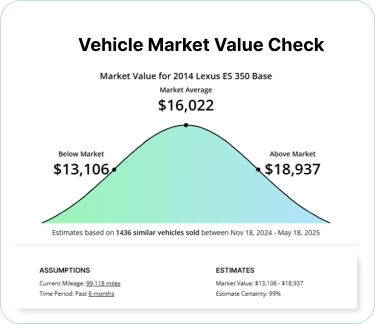
The original pricing for a 2001 Jayco RV Trailer would have varied significantly based on the specific model, size, and included features, but generally ranged from approximately $15,000 to $40,000 or more when new. Today, the used market prices for a 2001 Jayco RV Trailer are considerably lower, typically falling between $3,000 and $10,000. This reflects the substantial depreciation inherent in RVs, especially older ones. Factors heavily influencing resale value include the overall condition, particularly the absence of water damage, the functionality of appliances, the wear and tear on the interior and exterior, and any upgrades or recent maintenance. A well-maintained unit with good documentation will command a higher price than one with visible issues.
2001 JAYCO RV Trailer Cost of Ownership
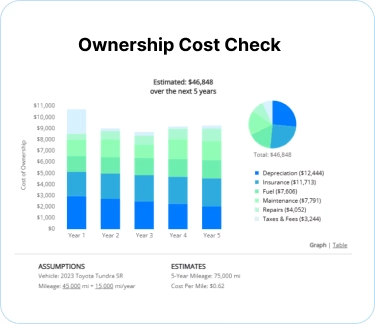
Owning a 2001 Jayco RV Trailer can be economical if purchased at a fair price and maintained well, but repair costs can escalate. Insurance premiums will vary but are generally less than for newer RVs. Fuel costs are borne by the towing vehicle. Annual maintenance, including roof inspections, seal checks, tire rotations, and appliance servicing, is crucial and can cost a few hundred dollars. Repair costs can be significant if major components like appliances or structural elements need replacement, potentially running into thousands. Overall, it's more economical than owning a new RV, but proactive maintenance is key to avoiding costly surprises.
2001 JAYCO RV Trailer Fuel Efficiency
Fuel Type
NOT Applicable
Fuel Capacity
-
City Mileage
-
Highway Mileage
-
2001 JAYCO RV Trailer Insurance
Insurance for a 2001 JAYCO RV Trailer is moderately priced, reflecting its status as a Recreational Vehicle with strong safety ratings and
reasonable repair costs.
How Does the 2001 JAYCO RV Trailer Compare to Other Recreational Vehicle?
The 2001 Jayco RV Trailer competed in a crowded market of travel trailers from manufacturers like Forest River (Wildwood, Surveyor), Keystone RV (Cougar, Outback), and Dutchmen (Denali, Kodiak). In terms of performance, as a trailer, this is dictated by the towing vehicle. All trailers in this class would offer similar towing dynamics, with larger and heavier models requiring more robust towing setups.
Features on the 2001 Jayco were generally competitive for its time, often offering a good balance of amenities for families looking for affordable travel. Rivals might have offered slightly more luxurious interiors or innovative floor plans in certain segments, but Jayco was known for solid, no-frills construction. Reliability is where Jayco often held its own; while age brings potential issues to all RVs, Jayco models from this era are frequently cited for their durable frames and decent build quality compared to some competitors who might have cut corners in materials.
Price was a significant factor. The 2001 Jayco RV Trailer, especially on the used market, offered excellent value. Rivals might have been priced similarly new, but their used prices could also vary.
Alternatives:
For similar value and reliability in a used trailer from the early 2000s, consider brands like Forest River (especially their Wildwood or Surveyor lines) or Prowler. These brands also focused on delivering functional RVs at accessible price points. If budget allows for a slightly newer model (e.g., 2005-2010), you might find RVs with more modern features and potentially less age-related wear, though at a higher purchase price. For a similar experience and potentially better build quality in certain areas, though often at a higher price point, brands like Airstream (though significantly more expensive even used) or some higher-end models from brands like Starcraft could be considered, but they represent a different market segment.
Features on the 2001 Jayco were generally competitive for its time, often offering a good balance of amenities for families looking for affordable travel. Rivals might have offered slightly more luxurious interiors or innovative floor plans in certain segments, but Jayco was known for solid, no-frills construction. Reliability is where Jayco often held its own; while age brings potential issues to all RVs, Jayco models from this era are frequently cited for their durable frames and decent build quality compared to some competitors who might have cut corners in materials.
Price was a significant factor. The 2001 Jayco RV Trailer, especially on the used market, offered excellent value. Rivals might have been priced similarly new, but their used prices could also vary.
Alternatives:
For similar value and reliability in a used trailer from the early 2000s, consider brands like Forest River (especially their Wildwood or Surveyor lines) or Prowler. These brands also focused on delivering functional RVs at accessible price points. If budget allows for a slightly newer model (e.g., 2005-2010), you might find RVs with more modern features and potentially less age-related wear, though at a higher purchase price. For a similar experience and potentially better build quality in certain areas, though often at a higher price point, brands like Airstream (though significantly more expensive even used) or some higher-end models from brands like Starcraft could be considered, but they represent a different market segment.
Final Verdict: Is the 2001 JAYCO RV Trailer a Good Recreational Vehicle?
The 2001 Jayco RV Trailer is ideal for budget-conscious individuals or families looking for an entry-level RV experience or a secondary camping solution. It's worth buying primarily in the used market, provided it has been meticulously inspected for water damage and wear. It's best suited for those who are comfortable with potential minor repairs and maintenance, or who have the skills to address them. Buying this trailer requires careful scrutiny; a well-maintained unit with clear documentation of upkeep will be a much better investment than a neglected one. It's not for someone seeking modern amenities or a completely trouble-free experience, but rather for those valuing affordability and the freedom of the open road with a bit of DIY spirit.