by VIN, Year, Make, Model by License Plate

2017 Yamaha YZF-R1 Overview, Reviews, Ratings & Specs

Rating: 0.00
Based on 0 Owner Reviews
Cathleen V | February 26, 2026

The 2017 Yamaha YZF-R1 is a flagship supersport motorcycle, representing Yamaha's pinnacle of performance. Introduced in its current generation for 2015, the R1 has a rich racing heritage. It boasts a radical, aggressive, and aerodynamic sportbike body style. Key trims for 2017 included the standard R1 and the track-focused R1M. Pricing for the 2017 model ranged approximately from $16,999 to $22,499. It stands out due to its sophisticated electronic rider aids, derived from MotoGP technology, and its potent crossplane crankshaft engine, making it a favorite among serious sportbike enthusiasts and track day riders.

The Good

The 2017 Yamaha YZF-R1 excels with its exhilarating performance, sophisticated electronics offering confidence-inspiring control, and legendary Yamaha reliability. Its aggressive design evokes passion, while the rider-focused ergonomics, though firm, provide surprising usability for its class. It offers exceptional value for a machine with such advanced technology.

The Bad

Potential weaknesses for the 2017 Yamaha YZF-R1 include its high-strung nature, which can be intimidating for novice riders. Some owners report a firm seat and limited comfort for long-distance touring. The sophisticated electronics, while beneficial, can also be complex for basic maintenance. Fuel economy is also not a strong suit.

2017 Yamaha YZF-R1: Quick Overview

  • Engine: 998cc liquid-cooled inline 4-cylinder, DOHC, 16 valves
  • Horsepower: Approximately 200 hp (at crankshaft)
  • Torque: Approximately 83 lb-ft (at crankshaft)
  • Fuel Economy: Estimated 30-35 MPG (combined), highly dependent on riding style.
  • 0-60 Times: Typically in the low 3-second range.
  • Towing Capacity: Not applicable. This is a sportbike.
  • Transmission: 6-speed constant mesh
  • Clutch: Assist and Slipper Clutch
  • Frame: Aluminum Deltabox frame
  • Suspension (Front): 43mm KYB inverted telescopic fork, fully adjustable. R1M features Öhlins electronic racing suspension.
  • Suspension (Rear): KYB single shock, fully adjustable. R1M features Öhlins electronic racing suspension.
  • Brakes (Front): Dual 320mm hydraulic disc brakes with ABS
  • Brakes (Rear): 220mm hydraulic disc brake with ABS
  • Tires: Front: 120/70ZR17, Rear: 190/55ZR17
  • Wheelbase: 54.9 inches
  • Seat Height: 32.7 inches
  • Fuel Capacity: 4.5 gallons
  • Dry Weight: Approximately 377 lbs (401 lbs with all standard equipment)
  • Trim-Level Features:
      - YZF-R1: ABS, Traction Control System (TCS), Slide Control (SCS), Lift Control (LIF), Launch Control (LCS), Quick Shift System (QSS), riding modes (D-mode), LED lighting, fully digital instrumentation.
      - YZF-R1M: Includes all R1 features plus Öhlins Electronic Racing Suspension (ERS), carbon fiber bodywork, connectivity features for data logging and tuning via smartphone app, and a single-seat setup.

2017 Yamaha YZF-R1 Specifications

Vehicle Information
Year 2017
Make Yamaha
Model YZF-R1
Trim -
Style -
Type Motorcycle
Category Motorcycle
Manufacturing Details
Made In Japan
Manufacturing City IWATA
Dimensions
Doors -
Curb Weight -
Gross Vehicle Weight Rating -
Overall Height -
Overall Length -
Overall Width -
Wheelbase Length -
Standard Seating -
Engine & Performance
Engine 998CC
Engine Size 998L
Engine Cylinders 4
Transmission -
Transmission Type -
Transmission Speeds -
Drivetrain -
Additional Features
Anti-Brake System -
Steering Type -
Pricing
Manufacturer Suggested Retail Price (MSRP) -
Invoice Price -
Delivery Charges -

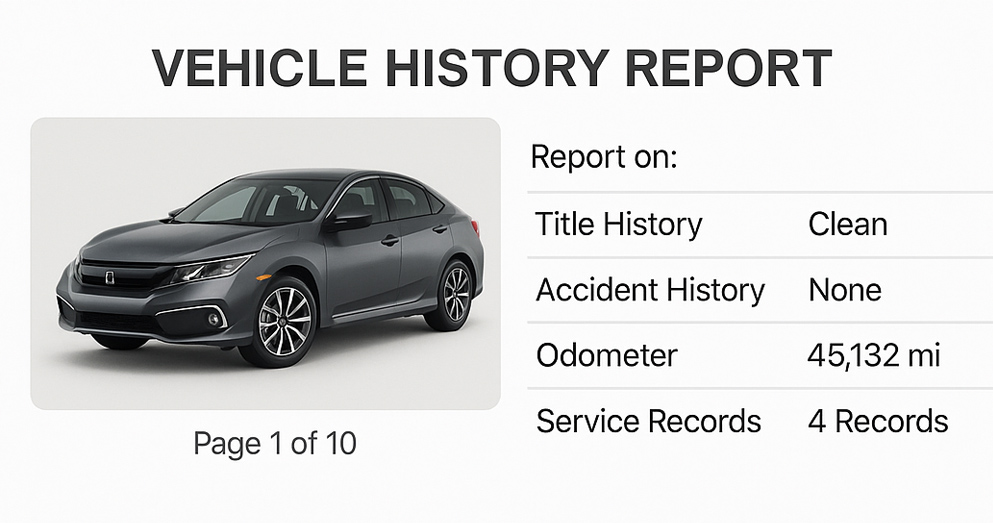
Vehicle History Report

Vehicle
Specifications
Ownership
History
All History
Events
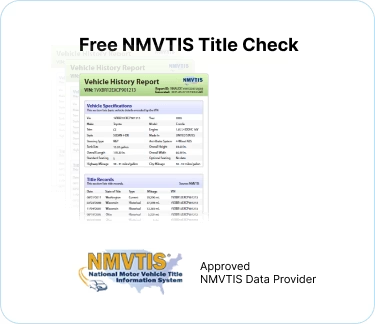
NMVTIS Title
History Check
Salvage/Rebuilt
Check
Accident
Check
Theft
Check
Open Lien
Check
Past Sale
Listings
Safety
Recalls
Odometer
Check
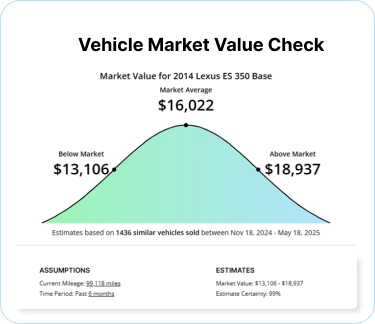
Market Price
Analysis

What Problems Does the 2017 Yamaha YZF-R1 Have?

The 2017 Yamaha YZF-R1 is generally considered a very reliable motorcycle, benefiting from Yamaha's robust engineering and quality control. However, like many high-performance machines, some owners have reported specific issues or points of concern:

Frequently Reported Issues:

  • Electronic Rider Aid Sensitivity: While the advanced electronic aids like TCS and SCS are a major selling point, some riders have found them to be overly sensitive or intrusive in certain conditions, requiring careful tuning of the settings. This is more of a user-experience aspect than a mechanical failure.
  • Clutch Actuation: A small number of owners have reported occasional stiffness or difficulty in engaging the clutch, particularly when cold. This is often resolvable with proper maintenance and adjustment.
  • Exhaust Valve Actuator: Some reports indicate potential issues with the exhaust valve actuator, which can sometimes throw a fault code or malfunction. This is usually a minor electrical or mechanical fix.
  • Radiator Fan Operation: In very hot weather or during extended periods of idling, some owners have noted that the radiator fan might cycle more frequently than expected, though this typically does not indicate a critical problem.

Recalls:

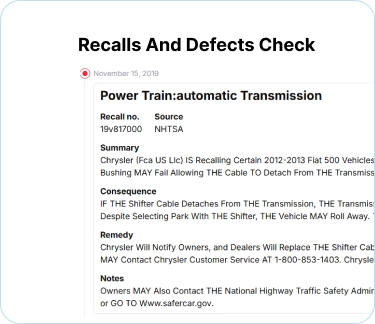
While specific recalls can vary by region and are subject to updates, it is always prudent for owners to check with Yamaha's official channels or the NHTSA database for any active recalls pertaining to their specific motorcycle's VIN. For the 2017 model year, recalls have sometimes addressed issues related to the braking system (e.g., brake hose routing) or potential electrical wiring harness concerns. These are typically addressed by dealerships with component replacements or modifications.

Long-Term Reliability Concerns:

Overall, the 2017 R1 demonstrates strong long-term reliability. The engine, in particular, is known for its durability when properly maintained. The advanced electronics, while complex, are generally well-integrated and reliable. The primary factors for maintaining long-term reliability are diligent adherence to the maintenance schedule, using high-quality fluids and parts, and avoiding excessive abuse on the track without proper preparation and cooling.

Model Year Specifics:

The 2017 model is part of the sixth generation of the R1, which saw significant updates in 2015. Most of the reported minor issues are common across this generation (2015-2019) rather than being specific to the 2017 model year itself. Yamaha typically refines its electronics and minor components in subsequent model years, but the core platform remains consistent.

How long will the 2017 Yamaha YZF-R1 last?

Based on owner data and typical usage patterns, the 2017 Yamaha YZF-R1 can reasonably be expected to provide 50,000 to 100,000 miles of service, provided it receives consistent and meticulous maintenance. Many owners use their R1s for spirited riding, track days, or as a primary mode of recreational transport, accumulating mileage at varying rates. Those who engage in frequent track use may see component wear accelerate, particularly on tires, brakes, and suspension, but the core engine and chassis are built for longevity.

Long-term durability is a strong suit for the R1. The engine's robust construction means that with regular oil changes, filter replacements, and valve adjustments as per the service manual, it can last for well over 100,000 miles. Weaknesses over time are more likely to be related to the wear of consumables or the aging of electrical components and seals, rather than catastrophic mechanical failures. Proper care, including storage protection and avoiding harsh environments, will maximize its lifespan.

What Technology & Safety Features are Included?

The 2017 Yamaha YZF-R1 is a technological marvel for its era, packed with advanced features designed to enhance performance, control, and rider safety. While it lacks traditional automotive entertainment systems, its technology is focused on optimizing the riding experience.

Key Technology & Safety Features:

  • Ride-by-Wire Throttle (YCC-T): Yamaha Chip Controlled Throttle provides precise throttle control, enabling sophisticated electronic rider aids.
  • Multi-Stage Traction Control System (TCS): Allows riders to select different levels of traction control intervention based on conditions and preference.
  • Slide Control System (SCS): Helps manage rear-wheel slides, particularly during corner exits, by reducing engine power when excessive slip is detected.
  • Front Lift Control System (LIF): Manages wheelies by modulating engine output to keep the front wheel from lifting too high.
  • Launch Control System (LCS): Optimizes engine output and throttle response for the quickest possible standing start.
  • Quick Shift System (QSS): Enables clutchless upshifts, allowing for seamless acceleration without reducing throttle.
  • Multiple Riding Modes (D-Mode): Offers different throttle response maps (e.g., A-mode for full power, B-mode for softer response) to suit various riding situations.
  • ABS (Anti-lock Braking System): Standard on the 2017 R1, it prevents wheel lock-up during braking, enhancing stability and control.
  • LED Lighting: Features bright LED headlights, taillights, and turn signals for improved visibility.
  • Full Digital Instrumentation: A comprehensive LCD display provides essential information like speed, RPM, gear position, rider aid settings, and diagnostic codes.
  • Assist and Slipper Clutch: Reduces clutch lever effort and prevents rear-wheel hop under hard deceleration.

Optional Features:

The primary differentiation comes with the R1M trim, which adds:

  • Öhlins Electronic Racing Suspension (ERS): Sophisticated electronic suspension that actively adjusts damping based on riding conditions and settings, offering unparalleled adjustability and performance.
  • Communication Control Unit (CCU): Allows for data logging of riding parameters (throttle position, lean angle, GPS data, etc.) and tuning via a smartphone app, making it ideal for track use and analysis.
  • Carbon Fiber Bodywork: Lighter and more premium aesthetic.

Crash-Test Ratings:

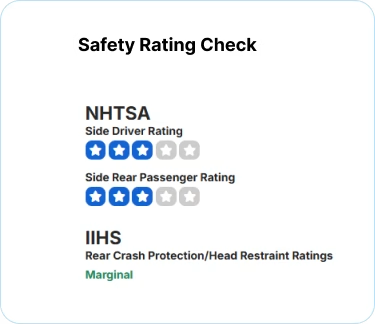
Motorcycles are not subjected to the same type of crash-test ratings as cars. However, the safety features incorporated into the 2017 Yamaha YZF-R1, such as ABS, TCS, and SCS, are designed to actively prevent accidents and mitigate the severity of potential incidents, making it one of the safest supersport motorcycles available.

What Colors Options are Available?

We’re working on this section!
In the meantime, feel free to explore the other sections for more content.

2017 Yamaha YZF-R1 Prices and Market Value

When new, the 2017 Yamaha YZF-R1 had an MSRP (Manufacturer's Suggested Retail Price) that typically ranged from approximately $16,999 for the standard R1 up to around $22,499 for the premium R1M variant. The used market prices for a 2017 Yamaha YZF-R1 currently vary significantly based on condition, mileage, modifications, and geographic location. Generally, you can expect to find them in the range of $10,000 to $15,000, with the R1M commanding a premium.

Depreciation on high-performance motorcycles like the R1 tends to be steeper in the initial few years compared to more utilitarian vehicles. However, the R1 holds its value relatively well due to its desirability, advanced technology, and Yamaha's reputation for quality. Factors significantly affecting resale value include meticulous maintenance records, low mileage, stock condition (fewer modifications), and the presence of desirable optional equipment like the R1M's advanced electronics.

2017 Yamaha YZF-R1 Cost of Ownership

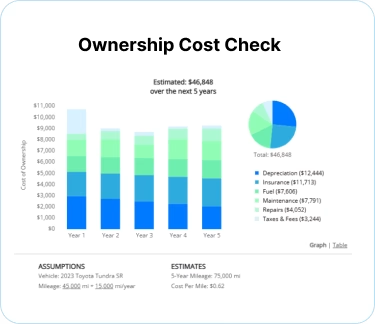
Owning a 2017 Yamaha YZF-R1 is generally considered costly. Insurance premiums for high-performance sportbikes are typically elevated due to their high value and risk profile. Fuel costs will be moderate to high, averaging around 30-35 MPG, depending on riding style. Maintenance costs are also significant, with regular services like oil changes, chain adjustments, and tire replacements being frequent. High-performance tires wear out quickly. Repair costs can be substantial, especially if specialized electronic components or engine internals are involved. This is not an economical vehicle to own; its cost reflects its high-performance nature and advanced technology.

2017 Yamaha YZF-R1 Fuel Efficiency

Fuel Type Gasoline
Fuel Capacity -
City Mileage -
Highway Mileage -

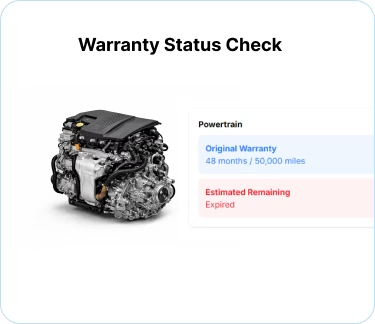
2017 Yamaha YZF-R1 Warranty

Basic
Original warranty 0 months / No data
Estimated remaining Expired
Powertrain
Original warranty 0 months / No data
Estimated remaining Expired
Rust
Original warranty 0 months / No data
Estimated remaining Expired

2017 Yamaha YZF-R1 Insurance

Insurance for a 2017 Yamaha YZF-R1 is moderately priced, reflecting its status as a Motorcycle with strong safety ratings and
reasonable repair costs.

How Does the 2017 Yamaha YZF-R1 Compare to Other Motorcycle?

The 2017 Yamaha YZF-R1 competes in the hyper-sportbike segment against formidable opponents like the Honda CBR1000RR Fireblade, Kawasaki Ninja ZX-10R, and Suzuki GSX-R1000R.

Performance: The R1, with its 998cc crossplane engine, offers immense power and a unique character. Its MotoGP-derived electronics suite, including SCS and LIF, sets it apart, providing advanced rider control. The Kawasaki ZX-10R often edges it slightly in raw horsepower and track-focused agility, while the Honda Fireblade emphasizes refined handling and a more linear power delivery. The Suzuki GSX-R1000R, especially the R model, boasts a potent engine and a comprehensive electronics package as well.

Features: The R1's electronic aids are among the most advanced, especially the R1M's Öhlins ERS. The ZX-10R also features a sophisticated electronics package and advanced suspension. The CBR1000RR is known for its balance and electronic aids, while the GSX-R1000R offers a strong suite of features for its price. Entertainment is secondary, with focus on rider feedback and control.

Reliability: Yamaha has a stellar reputation for reliability, and the R1 is no exception. It generally proves to be more durable in the long run than some competitors, especially concerning its engine. Honda and Suzuki also have strong reliability records. Kawasaki's reliability is good, but some owners have noted more minor electrical gremlins compared to Yamaha or Honda.

Price: At launch, the 2017 R1 was priced competitively within the premium supersport segment. The ZX-10R and GSX-R1000R often offered slightly better value in terms of raw power-per-dollar, while the Fireblade sat in a similar premium bracket. Used prices for the 2017 R1 are now competitive, offering good value for the technology included.

Alternatives:

  • Similar: Kawasaki Ninja ZX-10R (2016-2020) offers comparable performance and electronic sophistication, often at a slightly lower used price. Honda CBR1000RR (2017-2019) provides a refined, balanced, and reliable alternative with excellent handling. Suzuki GSX-R1000R (2017-2018) is a strong contender with impressive power and a feature set that rivals the R1.
  • Potentially Better (depending on priority): If absolute peak track performance and the latest technology are paramount, one might consider newer generations or specialized track bikes. For a more road-biased sportbike experience with slightly more comfort, bikes like the BMW S1000RR (used) or Ducati Panigale V4 (used) could be considered, though they typically come with higher maintenance costs and purchase prices.

Final Verdict: Is the 2017 Yamaha YZF-R1 a Good Motorcycle?

The 2017 Yamaha YZF-R1 is ideal for experienced sportbike riders who crave cutting-edge technology, exhilarating performance, and a machine with a strong racing pedigree. It's perfect for track day enthusiasts looking to shave seconds off their lap times and street riders who appreciate sophisticated rider aids and a potent, characterful engine. While not the most comfortable for long-distance touring, its advanced electronics offer significant safety benefits for spirited riding.

It is absolutely worth buying for those seeking a premium supersport experience. The used market presents the best value, allowing enthusiasts to acquire this sophisticated machine at a considerably lower price than new. A well-maintained used R1 from a reputable seller is highly recommended. The standard R1 offers exceptional performance and technology, while the R1M is for those who demand the absolute pinnacle of electronic suspension and data logging capabilities. For the right rider, the 2017 R1 remains a compelling and rewarding purchase.

2017 Yamaha YZF-R1 Owner Reviews

0.00
Consumer Rating, Based on 0 Consumer Reviews
Overall rating
Cancel
Thank You for Your Review!

We truly appreciate the time and effort you took to share your experience with us.

Uh oh!

Something went wrong, please try again later.

Author Image
Cathleen V

Cathleen is an exceptional freelance writer covering hot topics in the automotive world from a gearhead's perspective. Her articles delve into various aspects of automotive technology and history, offering readers detailed insights into engine performance, reliability, and maintenance. Through her engaging and informative writing, Cathleen provides valuable information to automotive enthusiasts and consumers alike, helping them make informed decisions about vehicle maintenance and purchases.