When you shop for a used car at a dealership, one of the most important documents may be sitting right on the window: the FTC Buyers Guide. It is easy to overlook because it can look like another piece of dealership paperwork, but it tells you key information about warranty coverage, “as is” sales, service contracts, and what the dealer is actually promising in writing.
The FTC Buyers Guide does not tell you whether the car is a good deal, whether the title is clean, or whether the vehicle has hidden mechanical problems. What it does tell you is how the dealer is offering the vehicle for sale and what warranty responsibility the dealer is or is not taking.
Before buying from a dealer, read the Buyers Guide carefully and compare it with the sales contract, warranty documents, vehicle history report, title records, and recall status. If the window sticker says one thing and the salesperson says another, get the promise in writing before you sign.
What Is the FTC Buyers Guide?
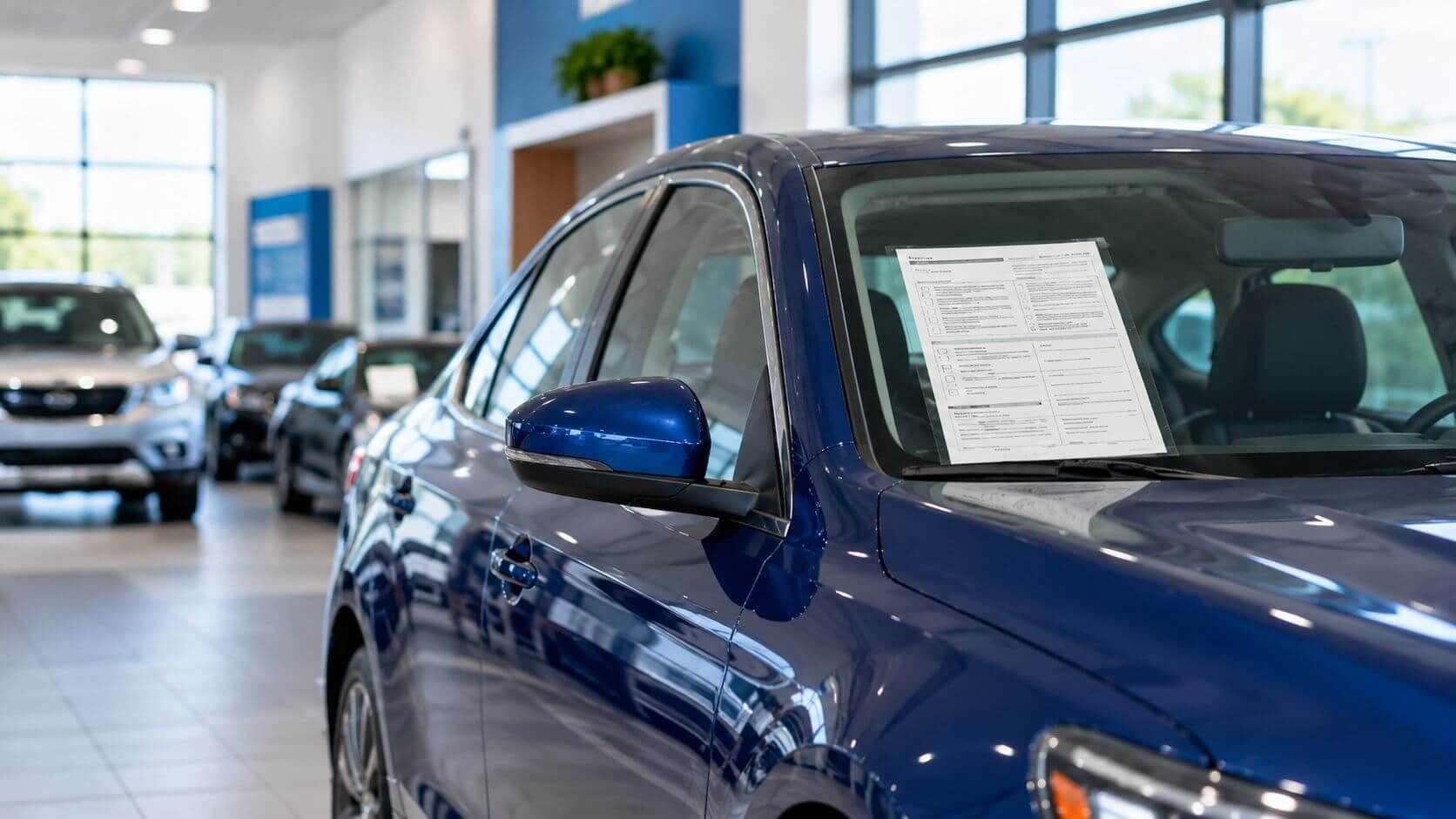
The FTC Buyers Guide is a window form required by the Federal Trade Commission’s Used Car Rule for most used vehicles sold by dealers. It is designed to help buyers understand whether the dealer is selling the car with a warranty, without a dealer warranty, with implied warranties only, or with other coverage information.
The guide is not just a decoration. It is a required disclosure document for dealer sales covered by the rule. The FTC explains that the Buyers Guide must be displayed prominently and conspicuously on or in a used vehicle when it is offered for sale. The guide also becomes part of the sales contract and overrides contrary provisions if the dealer gives the buyer a warranty.
For buyers, the practical lesson is simple: do not rely only on verbal promises. Read the Buyers Guide before signing, and make sure anything important is written down.
Why the Buyers Guide Matters
The Buyers Guide matters because warranty misunderstandings are common in used car sales. A buyer may think the dealer promised repairs, while the written paperwork says the vehicle was sold “as is.” A salesperson may describe a service contract, while the Buyers Guide shows no dealer warranty. A car may still have manufacturer warranty coverage, but the dealer may not be offering its own warranty.
The Buyers Guide helps clarify:
- Whether the dealer is offering a warranty
- Whether the vehicle is being sold “as is” where allowed
- Whether implied warranties apply
- What percentage of repair costs the dealer will pay under a warranty
- Which systems are covered
- How long coverage lasts
- Whether a service contract may be available
- Whether an unexpired manufacturer warranty may apply
- That buyers should check for open recalls
It does not replace a vehicle history report, a title check, a recall lookup, or a mechanic inspection. It simply tells you what the dealer is putting in writing about warranty responsibility.
What “As Is — No Dealer Warranty” Means
One of the most important boxes on the Buyers Guide is As Is — No Dealer Warranty.
If this box is checked, it means the dealer is not promising to pay for repairs after the sale. According to the FTC, when a car is sold “as is,” the buyer assumes the risk for anything that goes wrong after purchase. If the car breaks down after you leave, the dealer generally does not have to fix it unless another written promise, warranty, or state-law protection applies.
This is why written terms matter. If the salesperson says, “We’ll take care of that after you buy,” ask for that promise to be written on the Buyers Guide or in the contract. If it is not written, it may be hard to enforce later.
“As is” does not mean the dealer can lie about the car. It also does not erase every possible state-law protection. But it does mean you should be much more careful before buying.
What “Implied Warranties Only” Means
Some states limit or prohibit dealers from disclaiming implied warranties. In those states, the Buyers Guide may use an Implied Warranties Only version instead of the “as is” version.
Implied warranties are legal promises that may apply even if they are not written out like a traditional warranty. The most common idea is that the vehicle should be fit for ordinary driving purposes, based on the circumstances of the sale and state law.
This area can vary by state, so buyers should not assume the same rule applies everywhere. If you are unsure what implied warranties mean in your state, check with your state attorney general’s office or a local consumer protection agency before buying.
What the Warranty Section Tells You
If the dealer offers a written warranty, the Buyers Guide should identify the warranty and explain important coverage details.
Look for:
- Whether the warranty is full or limited
- What systems are covered
- How long coverage lasts
- What percentage of repair costs the dealer pays
- Whether parts and labor are included
- Whether there are exclusions or limits
- Whether the warranty is provided by the dealer or another party
Do not assume that “warranty included” means everything is covered. A limited warranty may cover only certain systems, such as engine or powertrain components. It may exclude wear items, electronics, diagnostics, fluids, seals, trim, or pre-existing conditions.
If warranty coverage is part of your buying decision, verify it separately with a car warranty check by VIN and ask the dealer for the full written warranty terms.
Buyers Guide vs. Service Contract
The Buyers Guide may also mention whether a service contract is available. A service contract is not the same as a dealer warranty.
A warranty is a promise included with the vehicle or offered by a party as part of the sale. A service contract is usually an optional product that may be sold for an extra charge. It may cover certain repairs, but coverage depends on the contract.
Before buying a service contract, ask:
- Who backs the contract?
- What repairs are covered?
- What repairs are excluded?
- Is there a deductible?
- Where can repairs be done?
- Does coverage start immediately?
- Are diagnostics covered?
- Are electronics covered?
- Can the contract be canceled?
- Is it transferable?
Do not rely on the short description alone. Read the full contract before paying for it.
Manufacturer Warranty: What to Verify
The revised Buyers Guide includes a box dealers can use to indicate that an unexpired manufacturer warranty applies. This can be important for newer used vehicles, certified pre-owned vehicles, or cars still within factory warranty limits.
However, you should verify manufacturer warranty status yourself. Factory warranty coverage can depend on the in-service date, mileage, warranty type, ownership history, exclusions, and whether the vehicle has been modified, salvaged, or used commercially.
Ask the dealer for proof of remaining warranty and confirm it with the manufacturer or an authorized dealer. A warranty claim can become complicated if the vehicle has title brands, missing maintenance records, or modifications.
The Buyers Guide Tells You to Check Recalls
The FTC’s revised Buyers Guide directs buyers to check for safety recalls before buying. This matters because open recalls may involve airbags, brakes, steering, fuel systems, seat belts, electrical systems, or other safety-related components.
The Buyers Guide itself does not guarantee that recall repairs are complete. It simply points buyers to check.
Before buying, run a VIN recall check and ask the dealer whether any open recalls have been repaired. If the dealer says the recall work is done, ask for written dealer repair documentation.
What the Buyers Guide Does Not Tell You
The Buyers Guide is important, but it has limits. It is not a complete vehicle history report and does not tell you everything about the car.
It does not necessarily tell you:
- Whether the title is clean
- Whether the car has accident history
- Whether there are open liens
- Whether the mileage history is consistent
- Whether the car has flood damage
- Whether the car was previously stolen
- Whether the car will need repairs soon
- Whether the asking price is fair
- Whether the vehicle passed an independent inspection
This is why the Buyers Guide should be only one part of your buying process. For title concerns, run a title check by VIN and compare the result with the actual title before signing.
How to Read the Buyers Guide Before You Sign
Read the Buyers Guide slowly before you agree to buy. Do not wait until after financing paperwork is already printed.
Check these items:
| Buyers Guide Item | What It Means | What to Do |
|---|---|---|
| As Is box | Dealer is not offering a dealer warranty | Inspect carefully and get promises in writing |
| Implied Warranties Only | State-law implied warranties may apply | Understand your state’s rules |
| Warranty box | Dealer offers written warranty coverage | Read what systems and duration are covered |
| Systems covered | Shows what the dealer warranty includes | Confirm parts, labor, and exclusions |
| Service contract | Optional paid coverage may be available | Read the full contract before buying |
| Manufacturer warranty | Factory warranty may still apply | Verify with manufacturer or dealer |
| Recall notice | Buyer should check for safety recalls | Run a recall lookup before purchase |
If anything is unclear, ask questions before signing.
What to Do if the Salesperson Promises Something Different
If a salesperson promises repairs, warranty coverage, free service, cancellation rights, or any other protection, make sure it appears in writing.
Ask the dealer to write the promise on:
- The Buyers Guide
- The sales contract
- A warranty document
- A signed “we owe” or due-bill form
- Another written agreement that clearly identifies the vehicle and promise
Verbal promises are risky. If the Buyers Guide says “As Is — No Dealer Warranty” but the salesperson says repairs are included, the written documents matter most.
Do not sign until the paperwork matches what you were promised.
FTC Buyers Guide Checklist
Use this checklist before buying a used car from a dealer.
| Question | Why It Matters |
|---|---|
| Is the Buyers Guide displayed? | It is required for many dealer-used vehicles |
| Is the car sold as is? | You may be responsible for repairs after sale |
| Is there a dealer warranty? | Shows whether the dealer pays for certain repairs |
| What systems are covered? | Avoids assuming full coverage |
| How long does coverage last? | Helps compare warranty value |
| Is a service contract optional? | Service contracts can cost extra and have exclusions |
| Is manufacturer warranty still active? | May provide important protection |
| Are recalls checked? | Helps identify safety concerns |
| Does the title match the vehicle? | Helps avoid ownership and brand problems |
| Are promises written down? | Written terms are easier to enforce |
Red Flags on a Used Car Window Sticker
Be careful if you notice:
- The Buyers Guide says “as is,” but the salesperson promises repairs verbally
- Warranty coverage is described vaguely
- The dealer refuses to provide warranty terms in writing
- The vehicle has no Buyers Guide displayed
- The Buyers Guide and sales contract do not match
- Service contract details are unclear
- The dealer discourages an independent inspection
- The dealer says recall checks are unnecessary
- The title status is unclear
- The dealer pressures you to sign quickly
A trustworthy dealer should allow time to review documents carefully.
Bottom Line
The FTC Buyers Guide is one of the most important documents on a used car window. It tells you whether the dealer is offering a warranty, selling the car as is, identifying implied warranties, offering a service contract, or noting possible manufacturer warranty coverage.
What it does not do is guarantee that the vehicle has clean title history, no accidents, no open recalls, or no mechanical problems. You still need to review the title, check recalls, inspect the vehicle, compare the warranty terms, and make sure every promise is written down.
Before signing, make the paperwork match the deal. If the Buyers Guide, contract, warranty terms, and salesperson’s promises do not line up, pause the purchase until they do.
FAQs
What is the FTC Buyers Guide on a used car?
The FTC Buyers Guide is a required window disclosure for many used vehicles sold by dealers. It tells buyers whether the dealer is offering the vehicle with a warranty, without a dealer warranty, with implied warranties only, or with related coverage information.
What does “as is” mean on the Buyers Guide?
“As is” means the dealer is not offering a dealer warranty and generally will not pay for repairs after the sale. If a dealer promises repairs, get that promise in writing before signing.
Does the Buyers Guide show whether a car has a clean title?
No. The Buyers Guide focuses mainly on warranty and coverage disclosures. To check title brands, liens, or ownership concerns, review the title and run a title check by VIN.
Does the Buyers Guide tell me if recalls are fixed?
No. The revised Buyers Guide directs buyers to check for safety recalls, but it does not prove that recall repairs have been completed. Verify recall status separately by VIN.
Is a service contract the same as a warranty?
No. A service contract is usually an optional paid product with its own terms, exclusions, deductibles, and repair rules. A warranty is coverage provided as part of the sale or by another warrantor.
Author
Nathan Whitmore
Nathan Whitmore is an automotive research writer focused on vehicle history reports, VIN analysis, title verification, and used-car background checks. He writes practical, consumer-friendly content that helps buyers understand how ownership records, accident history, branded titles, and lien data can affect a vehicle’s value and legal standing. His work is designed to make complex vehicle records easier to interpret before a sale is finalized.