A free vehicle history report can be one of the smartest first steps before buying a used car. It can help you spot records connected to title problems, accident history, mileage concerns, theft checks, recalls, specifications, sale history, and market value. For many buyers, that first report can quickly separate a car worth inspecting from one that deserves a hard pass.
However, a free report is not the same as a final purchase decision. Vehicle history data is powerful, but it is still based on available records. Some events may be delayed, incomplete, incorrectly entered, or never reported at all. Therefore, the safest approach is to use a report as your first layer of protection, then confirm the details with documents, inspection results, seller answers, and official sources when needed.
If you are comparing used cars, start with a free VIN check before you schedule a test drive or send a deposit. Then use this guide to understand what a free report can show, what it may miss, and what you should verify before you buy.
What Can a Free Vehicle History Report Tell You?
A free vehicle history report can help reveal whether a used car has warning signs in its recorded history. Depending on available data, it may show basic vehicle specifications, title records, junk or salvage records, theft records, accident records, sale records, open recalls, market value, ownership cost, warranty information, fuel efficiency, safety ratings, and equipment details.
It can also help you ask better questions. For example, if the report shows a branded title, you can ask the seller for repair documents. If the mileage pattern looks inconsistent, you can compare it with service records. If an open recall appears, you can contact a dealer before purchase.
Still, the report should not replace a physical inspection, mechanic review, title document check, or test drive. It tells you what has been recorded. It does not guarantee that every repair, collision, flood exposure, mechanical issue, or seller claim is fully documented.
What a Free Vehicle History Report Can Tell You
A good free report gives you a clearer picture of the vehicle before you spend money on a paid report, inspection, or deposit. The exact details can vary by VIN, data availability, and record source, but these are the main areas buyers should review.
Vehicle Specifications
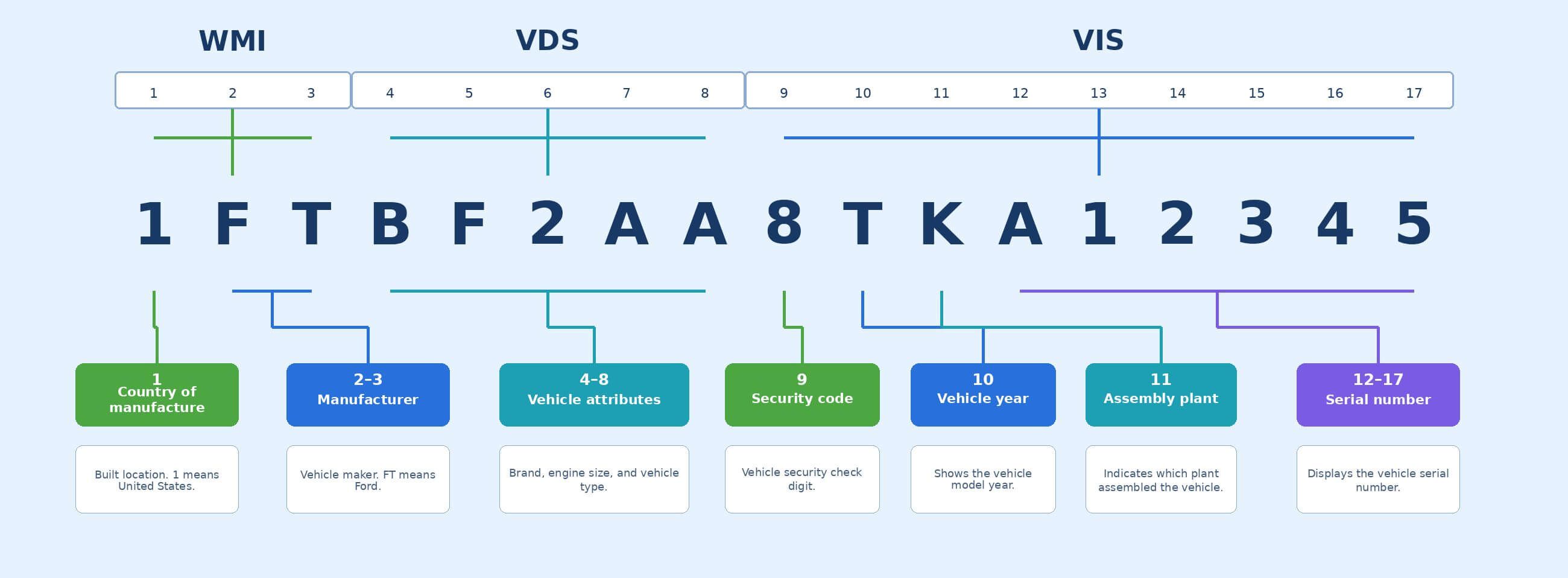
A report may show basic vehicle details such as year, make, model, trim, body style, engine type, transmission, drivetrain, fuel type, and manufacturing information. This matters because sellers sometimes list the wrong trim, engine, or package level by mistake.
For example, a seller may advertise a higher trim because the vehicle has leather seats or a large screen. However, the VIN may show a different trim or factory configuration. That difference can affect value, insurance, parts compatibility, and resale expectations.
Use the report to confirm whether the vehicle matches the listing. If the specs do not match, ask for clarification before visiting the car.
Title Records
Title records are among the most important parts of a used car check. A vehicle with a clean-looking exterior may still have title problems that affect safety, financing, insurance, and resale.
A free report may help identify whether a vehicle has title-related records such as salvage, rebuilt, flood, junk, lemon, theft, or other brands. These labels can indicate that the vehicle had serious damage, was declared a total loss, was recovered after theft, or had another major issue in its documented history.
If the report raises a title concern, run a more focused title check by VIN and compare the result with the paper title, seller disclosures, and state DMV records where appropriate.
Junk, Salvage, and Insurance Records
Junk, salvage, and insurance records can reveal serious risk. A vehicle may look repaired, but previous damage can still affect structural integrity, electrical systems, resale value, and insurability.
A salvage or junk record does not automatically mean every buyer should walk away. Some rebuilt vehicles are repaired and inspected. However, it does mean you need stronger proof before purchase. Ask for repair invoices, before-and-after photos, inspection certificates, and proof that the vehicle is legally roadworthy in your state.
Also remember that a low price is not always a bargain. If the vehicle has a salvage or rebuilt history, the discount should reflect the added risk.
Theft Records
A free vehicle history check may help identify theft-related records when available. This is especially important when buying from a private seller, a marketplace listing, or an unfamiliar dealer.
A stolen vehicle can create serious legal and financial problems for an innocent buyer. You could lose the car, lose the money you paid, and face a difficult recovery process. Therefore, any theft record should be treated as a major red flag until resolved.
If the seller cannot clearly explain the issue, pause the transaction. Verify the VIN on the dashboard, driver-side door label, title, registration, and seller documents. The VIN should match everywhere.
Accident Records
Accident history can affect safety, value, insurance costs, and future repairs. A report may show recorded accident events, damage records, or related history depending on available data.
Look carefully at the type of damage, date, location, and severity when available. A minor parking-lot scrape is very different from structural damage, airbag deployment, or repeated accident history.
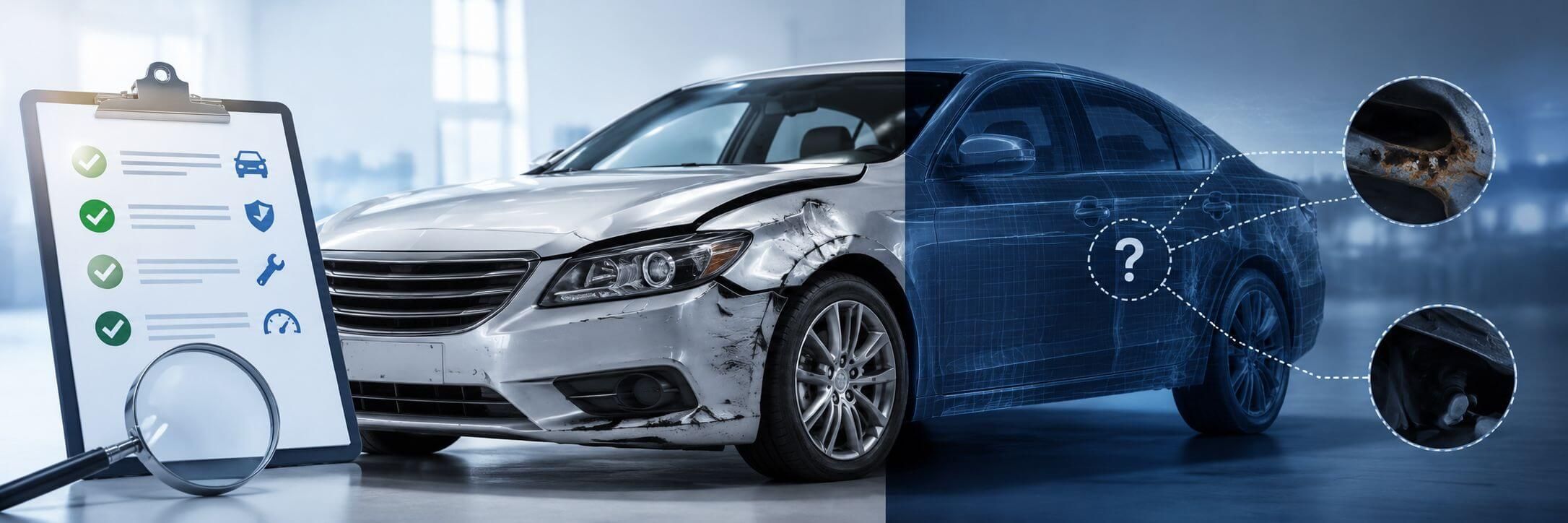
However, not all accidents appear in every report. Some crashes are repaired privately. Some are not reported to insurance. Others may appear late. As a result, you should still inspect the paint, body gaps, frame areas, undercarriage, lights, sensors, and airbags before buying.
Sale Records and Auction Clues
Sale records may show when the vehicle appeared in listings, auctions, or prior sales. This can help you understand how long the car has been moving through the market and whether the seller’s story makes sense.
For example, if a seller claims long-term personal ownership but the report shows recent auction activity, that deserves a follow-up question. If a car was sold shortly after major damage, ask why.
Sale records are not automatically negative. Still, they can help you see whether the vehicle’s timeline is consistent.
Open Recalls and Safety Issues
A report may point you toward recall information, but recall status should always be verified before purchase. Open recalls can involve airbags, brakes, fuel systems, electrical issues, fire risks, steering, seat belts, or other safety-related defects.
Before buying, run a VIN recall check and confirm whether any unrepaired safety recall is still open. If a recall exists, ask whether the repair has been completed. If not, contact a local dealer to confirm remedy availability and timing.
A recall does not always mean the car is a bad buy. But an unresolved recall can affect safety, convenience, and negotiation.
Market Value and Ownership Cost
Some vehicle history tools may show market value, ownership cost, fuel efficiency, or related pricing signals. These details help you understand whether the asking price is reasonable.
A car with clean records, consistent mileage, strong maintenance history, and no title problems may justify a stronger price. On the other hand, title brands, accidents, mileage inconsistencies, prior fleet use, or unresolved safety issues may reduce buyer confidence and resale value.
Use a car value by VIN check to compare the seller’s price against the vehicle’s history, mileage, trim, and condition. This can help you negotiate with facts instead of guesses.
What a Free Vehicle History Report Cannot Tell You
A free report is useful, but it has limits. The biggest mistake buyers make is treating a clean report as proof that the car has no problems. A clean report simply means no major issue appeared in the available records reviewed by that source.
It Cannot Guarantee the Car Was Never in an Accident
Some accidents are never reported to insurance, police, auctions, or repair networks. A seller may repair damage privately, pay cash, or replace parts without creating a record that appears in a report.
That is why a clean accident history should not replace a visual inspection. Look for uneven panel gaps, mismatched paint, overspray, new bolts, replaced glass, dashboard warning lights, unusual tire wear, and signs of frame repair.
It Cannot Prove the Current Mechanical Condition
A report can show historical clues, but it cannot tell you exactly how the engine, transmission, suspension, brakes, battery, cooling system, or electronics perform today.
A vehicle may have a clean history and still need expensive repairs. Meanwhile, another vehicle may have a minor reported issue but be well maintained now. Therefore, the current condition matters as much as the recorded history.
Always test drive the vehicle and consider a pre-purchase inspection from a trusted mechanic.
It Cannot Confirm Every Maintenance Record
Maintenance records are useful, but they are often incomplete. Some shops report service data. Others do not. DIY repairs, cash repairs, small independent shop visits, and owner-performed maintenance may never appear.
If maintenance history is important to your decision, ask the seller for receipts, service invoices, oil change records, warranty repair documents, and inspection reports.
It Cannot Replace the Actual Title Document
A vehicle history report can alert you to possible title issues, but it does not replace the title itself. Before paying, verify the actual title document, the seller’s name, lienholder information, VIN, odometer disclosure, and any title brand shown on the document.
If the title is missing, altered, assigned incorrectly, or held by a lender, slow down. Title problems can delay registration and may expose you to ownership disputes.
It Cannot Guarantee There Are No Liens
A report may help flag lien concerns, but lien information can vary by state, lender, and reporting source. Because a lien gives another party a financial interest in the vehicle, it can create serious problems after purchase.
Before buying, confirm that any loan has been paid off and that the seller can legally transfer ownership. When possible, complete the transaction through a lender, DMV office, or escrow-style process that protects both sides.
It Cannot Replace a Recall Verification
Recall data can change. A recall may be newly announced, recently repaired, not yet tied to every VIN, or not covered in the same way across all lookup tools.
For safety, verify open recalls close to the purchase date. This is especially important for older vehicles, vehicles with multiple owners, and models known for major safety campaigns.
It Cannot Tell You Whether the Seller Is Honest
A report can expose inconsistencies, but it cannot judge a seller’s intent. The seller may omit details, misunderstand the vehicle’s history, or deliberately hide problems.
Use the report as a conversation tool. Ask direct questions. Request documents. Compare the seller’s answers against the VIN, title, mileage, service records, and inspection results.
Free Vehicle History Report: What to Trust vs. What to Verify
| Report Detail | What It Can Help You Learn | What You Should Still Verify |
|---|---|---|
| Vehicle specs | Year, make, model, trim, engine, and body style clues | Compare with listing, window sticker, build sheet, and physical features |
| Title records | Possible salvage, rebuilt, flood, junk, lemon, or theft brands | Check the actual title and state records when needed |
| Accident records | Recorded accidents or damage events | Inspect the vehicle and order a mechanic review |
| Mileage records | Odometer readings from available records | Compare with dashboard, service records, and wear signs |
| Theft records | Possible theft or recovery history | Verify VIN matches and confirm seller ownership |
| Recall information | Possible open safety recall clues | Run a current recall lookup before buying |
| Sale records | Auction, listing, or prior sale clues | Ask the seller to explain timeline gaps |
| Market value | Price context based on available data | Compare condition, local market, trim, and repair needs |
How to Use a Free Vehicle History Report Before You Buy
A report is most useful when you follow a simple workflow. Do not just scan for one red or green signal. Review the whole story.
Step 1: Confirm the VIN
Before running a report, copy the VIN carefully. Check the dashboard, driver-side door label, registration, title, insurance card, and seller listing. A single wrong character can pull the wrong vehicle or return incomplete data.
Step 2: Review the Basic Vehicle Identity
Confirm the year, make, model, trim, engine, body type, and other specs. If the report does not match the listing, ask why. A mismatch could be a listing mistake, but it could also point to VIN cloning, incorrect paperwork, or seller confusion.
Step 3: Check Title and Brand Records
Look for salvage, rebuilt, flood, junk, lemon, theft, or other title brands. Any title brand should trigger deeper review. Ask for repair documents, inspection records, and state title confirmation.
Step 4: Review Mileage Patterns
Mileage should move forward logically over time. Be cautious if the mileage drops, stalls for years, jumps strangely, or does not match the vehicle’s condition.
Step 5: Look for Accident, Flood, or Damage Clues
If the report shows damage, do not rely only on the summary. Ask what happened, who repaired it, whether airbags deployed, and whether structural parts were affected.
Step 6: Check Recalls and Safety Issues
Use the report as a reminder to verify recalls separately. Do this before you finalize the purchase, especially if you plan to drive the car immediately.
Step 7: Compare the Price Against the History
A clean, well-documented car can command a stronger price. A vehicle with title brands, accident records, inconsistent mileage, or unresolved recalls should be priced accordingly.
Step 8: Get a Pre-Purchase Inspection
If you are still interested after reviewing the report, have the vehicle inspected. The report tells you what records say. The inspection tells you what the vehicle looks like today.
Red Flags That Should Make You Pause
A single warning sign does not always mean you should walk away. However, several red flags together can signal a high-risk purchase.
Watch carefully for:
- VIN mismatch between the report, title, dashboard, and door label
- Salvage, rebuilt, flood, junk, or theft title brands
- Odometer readings that move backward or do not make sense
- Seller refuses to provide the title before payment
- Recent auction activity with no clear explanation
- Price is far below market value without a believable reason
- Open safety recalls with no repair plan
- Accident history plus poor repair quality
- Missing service records on a high-mileage or luxury vehicle
- Seller pressures you to pay before inspection
If something feels rushed or inconsistent, pause the deal. A legitimate seller should be willing to answer reasonable questions.
When a Free Report Is Enough and When You Need More
A free report may be enough for an early screening decision. For example, if the report shows a major title problem and you are not comfortable with branded-title vehicles, you can move on without spending more time.
However, you may need more information when:
- The vehicle is expensive
- The seller is private or unfamiliar
- The car has a title brand
- The mileage history looks unusual
- The report shows accident or auction records
- The title is missing or held by a lender
- You are buying from another state
- You plan to finance, insure, or resell the car soon
In these cases, combine the free report with official title verification, recall checks, mechanic inspection, lien confirmation, and seller documentation.
Free Report vs. Paid Report vs. Inspection
A free report, paid report, and inspection each answer a different question.
| Check Type | Best For | Limitation |
|---|---|---|
| Free vehicle history report | Early screening and red-flag detection | May not include every record or detailed history |
| Paid vehicle history report | Deeper record review when available | Still depends on reported data |
| Title verification | Confirming ownership and title status | May require state-specific checks |
| Recall lookup | Checking open safety recalls | May not show every older or recently announced recall immediately |
| Pre-purchase inspection | Current mechanical and physical condition | Does not reveal every historical record |
The safest buyers do not rely on one source. They combine records, documents, inspection, and common sense.
Bottom Line: Use the Report as a Filter, Not a Final Answer
A free vehicle history report can save you time, money, and stress before buying a used car. It can help you spot title brands, accident history, theft records, recall clues, mileage concerns, value issues, and specification mismatches. More importantly, it helps you ask smarter questions before you meet the seller or make an offer.
Still, no report can promise that every problem has been recorded. A clean report is encouraging, but it is not a guarantee. Before you buy, compare the report with the actual title, seller documents, recall status, mileage, vehicle condition, and a professional inspection when possible.
Before you schedule a test drive or send money, run a free vehicle history report and use the results as your first buyer-protection filter.
Frequently Asked Questions
Is a free vehicle history report enough before buying a used car?
A free vehicle history report is a strong first step, but it is not enough by itself. Use it to screen for red flags, then verify the title, inspect the car, check recalls, review documents, and ask the seller direct questions.
Can a free vehicle history report show accidents?
It may show accident or damage records when those records are available. However, not every accident is reported. Always inspect the vehicle and consider a mechanic review before buying.
Can a free vehicle history report show a salvage title?
Yes, a report may show salvage, rebuilt, flood, junk, theft, lemon, or other title brands when available. If any brand appears, verify it with a title check and review the actual title document.
Can a vehicle history report be wrong?
Yes. A report can be incomplete, delayed, or affected by data-entry errors. That is why buyers should compare report details with the title, VIN plates, service records, inspection findings, and seller documents.
What should I do if the report is clean but the car looks damaged?
Trust the physical evidence. A clean report does not guarantee the car was never damaged. If you see paint mismatch, frame repair signs, warning lights, water damage, or unusual wear, ask questions and get a pre-purchase inspection.
What is the most important thing to check in a free vehicle history report?
Start with title brands, mileage consistency, theft records, accident or damage history, and recall clues. Then compare the report with the seller’s documents and the vehicle’s actual condition.
Author
Elise Rowan
Elise Rowan is a vehicle ownership and consumer protection writer with a strong focus on title transfers, vehicle liens, registration records, and buyer due diligence. She writes educational content for people buying from private sellers, auctions, and online marketplaces, with an emphasis on helping readers verify a vehicle’s financial and legal background before committing to a purchase.