
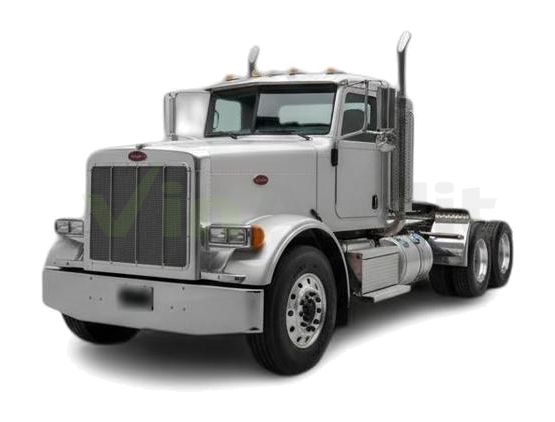
The Good
Key advantages of the 2007 Peterbilt 357 include its legendary vocational reliability and the ability to handle extreme payloads and terrains. The classic, muscular design appeals emotionally to drivers who appreciate traditional trucking aesthetics, while its proven durability and strong resale value offer practical long-term benefits. Customization options meant it could be perfectly tailored for specific job demands, ensuring optimal performance and efficiency for a variety of tasks.
The Bad
Potential weaknesses for the 2007 Peterbilt 357 primarily revolve around its 2007-era emissions technology. The early DPF (Diesel Particulate Filter) and EGR (Exhaust Gas Recirculation) systems could be prone to clogging and sensor issues, leading to increased maintenance and reduced fuel economy. Additionally, being a working truck, general wear and tear on suspension components and chassis integrity should be carefully inspected on used models.
2007 Peterbilt 357: Quick Overview
- Engine Options: The 2007 Peterbilt 357 primarily featured heavy-duty diesel engines from reputable manufacturers. Common options included the Caterpillar C13, C15, and Cummins ISM or ISX engines. Engine availability depended heavily on customer specifications and ordering.
- Horsepower: Horsepower ratings varied significantly based on the specific engine and its tune. For instance, the Caterpillar C15 could range from approximately 435 hp to over 600 hp, while Cummins ISX engines offered similar ranges, typically from 400 hp to 600 hp for vocational applications. Torque figures were substantial, often exceeding 1,650 lb-ft, crucial for heavy hauling.
- Fuel Economy: Fuel economy for a heavy-duty vocational truck like the 357 is highly variable, depending on the engine, transmission, load, terrain, and driving style. Expect figures typically in the range of 3-6 miles per gallon (MPG). The introduction of early 2007 emissions systems (DPF/EGR) could sometimes negatively impact fuel efficiency compared to pre-emissions models.
- 0-60 Times: 0-60 mph times are not a relevant performance metric for heavy-duty vocational trucks. These vehicles are designed for power, torque, and pulling heavy loads, not acceleration. Their focus is on sustained pulling power and reliability in demanding conditions.
- Towing Capacity: "Towing capacity" for the 357 is better understood as its Gross Combination Vehicle Weight Rating (GCVWR) or Gross Vehicle Weight Rating (GVWR) when configured as a straight truck. GCVWRs could easily exceed 80,000 lbs, with GVWRs for straight truck configurations (e.g., dump truck) often ranging from 60,000 lbs to over 80,000 lbs, depending on the number of axles, suspension, and chassis reinforcement.
- Trim-Level Features: Unlike passenger cars, the 357 didn't have traditional "trim levels." Instead, features were highly customizable based on the vocational application. Key configurable aspects included:
- Cab Configurations: Primarily a Conventional Day Cab, optimized for job site access.
- Axle Configurations: Available in 4x2, 6x4, 8x4, and other multi-axle setups, often with tandem or tridem rear axles, steerable lift axles.
- Suspension: Options included Peterbilt Air Trac® air suspensions, various Hendrickson, or Reyco spring suspensions, tailored for ride quality and load distribution.
- Frame Rails: Various frame rail materials (e.g., steel, aluminum) and thicknesses were available for specific strength requirements.
- Interior Amenities: Basic but durable interiors with options for air-ride seats, power windows, air conditioning, and basic audio systems.
- Specialized Body Prep: Factory provisions for mounting dump bodies, mixer drums, cranes, roll-off systems, etc.
2007 Peterbilt 357 Specifications
Vehicle Information
| Year | 2007 |
| Make | Peterbilt |
| Model | 357 |
| Trim | - |
| Style | - |
| Type | Truck |
| Category | Medium Truck |
Manufacturing Details
| Made In | United States |
| Manufacturing City | DENTON |
Dimensions
| Doors | - |
| Curb Weight | - |
| Gross Vehicle Weight Rating | - |
| Overall Height | - |
| Overall Length | - |
| Overall Width | - |
| Wheelbase Length | - |
| Standard Seating | - |
Engine & Performance
| Engine | 14.6L I6 |
| Engine Size | 14.6L |
| Engine Cylinders | 6 |
| Transmission | - |
| Transmission Type | - |
| Transmission Speeds | - |
| Drivetrain | 6x4 |
Additional Features
| Anti-Brake System | - |
| Steering Type | - |
Pricing
| Manufacturer Suggested Retail Price (MSRP) | - |
| Invoice Price | - |
| Delivery Charges | - |
Vehicle History Report
Specifications
History
Events
History Check
Check
Check
Check
Check
Listings
Recalls
Check
Analysis
What Problems Does the 2007 Peterbilt 357 Have?
- DPF Clogging: The Diesel Particulate Filter, designed to capture soot, was prone to clogging, especially in trucks that experienced excessive idling or short-haul, low-temperature operation. This led to frequent "regeneration" cycles, reduced power, and ultimately costly DPF cleaning or replacement.
- EGR System Failures: The Exhaust Gas Recirculation system, intended to reduce NOx emissions, often experienced issues with cooler failures, valve sticking, and carbon buildup. These problems could lead to engine performance issues, increased oil consumption, and higher operating temperatures.
- Sensor Malfunctions: The complex emissions systems relied on numerous sensors (e.g., NOx sensors, differential pressure sensors) that were susceptible to failure, leading to "check engine" lights and diagnostic headaches.
- Fuel Economy Degradation: While designed to be efficient, the added complexity of the emissions systems, particularly active DPF regenerations, could lead to a noticeable decrease in fuel economy compared to pre-2007 engines.
- Aftertreatment System Cost: Repair and replacement costs for DPFs, EGR coolers, and other aftertreatment components are substantial, significantly impacting the total cost of ownership.
Beyond emissions, general wear and tear typical of heavy-duty vocational trucks include:
- Suspension Components: Given the heavy loads and rough terrains, bushings, springs, and air bags require regular inspection and replacement.
- Steering Components: Tie rods, drag links, and kingpins are subject to wear, necessitating periodic maintenance.
- Electrical Gremlins: Age and constant vibration can lead to wiring harness issues, corroded connections, and sensor failures throughout the truck's electrical system.
Recalls for 2007 Peterbilt models would typically be broad-based, addressing specific engine components (often related to emissions systems), braking systems, or structural components, rather than specific model-year inherent flaws beyond the general emissions technology. Prospective buyers should check NHTSA's database for specific recall campaigns tied to the vehicle's VIN.
How long will the 2007 Peterbilt 357 last?
What Technology & Safety Features are Included?
Built-in Tech & Instrumentation:
The dashboard was equipped with a comprehensive array of analog gauges, providing critical information to the driver: speedometer, tachometer, oil pressure, coolant temperature, voltmeter, fuel level, and air pressure for the braking system. Digital displays were minimal, typically limited to odometers or basic trip information within a small segment of the gauge cluster. Engine diagnostics were handled via warning lights and diagnostic ports, not integrated touchscreens.
Entertainment:
Standard entertainment was basic, usually an AM/FM radio. An optional CD player was a common upgrade. Bluetooth connectivity, USB ports, or satellite radio were generally not standard or factory-installed options in 2007; these would have been aftermarket additions. Sound systems were basic, focusing on clear audio in a noisy cabin environment.
Driver-Assistance Features:
Modern driver-assistance technologies like adaptive cruise control, lane departure warning, or automatic emergency braking were not available on the 2007 Peterbilt 357. Driver assistance was primarily manual, relying on the driver's skill and vigilance. The truck did, however, feature power steering and often air-ride seats to reduce driver fatigue.
Safety Features:
Core safety features were fundamental to commercial vehicles:
- Air Brakes: Standard, robust air brake systems with anti-lock braking system (ABS) for improved stopping performance and control, especially on slippery surfaces.
- Steel Cab Construction: Heavy-duty steel cab provided structural integrity.
- Excellent Visibility: Large windshields and side mirrors (often heated and power-adjustable as an option) offered good visibility of the road and surroundings.
- Seat Belts: Standard three-point seat belts.
- Lighting: Powerful halogen headlights and comprehensive marker lighting for visibility to other road users.
Crash-Test Ratings:
Heavy-duty commercial trucks like the Peterbilt 357 are not subjected to the same standardized crash-test ratings (e.g., NHTSA or IIHS ratings) as passenger vehicles. Their robust construction, sheer mass, and intended operational environment mean that crashworthiness is assessed differently, focusing on structural integrity and driver protection in commercial vehicle incidents rather than specific star ratings.
What Colors Options are Available?
2007 Peterbilt 357 Prices and Market Value
2007 Peterbilt 357 Cost of Ownership
2007 Peterbilt 357 Fuel Efficiency
2007 Peterbilt 357 Recalls & Defects
Power Train:axle Assembly
Equipment:other:labels
Equipment:other:labels
Tires
Suspension
Power Train:axle Assembly
Parking Brake
Service Brakes, Air:slack Adjusters
Trailer Hitches
2007 Peterbilt 357 Warranty
Basic
Powertrain
Rust
2007 Peterbilt 357 Insurance
reasonable repair costs.
How Does the 2007 Peterbilt 357 Compare to Other Truck?
Performance: The 357, like its rivals, offers strong performance characterized by high torque and robust engines (Caterpillar, Cummins). In terms of raw pulling power, it's largely on par with the Kenworth T800, which often shared similar PACCAR-family engines and components. Freightliner and Mack, while powerful, sometimes focused more on integration with their proprietary engines. The 357 excels in tailored power for specific vocational tasks.
Features: "Features" for these trucks are about customization. The 357 provides a classic, driver-centric cockpit with excellent visibility and durable materials. Kenworth T800 offers similar driver ergonomics and a strong build. Freightliner M2 and Mack Granite often provided more integrated electronic systems and perhaps more modern-looking interiors for the time. Volvo VHD, while robust, might have leaned slightly more into driver comfort innovations. The 357's "feature" is its timeless design and ability to accept diverse vocational bodies.
Reliability: This is where the 2007 model year for all brands faces a challenge due to the introduction of early emissions systems (DPF/EGR). All manufacturers struggled with these initial iterations. However, Peterbilt and Kenworth (often dubbed "Classics") generally hold a reputation for rugged, long-lasting chassis and powertrains when properly maintained. Mack Granite is also renowned for its durability in severe applications. Freightliner and Volvo offered good reliability, but their emissions systems from this era shared similar issues. The 357's core mechanicals are reliable, but the 2007 emissions compliance added complexity and potential failure points.
Price: New, all these trucks were similarly priced, varying based on exact specifications. On the used market, a well-maintained Peterbilt 357 or Kenworth T800 from this era can often command a premium over a comparable Freightliner or Volvo, largely due to brand perception and perceived longevity. Mack Granite also holds value well. However, the emissions system status is a major price determinant for all 2007 models.
Alternatives:
- Similar: The 2007 Kenworth T800 is perhaps the closest direct competitor, offering very similar attributes in terms of durability, engine options, and vocational adaptability.
- More Modern Tech (still 2007 era): A 2007 Freightliner M2 112SD or Mack Granite might offer a slightly more "modern" feel in the cab or integrate proprietary systems.
- Newer & Emissions Compliant: For those seeking less emissions-related headache, looking at a pre-2007 model (if available) or a post-2010 model (which had more refined emissions systems) would be a better alternative, though significantly more expensive.
Final Verdict: Is the 2007 Peterbilt 357 a Good Truck?
Is it worth buying? Yes, but with significant caveats. As a used vehicle, its value proposition is appealing due to lower initial cost compared to new trucks. However, potential buyers must be acutely aware of the 2007-era emissions technology. It's worth buying if:
- You have a thorough pre-purchase inspection by a diesel mechanic familiar with these systems.
- You budget generously for potential DPF/EGR maintenance and repairs, or are in a region where emissions "deletes" are legal and feasible.
- The truck's maintenance history is impeccable.
Avoid if you seek low operating costs or want a "set it and forget it" vehicle. It's a workhorse, not a luxury cruiser, and requires dedicated care.

Drew B
Drew is a seasoned automotive expert and contributor to VinCheck.info. With nearly 15 years of experience as a former Porsche technician, he brings a wealth of hands-on knowledge to his writing. Born in North Carolina, a region renowned for its deep-rooted NASCAR culture, Drew developed a passion for cars early in life, often building and working on vehicles from a young age. At VINCheck, Drew leverages his extensive technical background to provide in-depth analyses of various vehicles. His articles often focus on engine performance, reliability, and maintenance insights, offering readers practical information grounded in real-world experience. Some of his notable contributions include reviews on the Mazda CX-5's longevity and detailed examinations of engine options for models like the 2011 Toyota Camry and Tacoma