by VIN, Year, Make, Model by License Plate

2011 Peterbilt 365 Overview, Reviews, Ratings & Specs

Rating: 0.00
Based on 0 Owner Reviews
Cathleen V | April 9, 2026
The 2011 Peterbilt 365 is a vocational truck designed for demanding applications like construction, refuse, and heavy hauling. Introduced in the late 2000s, it's known for its robust build and customizable configurations. Key trims often revolve around specific vocational needs. Popularity stems from its legendary durability and the Peterbilt reputation for quality and driver comfort, making it a preferred choice for businesses that rely on dependable, hard-working equipment.
The Good

The 2011 Peterbilt 365 excels in rugged performance and unwavering reliability, built to conquer tough jobs. Its spacious, driver-focused cabin offers surprising comfort for long hauls. The iconic Peterbilt design commands respect, while its robust construction ensures long-term value, appealing to both the pride of ownership and the bottom line.

The Bad

Potential weaknesses for the 2011 Peterbilt 365 include the complexity and cost of maintaining its advanced powertrain components, especially if not regularly serviced. Some older models might exhibit wear and tear in cab components due to their vocational nature. Fuel efficiency, while acceptable for its class, won't rival lighter-duty vehicles. Owners should inspect for potential rust in high-corrosion areas.

2011 Peterbilt 365: Quick Overview

  • Engine Options: The 2011 Peterbilt 365 was typically offered with powerful PACCAR PX-8 or Cummins ISX15 diesel engines. Specific configurations varied greatly depending on the vocational application and customer specifications. These are robust, heavy-duty engines designed for sustained torque and durability.
  • Horsepower: Horsepower ratings varied significantly based on the engine choice. PACCAR PX-8 engines generally ranged from around 200 to 350 horsepower, while the Cummins ISX15 could deliver from 300 up to 600 horsepower for the most demanding applications.
  • Fuel Economy: Specific MPG figures for heavy-duty vocational trucks like the Peterbilt 365 are not typically published or directly comparable to light-duty vehicles. Fuel economy is highly dependent on engine choice, transmission, axle ratios, load weight, terrain, driving style, and vocational application. Owners often report figures in the range of 5-8 MPG for highway driving under moderate loads.
  • 0-60 Times: 0-60 mph acceleration times are not a relevant metric for this class of heavy-duty vocational truck, as they are not designed for rapid acceleration but rather for sustained power and pulling capacity.
  • Towing Capacity: The towing capacity of a 2011 Peterbilt 365 is exceptionally high and is determined by its Gross Vehicle Weight Rating (GVWR), Gross Combination Weight Rating (GCWR), chassis configuration, axle ratings, and specific build. These trucks are engineered to haul tens of thousands of pounds, with GCWRs often exceeding 80,000 lbs and capable of much more in specialized configurations (e.g., heavy haul).
  • Trim-Level Features: Specific trim levels are less about luxury and more about vocational function. Key features and configurations are highly customizable and include:
    • Chassis Configurations: Various axle configurations (e.g., 4x2, 6x4), tandem and tridem rear axles, and specialized suspensions for different terrains and load requirements.
    • Cab Options: Day cabs for local or regional work, and sleeper cabs for long-haul operations.
    • Body Mounts: Designed to accommodate a wide array of vocational bodies such as dump bodies, concrete mixers, refuse bodies, cranes, and specialized equipment.
    • Interior Options: While focusing on durability, cabins offer ergonomic seating, clear instrumentation, and basic amenities for driver comfort and productivity. Optional features might include upgraded audio systems and air conditioning.
    • Safety Features: Standard safety equipment includes robust braking systems, sturdy frames, and lighting. Advanced driver-assistance systems were less common in vocational trucks of this era compared to modern vehicles.

2011 Peterbilt 365 Specifications

Vehicle Information
Year 2011
Make Peterbilt
Model 365
Trim -
Style -
Type Truck
Category Medium Truck
Manufacturing Details
Made In United States
Manufacturing City DENTON
Dimensions
Doors -
Curb Weight -
Gross Vehicle Weight Rating -
Overall Height -
Overall Length -
Overall Width -
Wheelbase Length -
Standard Seating -
Engine & Performance
Engine 12L I6
Engine Size 12.9L
Engine Cylinders 6
Transmission -
Transmission Type -
Transmission Speeds -
Drivetrain Rear-Wheel Drive
Additional Features
Anti-Brake System -
Steering Type -
Pricing
Manufacturer Suggested Retail Price (MSRP) -
Invoice Price -
Delivery Charges -

Vehicle History Report

Vehicle
Specifications
Ownership
History
All History
Events
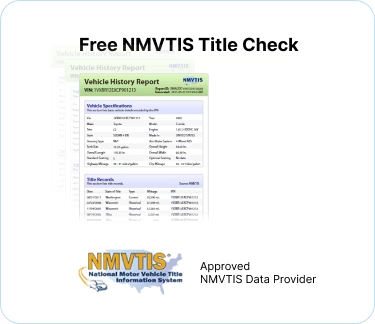
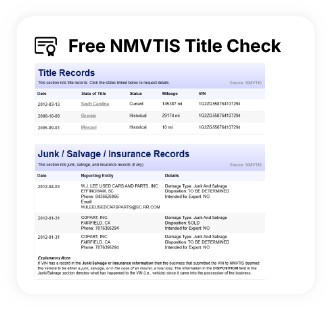
NMVTIS Title
History Check
Salvage/Rebuilt
Check
Accident
Check
Theft
Check
Open Lien
Check
Past Sale
Listings
Safety
Recalls
Odometer
Check
Market Price
Analysis

What Problems Does the 2011 Peterbilt 365 Have?

For the 2011 Peterbilt 365, common issues tend to be related to its vocational use and the age of the vehicle rather than specific widespread manufacturing defects tied to that model year. Frequently reported concerns often revolve around the drivetrain, particularly the complex emissions control systems common in diesel engines from this era. Issues with the Diesel Particulate Filter (DPF) regeneration process, exhaust gas recirculation (EGR) systems, and sensors can arise, often requiring specialized maintenance and cleaning. These systems, while essential for emissions compliance, can be a source of costly repairs if neglected or if sensors fail.

The transmission and clutch systems, especially in manual transmission models used for heavy hauling, can experience wear and require attention. Automatic transmissions, if equipped, can also develop issues over time. Electrical gremlins, such as intermittent warning lights or issues with instrument cluster functionality, can occur as wiring ages and components degrade. Wear and tear on suspension components, brakes, and tires are also common, reflecting the heavy-duty nature of the truck's work.

While specific recalls for the 2011 model year are best checked through official NHTSA databases using the VIN, general long-term reliability concerns for Peterbilt trucks of this vintage are typically focused on proactive maintenance. Properly maintained, these trucks are known for their longevity. However, neglecting routine service, especially on emissions components, can lead to significant problems. The robust PACCAR and Cummins engines themselves are generally very durable, but their supporting systems are where most issues manifest. Owners should be vigilant about fluid changes, filter replacements, and monitoring exhaust system performance. Rust and corrosion, especially in regions with harsh winters or coastal environments, can also be a long-term concern for the chassis and body panels.

How long will the 2011 Peterbilt 365 last?

The 2011 Peterbilt 365, when properly maintained, is built for exceptional longevity. Owner data and typical usage patterns suggest these trucks can easily achieve well over 500,000 miles, with many operating reliably for 800,000 to over 1 million miles. This long-term durability is a hallmark of Peterbilt engineering, particularly in the engine and chassis. Weaknesses that emerge over time are usually related to the cumulative stress of vocational use and the aging of components like suspension parts, brake systems, and electrical wiring. The emissions control systems, as mentioned, are a significant factor in long-term running costs and potential issues if not meticulously maintained. However, the core structure and powertrain of the 365 are designed to withstand extensive service life, making it a sound investment for continued operation with diligent care.

What Technology & Safety Features are Included?

The 2011 Peterbilt 365, as a vocational truck, prioritizes functionality, durability, and driver productivity over cutting-edge infotainment and advanced driver-assistance systems commonly found in passenger vehicles.

Built-in Tech & Entertainment: The base technology package in a 2011 Peterbilt 365 is functional rather than luxurious. This typically includes a digital driver information display showing vital vehicle data (engine parameters, fuel level, odometer, etc.), a robust AM/FM radio with auxiliary input, and potentially a CD player. Higher trim levels or optional packages might offer upgraded audio systems with more speakers. Bluetooth connectivity for hands-free calling was an option, but sophisticated touchscreen infotainment systems were not standard. The focus is on reliable operation and essential communication.

Driver-Assistance Features: Advanced driver-assistance systems (ADAS) like lane departure warning, adaptive cruise control, or automatic emergency braking were largely absent or very limited in vocational trucks of this era. The primary safety features were mechanical and passive. This includes powerful hydraulic or air-over-hydraulic braking systems, durable anti-lock braking systems (ABS), and robust chassis and cab structures designed for impact protection. Visibility is generally good due to the large windshield and side mirrors, crucial for maneuvering in tight job sites.

Safety Features: Standard safety features include seatbelts, interior lighting, and extensive exterior lighting for visibility. The frame and suspension are engineered to handle extreme loads, contributing to stability. Air conditioning and heating systems are designed for comfort during long workdays.

Optional Features: Options were heavily dictated by vocational use. These could include enhanced lighting packages for nighttime work, auxiliary power outlets, heated mirrors, power windows and locks (on some configurations), and upgraded seating for extended driver comfort. GPS navigation systems might have been available as an aftermarket or dealer-installed option.

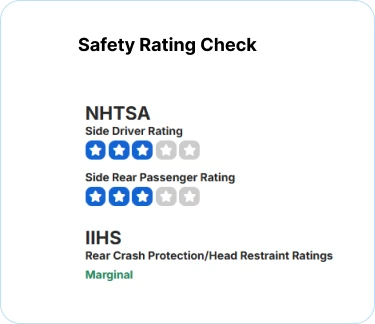
Crash-Test Ratings: Specific crash-test ratings from organizations like the NHTSA or IIHS for heavy-duty vocational trucks like the Peterbilt 365 are generally not available. These vehicles are not subjected to the same standardized crash testing protocols as passenger cars and light trucks due to their vastly different design, intended use, and immense size and weight. Their safety is inherent in their robust construction, powerful braking capabilities, and the driver's ability to operate them safely.

What Colors Options are Available?

We’re working on this section!
In the meantime, feel free to explore the other sections for more content.

2011 Peterbilt 365 Prices and Market Value

When new, the 2011 Peterbilt 365 carried a substantial price tag, typically ranging from $100,000 to $200,000 or more, depending heavily on the specific configuration, engine, transmission, and vocational options chosen. These are highly customized workhorses. The depreciation curve for vocational trucks like the 365 is generally less steep than for consumer vehicles, especially when well-maintained and kept in good working order.

Currently, used 2011 Peterbilt 365 models can range anywhere from $30,000 to $80,000+, again dictated by mileage, condition, engine hours, remaining service life, and the specific vocational setup (e.g., a basic chassis versus one equipped with a specialized body). Factors significantly affecting resale value include the overall condition of the drivetrain, transmission, chassis integrity (rust), tire wear, and the presence and condition of any specialized vocational equipment. Trucks with lower mileage and comprehensive maintenance records command higher prices. The reputation of Peterbilt for durability also supports its resale value.

2011 Peterbilt 365 Cost of Ownership

Owning a 2011 Peterbilt 365 is generally costly, reflecting its heavy-duty nature. Insurance premiums will be higher than for light-duty vehicles due to the truck's value, intended use, and potential for significant damage or liability. Fuel costs are substantial, with MPG in the 5-8 range heavily influenced by load and operation. Maintenance is critical and expensive; routine servicing for diesel engines, especially those with complex emissions systems, requires specialized fluids and filters. Repairs, particularly for the powertrain or transmission, can run into thousands of dollars. Overall, while its durability offers long-term value, the 2011 Peterbilt 365 is a costly vehicle to own and operate, best suited for businesses where its capabilities justify the expense.

2011 Peterbilt 365 Fuel Efficiency

Fuel Type Diesel
Fuel Capacity -
City Mileage -
Highway Mileage -

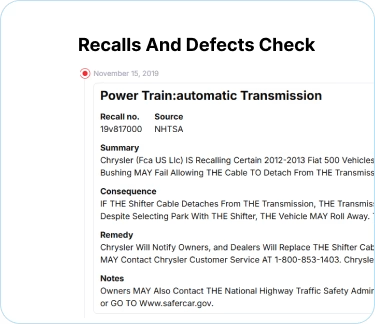
2011 Peterbilt 365 Recalls & Defects

Engine and Engine Cooling:exhaust System:emission Control:gas Recirculation Valve (Egr Valve)
Recall date 2010-10-01
Recall no. 10v453000
Source NHTSA
Summary Paccar IS Recalling Certain Model Year Kenworth and Peterbilt Vehicles. A Manufacturing Defect IN THE Seal Supplied BY A Component Manufacturer Installed ON THE Output Shaft OF THE Exhaust GAS Recirculation (Egr) Valve Actuator MAY Cause Eventual Delamination OF THE Seal. Delamination OF THE Seal MAY Allow Engine OIL TO Leak From THE EGR Valve Onto Exhaust Components.
Consequence THE Leaking OF Engine OIL Onto HOT Exhaust Components, Such AS When THE Engine IS Under Significant Load, MAY Create THE Possibility OF A Fire.
Remedy Dealers Will Replace THE EGR Valve Assembly ON THE Subject Vehicles Equipped With THE Paccar MX Engine. This Service Will BE Performed Free OF Charge. THE Safety Recall Began ON October 29, 2010. Owners MAY Contact Kenworth AT 425-828-5440 and Peterbilt AT 940-591-4196.
Notes Paccar Safety Recall NO. E008r.owners MAY Also Contact THE National Highway Traffic Safety Administration's Vehicle Safety Hotline AT 1-888-327-4236 (Tty 1-800-424-9153), or GO TO <A Href=http://Www.safercar.gov>http://www.safercar.gov</a> .
Electrical System:software
Recall date 2011-07-21
Recall no. 11v380000
Source NHTSA
Summary Paccar IS Recalling Certain Model Year 2011-2012 Kenworth T660, T700, and T800 Vehicles Manufactured From April 19, 2010, Through MAY 13, 2011, and Model Year 2008, 2010, and 2011 Peterbilt 365, 367, 384, 386, 387, 388 and 587 Vehicles Manufactured From April 20, 2010, Through June 11, 2011, and Equipped With Paccar MX Engines and Eaton Ultrashift DM or Allison Automatic Transmissions (Without Auto-Neutral). THE Fast Idle Control MAY BE Activated BY THE Operator While THE Transmission IS IN Gear.
Consequence IF THE Fast Idle Control Function IS Engaged With THE Transmission IN Gear, THE Vehicle Could Unexpectedly Accelerate and Override THE Parking Brake and , Creating A Risk OF A Crash and Damage TO Other Vehicles or Property and THE Potential FOR Injury TO Nearby Pedestrians.
Remedy Kenworth and Peterbilt Dealers Will Update THE Engine Software FOR THE Affected Chassis. This Service Will BE Performed Free OF Charge. THE Safety Recall Began ON August 22, 2011. Owners MAY Contact Kenworth AT 1-425-828-5440 and Peterbilt AT 1-940-591-4196.
Notes Kenworth and Peterbilt Safety Recall NO. E038r.owners MAY Also Contact THE National Highway Traffic Safety Administration's Vehicle Safety Hotline AT 1-888-327-4236 (Tty 1-800-424-9153), or GO TO <A Href=http://Www.safercar.gov>http://www.safercar.gov</a> .
Fuel System, Other:storage:tank Assembly
Recall date 2011-02-23
Recall no. 11v127000
Source NHTSA
Summary Paccar IS Recalling Certain Model Year 2008-2012 Kenworth T2000, T660, T700, T800, and W900, AS Well AS Model Year 2009-2012 Peterbilt 365, 367, 384, 386, 387, 388, 389, and 587 Trucks Equipped With Paccar MX Engines. THE OIL Module Centrifugal Spinner Filter CAP IN THE Paccar MX Engine MAY Become Loose, Possibly Allowing THE CAP TO Come OFF and Engine OIL TO Partially Discharge From THE OIL Module Onto Exhaust Components.
Consequence THE Discharge OF Engine OIL Onto Exhaust Components Which ARE Hot, Such AS When THE Engine IS Under Significant Load, MAY Cause A Fire.
Remedy Dealers Will Re-Torque THE OIL Module Filter CAP and Install A Secondary Retention Device ON THE Secondary Centrifugal Spinner Filter Cap. This Service Will BE Performed Free OF Charge. THE Safety Recall IS Expected TO Begin During March 2011. Owners MAY Contact Kenworth AT 1-425-828-5440 and Peterbilt AT 1-940-591-4196.
Notes Owners MAY Also Contact THE National Highway Traffic Safety Administration's Vehicle Safety Hotline AT 1-888-327-4236 (Tty 1-800-424-9153), or GO TO <A Href=http://Www.safercar.gov>http://www.safercar.gov</a> .
Equipment:other:labels
Recall date 2013-11-25
Recall no. 13v593000
Source NHTSA
Summary Paccar Incorporated (Paccar) IS Recalling Certain 2004-2013 Peterbilt 379, 357, 378, 367, 388, 365, 389, 385 and 386 Trucks Manufactured From April 3, 2003, Through October 25, 2013 and Equipped With Tri-Drive Rear Axles and A TAG or Pusher Axle. THE Affected Vehicles MAY BE Missing Required Information From THE Certification Label, Specifically THE TAG or Pusher Axle THE Gross Axle Weight Rating, Suitable Tire and RIM Information, and Recommended Tire Pressure Information. Without This Information, THE Vehicles DO NOT Comply With THE Requirements OF 49 C.f.r. Part 567, "certification."
Consequence AS A Result, THE Axles MAY BE Overloaded or THE Wrong Tires Could BE Installed or THE Tires Could BE Improperly Inflated. All OF These Issues Increase THE Risk OF A Crash.
Remedy Peterbilt Will Notify Owners and Dealers Will Inspect and Replace THE Certification Labels Missing THE Necessary Information. THE Recall IS Expected TO Begin IN January 2014. Customers CAN Contact Peterbilt AT 1-940-591-4000. Peterbilt's Number FOR This Campaign IS 1113-f.
Notes Owners MAY Also Contact THE National Highway Traffic Safety Administration Vehicle Safety Hotline AT 1-888-327-4236 (Tty 1-800-424-9153), or GO TO Www.safercar.gov.
Service Brakes
Recall date 2014-03-25
Recall no. 14v145000
Source NHTSA
Summary Paccar, Inc. (Paccar) IS Recalling Certain Model Year 2008-2013 Peterbilt 365, 367, 388, 389 Trucks Manufactured October 6, 2007, Through September 23, 2013. THE Affected Vehicles Were Built With 16.5" X 7" Front Drum Brakes and Bendix Es-420 Brake Linings Installed ON Front Axles Rated TO Carry Between 20,001 and 22,000 LBS Gawr and Larger SLR (20.5" TO 21.5") Tires, However These Brake Linings ARE NOT Rated FOR This Configuration. Thus, These Vehicles Fail TO Comply With Federal Motor Vehicle Safety Standard (fmvss) Number 121, "air Brake Systems."
Consequence THE Improper Brake Configuration Could Lengthen THE Braking Distance Needed TO Stop THE Vehicle, Increasing THE Risk OF A Crash.
Remedy Paccar Will Notify Owners and Dealers Will Install NEW 16.5" X 7" Brake Shoes With Es-600 Linings, Free OF Charge. THE Recall Began ON June 20, 2014. Owners MAY Contact AT Peterbilt AT 1-800-473-8372. Peterbilt's Number FOR This Recall IS 314-d.
Notes Owners MAY Also Contact THE National Highway Traffic Safety Administration Vehicle Safety Hotline AT 1-888-327-4236 (Tty 1-800-424-9153), or GO TO Www.safercar.gov.
AIR Bags
Recall date 2014-05-29
Recall no. 14v283000
Source NHTSA
Summary Paccar Incorporated (Paccar) IS Recalling Certain Model Year 2010-2015 Peterbilt 579, 388, 384, 367, 365, 348, and 337 Trucks Manufactured October 30, 2009, Through MAY 21, 2014. IN THE Affected Vehicles, IF Power IS Interrupted TO THE Seat Electronic Control Unit (Ecu), Such AS When THE Fuse FOR That Circuit Blows, THE Side AIR BAG Would BE Disabled BUT There Will NOT BE A Warning Lamp Indicator TO Notify THE Operator OF THE Malfunction.
Consequence Without A Warning OF A Problem Existing IN THE Side AIR BAG System, THE Driver MAY Continue TO Operate THE Vehicle, Increasing THE Risk OF Injury From THE Side AIR BAG NOT Deploying IN THE Event OF A Rollover.
Remedy Paccar Will Notify Owners, and Dealers Will Install A NEW Electrical Harness TO Correct Them Problem, Free OF Charge. THE Recall Began IN July 2014. Owners MAY Contact Peterbilt Customer Service AT 1-940-591-4220. Paccar's Number FOR This Recall IS 514-f.
Notes Owners MAY Also Contact THE National Highway Traffic Safety Administration Vehicle Safety Hotline AT 1-888-327-4236 (Tty 1-800-424-9153), or GO TO Www.safercar.gov.
Electrical System
Recall date 2014-05-29
Recall no. 14v283000
Source NHTSA
Summary Paccar Incorporated (Paccar) IS Recalling Certain Model Year 2010-2015 Peterbilt 579, 388, 384, 367, 365, 348, and 337 Trucks Manufactured October 30, 2009, Through MAY 21, 2014. IN THE Affected Vehicles, IF Power IS Interrupted TO THE Seat Electronic Control Unit (Ecu), Such AS When THE Fuse FOR That Circuit Blows, THE Side AIR BAG Would BE Disabled BUT There Will NOT BE A Warning Lamp Indicator TO Notify THE Operator OF THE Malfunction.
Consequence Without A Warning OF A Problem Existing IN THE Side AIR BAG System, THE Driver MAY Continue TO Operate THE Vehicle, Increasing THE Risk OF Injury From THE Side AIR BAG NOT Deploying IN THE Event OF A Rollover.
Remedy Paccar Will Notify Owners, and Dealers Will Install A NEW Electrical Harness TO Correct Them Problem, Free OF Charge. THE Recall Began IN July 2014. Owners MAY Contact Peterbilt Customer Service AT 1-940-591-4220. Paccar's Number FOR This Recall IS 514-f.
Notes Owners MAY Also Contact THE National Highway Traffic Safety Administration Vehicle Safety Hotline AT 1-888-327-4236 (Tty 1-800-424-9153), or GO TO Www.safercar.gov.
Steering:linkages:tie ROD Assembly
Recall date 2015-02-24
Recall no. 15v108000
Source NHTSA
Summary Paccar Incorporated (Paccar) IS Recalling Certain Model Year 2009-2015 Peterbilt 320, 365, 367, 388, and 389 Trucks Manufactured July 21, 2008, TO February 28, 2014. THE Front Axle TIE ROD END Clamp Bolts MAY BE Improperly Torqued.
Consequence Undertorqued TIE ROD END Clamp Bolts ARE Susceptible TO Corrosion, Which MAY Cause Loose Bolts TO Separate Resulting IN A Loss OF Vehicle Control and AN Increased Risk OF A Crash.
Remedy Paccar Will Notify Owners, and Dealers Will Replace THE Front Axle TIE ROD Assembly ON ANY Vehicle Where THE Factory Installed Assembly HAS NOT Been Previously Replaced, Free OF Charge. Owners Were Mailed Interim Notices ON MAY 11, 2015. THE Recall Began ON April 4, 2016. Owners MAY Contact Peterbilt Customer Service AT 1-940-591-4220. Paccar's Number FOR This Recall IS 215-c.
Notes Owners MAY Also Contact THE National Highway Traffic Safety Administration Vehicle Safety Hotline AT 1-888-327-4236 (Tty 1-800-424-9153), or GO TO Www.safercar.gov.
Equipment:other:labels
Recall date 2015-03-06
Recall no. 15v132000
Source NHTSA
Summary Paccar Incorporated (Paccar) IS Recalling Certain Model Year 2006-2016 Peterbilt 587, 579, 567, 389, 388, 387, 385, 382, 379, 378, 367, 365 and 357 Trucks Manufactured July 25, 2005, TO February 26, 2016. THE Affected Vehicles MAY BE Equipped With Tire and RIM Certification Labels That List A Tire Pressure Below THE Actual Correct Amount. AS Such, These Vehicles Fail TO Comply With THE Requirements OF Federal Motor Vehicle Safety Standard NO. 120, "tire Selection and Rims and Motor Home/Recreation Vehicle Trailer Load Carrying Capacity Information FOR Motor Vehicles With A Gvwr OF More Than 4,536 Kilograms (10,000 Pounds)."
Consequence IF THE Tires ARE Underinflated DUE TO THE Incorrect Inflation Pressure Listed ON THE Label, THE Truck MAY NOT BE Able TO Carry THE Maximum Gross Vehicle Weight Rating (Gvwr) Load Listed Without Experiencing Tire Failure Which Would Increase THE Risk OF A Crash.
Remedy Peterbilt Will Notify Owners and Mail Them A Corrected Tire and RIM Certification Label, Free OF Charge. THE Recall Began ON June 19, 2015. Owners MAY Contact Peterbilt Customer Service AT 1-940-591-4000. Paccar's Number FOR This Recall IS 215-d.
Notes Owners MAY Also Contact THE National Highway Traffic Safety Administration Vehicle Safety Hotline AT 1-888-327-4236 (Tty 1-800-424-9153), or GO TO Www.safercar.gov.
Tires
Recall date 2015-03-06
Recall no. 15v132000
Source NHTSA
Summary Paccar Incorporated (Paccar) IS Recalling Certain Model Year 2006-2016 Peterbilt 587, 579, 567, 389, 388, 387, 385, 382, 379, 378, 367, 365 and 357 Trucks Manufactured July 25, 2005, TO February 26, 2016. THE Affected Vehicles MAY BE Equipped With Tire and RIM Certification Labels That List A Tire Pressure Below THE Actual Correct Amount. AS Such, These Vehicles Fail TO Comply With THE Requirements OF Federal Motor Vehicle Safety Standard NO. 120, "tire Selection and Rims and Motor Home/Recreation Vehicle Trailer Load Carrying Capacity Information FOR Motor Vehicles With A Gvwr OF More Than 4,536 Kilograms (10,000 Pounds)."
Consequence IF THE Tires ARE Underinflated DUE TO THE Incorrect Inflation Pressure Listed ON THE Label, THE Truck MAY NOT BE Able TO Carry THE Maximum Gross Vehicle Weight Rating (Gvwr) Load Listed Without Experiencing Tire Failure Which Would Increase THE Risk OF A Crash.
Remedy Peterbilt Will Notify Owners and Mail Them A Corrected Tire and RIM Certification Label, Free OF Charge. THE Recall Began ON June 19, 2015. Owners MAY Contact Peterbilt Customer Service AT 1-940-591-4000. Paccar's Number FOR This Recall IS 215-d.
Notes Owners MAY Also Contact THE National Highway Traffic Safety Administration Vehicle Safety Hotline AT 1-888-327-4236 (Tty 1-800-424-9153), or GO TO Www.safercar.gov.
Engine and Engine Cooling:engine
Recall date 2015-05-26
Recall no. 15v309000
Source NHTSA
Summary Paccar Incorporated (Paccar) IS Recalling Certain Model Year 2010-2016 Kenworth T440, T800, and W900 Trucks Manufactured August 31, 2009, TO April 20, 2015, and 2008-2015 Peterbilt 320, 337, 348, 365, 382, and 384 Trucks Manufactured July 27, 2007, TO April 28, 2015, and Equipped With Certain Cummins Westport ISL G Engines. Excessive Engine Crankcase Pressures MAY Cause THE 90-degree Elbow OF THE Vent Tube Assembly TO Detach From THE Crankcase Ventilation Breather, Possibly Allowing Engine OIL TO Come Into Contact With HOT Surfaces.
Consequence IF Engine OIL Comes Into Contact With A HOT Surface, There IS AN Increased Risk OF A Fire.
Remedy Cummins Will Notify Owners ON Behalf OF Paccar, and Cummins Service Centers Will Administer THE Repairs Which Include Securing THE Ends OF THE 90-Degree Elbow and Reprogramming THE Electronic Control Module (Ecm) With Software That CAN Adjust THE Engine Output Under Misfire Conditions TO Limit Crankcase Pressures. These Repairs Will BE Performed Free OF Charge. THE Recall Began ON June 12, 2015. Owners MAY Contact Kenworth Customer Service AT 1-425-828-5000, Peterbilt Customer Service AT 1-940-591-4000 or Cummins Inc. AT 1-800-343-7357. Paccar's Number FOR This Recall IS 15kwh and 515-g.
Notes Owners MAY Also Contact THE National Highway Traffic Safety Administration Vehicle Safety Hotline AT 1-888-327-4236 (Tty 1-800-424-9153), or GO TO Www.safercar.gov.
Tires
Recall date 2015-11-09
Recall no. 15v740000
Source NHTSA
Summary Paccar Incorporated (Paccar) IS Recalling Certain Model Year 2009-2010 Peterbilt 340, 2010, 2012, and 2015-2016 Peterbilt 337, 2010 Peterbilt 335, 2011-2016 Peterbilt 348, 2009 and 2011-2016 Peterbilt 365, 2009 and 2012-2013 Peterbilt 386, 2009-2015 Peterbilt 388, 2015-2016 Peterbilt 389, and 2015 Peterbilt 567 Auto Hauler Vehicles. THE Affected Trucks ARE Equipped With Michelin 295/60r22.5 Xza-2 Front Tires That Have A Speed Rating Less Than THE Vehicle IS Governed TO.
Consequence Higher Vehicle Speeds and Other Factors Such AS Tire Load and Road Temperatures MAY Result IN Premature Tire Failure, Increasing THE Risk OF A Crash.
Remedy Peterbilt Will Notify Owners, and Dealers Will Reprogram THE Engine's Vehicle Speed Parameters TO Limit THE Maximum Vehicle Speed TO THE Tire Speed Rating, Free OF Charge. THE Recall Began ON January 4, 2016. Owners MAY Contact Peterbilt Customer Service AT 1-940-591-4000. Paccar's Number FOR This Recall IS 1115p.
Notes Owners MAY Also Contact THE National Highway Traffic Safety Administration Vehicle Safety Hotline AT 1-888-327-4236 (Tty 1-800-424-9153), or GO TO Www.safercar.gov.
Electronic Stability Control (Esc)
Recall date 2020-04-06
Recall no. 20v199000
Source NHTSA
Summary Paccar Incorporated (Paccar) IS Recalling Certain 2008-2019 Peterbilt 330, 335, 337, 340, 348, 365, 367, 384, 386, 387, 388, 389, 567, 579 and 587 Vehicles and 2008-2020 Kenworth T170, T270, T370, T660, T680, T800, T880, and W900 Vehicles Equipped With Namux Software. IN THE Event That THE Anti-lock Brake System (Abs) Loses Battery And/Or Ignition Power TO THE Controller, THE Dash Warning Light FOR THE ABS MAY NOT Illuminate TO Warn THE Driver OF THE Loss OF Abs. AS Such, These Vehicles Fail TO Comply With THE Requirements OF Federal Motor Vehicle Safety Standard (fmvss) Number 121, "air Brake Systems," and 136, "electronic Stability Control System ON Heavy Vehicles."
Consequence IF THE Driver Unknowingly Operates THE Vehicle Without THE ABS Functioning, There Would BE AN Increased Risk OF A Crash.
Remedy Paccar Will Notify Owners, and Dealers Will Update THE Namux Software Within THE Cab Control Module, Free OF Charge. Paccar Issued Owners AN Interim Notification ON June 4, 2020. THE Recall Began MAY 26, 2020. Owners MAY Contact Kenworth Customer Service AT 1-425-828-5888 or Peterbilt Customer Service AT 1-940-591-4220. Paccar's Number FOR This Recall IS 20pbc and 20kwb.
Notes Owners MAY Also Contact THE National Highway Traffic Safety Administration Vehicle Safety Hotline AT 1-888-327-4236 (Tty 1-800-424-9153), or GO TO Www.safercar.gov.
Service Brakes, Air:antilock:abs Warning Light
Recall date 2020-04-06
Recall no. 20v199000
Source NHTSA
Summary Paccar Incorporated (Paccar) IS Recalling Certain 2008-2019 Peterbilt 330, 335, 337, 340, 348, 365, 367, 384, 386, 387, 388, 389, 567, 579 and 587 Vehicles and 2008-2020 Kenworth T170, T270, T370, T660, T680, T800, T880, and W900 Vehicles Equipped With Namux Software. IN THE Event That THE Anti-lock Brake System (Abs) Loses Battery And/Or Ignition Power TO THE Controller, THE Dash Warning Light FOR THE ABS MAY NOT Illuminate TO Warn THE Driver OF THE Loss OF Abs. AS Such, These Vehicles Fail TO Comply With THE Requirements OF Federal Motor Vehicle Safety Standard (fmvss) Number 121, "air Brake Systems," and 136, "electronic Stability Control System ON Heavy Vehicles."
Consequence IF THE Driver Unknowingly Operates THE Vehicle Without THE ABS Functioning, There Would BE AN Increased Risk OF A Crash.
Remedy Paccar Will Notify Owners, and Dealers Will Update THE Namux Software Within THE Cab Control Module, Free OF Charge. Paccar Issued Owners AN Interim Notification ON June 4, 2020. THE Recall Began MAY 26, 2020. Owners MAY Contact Kenworth Customer Service AT 1-425-828-5888 or Peterbilt Customer Service AT 1-940-591-4220. Paccar's Number FOR This Recall IS 20pbc and 20kwb.
Notes Owners MAY Also Contact THE National Highway Traffic Safety Administration Vehicle Safety Hotline AT 1-888-327-4236 (Tty 1-800-424-9153), or GO TO Www.safercar.gov.

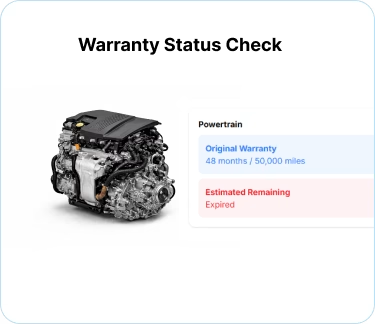
2011 Peterbilt 365 Warranty

Basic
Original warranty 0 months / No data
Estimated remaining Expired
Powertrain
Original warranty 0 months / No data
Estimated remaining Expired
Rust
Original warranty 0 months / No data
Estimated remaining Expired

2011 Peterbilt 365 Insurance

Insurance for a 2011 Peterbilt 365 is moderately priced, reflecting its status as a Truck with strong safety ratings and
reasonable repair costs.

How Does the 2011 Peterbilt 365 Compare to Other Truck?

The 2011 Peterbilt 365 competes in the vocational heavy-duty truck segment against formidable rivals such as the Kenworth T800, Freightliner Coronado, International WorkStar, and Mack Granite.

Performance: In terms of raw performance and torque for heavy hauling and vocational tasks, the Peterbilt 365 is a strong contender, often equipped with PACCAR or Cummins engines that deliver robust power. Its chassis is designed for extreme load-bearing. Rivals like the Kenworth T800 share similar PACCAR engine options and offer comparable performance. Freightliner and International trucks also offer powerful engine choices tailored for vocational applications.

Features: Peterbilt is renowned for its driver-centric cabins, offering excellent visibility and a comfortable driving position, which is a key differentiator. While features in 2011 were focused on practicality, the build quality and ergonomics are typically superior to some competitors, particularly in terms of driver comfort for extended periods. Kenworth also emphasizes driver comfort. Freightliner and International might offer more options in terms of specific technology integration, though less so in this model year.

Reliability: Peterbilt, along with Kenworth (both part of PACCAR), has a strong reputation for legendary reliability and durability. Their core components are built to last under strenuous conditions. While all heavy-duty trucks require diligent maintenance, Peterbilts are often perceived as having a slight edge in long-term robustness and ease of service for their key systems. International and Mack trucks also have a strong legacy in vocational markets, but Peterbilt often leads in overall perceived build quality and longevity for its class.

Price: New pricing for all these vocational trucks is high and heavily option-dependent. In the used market for a 2011 model, the Peterbilt 365 generally holds its value well due to its reputation. Competitors like Freightliner and International might offer slightly lower used prices for comparable mileage and condition, making them potentially more budget-friendly upfront.

Alternatives:
  • Similar: Kenworth T800: A very close competitor with shared PACCAR underpinnings and a similar focus on driver comfort and durability. Often considered an equally valid choice.
  • Similar: International WorkStar: A strong vocational truck with a wide range of configurations, offering competitive performance and reliability, sometimes at a slightly lower price point.
  • Potentially Better (depending on needs): Freightliner Coronado: Known for robust engineering and often found with powerful engine options, though sometimes perceived as less focused on driver comfort than Peterbilt.
  • Consider: Mack Granite: A specialized vocational truck with a strong reputation in construction and refuse, offering robust build quality and specific vocational advantages.

The choice often comes down to brand loyalty, specific vocational needs, dealer support in the region, and individual truck condition and price in the used market.

Final Verdict: Is the 2011 Peterbilt 365 a Good Truck?

The 2011 Peterbilt 365 is ideally suited for businesses and owner-operators in demanding vocational sectors such as construction, heavy hauling, logging, or waste management, where extreme durability, powerful performance, and a robust chassis are paramount. It is absolutely worth buying for those who prioritize long-term reliability and the legendary Peterbilt build quality over cutting-edge technology.

Given its age, purchasing this vehicle new is unlikely. The sweet spot for value is in the used market. It's crucial to buy a used 2011 Peterbilt 365 that has been meticulously maintained, ideally with detailed service records. Prioritize lower mileage (for a vocational truck) and inspect thoroughly for signs of excessive wear, rust, and the condition of its emissions control systems. Specific trims that align with your intended vocational use will be most beneficial. For serious work, this truck remains a solid investment, provided it's acquired and maintained with diligence.

2011 Peterbilt 365 Owner Reviews

0.00
Consumer Rating, Based on 0 Consumer Reviews
Overall rating
Cancel
Thank You for Your Review!

We truly appreciate the time and effort you took to share your experience with us.

Uh oh!

Something went wrong, please try again later.

Author Image
Cathleen V

Cathleen is an exceptional freelance writer covering hot topics in the automotive world from a gearhead's perspective. Her articles delve into various aspects of automotive technology and history, offering readers detailed insights into engine performance, reliability, and maintenance. Through her engaging and informative writing, Cathleen provides valuable information to automotive enthusiasts and consumers alike, helping them make informed decisions about vehicle maintenance and purchases.