by VIN, Year, Make, Model by License Plate

2025 Suzuki GSX-R1000 Overview, Reviews, Ratings & Specs

Rating: 0.00
Based on 0 Owner Reviews
Eugene S | April 23, 2026
The 2025 Suzuki GSX-R1000, often dubbed the "Gixxer," continues a legacy of legendary sportbike performance. Introduced in its current generation in 2001, this pinnacle of Suzuki's sportbike engineering boasts a sleek, aerodynamic superbike body style. While specific trims for 2025 are yet to be fully detailed, historically, models like the GSX-R1000R offer enhanced performance features. Pricing typically ranges from around $16,000 to $18,000 USD. Its enduring popularity stems from a potent blend of accessible power, sophisticated electronics, and a reputation for razor-sharp handling, making it a track-day favorite and a thrilling street machine.
The Good

The 2025 GSX-R1000 offers exhilarating acceleration and precise handling for emotional riders, while its renowned Suzuki reliability and relatively accessible price point appeal to practical buyers. Its sophisticated electronics enhance both performance and safety.

The Bad

Potential buyers should be aware of a firm suspension setup that can be less forgiving on rough roads. Some may find the rider aids, while effective, less cutting-edge compared to some newer competitors in terms of advanced customization.

2025 Suzuki GSX-R1000: Quick Overview

  • Engine: 999.8cc, liquid-cooled, 4-stroke, DOHC inline-four engine.
  • Horsepower: Approximately 199 hp (148 kW) at 13,200 rpm.
  • Torque: Approximately 86.7 lb-ft (117.6 Nm) at 10,800 rpm.
  • Fuel Economy: Estimated around 35-40 mpg, though highly dependent on riding style.
  • 0-60 mph: Typically in the low 3-second range.
  • Top Speed: Electronically limited, but capable of exceeding 186 mph.
  • Towing Capacity: Not applicable, as this is a sport motorcycle.
  • Transmission: 6-speed constant mesh with Suzuki's Quick Shift System (up and down).
  • Frame: Twin-spar aluminum frame.
  • Suspension (Front): Showa Big Piston Fork (BPF) with adjustable preload, compression, and rebound damping. Higher-spec models may feature fully adjustable suspension.
  • Suspension (Rear): Linkage type, single shock with adjustable preload, compression, and rebound damping.
  • Brakes (Front): Dual 320mm Brembo discs with radial-mount Brembo Monobloc calipers.
  • Brakes (Rear): Single 250mm disc with Nissin caliper.
  • Tires: Typically Bridgestone Battlax Hypersport S21 or similar.
  • Electronics Suite: Suzuki Intelligent Ride System (SIRS) featuring:
    • Motion Track Traction Control System (MT-TCS) with 10 modes.
    • Motion Track Anti-lock Brake System (MT-ABS) which adjusts to lean angle.
    • Launch Control (SRCL).
    • Bi-directional Quick Shift System (QS).
    • Suzuki Drive Mode Selector (SDMS) with three distinct engine maps.
    • Low RPM Assist.
    • Easy Start System.
  • Instrumentation: Full LCD multi-function display.
  • Lighting: LED headlights and taillights.
  • Trim Levels (Historical examples, 2025 may vary): GSX-R1000 (base) and GSX-R1000R (higher-spec with advanced suspension and electronics).

2025 Suzuki GSX-R1000 Specifications

Vehicle Information
Year 2025
Make Suzuki
Model GSX-R1000
Trim -
Style -
Type Motorcycle
Category Motorcycle
Manufacturing Details
Made In Japan
Manufacturing City HAMAMATSU
Dimensions
Doors -
Curb Weight -
Gross Vehicle Weight Rating -
Overall Height -
Overall Length -
Overall Width -
Wheelbase Length -
Standard Seating -
Engine & Performance
Engine 1000CC
Engine Size 1000L
Engine Cylinders 4
Transmission 6 Manual/Standard
Transmission Type Manual
Transmission Speeds 6-Speed
Drivetrain -
Additional Features
Anti-Brake System Standard
Steering Type -
Pricing
Manufacturer Suggested Retail Price (MSRP) -
Invoice Price -
Delivery Charges -

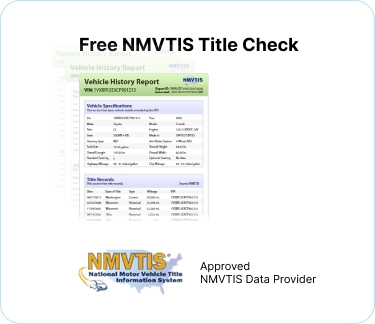
Vehicle History Report

Vehicle
Specifications
Ownership
History
All History
Events
NMVTIS Title
History Check
Salvage/Rebuilt
Check
Accident
Check
Theft
Check
Open Lien
Check
Past Sale
Listings
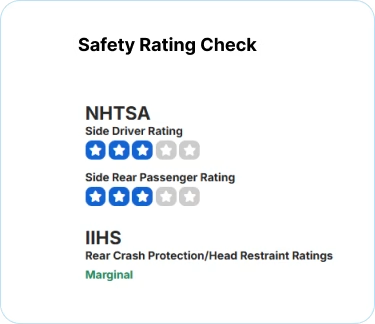
Safety
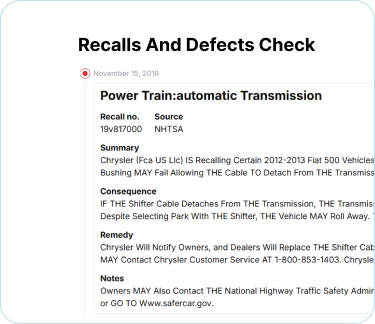
Recalls
Odometer
Check
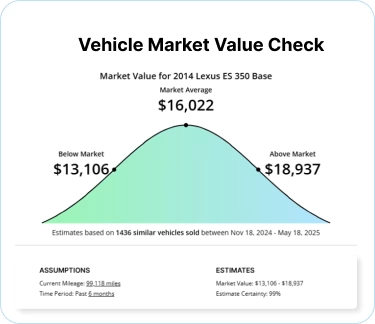
Market Price
Analysis

What Problems Does the 2025 Suzuki GSX-R1000 Have?

The Suzuki GSX-R1000, particularly in its current generation (starting from 2017), has a generally strong reputation for reliability. However, like any high-performance machine, some owner-reported issues have surfaced across various model years. One commonly discussed aspect, though not a 'problem' per se, is the firm suspension setup. While excellent for track use, some owners find it can lead to a harsher ride on public roads, especially over uneven surfaces. This is often addressed by adjusting suspension settings or opting for aftermarket solutions.

In terms of mechanical or electronic glitches, reports are relatively scarce for major systemic failures. Some owners have noted minor issues with the quickshifter system occasionally being less smooth at very low RPMs or during specific riding conditions, though this is generally considered a characteristic of the technology rather than a widespread defect. Electrical gremlins are infrequent, but as with any modern motorcycle, owners are advised to ensure all connections are secure and free from corrosion, especially in environments with heavy moisture.

Recalls for the GSX-R1000 have been issued periodically, as is common for all manufacturers. These typically address specific components like the braking system, clutch, or electronic control units to comply with safety standards or rectify minor manufacturing defects. For instance, recalls have in the past concerned issues with the clutch slave cylinder or the proper functioning of the idle speed control system. It is crucial for owners to stay informed about any active recalls by checking with Suzuki or their local dealership, as these are addressed free of charge and are vital for maintaining the motorcycle's safety and longevity.

Long-term reliability is generally considered excellent, with many GSX-R1000 owners reporting hundreds of thousands of miles with regular, diligent maintenance. The engine is known for its robust build. Owners who adhere to the recommended service intervals for oil changes, filter replacements, chain maintenance, and valve checks are likely to experience very few significant issues over the life of the bike. The current generation's electronic systems, while advanced, have also proven to be quite dependable. There are no widespread, year-specific issues that plague the entire model line. Vigilant maintenance remains the key to maximizing the lifespan and enjoyment of any GSX-R1000.

How long will the 2025 Suzuki GSX-R1000 last?

With proper and consistent maintenance, the 2025 Suzuki GSX-R1000 can be expected to provide excellent service for well over 100,000 miles. Many owners report comfortably exceeding 150,000 miles on their machines, particularly those used for commuting or touring rather than solely track abuse. The engine and drivetrain are built with durability in mind. The primary factors influencing long-term service are regular oil changes, chain and sprocket upkeep, and adherence to the scheduled valve clearance checks. Weaknesses over time are generally minor and related to wear-and-tear items like brake pads, tires, and suspension seals, which are expected on any performance motorcycle. The electrical components are generally robust, and the chassis holds up well. With diligent care, the GSX-R1000 is a machine built for the long haul.

What Technology & Safety Features are Included?

The 2025 Suzuki GSX-R1000 is equipped with a comprehensive suite of modern technology designed to enhance both rider experience and safety. Its primary tech hub is the Suzuki Intelligent Ride System (SIRS), which integrates several sophisticated electronic aids. This system includes a 10-mode Motion Track Traction Control System (MT-TCS), allowing riders to fine-tune grip levels based on road conditions and preference. The Motion Track Anti-lock Brake System (MT-ABS) is particularly noteworthy as it monitors lean angle, adjusting braking power to prevent wheel lift during cornering, a significant safety advancement.

For performance enthusiasts, the Bi-directional Quick Shift System (QS) allows for seamless upshifts and downshifts without the need for the clutch, making track riding and spirited corner exits much smoother. The Suzuki Drive Mode Selector (SDMS) offers three distinct engine maps (A, B, and C), enabling riders to tailor the power delivery to suit their riding style or varying conditions. Low RPM Assist and the Easy Start System contribute to a more user-friendly experience, particularly in stop-and-go traffic or when starting from a standstill.

While the GSX-R1000 doesn't feature an entertainment system in the traditional sense (like a radio or infotainment screen), its full LCD multi-function display provides clear, concise information including speed, RPM, gear position, selected drive mode, traction control level, lap timer, and more. This display is highly readable in various lighting conditions.

Safety is further bolstered by the advanced braking hardware, including Brembo Monobloc calipers and ABS. LED lighting provides excellent visibility for both the rider and for other road users.

Optional features typically focus on performance enhancement or customization, such as aftermarket exhaust systems for increased power and sound, various cosmetic enhancements, or different seat options for improved comfort on longer rides. Regarding crash-test ratings, motorcycles like the GSX-R1000 are not subjected to standardized crash tests in the same way as cars by organizations like NHTSA or IIHS. However, its safety features, particularly the lean-sensitive ABS and traction control, are designed to mitigate potential accidents. Suzuki's engineering also focuses on structural integrity and rider protection through its design and materials.

What Colors Options are Available?

We’re working on this section!
In the meantime, feel free to explore the other sections for more content.

2025 Suzuki GSX-R1000 Prices and Market Value

When new, the 2025 Suzuki GSX-R1000 is expected to have an MSRP in the range of approximately $16,000 to $18,000 USD, depending on the specific trim (e.g., base model versus the potential GSX-R1000R variant). On the used market, prices can vary significantly based on mileage, condition, age, and any aftermarket modifications. You might find well-maintained models from previous years (e.g., 2017-2024) typically ranging from $11,000 to $15,000.

The GSX-R1000 experiences moderate depreciation, which is typical for high-performance sportbikes. Its value retention is generally good, especially for models with lower mileage and comprehensive service history. Factors that positively affect resale value include pristine cosmetic condition, a clean title, stock configuration (or high-quality, tasteful modifications), and evidence of diligent maintenance. Conversely, bikes used heavily for track days, showing significant wear, or with poorly executed modifications will depreciate more rapidly. The enduring reputation of the GSX-R line for performance and reliability helps support its used market value.

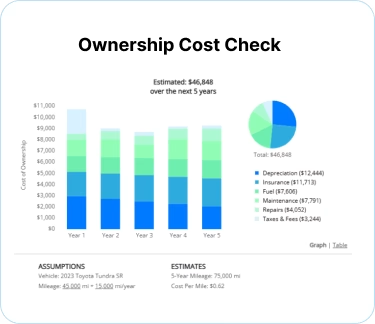
2025 Suzuki GSX-R1000 Cost of Ownership

Owning a 2025 Suzuki GSX-R1000 is generally considered moderately costly, reflecting its performance-oriented nature. Insurance premiums will be higher than for commuter bikes due to its power and sportbike classification, likely ranging from $800-$2000 annually depending on rider history and location. Fuel economy, while decent for its class (around 35-40 mpg), means fuel costs will be a factor for frequent riders. Standard maintenance (oil changes, chain lube, tire replacement) is comparable to other superbikes. Repair costs for specialized components or accident damage can be substantial. Overall, while not prohibitively expensive for its segment, it is a costlier vehicle to own and operate than a standard motorcycle.

2025 Suzuki GSX-R1000 Fuel Efficiency

Fuel Type Gasoline
Fuel Capacity -
City Mileage 0 mpg
Highway Mileage -

2025 Suzuki GSX-R1000 Warranty

Basic
Original warranty 0 months / No data
Estimated remaining Expired
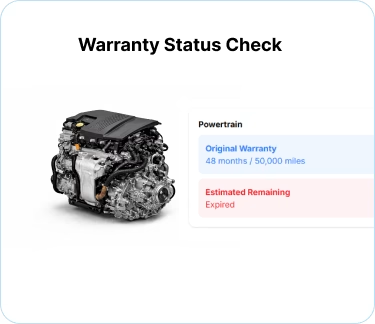
Powertrain
Original warranty 0 months / No data
Estimated remaining Expired
Rust
Original warranty 0 months / No data
Estimated remaining Expired

2025 Suzuki GSX-R1000 Insurance

Insurance for a 2025 Suzuki GSX-R1000 is moderately priced, reflecting its status as a Motorcycle with strong safety ratings and
reasonable repair costs.

How Does the 2025 Suzuki GSX-R1000 Compare to Other Motorcycle?

The 2025 Suzuki GSX-R1000 competes in the highly contested liter-class superbike segment against formidable rivals like the Yamaha YZF-R1, Honda CBR1000RR-R Fireblade, Kawasaki Ninja ZX-10R, and the Ducati Panigale V4.

Performance: The GSX-R1000's 199 hp engine is a powerhouse, offering blistering acceleration and a broad powerband thanks to its variable valve timing (SR-VVT) system. It generally matches or closely trails competitors like the ZX-10R and CBR1000RR-R in outright power figures, while the R1 offers a more characterful crossplane crank. The Panigale V4, however, often boasts higher peak horsepower. Suzuki's electronic suite is comprehensive and effective, though some rivals offer even more advanced rider aids or finer adjustability.

Features: Suzuki's SIRS is robust, featuring lean-sensitive ABS, 10-mode traction control, and quickshifters. The Yamaha R1 also offers advanced electronics with a 6-axis IMU. The Honda CBR1000RR-R Fireblade has a highly sophisticated electronics package, and the Kawasaki ZX-10R has long been a benchmark for track-focused features. Ducati's Panigale V4 typically leads in cutting-edge electronics and premium materials.

Reliability: Suzuki has a legendary reputation for reliability, and the GSX-R1000 is no exception. It is generally considered more reliable and less temperamental than some European counterparts, such as certain Ducati models, although this can vary. Honda and Yamaha also boast exceptional reliability records in this class. Kawasaki's ZX-10R is also known for its robustness.

Price: The GSX-R1000 often presents a compelling value proposition. It typically comes in at a lower MSRP than the Ducati Panigale V4 and often undercuts the Honda CBR1000RR-R and Yamaha R1, while being competitive with the Kawasaki ZX-10R.

Recommendations:
Similar Alternatives: The Kawasaki Ninja ZX-10R is a direct competitor, offering similar performance and a strong track pedigree, often at a very competitive price point. The Yamaha YZF-R1 is another excellent choice, known for its unique engine character and advanced electronics.
Slightly Different Philosophies: If ultimate track-focused performance and exotic Italian flair are paramount, the Ducati Panigale V4 (though significantly more expensive) is in a league of its own. For a more refined road-biased supersport with exceptional handling, the Honda CBR1000RR-R Fireblade is a strong contender.

The GSX-R1000 stands out as a superb blend of accessible, potent performance, proven reliability, and excellent value for money, making it a highly recommendable option for many riders.

Final Verdict: Is the 2025 Suzuki GSX-R1000 a Good Motorcycle?

The 2025 Suzuki GSX-R1000 is ideally suited for experienced sportbike riders who crave exhilarating performance, sharp handling, and a machine with a proven track record for reliability. It's perfect for those who enjoy spirited riding on twisty roads, occasional track days, or even as a capable, albeit potent, street-legal superbike.

It is absolutely worth buying for riders seeking a high-performance motorcycle that balances raw power with sophisticated, confidence-inspiring electronics and Suzuki's renowned durability. The GSX-R1000 represents a fantastic value in the liter-bike class, offering a premium experience without the absolute top-tier pricing of some European rivals.

Whether to buy new or used depends on budget and priorities. A new model offers the latest refinements and full warranty. However, a well-maintained used GSX-R1000 from recent model years (2017+) can offer significant savings while still providing the core performance and reliability. Specific trims, like the potential GSX-R1000R, might be worth the extra cost for riders demanding the absolute best suspension and electronic aids, but the standard GSX-R1000 is already an exceptional package for most enthusiasts.

2025 Suzuki GSX-R1000 Owner Reviews

0.00
Consumer Rating, Based on 0 Consumer Reviews
Overall rating
Cancel
Thank You for Your Review!

We truly appreciate the time and effort you took to share your experience with us.

Uh oh!

Something went wrong, please try again later.

Author Image
Eugene S

Eugene is an automotive enthusiast with over 15 years of experience in the used car market. As a writer at VINCheck.info, he brings deep industry insight and a passion for cars, helping readers make smart, informed decisions. Eugene has written hundreds of used car reviews and is known for breaking down complex automotive topics into clear, actionable advice. Over the years, he has driven and worked on a wide range of vehicles—starting with tuning street cars in his early days and eventually focusing on performance upgrades and reliability improvements. Today, he specializes in evaluating used vehicles through the lens of real-world ownership and enthusiast needs. A longtime fan of Porsche, Eugene especially appreciates vehicles that blend durability with driving enjoyment.