
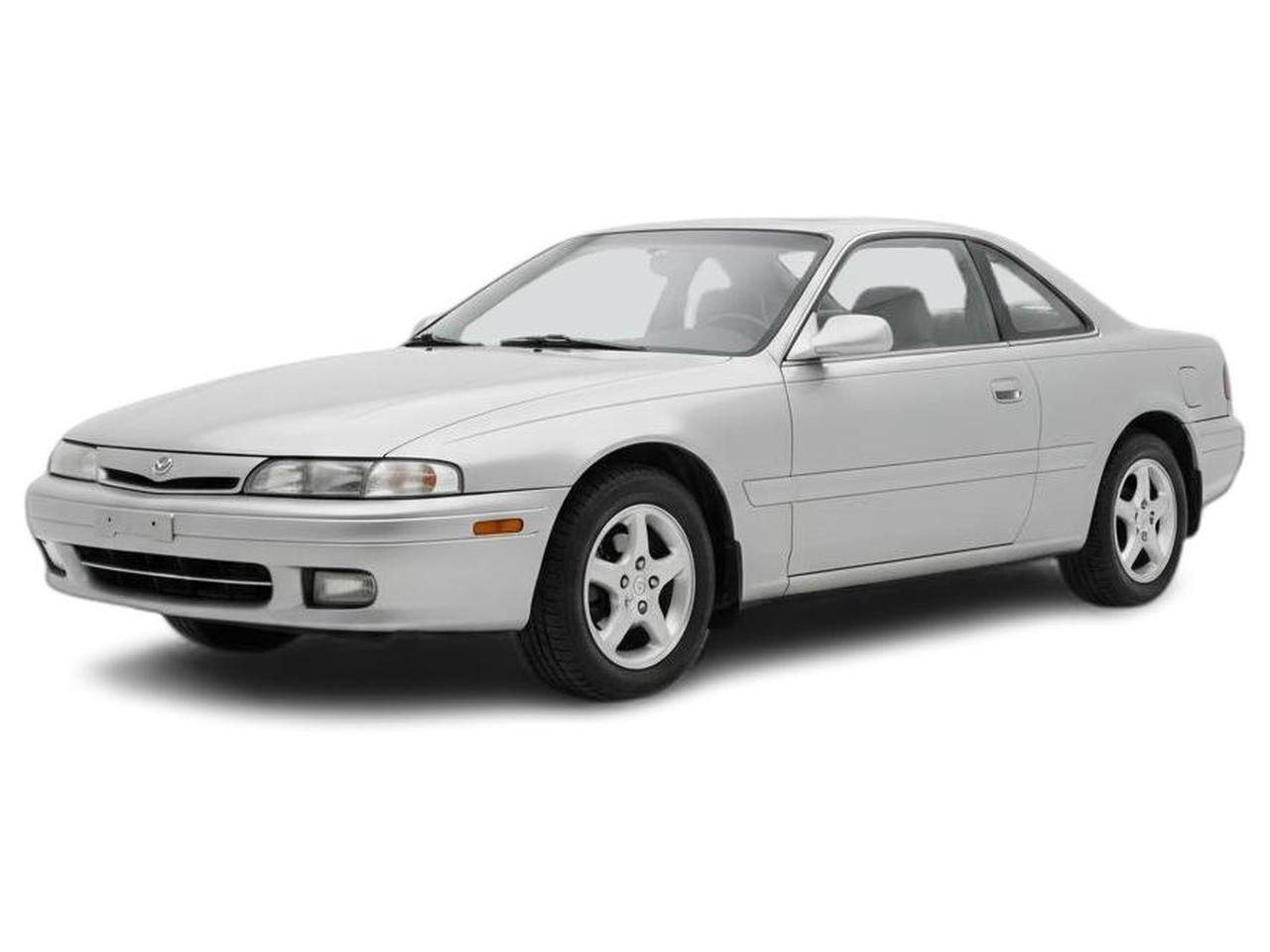
The Good
The 1996 Mazda MX-6 offers a compelling mix of engaging performance with its available V6, attractive sporty styling that appeals to the eye, and a comfortable ride for daily driving. It provides good value for those seeking a fun yet practical coupe, boasting decent reliability for its era.
The Bad
Common concerns for the 1996 Mazda MX-6 include potential for rust, especially in areas with harsh winters. Electrical gremlins can sometimes surface, and the automatic transmission might require attention. Wear and tear on suspension components and the interior are also points to inspect.
1996 Mazda MX-6: Quick Overview
- Engine Options:
- 2.5L KL-DE V6
- 2.0L FS-DE Inline-4 (primarily for JDM, less common in other markets) - Horsepower:
- 2.5L V6: Approximately 164 hp
- 2.0L Inline-4: Approximately 120-130 hp - Fuel Economy (EPA Estimated MPG):
- 2.5L V6 (Manual): Around 19 city / 27 highway
- 2.5L V6 (Automatic): Around 19 city / 26 highway - 0-60 Times:
- 2.5L V6: Estimated 7.5-8.5 seconds - Towing Capacity:
- Not applicable; the MX-6 is not designed for towing. - Trim-Level Features (Common for LS Trim):
- Leather-trimmed seating
- Power windows, door locks, and mirrors
- Sunroof (often standard or optional)
- Cruise control
- Air conditioning
- Anti-lock Braking System (ABS)
- Alloy wheels
- Premium audio system (e.g., 6-speaker system with cassette/CD player)
- Fog lights (optional/standard depending on package)
- Spoiler (rear)
- Body-colored side moldings
- Front and rear stabilizer bars for enhanced handling
- Optional sport-tuned suspension packages may have been available.
- Driver and passenger airbags
1996 Mazda MX-6 Specifications
Vehicle Information
| Year | 1996 |
| Make | Mazda |
| Model | MX-6 |
| Trim | - |
| Style | LS Coupe FWD 5MT 2.5L V6 |
| Type | Coupe |
| Category | passenger |
Manufacturing Details
| Made In | United States |
| Manufacturing City | FLAT ROCK |
Dimensions
| Doors | 2-Door |
| Curb Weight | 2900 pounds |
| Gross Vehicle Weight Rating | - |
| Overall Height | 50.4 inches |
| Overall Length | 180.3 inches |
| Overall Width | 70.5 inches |
| Wheelbase Length | 102.4 inches |
| Standard Seating | 4 |
Engine & Performance
| Engine | 2.5L V6 |
| Engine Size | 2.5L |
| Engine Cylinders | 6 |
| Transmission | 5-Speed Manual |
| Transmission Type | Manual |
| Transmission Speeds | 5-Speed |
| Drivetrain | Front-Wheel Drive |
Additional Features
| Anti-Brake System | 4-Wheel ABS |
| Steering Type | Rack & Pinion |
Pricing
| Manufacturer Suggested Retail Price (MSRP) | $19,500 |
| Invoice Price | $18,000 |
| Delivery Charges | $500 |
Vehicle History Report
Specifications
History
Events
History Check
Check
Check
Check
Check
Listings
Recalls
Check
Analysis
What Problems Does the 1996 Mazda MX-6 Have?
Rust is another significant concern, particularly for vehicles that have lived in areas with salted roads during winter. Check the rocker panels, wheel wells, and the underside of the car for any signs of corrosion.
Electrical issues, though not as widespread as mechanical ones, can sometimes crop up. This might include problems with power windows, door locks, or the instrument cluster.
The suspension components, such as ball joints and bushings, can wear out over time, leading to clunking noises and degraded handling.
While there aren't many specific recalls directly tied to major widespread failures for the 1996 model year that stand out as critical, it's always advisable to check the National Highway Traffic Safety Administration (NHTSA) website for any outstanding recalls relevant to your specific vehicle identification number (VIN).
In terms of long-term reliability, the V6 engine is generally robust if properly maintained. However, issues like rear main seal leaks or intake manifold gaskets can develop with higher mileage. The timing belt on the V6 needs to be replaced at recommended intervals to prevent catastrophic engine damage. Neglecting this maintenance item is a significant long-term reliability risk. Overall, with consistent maintenance, the 1996 MX-6 can be a dependable car, but be prepared for potential age-related repairs common to vehicles of this vintage.
How long will the 1996 Mazda MX-6 last?
What Technology & Safety Features are Included?
Standard Tech & Entertainment: Most 1996 MX-6 models came with a fairly basic but functional audio system, typically a cassette player with an AM/FM radio. Higher trims or optional packages often included a CD player, which was a premium feature at the time. Speaker systems were usually around 4 to 6 speakers, providing adequate sound quality for daily commuting. Standard features also included air conditioning, power windows, power door locks, and power mirrors.
Safety Features: Standard safety equipment on the 1996 MX-6 included driver and front passenger airbags. The Anti-lock Braking System (ABS) was often standard on higher trims like the LS, or available as an option on other trims, providing improved stopping power and control during emergency braking.
Optional Features: Buyers could opt for a power sunroof, which added an open-air feel to the cabin. Some models might have come with fog lights for improved visibility in poor weather. An optional alarm system might also have been available. The availability of features could vary significantly based on the specific trim level (e.g., LS) and any optional packages selected at the time of purchase.
Crash-Test Ratings: Obtaining specific, standardized crash-test ratings (like those from the NHTSA or IIHS) for vehicles from the mid-1990s can be challenging as testing protocols and reporting have evolved considerably. However, contemporary reviews and the presence of dual airbags and optional ABS indicated a focus on occupant safety for the time. Anecdotal evidence and the general build quality suggest it offered reasonable protection for its class and era, but it would not meet modern safety standards.
What Colors Options are Available?
1996 Mazda MX-6 Prices and Market Value
Currently, the used market value for a 1996 Mazda MX-6 is generally quite affordable, often falling between $2,000 and $6,000. Well-maintained examples with lower mileage and desirable options (like the V6 engine and manual transmission) can fetch slightly higher prices.
The MX-6 has undergone significant depreciation since its release, which is typical for most vehicles. Factors affecting its resale value today include its overall condition, mileage, maintenance history, the presence of rust, and whether it has the more sought-after V6 engine and manual gearbox. Well-preserved examples, especially those with original paint and interior, can be considered collector's items in certain enthusiast circles, holding their value better than average.
1996 Mazda MX-6 Cost of Ownership
1996 Mazda MX-6 Fuel Efficiency
1996 Mazda MX-6 Insurance
reasonable repair costs.
How Does the 1996 Mazda MX-6 Compare to Other Coupe?
Performance: The MX-6, especially with its 2.5L V6, offered a refined and reasonably potent performance package, often outperforming the base 4-cylinder models of its competitors. Its front-wheel-drive dynamics were well-balanced, though not as raw as some RWD counterparts. The Celica offered sporty handling, while the Eclipse often appealed to tuner culture with its turbo options. The Probe offered a similar driving experience due to its shared platform.
Features: The MX-6, particularly in its LS trim, provided a good balance of sporty appointments and comfort features like leather seats and a sunroof, often matching or exceeding its competitors in this regard for the price point. The Celica and Eclipse also offered well-equipped interiors, with the Eclipse often having more aggressive styling cues and available performance tech.
Reliability: Mazda has a generally good reputation for reliability, and the MX-6 was no exception. While not bulletproof, it was often considered more reliable than some of its more complex competitors, especially those with turbocharged engines like certain Eclipse models. The Celica is renowned for its bulletproof reliability. The Probe's reliability mirrored that of the MX-6 to some extent, but also had its own specific issues.
Price: The MX-6 was competitively priced, offering a strong value proposition. It provided a blend of style, performance, and refinement that was hard to beat in its price bracket. The Celica often commanded a slightly higher price, while the Eclipse varied greatly depending on trim and engine.
Recommendations:
- Similar Alternatives: The Ford Probe GT (V6 models) offers a very similar driving experience and platform. The Toyota Celica GT-S (2000-2005 generation) is a more modern, albeit pricier, alternative with excellent handling and reliability.
- Better Alternatives (if prioritizing specific aspects): If absolute reliability is paramount, a Toyota Celica (later generations) or a Honda Prelude would be stronger choices. For more raw performance and tuning potential, a Mitsubishi Eclipse GST/GSR (turbocharged models) would be considered, though often at the cost of reliability and complexity. The MX-6 strikes a great balance between sporty engagement and everyday usability.
Final Verdict: Is the 1996 Mazda MX-6 a Good Coupe?
Is it worth buying? Yes, but with caveats. It is absolutely worth buying as a used vehicle. Buying new is not an option as it has been discontinued. Focus on finding well-maintained examples, ideally with the 2.5L V6 engine and potentially a manual transmission for the best driving experience. Thoroughly inspect any potential purchase for rust, check the transmission's health, and review its maintenance history. Given its affordable used prices and reasonable running costs, it represents excellent value for those willing to perform due diligence and address potential age-related issues.

Drew B
Drew is a seasoned automotive expert and contributor to VinCheck.info. With nearly 15 years of experience as a former Porsche technician, he brings a wealth of hands-on knowledge to his writing. Born in North Carolina, a region renowned for its deep-rooted NASCAR culture, Drew developed a passion for cars early in life, often building and working on vehicles from a young age. At VINCheck, Drew leverages his extensive technical background to provide in-depth analyses of various vehicles. His articles often focus on engine performance, reliability, and maintenance insights, offering readers practical information grounded in real-world experience. Some of his notable contributions include reviews on the Mazda CX-5's longevity and detailed examinations of engine options for models like the 2011 Toyota Camry and Tacoma