
by VIN, Year, Make, Model by License Plate

2018 Toyota Camry Hybrid Overview, Reviews, Ratings & Specs

Rating: 0.00
Based on 0 Owner Reviews
Eugene S | September 26, 2025
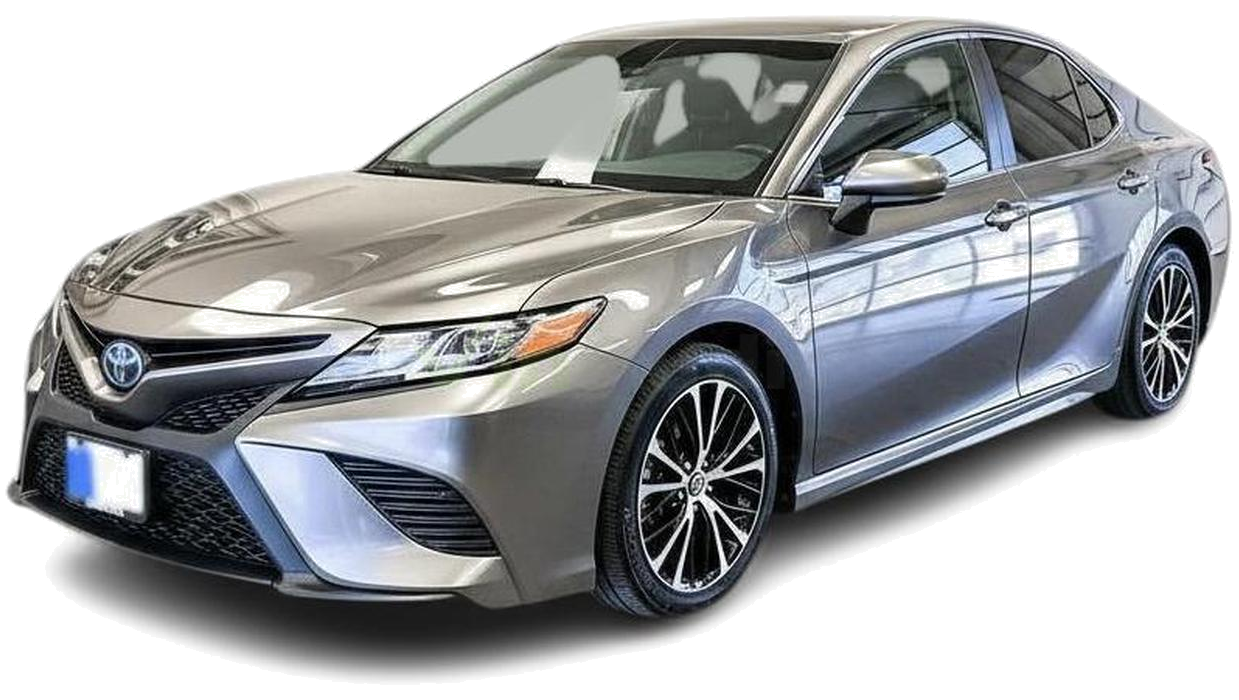
The 2018 Toyota Camry Hybrid marks the debut of the eighth-generation Camry (XV70), a sleek mid-size sedan. Available in LE, SE, and XLE Hybrid trims, its new MSRP ranged approximately from $28,000 to $33,000. It stands out for its exceptional fuel efficiency, Toyota's legendary reliability, and a more dynamic, eye-catching design, making it incredibly popular among buyers seeking a practical yet stylish and economical vehicle.
The Good

The 2018 Camry Hybrid offers a smooth, quiet performance with outstanding reliability, a hallmark of Toyota. Its redesigned, more aggressive exterior and comfortable, spacious interior appeal emotionally, while its segment-leading fuel efficiency (up to 52 MPG combined) and strong resale value provide immense practical advantages. It truly delivers on peace of mind and cost savings.

The Bad

Potential weaknesses for the 2018 Camry Hybrid include its Entune infotainment system, which was often criticized for being clunky and notably lacked Apple CarPlay/Android Auto integration. Some drivers also report that the regenerative braking can feel unnatural, and while improved, driving dynamics aren't as sporty as some rivals.

2018 Toyota Camry Hybrid: Quick Overview

  • Engine: 2.5L DOHC 16-valve VVT-i 4-cylinder engine paired with an electric motor.
  • Horsepower: Combined net 208 hp.
  • Fuel Economy:
    • LE Hybrid: EPA-estimated 51 city/53 highway/52 combined MPG.
    • SE Hybrid/XLE Hybrid: EPA-estimated 44 city/47 highway/46 combined MPG.
  • 0-60 mph: Approximately 7.4-7.8 seconds (unofficial estimates).
  • Towing Capacity: Generally not rated or recommended for towing.
  • Trim-Level Features:
    • LE Hybrid: Entry-level yet well-equipped. Includes dual-zone automatic climate control, a 7-inch Entune 3.0 touchscreen, six-speaker audio system, and the comprehensive Toyota Safety Sense P (TSS-P) suite (Pre-Collision System with Pedestrian Detection, Lane Departure Alert with Steering Assist, Automatic High Beams, Dynamic Radar Cruise Control). It also features smart key access and 16-inch alloy wheels.
    • SE Hybrid: Adds a sportier flair with a sport-tuned suspension, unique exterior styling (different grille, rear spoiler, side rocker panels), 18-inch black machined-finish alloy wheels, SofTex®-trimmed seats, and paddle shifters for a more engaging drive.
    • XLE Hybrid: The most luxurious trim. It builds upon the lower trims by adding leather-trimmed seats, an 8-inch Entune 3.0 touchscreen, Qi-compatible wireless smartphone charging, a larger 7-inch multi-information display in the gauge cluster, blind-spot monitor with rear cross-traffic alert, full LED headlights, and 18-inch chrome-finish alloy wheels. Optional features for the XLE included a panoramic glass roof, a premium JBL audio system, and a head-up display.

2018 Toyota Camry Hybrid Specifications

Vehicle Information
Year 2018
Make Toyota
Model Camry
Trim -
Style -
Type Sedan
Category Mid-Size Car
Manufacturing Details
Made In Japan
Manufacturing City TOYOTA CITY
Dimensions
Doors 4-Door
Curb Weight 1495.04 kg
Gross Vehicle Weight Rating -
Overall Height 144.53 cm
Overall Length 487.93 cm
Overall Width 183.9 cm
Wheelbase Length 282.45 cm
Standard Seating 5
Engine & Performance
Engine 2.5L I4
Engine Size 2.5L
Engine Cylinders 4
Transmission 8-Speed Automatic
Transmission Type Automatic
Transmission Speeds 8-Speed
Drivetrain Front-Wheel Drive
Additional Features
Anti-Brake System 4-Wheel ABS
Steering Type Rack & Pinion
Pricing
Manufacturer Suggested Retail Price (MSRP) $23,495 USD
Invoice Price $21,497 USD
Delivery Charges $885 USD

Vehicle History Report

Vehicle
Specifications
Ownership
History
All History
Events
NMVTIS Title
History Check
Salvage/Rebuilt
Check
Accident
Check
Theft
Check
Open Lien
Check
Past Sale
Listings
Safety
Recalls
Odometer
Check
Market Price
Analysis

What Problems Does the 2018 Toyota Camry Hybrid Have?

The 2018 Toyota Camry Hybrid generally upholds Toyota's stellar reputation for reliability, yet a few issues have been noted. A common point of frustration among owners was the Entune 3.0 infotainment system. While functional, its interface was often described as less intuitive and slower than rivals, and significantly, it lacked standard Apple CarPlay or Android Auto integration, which was becoming common in competitor vehicles by 2018.
Some drivers also reported a slightly inconsistent or "non-linear" feel to the regenerative braking system as it transitions to conventional friction braking, requiring a period of adjustment. Minor interior rattles or squeaks have occasionally been reported, though these are not widespread.
Regarding recalls, the 2018 Camry Hybrid was notably affected by a significant low-pressure fuel pump recall issued in 2020, impacting many 2018-2020 Toyota and Lexus models. This issue could lead to engine stalling, increasing accident risk. Owners should ensure this recall has been addressed. Another smaller recall involved the brake booster pump assembly for some 2018 Camry models, including hybrids, which could malfunction and reduce braking assist.
Long-term reliability is a strong suit. Toyota's hybrid systems are exceptionally durable. While the high-voltage hybrid battery will eventually degrade over extreme mileage (200,000+ miles) or many years, many last well beyond typical ownership periods and are backed by a long warranty. Proper maintenance, including regular servicing of the hybrid system components like the inverter coolant, is crucial to maximizing its lifespan. Overall, major problems are rare, reinforcing its reputation as a dependable long-term vehicle.

How long will the 2018 Toyota Camry Hybrid last?

The 2018 Toyota Camry Hybrid is a champion of longevity. With consistent, proper maintenance, including regular oil changes and checks of the hybrid system, these vehicles are routinely expected to exceed 200,000 to 250,000 miles, with many owners reporting successful operation for 15 years or more. Its long-term durability is outstanding, thanks to a robust hybrid powertrain and Toyota's proven engineering.
Over time, the primary "weakness" to consider is the eventual degradation of the high-voltage hybrid battery. While Toyota batteries are incredibly durable, they will eventually lose capacity or fail, typically at very high mileages, potentially leading to reduced fuel economy or system warnings. Other long-term wear items include suspension components, conventional 12V batteries (which can have different charging characteristics in hybrids), and general wear and tear on interior finishes.

What Technology & Safety Features are Included?

The 2018 Toyota Camry Hybrid came equipped with a solid array of technology, entertainment, and safety features, though some aspects lagged contemporaries.
Built-in Tech & Entertainment: Standard on all trims was the Entune 3.0 Audio system with a 7-inch touchscreen, six speakers, a USB port, and Bluetooth. A complimentary 3-month SiriusXM trial was also included. Higher trims or optional packages offered the Entune 3.0 Audio Plus with an 8-inch touchscreen, app suite, and dynamic navigation. A premium JBL audio system with nine speakers and a subwoofer, along with Qi-compatible wireless smartphone charging, was available. A notable omission for the 2018 model year was Apple CarPlay and Android Auto, which became standard in later models.
Driver-Assistance & Safety Features: Toyota set a high bar by making its comprehensive Toyota Safety Sense P (TSS-P) suite standard across all Camry Hybrid trims. This suite included:
  • Pre-Collision System with Pedestrian Detection (PCS w/PD): Provides warnings and can apply automatic braking to mitigate or avoid collisions.
  • Lane Departure Alert with Steering Assist (LDA w/SA): Warns if the vehicle drifts from its lane and can provide corrective steering.
  • Automatic High Beams (AHB): Automatically switches between high and low beams based on traffic.
  • Dynamic Radar Cruise Control (DRCC): Maintains a set speed and distance from the vehicle ahead.
Available safety features on higher trims (XLE) or as options included a Blind Spot Monitor (BSM) with Rear Cross-Traffic Alert (RCTA), Intelligent Clearance Sonar (ICS) with Rear Cross-Traffic Braking (RCTB) for parking, and a Bird's Eye View Camera with Perimeter Scan for a 360-degree view.
Crash-Test Ratings: The 2018 Camry Hybrid earned top safety marks.
  • NHTSA (National Highway Traffic Safety Administration): Achieved a perfect 5-Star Overall Safety Rating, with 5 stars in frontal and side crash tests, and 4 stars in rollover.
  • IIHS (Insurance Institute for Highway Safety): Awarded the prestigious Top Safety Pick+ rating. It received "Good" ratings in all six crashworthiness tests. The standard front crash prevention system (TSS-P) earned a "Superior" rating, while headlight ratings varied by trim from "Good" to "Acceptable."

What Colors Options are Available?

We’re working on this section!
In the meantime, feel free to explore the other sections for more content.

2018 Toyota Camry Hybrid Prices and Market Value

When new, the 2018 Toyota Camry Hybrid had an MSRP ranging approximately from $27,950 for the LE Hybrid to around $33,050 for the XLE Hybrid, excluding destination fees and options. In the current used market (late 2023/early 2024), prices typically fall between $19,000 and $25,000+, depending heavily on mileage, condition, and trim level. Low-mileage XLE models command the highest prices.
The Camry Hybrid demonstrates excellent depreciation resistance. Toyota's reputation for unwavering reliability and the high demand for fuel-efficient vehicles significantly bolster its resale value. Factors such as lower mileage, pristine condition, a complete maintenance history, and the XLE's superior feature set positively impact its resale value, making it a smart long-term investment.

2018 Toyota Camry Hybrid Cost of Ownership

The 2018 Toyota Camry Hybrid is an exceptionally economical vehicle to own. Insurance costs are generally moderate due to its high safety ratings and low theft rates. Fuel costs are remarkably low, thanks to its outstanding EPA-estimated 52 combined MPG for the LE trim, making it a leader in fuel efficiency.
Maintenance and repair costs are typically very affordable, reflecting Toyota's reputation for reliability and readily available, inexpensive parts. Major repairs are infrequent, and hybrid system components come with a long warranty, mitigating long-term risks. Overall, its low fuel consumption, strong reliability, and reasonable upkeep make the 2018 Camry Hybrid one of the most cost-effective vehicles for long-term ownership.

2018 Toyota Camry Hybrid Fuel Efficiency

Fuel Type Gasoline
Fuel Capacity 54.89 liters
City Mileage 12.33 km/l
Highway Mileage 17.43 km/l

2018 Toyota Camry Hybrid Safety Rating

2018 Toyota Camry Hybrid Recalls & Defects

Fuel System, Gasoline:delivery:hoses, Lines/Piping, and Fittings
Recall date 2018-02-14
Recall no. 18v108000
Source NHTSA
Summary Toyota Motor Engineering & Manufacturing (Toyota) IS Recalling Certain 2018 Toyota Camry Vehicles Equipped With V6 Engines. These Vehicles Have Fuel Delivery Pipes That MAY NOT BE Properly Connected TO THE Fuel Hoses IN THE Engine Compartment.
Consequence THE Improperly Connected Hoses MAY Leak Fuel, Which, IN THE Presence OF AN Ignition Source, CAN Increase THE Risk OF A Fire.
Remedy Toyota Will Notify Owners, and Dealers Will Inspect THE Fuel Pipes FOR THE Correct Installation, Correcting Them AS Necessary, Free OF Charge. THE Recall IS Expected TO Begin March 30, 2018. Owners MAY Contact Toyota Customer Service AT 1-888-270-9371. Toyota's Number FOR This Recall IS J0g.
Notes Owners MAY Also Contact THE National Highway Traffic Safety Administration Vehicle Safety Hotline AT 1-888-327-4236 (Tty 1-800-424-9153), or GO TO Www.safercar.gov.
Service Brakes, Hydraulic:power Assist:vacuum
Recall date 2018-04-03
Recall no. 18v211000
Source NHTSA
Summary Toyota Motor Engineering & Manufacturing (Toyota) IS Recalling Certain 2018 Toyota Camry and Highlander Vehicles, 2017 Toyota Sienna and Tacoma Vehicles and 2017 Lexus Rx350 Vehicles. During THE Manufacturing Process, THE OIL Galley IN THE Rotor FOR THE Brake Booster Vacuum Pump Assembly MAY Have Been Improperly Machined Possibly Resulting IN A Sudden Loss OF Brake Assist.
Consequence A Sudden Loss OF Braking Assist CAN Increase THE Risk OF A Crash.
Remedy Toyota Will Notify Owners, and Dealers Will Replace THE Brake Booster Vacuum Pump, Free OF Charge. THE Recall Began ON MAY 9, 2018. Owners MAY Contact Toyota Customer Service AT 1-888-270-9371, or Lexus Customer Service AT 1-800-255-3987. Toyota's Numbers FOR This Recall ARE J0k/Jld.
Notes Owners MAY Also Contact THE National Highway Traffic Safety Administration Vehicle Safety Hotline AT 1-888-327-4236 (Tty 1-800-424-9153), or GO TO Www.safercar.gov.
Engine and Engine Cooling:engine
Recall date 2018-03-28
Recall no. 18v200000
Source NHTSA
Summary Toyota Motor Engineering & Manufacturing (Toyota) IS Recalling Certain 2018 Toyota Camry Vehicles Equipped With A 2.5l, Four-Cylinder Engine. THE Pistons ON These Vehicles MAY BE Larger Than Specified, Possibly Causing THE Engine TO Stall.
Consequence AN Engine Stall CAN Increase THE Risk OF A Crash.
Remedy Toyota Will Notify Owners, and Dealers Will Inspect THE Production Date Codes OF THE Pistons And, IF AN Engine Contains A Piston From THE Affected Production Period, THE Engine Assembly Will BE Replaced, Free OF Charge. THE Recall IS Expected TO Begin MAY 25, 2018. Owners MAY Contact Toyota Customer Service AT 1-888-270-9371. Toyota's Number FOR This Recall IS J1m/J0m.
Notes Owners MAY Also Contact THE National Highway Traffic Safety Administration Vehicle Safety Hotline AT 1-888-327-4236 (Tty 1-800-424-9153), or GO TO Www.safercar.gov.
Equipment:other:labels
Recall date 2019-06-28
Recall no. 19v503000
Source NHTSA
Summary Southeast Toyota Distributors, LLC (Set) IS Recalling Certain 2017-2019 Toyota Camry, Corolla, Rav4, Sienna, and Yaris IA Vehicles Equipped With Factory-Installed Floor Mats. THE Load Carrying Capacity Modification Label MAY BE Incorrect. AS Such, These Vehicles Fail TO Comply With THE Requirements OF Federal Motor Vehicle Safety Standard (Fmvss) Number 110, "tire Selection and Rims."
Consequence AN Incorrect Label MAY Lead TO Unintentionally Overloading THE Vehicle, Increasing THE Risk OF A Crash.
Remedy SET Will Notify Owners and Provide A Corrected Label FOR Placement Over THE Inaccurate Label, Free OF Charge. THE Recall Began August 23, 2019. Owners MAY Contact Toyota Customer Service AT 1-888-270-9371. Set's Number FOR This Recall IS Set19a.
Notes Owners MAY Also Contact THE National Highway Traffic Safety Administration Vehicle Safety Hotline AT 1-888-327-4236 (Tty 1-800-424-9153), or GO TO Www.safercar.gov.
Fuel System, Gasoline:delivery:fuel Pump
Recall date 2020-01-13
Recall no. 20v012000
Source NHTSA
Summary Toyota Motor Engineering & Manufacturing (Toyota) Recalled Certain 2018-2019 4runner, Highlander, Camry, Land Cruiser, Sequoia, Sienna, Tacoma and Tundra, and Lexus RC 300, RC 350, GS 350, GX 460, IS 300, LC 500, LS 500, LX 570, RX 350l, and 2019 Toyota Avalon and Corolla, and Certain Lexus NX 300, and ES 350 Vehicles ON January 13, 2020. ON March 4, 2020, Toyota Expanded THE Recall TO Include Certain 2014-2015 Toyota 4runner and Land Cruiser, 2018 Avalon, Corolla, 2014 FJ Cruiser, 2017 Sienna and Lexus 2018 ES 350, 2018-2019 GS 300, 2013-2014 Gs350, 2014-2015 GX 460, IS 350 and LX 570, 2014 IS F, 2018-2019 IS 350, LC 500h and LS 500h, 2013-2015 LS 460, 2015 NX 200t and Rc350, 2017 RC 200t and RX 350. Toyota Also Removed THE 2018-2019 Toyota 4runner and Land Cruiser and 2018-2019 Lexus GX 460 and LX 570 and 2019 Nx300 From Inclusion IN This Recall. ON March 19, 2020, Toyota Expanded THE Recall TO Include 2015 Lexus Gs350 Vehicles. THE Low-pressure Fuel Pump Inside THE Fuel Tank MAY Fail.
Consequence IF THE Fuel Pump Fails, THE Engine CAN Stall While Driving, Increasing THE Risk OF A Crash.
Remedy Toyota Will Notify Owners, and Dealers Will Replace THE Fuel Pump, Free OF Charge. THE Recall Began MAY 4, 2020. Owners MAY Contact Toyota Customer Service AT 1-888-270-9371 or Lexus Customer Service AT 1-800-255-3987. Toyota's Numbers FOR This Recall ARE 20tb02 and 20ta02 FOR Toyota Vehicles and 20lb01 and 20la01 FOR Lexus Vehicles.
Notes Owners MAY Also Contact THE National Highway Traffic Safety Administration Vehicle Safety Hotline AT 1-888-327-4236 (Tty 1-800-424-9153), or GO TO Www.safercar.gov.
Fuel System, Gasoline:delivery:fuel Pump
Recall date 2020-11-04
Recall no. 20v682000
Source NHTSA
Summary Toyota Motor Engineering & Manufacturing (Toyota) IS Recalling Certain 2018-2019 4runner, 2019-2020 Avalon, 2019 Corolla Hatchback, 2017-2019 Highlander, 2018-2020 Camry, 2020 Corolla, 2018-2019 Land Cruiser, 2017-2020 Tacoma, 2019-2020 Rav4, 2019-2020 Sequoia, 2017-2020 Sienna, 2019-2020 Tundra, 2018-2020 Lexus Es350, 2017 Lexus Gs200t, 2017-2019 Lexus Gs350, 2019 Lexus Gs300, 2018-2020 Lexus Lc500h, 2019-2020 Lexus Ls500, 2018-2019 Lexus Gx460, 2017 Lexus Is200t, 2019 Lexus Is300, 2019 Lexus Is350, 2018-2020 Lexus Lc500, 2018 Lexus Ls500, 2019 Lexus Ls500h, 2018-2019 Lexus Lx570, 2017 Lexus Rc200t, 2019 Lexus Rc300, Rc350, 2017 and 2019-2020 Lexus Rx350, 2018-2020 Rx350l, 2019 Lexus Ux200, 2018-2019 Lexus Nx300 Vehicles. THE Low-pressure Fuel Pump Inside THE Fuel Tank MAY Fail.
Consequence IF THE Fuel Pump Fails, THE Engine CAN Stall While Driving, Increasing THE Risk OF A Crash.
Remedy Toyota Will Notify Owners, and Dealers Will Replace THE Fuel Pump Assembly With AN Improved One, Free OF Charge. Owners OF Specific Models Were Notified That Remedy Parts Were Available Starting January 21, 2021. Owners OF Other Models Will BE Notified AS Remedy Parts Become Available. Remedy Parts Should BE Available FOR All Affected Vehicles BY Late March 2021. Owners MAY Contact Toyota Customer Service AT 1-888-270-9371 or Lexus Customer Service AT 1-800-255-3987. Note: This Recall IS AN Expansion OF Recall 20v-012. Toyota's Number FOR This Recall IS 20ta02. Lexus' Number FOR This Recall IS 20la01.
Notes Owners MAY Also Contact THE National Highway Traffic Safety Administration Vehicle Safety Hotline AT 1-888-327-4236 (Tty 1-800-424-9153), or GO TO Www.safercar.gov.
Service Brakes, Hydraulic:power Assist:vacuum
Recall date 2021-11-17
Recall no. 21v890000
Source NHTSA
Summary Toyota Motor Engineering & Manufacturing (Toyota) IS Recalling Certain 2018-2019 Camry Vehicles. THE Vane CAP Inside THE Vacuum Pump MAY Break, Causing THE Pump TO Fail, Which Could Result IN A Sudden Loss OF Braking Assist.
Consequence A Sudden Loss OF Braking Assist CAN Increase THE Risk OF A Crash.
Remedy Dealers Will Repair or Replace THE Vacuum Pump, AS Necessary, Free OF Charge. Owner Notification Letters Were Mailed MAY 16, 2022. Owners MAY Contact Toyota Customer Service AT 1-800-331-4331.
Notes Owners MAY Also Contact THE National Highway Traffic Safety Administration Vehicle Safety Hotline AT 1-888-327-4236 (Tty 1-800-424-9153), or GO TO Www.nhtsa.gov.
Fuel System, Gasoline:delivery:fuel Pump
Recall date 2025-01-22
Recall no. 25v028000
Source NHTSA
Summary Toyota Motor Engineering & Manufacturing (Toyota) IS Recalling Certain 2018 Camry, 2019 Lexus Nx300, and 2019 Rx350l Vehicles. THE Low-Pressure Fuel Pump Inside THE Fuel Tank MAY Fail.
Consequence Fuel Pump Failure CAN Cause AN Engine Stall, Increasing THE Risk OF A Crash.
Remedy Dealers Will Replace THE Fuel Pump Assembly, Free OF Charge. Owner Notification Letters Were Mailed March 12, 2025. Owners MAY Contact Toyota's Customer Service AT 1-800-331-4331. Toyota's Numbers FOR This Recall ARE 25ta01 and 25la01.
Notes Owners MAY Also Contact THE National Highway Traffic Safety Administration Vehicle Safety Hotline AT 1-888-327-4236 (Tty 1-800-424-9153) or GO TO Nhtsa.gov.

2018 Toyota Camry Hybrid Warranty

Basic
Original warranty 36 months / 36,000 miles
Estimated remaining Expired
Powertrain
Original warranty 60 months / 60,000 miles
Estimated remaining Expired
Rust
Original warranty 60 months / unlimited miles
Estimated remaining Expired

2018 Toyota Camry Hybrid Insurance

Insurance for a 2018 Toyota Camry Hybrid is moderately priced, reflecting its status as a Sedan with strong safety ratings and
reasonable repair costs.

How Does the 2018 Toyota Camry Hybrid Compare to Other Sedan?

The 2018 Toyota Camry Hybrid competes in a competitive segment against rivals like the Honda Accord Hybrid, Hyundai Sonata Hybrid, and Kia Optima Hybrid.
Performance: The Camry Hybrid offers a smooth, quiet, and composed ride with a combined 208 horsepower. It prioritizes fuel efficiency and comfort. The Honda Accord Hybrid is often lauded for slightly more engaging driving dynamics and a more premium feel, while the Hyundai Sonata Hybrid and Kia Optima Hybrid generally provide a comfortable but less spirited experience. For sheer balance of efficiency and comfort, the Camry is excellent.
Features: The Camry Hybrid excels with its standard Toyota Safety Sense P (TSS-P) suite, which was comprehensive for its time. However, a notable drawback for 2018 was the lack of standard Apple CarPlay and Android Auto in its Entune 3.0 infotainment system, which rivals like the Accord, Sonata, and Optima Hybrids often included or made easily available, giving them an edge in smartphone integration.
Reliability: This is where the Camry Hybrid truly shines. Toyota's reputation for bulletproof long-term reliability is unmatched, and the Camry Hybrid consistently ranks at the top for durability and low maintenance costs. The Accord Hybrid is also highly reliable, closely following the Camry. The Korean rivals (Sonata, Optima) offer good reliability but perhaps haven't quite reached the same legendary status as Toyota in this regard.
Price: New, all these hybrids were competitively priced. In the used market, the Camry Hybrid and Accord Hybrid tend to hold their value exceptionally well, leading to strong resale prices. The Sonata Hybrid and Optima Hybrid often depreciate slightly more, potentially making them more attractive used bargains for buyers prioritizing initial cost savings.
Recommendations:
  • For Unparalleled Reliability and Fuel Economy: The 2018 Toyota Camry Hybrid is still the gold standard.
  • For a More Engaging Drive and Superior Infotainment (CarPlay/Android Auto): The 2018 Honda Accord Hybrid is a strong alternative.
  • For Excellent Value and Features at a Lower Price Point: Consider the 2018 Hyundai Sonata Hybrid or Kia Optima Hybrid, especially on the used market.

Final Verdict: Is the 2018 Toyota Camry Hybrid a Good Sedan?

The 2018 Toyota Camry Hybrid is ideal for buyers who prioritize exceptional fuel efficiency, legendary reliability, and low long-term ownership costs in a comfortable and now more stylish mid-size sedan package. It's perfect for commuters, small families, or anyone seeking a practical, eco-conscious daily driver with strong resale value and peace of mind.
It is absolutely worth buying, especially as a used vehicle. The significant initial depreciation has already occurred, yet the car has many years and miles of reliable service ahead.
When buying used, consider:
  • The LE Hybrid offers the best fuel economy and value.
  • The SE Hybrid provides a sportier aesthetic and slightly firmer ride.
  • The XLE Hybrid is best for those desiring more luxury, advanced safety features, and comfort.

While the lack of Apple CarPlay/Android Auto is a minor drawback for the 2018 model, its overwhelming strengths in efficiency, reliability, and safety make it an outstanding and economical used car purchase.

2018 Toyota Camry Hybrid Owner Reviews

0.00
Consumer Rating, Based on 0 Consumer Reviews
Overall rating
Cancel
Thank You for Your Review!

We truly appreciate the time and effort you took to share your experience with us.

Uh oh!

Something went wrong, please try again later.

Author Image
Eugene S

Eugene is an automotive enthusiast with over 15 years of experience in the used car market. As a writer at VINCheck.info, he brings deep industry insight and a passion for cars, helping readers make smart, informed decisions. Eugene has written hundreds of used car reviews and is known for breaking down complex automotive topics into clear, actionable advice. Over the years, he has driven and worked on a wide range of vehicles—starting with tuning street cars in his early days and eventually focusing on performance upgrades and reliability improvements. Today, he specializes in evaluating used vehicles through the lens of real-world ownership and enthusiast needs. A longtime fan of Porsche, Eugene especially appreciates vehicles that blend durability with driving enjoyment.