
The Good
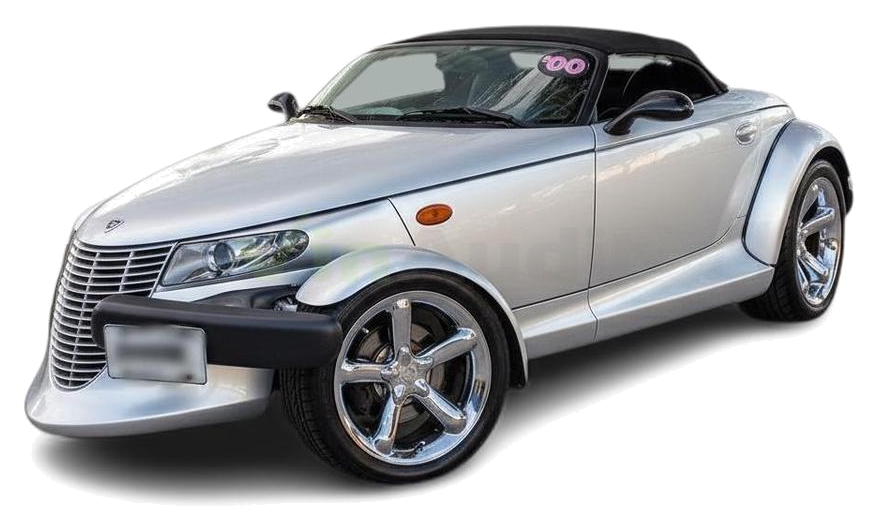
The Prowler's primary advantage is its unparalleled, head-turning retro hot rod design, offering immense emotional appeal and exclusivity. Its 3.5L V6 provides decent performance for cruising, while its unique factory-built nature offers a degree of reliability and accessibility for parts not found in custom builds. It's a distinctive collector's item with potential for appreciating value.
The Bad
Known weaknesses include its relatively stiff ride and limited cargo space, making it impractical for daily use. While unique, the V6 engine lacks the raw power many expect from a "hot rod". Some owners report minor electrical gremlins or transmission quirks. The polarizing design isn't for everyone, and specialized parts can be costly to replace.
2000 Plymouth Prowler: Quick Overview
- Engine: For the 2000 model year, the Plymouth Prowler was exclusively equipped with a 3.5-liter SOHC (Single Overhead Cam) 24-valve V6 engine. This was an upgraded version compared to the 1997 model's engine.
- Horsepower: The 2000 Prowler's V6 engine produced a respectable 253 horsepower at 6400 rpm.
- Torque: It delivered 255 lb-ft of torque at 3800 rpm.
- Transmission: Power was routed through a 4-speed AutoStick automatic transmission, which allowed for manual gear selection.
- Fuel Economy: Official EPA estimates were around 18 miles per gallon (MPG) in the city and 23 MPG on the highway, with a combined average of approximately 20 MPG.
- 0-60 Times: The 2000 Prowler was capable of accelerating from 0 to 60 mph in approximately 5.9 to 6.0 seconds, which was quick for its time, especially for a V6-powered specialty car.
- Towing Capacity: The Plymouth Prowler was not designed or rated for towing. Its unique chassis and lightweight construction make towing capacity effectively zero and strongly unadvised.
- Trim-Level Features: The Prowler essentially came in one comprehensive trim level, though various exterior colors were available. Standard features for the 2000 model included:
- Air Conditioning
- Power Windows, Door Locks, and Mirrors
- Leather-trimmed bucket seats
- AM/FM stereo with cassette player and a 6-disc CD changer located in the trunk
- Premium sound system
- Cruise Control
- Tilt Steering Column
- Keyless Entry
- Four-wheel disc brakes with Anti-lock Braking System (ABS)
- Unique forged aluminum wheels (17-inch front, 20-inch rear)
- Integrated Fog Lights
- Dual front airbags
2000 Plymouth Prowler Specifications
Vehicle Information
| Year | 2000 |
| Make | Plymouth |
| Model | Prowler |
| Trim | - |
| Style | - |
| Type | Convertible |
| Category | Sports Car |
Manufacturing Details
| Made In | United States |
| Manufacturing City | DETROIT |
Dimensions
| Doors | 2-Door |
| Curb Weight | 1287.29 kg |
| Gross Vehicle Weight Rating | - |
| Overall Height | 129.29 cm |
| Overall Length | 419.86 cm |
| Overall Width | 194.31 cm |
| Wheelbase Length | 287.78 cm |
| Standard Seating | 2 |
Engine & Performance
| Engine | 3.5L V6 |
| Engine Size | 3.5L |
| Engine Cylinders | 6 |
| Transmission | 4-Speed Automatic |
| Transmission Type | Automatic |
| Transmission Speeds | 4-Speed |
| Drivetrain | Rear-Wheel Drive |
Additional Features
| Anti-Brake System | Non-ABS |
| Steering Type | Rack & Pinion |
Pricing
| Manufacturer Suggested Retail Price (MSRP) | $43,000 USD |
| Invoice Price | $40,155 USD |
| Delivery Charges | - |
Vehicle History Report
Specifications
History
Events
History Check
Check
Check
Check
Check
Listings
Recalls
Check
Analysis
What Problems Does the 2000 Plymouth Prowler Have?
Electrical gremlins are another area sometimes cited. These are typically minor, such as power window regulators failing, issues with dashboard lights, or quirky behavior from the audio system's CD changer. These are often characteristic of Chrysler vehicles from this era.
Due to its unique suspension design and aluminum frame, the steering and suspension components can be points of wear over time. Bushings and tie rod ends, especially if the car has been driven aggressively, may require replacement. The open-wheel design means these components are more exposed to the elements and road debris.
Some owners have also mentioned accelerated wear on brake components, particularly rotors and pads, which could be attributed to the vehicle's weight distribution and driving style.
Regarding recalls, the 2000 Plymouth Prowler did not have a large number of specific recalls unique to its model year. However, it's always advisable to check the NHTSA database using the VIN for any applicable safety recalls related to common components shared with other Chrysler vehicles of the period. For instance, some minor recalls related to wiring harnesses or specific sensors might have been issued that apply across various models.
Long-term reliability concerns often revolve around the availability and cost of unique body and chassis parts. While powertrain components are relatively common Mopar parts, the specialized body panels, suspension arms, and interior trim pieces can be harder to source and expensive. The lightweight aluminum body, while resistant to rust, can be costly to repair if damaged. Interior plastics may show signs of aging, such as cracking or fading, especially if exposed to harsh sunlight without protection. Overall, attentive maintenance is key to keeping a Prowler in good running order for the long term.
How long will the 2000 Plymouth Prowler last?
Long-term durability is generally good, particularly for its V6 engine and automatic transmission, which are proven Mopar units. The aluminum chassis is resilient to rust. However, weaknesses can emerge over time. The unique suspension components may wear, requiring specialized and potentially expensive replacements. Electrical components, like power window switches or sensors, can fail due to age. Interior materials, while decent, may show wear, cracking, or fading, especially with sun exposure. Regular fluid changes and proactive inspection of unique components are crucial for extending its service life.
What Technology & Safety Features are Included?
Built-in Tech & Driver-Assistance: Standard technological amenities included power windows, power door locks, power adjustable mirrors, and keyless entry. A trip computer provided basic information. Driver-assistance features, as understood today, were non-existent. The most advanced "assistance" was standard cruise control for highway driving and a tilt steering column for driver comfort. There was no traction control, stability control, or any form of parking assist.
Entertainment: The entertainment system was a step up for its time, featuring an AM/FM stereo with a cassette player and a remote 6-disc CD changer conveniently located in the trunk. It also boasted a premium sound system for an enhanced audio experience.
Safety Features: Safety equipment was standard for the late 1990s and early 2000s, including dual front airbags for the driver and passenger, providing essential frontal crash protection. The car was equipped with a four-wheel anti-lock braking system (ABS) on its four-wheel disc brakes, significantly improving stopping performance and control under hard braking. The unique open-wheel design, however, inherently means less front-end energy absorption than a conventional enclosed-fender car.
Optional Features: Beyond a range of eye-catching paint colors, there were virtually no significant optional tech, entertainment, or safety features offered by the factory. Most features were standard, emphasizing the Prowler's singular vision.
Crash-Test Ratings: Due to its low production volume and specialty nature, the 2000 Plymouth Prowler was never subjected to official crash testing by organizations like the National Highway Traffic Safety Administration (NHTSA) or the Insurance Institute for Highway Safety (IIHS). Therefore, no official crash-test ratings are available.
What Colors Options are Available?
2000 Plymouth Prowler Prices and Market Value
In the current used market, Prowler prices are highly variable but generally demonstrate excellent value retention, often appreciating for pristine examples. Used prices typically range from $25,000 for higher mileage or less pristine models, up to $45,000 or even $55,000+ for very low-mileage, exceptionally well-maintained, or rare-color examples.
Depreciation insights for the Prowler are unique. While it initially followed a typical depreciation curve, its status as a limited-production, iconic "factory hot rod" allowed it to stabilize and eventually begin appreciating. Factors significantly affecting resale value include mileage (lower is always better), overall condition (originality, paint quality, interior wear), maintenance history, and the specific exterior color. Certain colors, like Inca Gold or Prowler Purple, are often more desirable than others, commanding higher prices. Its collector status makes it less susceptible to traditional market fluctuations.
2000 Plymouth Prowler Cost of Ownership
2000 Plymouth Prowler Fuel Efficiency
2000 Plymouth Prowler Safety Rating
NHTSA
IIHS
2000 Plymouth Prowler Recalls & Defects
Child Seat
Suspension:front:control Arm:lower ARM
Fuel System, Gasoline:delivery:fuel Pump
Service Brakes, Hydraulic
2000 Plymouth Prowler Warranty
Basic
Powertrain
Rust
2000 Plymouth Prowler Insurance
reasonable repair costs.
How Does the 2000 Plymouth Prowler Compare to Other Convertible?
Chevrolet SSR (2003-2006):
- Performance: The SSR, with its V8 engine (5.3L or 6.0L), generally offers superior straight-line performance and torque compared to the Prowler's V6, especially later models.
- Features: The SSR offered more modern conveniences, including a retracting hardtop and a more practical truck bed. Its interior tech was also slightly more contemporary.
- Reliability: Both are specialty vehicles. The SSR, being newer, benefited from later GM engineering, but both can have specific quirks. Powertrains are generally robust.
- Price: New, the SSR was significantly more expensive. Used, SSRs typically range higher than Prowlers, often $30,000-$50,000+.
- Performance: The base models are comparable or slightly slower than the Prowler. However, the turbocharged GXP/Redline versions offer significantly better performance (260 hp) and much more modern handling dynamics.
- Features: More modern interiors, better comfort, and more contemporary safety features like stability control.
- Reliability: Generally good for their era, but subject to GM's quality of that period.
- Price: Used, they are generally less expensive than Prowlers, often in the $10,000-$25,000 range.
- Performance: Highly variable. A custom rod can be built with far more power (V8, supercharged) but lacks factory engineering and reliability.
- Features: Dependent on the builder, often more spartan.
- Reliability: Inherently less predictable than a factory vehicle due to custom nature.
- Price: Can range from under $20,000 to well over $100,000.
Final Verdict: Is the 2000 Plymouth Prowler a Good Convertible?
Is it worth buying? Absolutely, if you understand its specific niche. As a used vehicle, it represents an opportunity to own a piece of automotive design history that has stabilized and even appreciated in value. When buying, focus on low-mileage, well-maintained examples, as unique parts can be costly. There were no distinct trims for the 2000 model year, but opting for the 1999-2002 models (with the 253 hp V6) is generally preferred over the earlier 1997 iteration. It's an excellent addition for a collector or a fun second car, offering an unparalleled blend of retro charm and modern (for its time) reliability.

Simon A
Simon is a contributor to VinCheck, where he provides articles and reviews on various automotive topics. His work focuses on delivering accurate and up-to-date information about used cars, helping readers make informed decisions.