
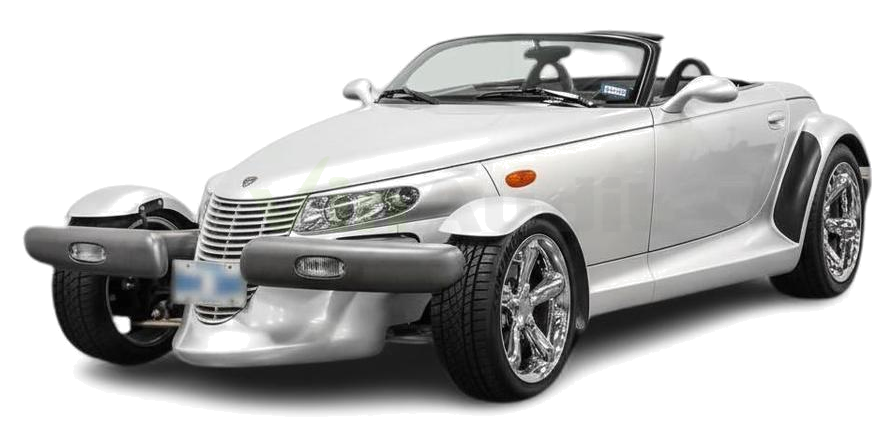
The Good
The Prowler's main advantage is its utterly unique, show-stopping design, offering unmatched emotional appeal and attention. Practically, its 3.5L V6 engine provides respectable performance and surprising fuel efficiency for its class, while its robust Chrysler powertrain offers decent reliability. It holds its value well as a collectible, making it a sound investment for enthusiasts.
The Bad
Known weaknesses include its limited practicality, offering only two seats and minimal cargo space. The ride can be firm due to its sporty suspension, and visibility is somewhat compromised. For some, the V6 engine, while capable, isn't the traditional V8 expected in a hot rod, and it was only available with an automatic transmission.
1999 Plymouth Prowler: Quick Overview
The 1999 Plymouth Prowler came with a singular, well-defined specification set:
- Engine: It was powered exclusively by a 3.5-liter, SOHC (Single Overhead Cam), 24-valve V6 engine, constructed with an aluminum block and heads. This engine was shared with other Chrysler vehicles, ensuring relatively good parts availability for the powertrain.
- Horsepower: The V6 engine produced a healthy 253 horsepower at 6400 rpm and 255 lb-ft of torque at 3800 rpm. This was a significant upgrade from the 214 hp engine in the 1997 model.
- Transmission: Power was delivered to the rear wheels via a 4-speed AutoStick automatic transmission, which allowed for manual gear selection. No manual transmission option was ever offered.
- Fuel Economy: Official EPA estimates for the 1999 Prowler were approximately 18 MPG in the city and 23 MPG on the highway. Given its performance orientation and two-seater nature, these figures were quite respectable.
- 0-60 Times: The Prowler could accelerate from 0 to 60 mph in approximately 5.9 seconds, a brisk time for a V6-powered vehicle of its era. This performance was aided by its lightweight construction.
- Towing Capacity: The Prowler was not designed for towing, and no official towing capacity was provided or recommended. Its purpose was purely as a two-seater roadster.
- Trim-Level Features: The 1999 Prowler essentially came in one high-specification trim, with color being the primary differentiator. Standard features included:
- Air conditioning
- Power windows and door locks
- Cruise control
- AM/FM stereo with CD player
- Leather-trimmed bucket seats
- Tilt steering wheel
- Four-wheel disc brakes with ABS (Anti-lock Braking System)
- Speed-sensitive power steering
- Front and rear independent suspension
- Unique staggered wheel setup: 17-inch chrome wheels up front and massive 20-inch chrome wheels at the rear.
- Integrated fog lights
1999 Plymouth Prowler Specifications
Vehicle Information
| Year | 1999 |
| Make | Plymouth |
| Model | Prowler |
| Trim | - |
| Style | - |
| Type | Convertible |
| Category | Sports Car |
Manufacturing Details
| Made In | United States |
| Manufacturing City | DETROIT |
Dimensions
| Doors | 2-Door |
| Curb Weight | 1283.21 kg |
| Gross Vehicle Weight Rating | - |
| Overall Height | 129.29 cm |
| Overall Length | 419.86 cm |
| Overall Width | 194.31 cm |
| Wheelbase Length | 287.78 cm |
| Standard Seating | 2 |
Engine & Performance
| Engine | 3.5L V6 |
| Engine Size | 3.5L |
| Engine Cylinders | 6 |
| Transmission | 4-Speed Automatic |
| Transmission Type | Automatic |
| Transmission Speeds | 4-Speed |
| Drivetrain | Rear-Wheel Drive |
Additional Features
| Anti-Brake System | Non-ABS |
| Steering Type | Rack & Pinion |
Pricing
| Manufacturer Suggested Retail Price (MSRP) | $39,300 USD |
| Invoice Price | $36,773 USD |
| Delivery Charges | - |
Vehicle History Report
Specifications
History
Events
History Check
Check
Check
Check
Check
Listings
Recalls
Check
Analysis
What Problems Does the 1999 Plymouth Prowler Have?
Frequently Reported Problems:
- Electrical Gremlins: While not widespread, some owners have reported minor electrical issues, such as intermittent power window operation, issues with the radio or climate control, or dashboard warning lights. These are often related to aging wiring or switch components.
- Suspension Components: Due to its firm, sporty suspension and the age of the vehicle, wear and tear on suspension bushings, ball joints, and shocks can lead to a harsher ride, creaks, or diminished handling. Replacement parts for the Prowler's unique suspension setup can be more expensive than standard vehicle components.
- Brake Wear/Noise: Owners occasionally report premature brake pad wear or squealing, which might be attributed to the vehicle's specific braking system design or driving style. Regular inspection and quality replacement parts are essential.
- Interior Plastics: The Prowler's interior, while unique, features a good deal of plastic. Over time, these plastics can show signs of wear, fading, or become brittle, leading to cracks or loose trim pieces.
- Convertible Top Mechanism: For convertible versions, the manual folding top mechanism can experience wear in its linkages or seals, potentially leading to leaks or difficulty in operation if not regularly lubricated and inspected.
Specific recalls for the 1999 Plymouth Prowler were generally limited and often related to broader Chrysler campaigns that affected multiple models using similar components. These might include recalls for specific airbag inflators (a common industry-wide issue, particularly with Takata inflators in later years), minor electrical system components, or issues with specific safety labels. Owners should always check the NHTSA (National Highway Traffic Safety Administration) website using the vehicle's VIN for any open recalls. It's important to note that many Prowlers are low-mileage vehicles, meaning some issues associated with high mileage might not be as prevalent.
Long-Term Reliability Concerns:
The core powertrain is generally reliable. Long-term concerns primarily revolve around the availability and cost of Prowler-specific body parts, unique suspension components, and specialized trim pieces as the vehicle ages. Finding a skilled technician familiar with the Prowler's unique chassis can also be a consideration. Regular, diligent maintenance is key to its longevity.
How long will the 1999 Plymouth Prowler last?
However, weaknesses over time include aging interior plastics, which can become brittle or faded. The convertible top mechanism (if applicable) requires regular maintenance to prevent issues. Suspension components like bushings and shocks will eventually need replacement. Electrical systems, while generally reliable, can develop minor gremlins. Consistent, preventative maintenance, proper storage, and addressing small issues promptly are crucial for preserving the Prowler's condition and ensuring extended years of service.
What Technology & Safety Features are Included?
Built-in Tech & Entertainment:
- Audio System: Standard equipment included an AM/FM stereo with a single-disc CD player. It typically featured a 4-speaker sound system, which was adequate but not premium by modern standards.
- Basic Comfort Features: The vehicle included air conditioning, power windows, and power door locks. Cruise control was also a standard convenience feature, useful for longer highway drives.
- Instrumentation: The dashboard featured analog gauges for speed, RPM, fuel level, and engine temperature, with a small digital odometer.
Driver-Assistance Features:
By modern definitions, the 1999 Prowler had virtually no driver-assistance features. It predates common technologies like traction control, stability control, blind-spot monitoring, or parking sensors. Its primary driver aids were power steering and the aforementioned cruise control, which were standard for vehicles of its class and era.
Safety Features:
The Prowler offered fundamental safety features consistent with late-1990s standards, but lacked the comprehensive suite found in today's vehicles.
- Airbags: Dual front airbags were standard for both the driver and passenger.
- Brakes: Four-wheel disc brakes with Anti-lock Braking System (ABS) were standard, providing improved stopping power and control.
- Structural Safety: The car featured side-impact door beams designed to offer some protection in a side collision. Its unique aluminum spaceframe chassis offered a rigid passenger cell.
- Seatbelts: Three-point seatbelts with pretensioners were standard.
Optional Features:
Beyond exterior paint colors, very few factory optional features were available. Most "options" were dealer-installed accessories, such as specific floor mats or aesthetic enhancements.
Crash-Test Ratings:
The 1999 Plymouth Prowler was never formally crash-tested by major organizations like the National Highway Traffic Safety Administration (NHTSA) or the Insurance Institute for Highway Safety (IIHS). This is common for limited-production, niche vehicles. Given its open-wheel design, lack of modern crumple zones, and absence of advanced safety technologies, its crash-test performance would likely be significantly lower than contemporary mass-market vehicles.
What Colors Options are Available?
1999 Plymouth Prowler Prices and Market Value
Today, the used market prices for a 1999 Plymouth Prowler are highly variable, typically ranging from $30,000 to over $50,000. Exceptional, ultra-low mileage, or rare-color examples can command even higher prices. Factors heavily affecting resale value include the vehicle's overall condition, actual mileage (lower is always better), the originality of its parts, a comprehensive maintenance history, and its unique exterior color. For instance, the original "Prowler Purple" from 1997, or specific limited-run colors from later years, can sometimes fetch a premium due to collector demand. This vehicle is a strong example of appreciating, or at least stable, asset in the automotive world.
1999 Plymouth Prowler Cost of Ownership
1999 Plymouth Prowler Fuel Efficiency
1999 Plymouth Prowler Safety Rating
NHTSA
IIHS
1999 Plymouth Prowler Recalls & Defects
Interior Lighting
Interior Lighting
Structure:frame and Members
Suspension:front:control Arm:lower ARM
Fuel System, Gasoline:delivery:fuel Pump
Service Brakes, Hydraulic
1999 Plymouth Prowler Warranty
Basic
Powertrain
Rust
1999 Plymouth Prowler Insurance
reasonable repair costs.
How Does the 1999 Plymouth Prowler Compare to Other Convertible?
- Performance: The Prowler's 253 hp V6 offers brisk acceleration (0-60 in ~5.9 seconds). Against contemporaries like the Porsche Boxster (around 200-250 hp for S models) or a Chevrolet Corvette C5 (345 hp V8), the Prowler falls in the middle or slightly behind in raw power. The Corvette easily outclasses it in straight-line speed and track performance. The Boxster offers superior handling dynamics and balance.
- Features: The Prowler is quite spartan. It offers basic amenities like AC, power windows, and a CD player. Rivals like the Boxster or C5 Corvette would typically offer more refined interiors, better audio systems, and more creature comforts, though still relatively basic by modern standards. Driver-assistance tech was minimal across all in this era.
- Reliability: The Prowler's 3.5L V6 is a proven Chrysler engine, generally reliable. The C5 Corvette's LS1 V8 is legendary for its durability. Porsche Boxsters are also generally reliable but can have higher maintenance costs for specialized parts. Overall, the Prowler's powertrain reliability is competitive, but unique body/suspension parts could be a long-term concern.
- Price: New, the Prowler was around $39,000. A C5 Corvette Convertible was similarly priced or slightly higher, while a Porsche Boxster started slightly lower but could quickly escalate with options. In the used market, the Prowler has generally held or appreciated in value, unlike many mass-produced sports cars that depreciated more heavily.
Recommendations for Alternatives:
- For raw performance and V8 power: A Chevrolet Corvette C5 Convertible offers significantly more power, better track capability, and a robust aftermarket, often at a comparable or even lower used price.
- For driving dynamics and refinement: A Porsche Boxster (986 generation) provides a more sophisticated open-top driving experience with superior handling, though it lacks the Prowler's unique visual drama.
- For a more affordable, pure roadster experience with good reliability: The Mazda MX-5 Miata (NB generation) is a fantastic, albeit less powerful, alternative that embodies the lightweight, open-air ethos without the Prowler's cost or maintenance complexities.
- For extreme uniqueness (without the retro vibe): A Lotus Elise (though much newer and more expensive) offers a similarly striking, lightweight, and focused driving experience.
Final Verdict: Is the 1999 Plymouth Prowler a Good Convertible?
Is it worth buying? Absolutely, if you understand its purpose. It's a piece of automotive history and an instant classic that has largely held or appreciated in value. It is only available used, as new production ceased long ago. When buying, focus on overall condition, verifiable low mileage, a comprehensive maintenance history, and originality. There were no significant trim levels; the primary variations are color. It is not recommended as a daily driver due to its limited practicality, firm ride, and lack of modern safety features. For the right buyer—someone seeking a distinctive, well-preserved collectible for sunny drives and car shows—the Prowler remains a worthwhile and emotionally rewarding acquisition.

Eugene S
Eugene is an automotive enthusiast with over 15 years of experience in the used car market. As a writer at VINCheck.info, he brings deep industry insight and a passion for cars, helping readers make smart, informed decisions. Eugene has written hundreds of used car reviews and is known for breaking down complex automotive topics into clear, actionable advice. Over the years, he has driven and worked on a wide range of vehicles—starting with tuning street cars in his early days and eventually focusing on performance upgrades and reliability improvements. Today, he specializes in evaluating used vehicles through the lens of real-world ownership and enthusiast needs. A longtime fan of Porsche, Eugene especially appreciates vehicles that blend durability with driving enjoyment.