by VIN, Year, Make, Model by License Plate

2007 Peterbilt 379 Overview, Reviews, Ratings & Specs

Rating: 0.00
Based on 0 Owner Reviews
Eugene S | September 30, 2025
The 2007 Peterbilt 379 represents the final model year of an iconic American Class 8 conventional truck, renowned for its classic long-nose styling and status as a "driver's truck." Produced from 1987 to 2007, its body style is unmistakable with polished chrome, exposed fuel tanks, and a commanding presence. Key configurations included day cabs and various sleeper sizes (e.g., UltraCab, Unibilt). New prices ranged from approximately $100,000 to over $160,000, depending on customization. It stands out for its robust build, timeless aesthetics, and the ability to be highly customized, making it a favorite among owner-operators and enthusiasts who value tradition and strong performance.
The Good

The 2007 Peterbilt 379 offers powerful performance through its heavy-duty engines and drivelines, known for their workhorse reliability and longevity. Its classic, imposing design appeals emotionally, while the spacious, customizable cab provides practical comfort for long hauls. Though not cutting-edge in efficiency, its solid build and strong resale value offer excellent long-term value, making it a practical choice for owner-operators who appreciate its ruggedness and maintainability.

The Bad

Known weaknesses for the 2007 Peterbilt 379 often revolve around its 2007-mandated emissions equipment, specifically the DPF system, which can be prone to issues, increasing maintenance costs. Its older design means less advanced aerodynamics, impacting fuel efficiency compared to modern trucks. Rust can be a concern on older frames, and wear-and-tear items require regular attention due to the vehicle's age and typical heavy usage.

2007 Peterbilt 379: Quick Overview

  • Engine Options: The 2007 Peterbilt 379 offered a range of robust heavy-duty diesel engines. Common options included the Caterpillar C15 (often with ACERT technology), Cummins ISX, and Detroit Diesel Series 60. These engines were designed for high torque and durability, capable of handling demanding long-haul operations.

  • Horsepower: Horsepower ratings typically ranged from 450 hp to 600 hp, with some custom configurations potentially higher. The Caterpillar C15 ACERT was particularly popular, often spec'd in the 475-550 hp range, providing ample power for heavy loads and challenging terrain. Torque figures were substantial, often exceeding 1,650 lb-ft.

  • Fuel Economy: Fuel economy for a Class 8 truck like the 379 varies significantly based on load, terrain, driver habits, and engine spec. Generally, owners could expect averages ranging from 4.5 to 6.5 miles per gallon (MPG). The aerodynamic limitations of its classic "long nose" design meant it was not as fuel-efficient as more modern, streamlined trucks.

  • 0-60 Times: As a heavy-duty commercial truck, 0-60 mph acceleration times are not a relevant performance metric and are not published. These vehicles are designed for hauling heavy loads, not rapid acceleration.

  • Towing Capacity (GCWR): The towing capacity, or more accurately, the Gross Combination Weight Rating (GCWR), for a 2007 Peterbilt 379 could range significantly based on axle configurations, transmission, and engine. It typically started around 80,000 lbs for standard highway configurations and could extend much higher for specialized heavy-haul applications, often up to 100,000 lbs or more.

  • Trim-Level Features: The 379 didn't have traditional "trim levels" like passenger cars but rather highly customizable specifications. Features included:
    • Cab Configurations: Day Cab (no sleeper), various sleeper sizes including 36", 48", 63", and 70" UltraCab or Unibilt sleepers.
    • Interior Finishes: Options for premium woodgrain or chrome dashes, air-ride seats (driver and passenger), full instrumentation with traditional analog gauges.
    • Sleeper Amenities: Often included climate control, storage cabinets, bunk beds, and provisions for refrigerators or entertainment systems.
    • Exterior Customization: Abundant chrome accents, polished aluminum wheels, custom paint jobs, and various grille options were popular choices, reflecting its "show truck" appeal.
    • Driveline Choices: Multiple transmission options (e.g., Eaton Fuller 10, 13, 18-speed manual), various rear axle ratios, and suspension systems (air-ride being common for comfort).

2007 Peterbilt 379 Specifications

Vehicle Information
Year 2007
Make Peterbilt
Model 379
Trim -
Style -
Type Truck
Category Medium Truck
Manufacturing Details
Made In United States
Manufacturing City DENTON
Dimensions
Doors -
Curb Weight -
Gross Vehicle Weight Rating -
Overall Height -
Overall Length -
Overall Width -
Wheelbase Length -
Standard Seating -
Engine & Performance
Engine 14.6L L6 DIESEL
Engine Size 14.6L
Engine Cylinders 6
Transmission -
Transmission Type -
Transmission Speeds -
Drivetrain 6x4
Additional Features
Anti-Brake System -
Steering Type -
Pricing
Manufacturer Suggested Retail Price (MSRP) -
Invoice Price -
Delivery Charges -

Vehicle History Report

Vehicle
Specifications
Ownership
History
All History
Events
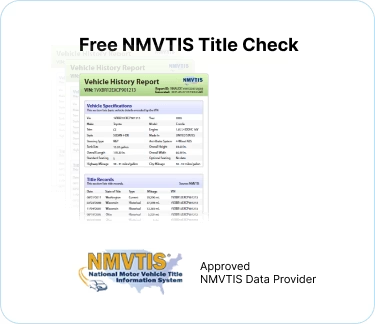
NMVTIS Title
History Check
Salvage/Rebuilt
Check
Accident
Check
Theft
Check
Open Lien
Check
Past Sale
Listings
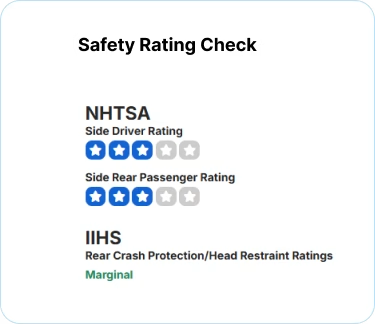
Safety
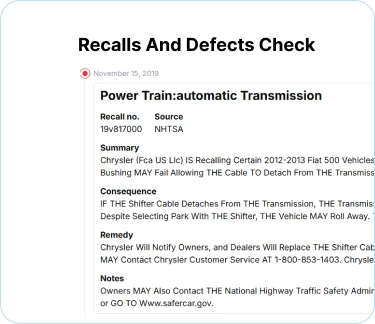
Recalls
Odometer
Check
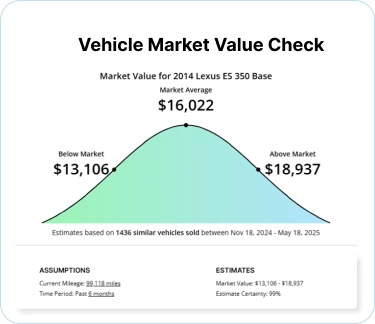
Market Price
Analysis

What Problems Does the 2007 Peterbilt 379 Have?

The 2007 Peterbilt 379, being the last year of its production run, encountered a significant challenge with the introduction of new EPA emissions standards. A frequently reported problem for the 2007 model year, and other trucks from this period, centers around the Diesel Particulate Filter (DPF) system and Exhaust Gas Recirculation (EGR) components. These systems, mandated for the first time in 2007, were notoriously problematic in their early iterations. Owners often report issues such as:
  • DPF Regeneration Failures: The DPF system can clog frequently, leading to forced regenerations, reduced power, or even derating of the engine if regeneration fails. Sensors, filters, and dosing valves within the system are common failure points.

  • EGR Valve and Cooler Problems: The EGR system, designed to reduce NOx emissions, can accumulate soot and carbon, leading to stuck valves, clogged coolers, and performance issues. This often results in expensive repairs and downtime.

  • Turbocharger Issues: Emissions system issues can place added stress on turbochargers, leading to premature wear or failure.

  • Fuel Injector Failures: While not exclusive to 2007, some of the engine platforms, especially the Caterpillar C15 ACERT and Cummins ISX, have had their share of injector-related problems over their long service lives, sometimes exacerbated by fuel quality or DPF issues.

  • Electrical Gremlins: Over time, like many older vehicles, electrical connections can degrade, leading to intermittent issues with lights, gauges, or accessory power.

Recalls specific to the 2007 Peterbilt 379 are typically related to components shared across the industry rather than the 379 itself. For example, recalls on specific Cummins or Caterpillar engines or Eaton transmissions might affect the 379. Owners should check the NHTSA database using their VIN for any outstanding recalls. Long-term reliability concerns, beyond the emissions systems, generally stem from typical wear and tear on a heavy-duty truck that has seen hundreds of thousands, if not millions, of miles. Air suspension components, steering linkages, braking systems, and various sensors will require replacement over time. The fundamental structure of the 379 – its frame, cab, and major driveline components (apart from early emissions tech) – are known for their robustness, making it a desirable platform for rebuilds or "glider kit" conversions, which often involve replacing the problematic 2007-era engine with a pre-emissions compliant one.

How long will the 2007 Peterbilt 379 last?

A well-maintained 2007 Peterbilt 379 can easily exceed 1,000,000 miles, with many owner-operators running them for 1,500,000 to 2,000,000 miles or more over 15-20+ years of service. Its long-term durability is a hallmark, thanks to a heavy-duty frame, robust axles, and proven driveline components. Owners who adhere to strict preventative maintenance schedules – including regular oil changes, valve adjustments, and chassis lubrication – significantly extend engine and component life. However, weaknesses over time typically involve the original 2007-era emissions equipment (DPF, EGR), which can become very costly to maintain or repair, sometimes leading owners to opt for "delete" solutions (where legal) or engine overhauls with pre-emissions components. Other long-term concerns include chassis rust, wear on suspension bushings, and the need for periodic engine and transmission rebuilds. Despite these, the core vehicle remains highly durable.

What Technology & Safety Features are Included?

For a 2007 heavy-duty commercial truck, the Peterbilt 379's built-in technology and features were primarily focused on operational functionality rather than advanced driver-assistance or infotainment. It was a utilitarian machine designed for work, not luxury tech.

Built-in Tech & Entertainment:
  • Instrumentation: The dashboard featured a classic array of analog gauges for critical engine and vehicle functions (speedometer, tachometer, oil pressure, coolant temp, voltage, air pressure, fuel level). Digital displays were minimal, perhaps a basic odometer or trip computer.
  • Audio System: Standard was a basic AM/FM radio, sometimes with a CD player. Owners frequently upgraded these to aftermarket units for better sound quality, satellite radio, or MP3 compatibility.
  • Climate Control: Manual air conditioning and heating systems were standard, with robust controls. Sleeper units often had separate climate controls.

Driver-Assistance & Safety Features:
  • Cruise Control: Basic electronic cruise control was standard, allowing drivers to maintain a set speed on highways.
  • Air Brakes: Standard across all Class 8 trucks, providing powerful and reliable stopping power. Anti-lock Braking System (ABS) was mandated by this time, significantly improving braking safety, especially on slippery surfaces.
  • Traction Control: Some trucks might have featured rudimentary traction control systems to aid in slippery conditions, though it wasn't as sophisticated as modern electronic stability control.
  • Adjustable Steering Column: Tilt and telescopic steering columns were common, allowing drivers to optimize their driving position.
  • Air-Ride Seats: Driver and often passenger seats were air-ride, crucial for comfort during long hours and acting as a primary form of passive vibration dampening.
  • Visibility: Large mirrors (often heated and electric adjustable) provided excellent rearward visibility, though blind spots inherent to large trucks still existed.

Optional Features: Beyond the standard equipment, optional features often included:
  • Enhanced sound systems
  • CB radios
  • Power windows and locks (not always standard on entry-level specs)
  • Integrated navigation systems were rare and rudimentary if present, often aftermarket additions.
  • Auxiliary power units (APUs) for climate control and power when the engine is off.

Crash-Test Ratings: Heavy-duty commercial trucks like the Peterbilt 379 are not subjected to the same standardized crash-test ratings (e.g., NHTSA or IIHS) as passenger vehicles. Their robust, heavy construction and large mass provide inherent protection to occupants in collisions with smaller vehicles, but they are not designed with crumple zones or advanced occupant restraint systems found in cars. Safety is primarily focused on preventing accidents through visibility, reliable braking, and driver alertness.

What Colors Options are Available?

We’re working on this section!
In the meantime, feel free to explore the other sections for more content.

2007 Peterbilt 379 Prices and Market Value

When new in 2007, a Peterbilt 379 typically retailed from approximately $100,000 for a basic day cab to well over $160,000 for a highly optioned sleeper model, with custom builds sometimes exceeding $200,000. Today, current used market prices vary wildly based on mileage, condition, engine type, emissions status, and maintenance history. A 2007 379 can fetch anywhere from $25,000 for a high-mileage unit needing work to $70,000+ for a meticulously maintained, "glider kit" converted, or pre-emissions engine swapped truck. Depreciation is significant over its initial years, like all commercial trucks. However, the 379 benefits from a strong cult following and its iconic status, which has somewhat stabilized its depreciation compared to less desirable models. Factors affecting resale value include the condition of the engine and driveline, the operational status of the 2007 emissions equipment, overall chassis and cab condition (rust, interior wear), and cosmetic appeal, especially for show trucks.

2007 Peterbilt 379 Cost of Ownership

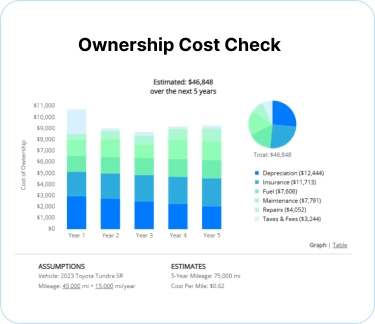
Owning a 2007 Peterbilt 379 is generally costly, not economical. Insurance for a commercial truck can be substantial, depending on usage, coverage, and driver history. Fuel costs are a major expense, given its 4.5-6.5 MPG average and large fuel tanks. Maintenance for a heavy-duty truck is ongoing and expensive; expect frequent oil changes, tire replacements, and chassis lubrication. Repairs, especially for the 2007-era emissions system (DPF, EGR), can be very costly, often thousands of dollars per incident. Long-term ownership involves potential engine/transmission rebuilds and continuous component replacement due to wear. While its initial purchase price might be attractive, the operational and maintenance costs demand significant budget and attention, making it a demanding vehicle to own and operate, particularly for those on tight margins.

2007 Peterbilt 379 Fuel Efficiency

Fuel Type Diesel
Fuel Capacity -
City Mileage -
Highway Mileage -

2007 Peterbilt 379 Warranty

Basic
Original warranty 0 months / No data
Estimated remaining Expired
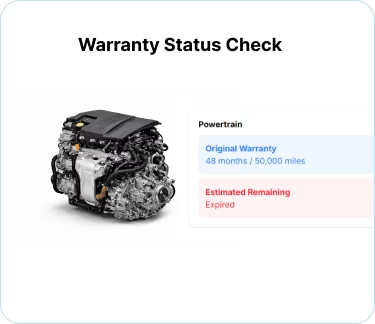
Powertrain
Original warranty 0 months / No data
Estimated remaining Expired
Rust
Original warranty 0 months / No data
Estimated remaining Expired

2007 Peterbilt 379 Insurance

Insurance for a 2007 Peterbilt 379 is moderately priced, reflecting its status as a Truck with strong safety ratings and
reasonable repair costs.

How Does the 2007 Peterbilt 379 Compare to Other Truck?

The 2007 Peterbilt 379 competes in the Class 8 heavy-duty truck segment, primarily against other conventional, long-nose trucks of its era, such as the 2007 Kenworth W900L and the 2007 Freightliner Classic XL.

Performance: All three, when equipped with similar engines (e.g., Cummins ISX, Cat C15, Detroit Diesel), offer comparable raw pulling power and highway cruising performance. The 379 and W900L are favored for their more robust "driver's truck" feel, while the Classic XL might have offered a slightly smoother ride due to different suspension setups. None excel in fuel efficiency compared to modern aerodynamic trucks due to their classic designs.

Features: The 379, W900L, and Classic XL all offered similar levels of interior customization, including various sleeper sizes, premium seating, and basic infotainment (AM/FM/CD). The 379 and W900L often came with more chrome and polished aluminum as standard or popular options, catering to owner-operators who valued aesthetics and customization. Driver-assistance tech was rudimentary across the board for this vintage, largely limited to ABS and basic cruise control. Newer trucks, like the Peterbilt 579 or Kenworth T680, offer vastly superior aerodynamics, advanced safety tech (collision mitigation, lane departure), and integrated infotainment.

Reliability: All trucks from this 2007 era faced challenges with the newly introduced EPA emissions equipment (DPF/EGR). Early iterations of these systems caused frequent issues across all manufacturers, impacting "reliability" in terms of uptime. However, the underlying chassis, engines (pre-emissions components), and transmissions in the 379, W900L, and Classic XL are generally considered robust and capable of high mileage with proper maintenance. The 379 and W900L often have a perceived edge in build quality and longevity due to their heavier construction.

Price: When new, prices were competitive across these models. In the used market today, the 379 often commands a slight premium over a comparable Classic XL, and sometimes even the W900L, due to its iconic status and strong demand from those who appreciate its classic styling. Used prices are heavily influenced by the condition of the engine and the status of the emissions system.

Alternatives:
  • Similar Alternative: The 2007 Kenworth W900L offers a very similar experience – iconic styling, strong performance, and robust build quality, often with similar reliability considerations regarding emissions.
  • More Modern Alternative: If reliability and fuel efficiency are paramount, a newer truck (e.g., 2010+ Peterbilt 386/389, or Peterbilt 579/Kenworth T680) would be a "better" alternative, as later emissions systems proved more reliable, and modern trucks offer significantly improved aerodynamics and driver amenities. However, these will come at a much higher purchase price.

Final Verdict: Is the 2007 Peterbilt 379 a Good Truck?

The 2007 Peterbilt 379 is ideal for the owner-operator or small fleet owner who deeply values classic American truck styling, robust build quality, and a customizable platform, more so than cutting-edge efficiency or advanced technology. It's a "driver's truck" that demands engagement.

It is worth buying, but under very specific conditions. As a used vehicle, potential buyers must be aware of the inherent challenges of the 2007 EPA emissions systems (DPF/EGR). Therefore, the ideal purchase would be a unit that has either had its emissions system meticulously maintained and recently serviced, or – where legally permissible and practical – converted to a "glider kit" with an older, pre-emissions engine. Look for units with comprehensive maintenance records. Avoid poorly maintained examples unless you plan a complete overhaul. For those willing to manage its higher running costs and potentially complex emissions system, the 379 offers unmatched pride of ownership and a timeless aesthetic.

2007 Peterbilt 379 Owner Reviews

0.00
Consumer Rating, Based on 0 Consumer Reviews
Overall rating
Cancel
Thank You for Your Review!

We truly appreciate the time and effort you took to share your experience with us.

Uh oh!

Something went wrong, please try again later.

Author Image
Eugene S

Eugene is an automotive enthusiast with over 15 years of experience in the used car market. As a writer at VINCheck.info, he brings deep industry insight and a passion for cars, helping readers make smart, informed decisions. Eugene has written hundreds of used car reviews and is known for breaking down complex automotive topics into clear, actionable advice. Over the years, he has driven and worked on a wide range of vehicles—starting with tuning street cars in his early days and eventually focusing on performance upgrades and reliability improvements. Today, he specializes in evaluating used vehicles through the lens of real-world ownership and enthusiast needs. A longtime fan of Porsche, Eugene especially appreciates vehicles that blend durability with driving enjoyment.