
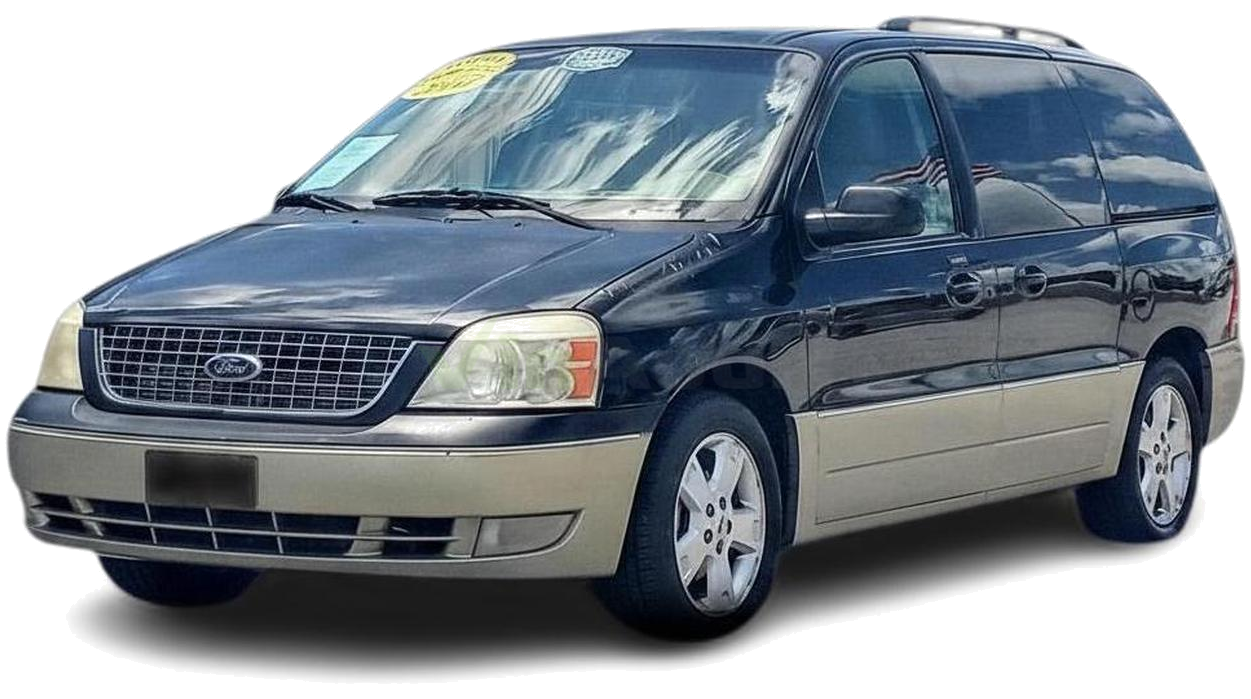
The Good
The 2004 Ford Freestar offered a comfortable, quiet ride and a highly spacious interior, perfect for large families or carpooling. Its practical sliding doors and adaptable seating appealed to practical buyers, while its accessible price point presented a strong value proposition, making it an emotionally reassuring choice for budget-minded parents seeking a reliable family hauler.
The Bad
Potential buyers of the 2004 Ford Freestar should watch out for transmission issues, particularly around 100,000 miles, as well as common power steering fluid leaks. Brake system wear is also a frequent concern. Rust on the rear wheel wells and suspension components can also be problematic, along with aging electrical components.
2004 Ford Freestar: Quick Overview
- Engine Options: The 2004 Ford Freestar was primarily offered with two V6 engine options: a 3.9-liter V6 and a more powerful 4.2-liter V6. Both engines were paired with a 4-speed automatic transmission.
- Horsepower:
- 3.9L V6: Approximately 193 horsepower at 4500 RPM.
- 4.2L V6: Approximately 201 horsepower at 4250 RPM. - Fuel Economy:
- 3.9L V6: EPA estimated around 17 MPG city / 23 MPG highway.
- 4.2L V6: EPA estimated around 16 MPG city / 22 MPG highway. - 0-60 Times:
- 3.9L V6: Generally in the range of 10.0-10.5 seconds.
- 4.2L V6: Generally in the range of 9.5-10.0 seconds. - Towing Capacity: When properly equipped with the towing package, the 2004 Ford Freestar had a maximum towing capacity of up to 3,500 pounds, making it capable for light trailers or recreational vehicles.
- Trim-Level Features:
- LX: The base model, typically including manual sliding doors, air conditioning, power windows and locks, and an AM/FM stereo with CD player. - - SE: Added features like body-color exterior trim, power driver's seat, cruise control, and often a more refined interior cloth.
- - SES: A sportier trim with unique styling cues, fog lights, upgraded wheels, and sometimes a rear spoiler, along with additional convenience features.
- - Limited: The top-tier luxury trim, featuring leather-trimmed seats, power sliding doors, automatic climate control, a premium audio system, alloy wheels, rear parking sensors, and often a DVD entertainment system and power-adjustable pedals as standard or optional.
- All trims generally offered ample seating for seven passengers with an optional third-row bench that folded flat into the floor, a significant convenience for cargo.
2004 Ford Freestar Specifications
Vehicle Information
| Year | 2004 |
| Make | Ford |
| Model | Freestar |
| Trim | - |
| Style | - |
| Type | Van |
| Category | Minivan |
Manufacturing Details
| Made In | Canada |
| Manufacturing City | OAKVILLE |
Dimensions
| Doors | 4-Door |
| Curb Weight | 4275 pounds |
| Gross Vehicle Weight Rating | - |
| Overall Height | 68.80 inches |
| Overall Length | 201.00 inches |
| Overall Width | 76.60 inches |
| Wheelbase Length | 120.80 inches |
| Standard Seating | 2 |
Engine & Performance
| Engine | 3.9L V6 |
| Engine Size | 3.9L |
| Engine Cylinders | 6 |
| Transmission | 4-Speed Automatic |
| Transmission Type | Automatic |
| Transmission Speeds | 4-Speed |
| Drivetrain | Front-Wheel Drive |
Additional Features
| Anti-Brake System | 4-Wheel ABS |
| Steering Type | Rack & Pinion |
Pricing
| Manufacturer Suggested Retail Price (MSRP) | $21,530 |
| Invoice Price | $19,617 |
| Delivery Charges | $685 |
Vehicle History Report
Specifications
History
Events
History Check
Check
Check
Check
Check
Listings
Recalls
Check
Analysis
What Problems Does the 2004 Ford Freestar Have?
Another common problem is with the power steering system. Leaks from the power steering pump, lines, and rack and pinion are prevalent, leading to fluid loss, noisy operation, and eventual steering difficulty. Owners often note a distinct whine from the pump.
Brake system issues are also common, with premature wear of rotors and pads, and sometimes issues with the ABS module or sensors, leading to warning lights or inconsistent braking.
Rust is a significant long-term concern, especially in regions with road salt. The rear wheel wells and rocker panels are particularly susceptible to rust formation, which can compromise structural integrity over time. Suspension components, such as control arms and sway bar links, also tend to wear out, leading to clunks and poor handling.
Electrical problems, though less critical than transmission issues, are also reported. These include malfunctioning power sliding doors, erratic gauge readings, climate control system glitches, and issues with the instrument cluster.
Regarding recalls, the 2004 Freestar had a significant recall related to the rear axle. A manufacturing defect could lead to axle fracture, potentially causing loss of vehicle control. Another recall addressed a potential issue with the lower control arm and ball joint, which could separate and affect steering. Additionally, there were recalls for issues with the third-row seat attachment points and potential for corrosion in the wiper motor linkage.
Overall, while some units prove durable with diligent maintenance, the 2004 Freestar often struggles with significant drivetrain and structural weaknesses that can lead to costly repairs in its later life.
How long will the 2004 Ford Freestar last?
Long-term durability is severely impacted by the propensity for transmission failure, which is arguably its weakest link. Other long-term weaknesses include persistent power steering leaks, suspension component wear, and increasing rust issues, especially in harsh climates. While the engine itself can be robust with regular oil changes, the ancillary systems and transmission often dictate the vehicle's longevity and cost of ownership over time. These vehicles rarely reach high mileage without at least one major component replacement.
What Technology & Safety Features are Included?
Driver-assistance features were quite basic. Rear parking sensors were an optional, but highly recommended, feature on higher trims, aiding in maneuvering the large minivan in tight spaces. Automatic headlights were also available.
Safety features included standard dual front airbags, anti-lock brakes (ABS), and a tire pressure monitoring system (TPMS) which was a relatively new inclusion for minivans at the time. Traction control was available as an option, providing additional stability in slippery conditions. However, side airbags were generally not standard across all trims and often remained an optional extra, which is a consideration compared to more modern vehicles.
Crash-test ratings provide valuable insight into its safety performance. The 2004 Ford Freestar received generally good ratings from the National Highway Traffic Safety Administration (NHTSA):
- Frontal Crash: Five stars for both driver and front passenger.
- Side Crash (front seat): Five stars.
- Side Crash (rear seat): Five stars.
These ratings indicate a strong performance in crash protection for its time. The Insurance Institute for Highway Safety (IIHS) rated the Freestar "Good" for moderate overlap front tests, which was commendable, but did not rate it for side impact or roof strength tests as thoroughly as modern vehicles are evaluated.
What Colors Options are Available?
2004 Ford Freestar Prices and Market Value
Depreciation has been steep due to several factors: its age, its general reputation for transmission issues and other reliability concerns, and the overall decline in demand for older minivans as consumer preferences shift towards SUVs. Factors affecting its minimal resale value include high mileage, visible rust, known mechanical problems (especially transmission), lack of maintenance records, and general wear and tear. A clean title and well-documented service history can help, but ultimately, its value is now largely at the bottom of the depreciation curve.
2004 Ford Freestar Cost of Ownership
2004 Ford Freestar Fuel Efficiency
2004 Ford Freestar Safety Rating
NHTSA
IIHS
2004 Ford Freestar Recalls & Defects
Power Train:automatic Transmission:torque Converter
Power Train:automatic Transmission
Seats
Steering:hydraulic Power Assist:hose, Piping, and Connections
Wheels:hub
Fuel System, Gasoline
2004 Ford Freestar Warranty
Basic
Powertrain
Rust
2004 Ford Freestar Insurance
reasonable repair costs.
How Does the 2004 Ford Freestar Compare to Other Van?
Performance: The Freestar's V6 engines offered decent power for everyday driving, comparable to the Chrysler/Dodge offerings, but generally fell short of the smoother, more refined power delivery of the Honda Odyssey or Toyota Sienna. Its ride comfort was good, but handling wasn't as agile as the Odyssey.
Features: In terms of features, the Freestar offered competitive amenities like power sliding doors and a DVD entertainment system on higher trims, matching most rivals. Its 'fold-flat' third row was a key selling point, similar to the Grand Caravan's Stow 'n Go (though the Freestar's system wasn't as refined). However, it often lacked some of the innovative storage or safety features found in Japanese competitors.
Reliability: This is where the Freestar significantly lagged. Its persistent transmission problems, power steering issues, and susceptibility to rust made it less reliable than the Honda Odyssey and Toyota Sienna, which are renowned for their long-term durability. The Chrysler/Dodge minivans also had their share of transmission and electrical issues, making them more comparable to the Freestar in terms of reliability concerns, though the Freestar's axle recall was a unique concern.
Price: The Freestar was often priced competitively, usually slightly below the Japanese rivals, both new and on the used market. This lower price point was its primary advantage, appealing to budget-conscious buyers.
Alternatives:
- Better Alternatives: For superior reliability, refinement, and long-term durability, the 2004-2006 Honda Odyssey and 2004-2007 Toyota Sienna are generally better choices, despite potentially higher used prices. They offer more robust powertrains and fewer common major mechanical failures.
- Similar Alternatives: If budget is the absolute top priority and you're prepared for potential repairs, a 2004-2007 Dodge Grand Caravan or Chrysler Town & Country offers similar practicality and price points, but also shares many of the reliability caveats of the Freestar, particularly concerning transmissions and electrical systems.
Final Verdict: Is the 2004 Ford Freestar a Good Van?
Is it worth buying? As a new vehicle, it offered decent value, but today, as a used vehicle, it's a conditional "yes." It's primarily worth considering if you find one in exceptional condition, ideally with documented transmission replacement or very low mileage, and if the price is extremely low (under $2,500). It's best bought as a used vehicle, given its significant depreciation.
Conditions for purchase include having an emergency fund for potential major repairs, or possessing mechanical skills for DIY fixes. Opting for higher trims like the Limited might offer more comfort features, but doesn't mitigate the underlying mechanical risks. It's not recommended for those seeking a trouble-free daily driver or long-term investment, due to its well-known Achilles' heel – the transmission.

Eugene S
Eugene is an automotive enthusiast with over 15 years of experience in the used car market. As a writer at VINCheck.info, he brings deep industry insight and a passion for cars, helping readers make smart, informed decisions. Eugene has written hundreds of used car reviews and is known for breaking down complex automotive topics into clear, actionable advice. Over the years, he has driven and worked on a wide range of vehicles—starting with tuning street cars in his early days and eventually focusing on performance upgrades and reliability improvements. Today, he specializes in evaluating used vehicles through the lens of real-world ownership and enthusiast needs. A longtime fan of Porsche, Eugene especially appreciates vehicles that blend durability with driving enjoyment.