The 1982 Alfa Romeo Spider is part of the iconic Series 3, known as the "Aerodinamica." This classic 2-door roadster, produced from 1982-1989, featured the Veloce and Graduate trims. New prices ranged approximately from $14,000 to $17,000. Its timeless Pininfarina design, exhilarating open-air driving experience, and the distinctive sound of its twin-cam engine make it a standout and enduringly popular choice among classic car enthusiasts.
The Good
Emotionally, the Spider offers a gorgeous Pininfarina design, an engaging driving experience with responsive handling, and a captivating engine note. For practical buyers, it features relatively simple mechanics for enthusiast DIY, reasonable fuel economy for its era, and solid appreciation potential as a classic, making it a valuable investment for well-maintained examples.
The Bad
Key weaknesses for the 1982 Alfa Romeo Spider include prevalent rust issues, especially in sills and floor pans, along with persistent electrical gremlins. Owners should also watch out for potential hydraulic clutch problems, carburetor tuning complexities (if not fuel injected), and the general degradation of rubber components over time.
1982 Alfa Romeo Spider: Quick Overview
- Engine Options: The 1982 Alfa Romeo Spider was primarily equipped with a single engine type in the U.S. market: a 2.0-liter (1962cc) DOHC (Double Overhead Camshaft) inline-4 cylinder engine. This engine was known for its lively character and free-revving nature. Depending on the specific market and fuel system (SPICA mechanical fuel injection or later carbureted versions), power output could vary.
- Horsepower: For the U.S. market 1982 model, equipped with mechanical fuel injection, horsepower typically ranged around 115-120 hp. This provided adequate performance for a lightweight roadster of its time, emphasizing driving engagement over raw power.
- Fuel Economy: Fuel economy figures are highly variable based on driving style and vehicle condition, but owners could generally expect around 20-25 miles per gallon (MPG) combined. This was competitive for a sports car from the early 1980s.
- 0-60 Times: The 0-60 mph acceleration for the 1982 Spider was in the range of approximately 9.5 to 10.5 seconds. While not blistering by modern standards, it offered a spirited feel, especially with the 5-speed manual transmission.
- Towing Capacity: The Alfa Romeo Spider was not designed for towing. Its lightweight construction and focus on sporty driving mean it has virtually no practical towing capacity, nor is it recommended.
- Trim-Level Features: The 1982 Spider was primarily offered in two main trims for the U.S. market: the Spider Veloce and the Spider Graduate.
- Spider Veloce: This was the more upscale trim, often featuring a more luxurious interior with leather seats, power windows, alloy wheels, and more refined interior appointments. It aimed to offer a sportier yet more comfortable experience.
- Spider Graduate: Positioned as a more entry-level and purist's version, the Graduate typically came with vinyl seats, steel wheels with hubcaps, and manual windows. It was a more basic, no-frills roadster, often chosen for its lower price point and simpler maintenance.
Both trims shared the same engine, 5-speed manual transmission, four-wheel disc brakes, independent front suspension, and a solid rear axle. The Series 3 "Aerodinamica" styling, characterized by its integrated front air dam, black rubber spoilers on the trunk lid, and larger rubber bumpers, was common across both trims for this model year.
1982 Alfa Romeo Spider Specifications
Vehicle Information
| Year | 1982 |
| Make | Alfa Romeo |
| Model | Spider |
| Trim | - |
| Style | Convertible |
| Type | Convertible |
| Category | Compact Car |
Manufacturing Details
| Made In | Italy |
| Manufacturing City | MILAN |
Dimensions
| Doors | 2-Door |
| Curb Weight | - |
| Gross Vehicle Weight Rating | - |
| Overall Height | - |
| Overall Length | - |
| Overall Width | - |
| Wheelbase Length | - |
| Standard Seating | - |
Engine & Performance
| Engine | 2L I4 |
| Engine Size | 2L |
| Engine Cylinders | 4 |
| Transmission | - |
| Transmission Type | - |
| Transmission Speeds | - |
| Drivetrain | Rear-Wheel Drive |
Additional Features
| Anti-Brake System | - |
| Steering Type | - |
Pricing
| Manufacturer Suggested Retail Price (MSRP) | - |
| Invoice Price | - |
| Delivery Charges | - |
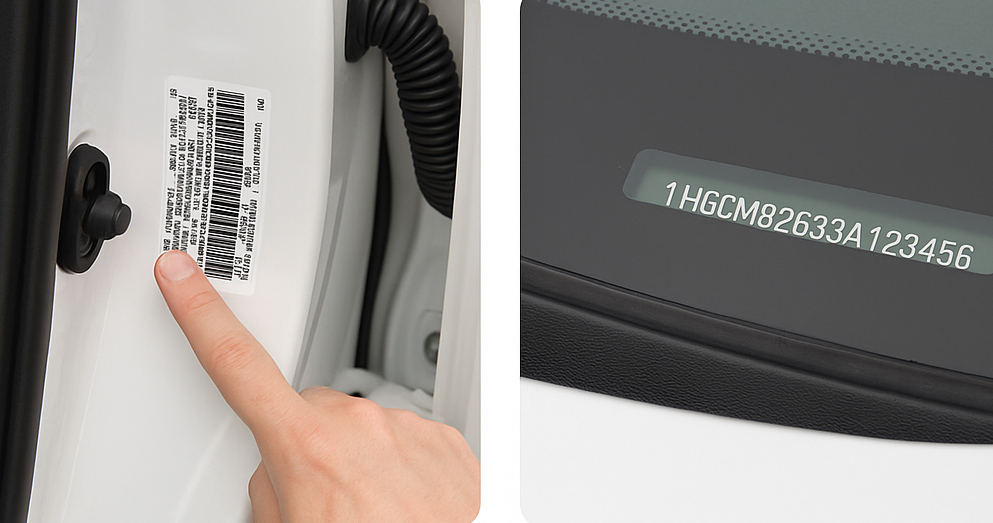
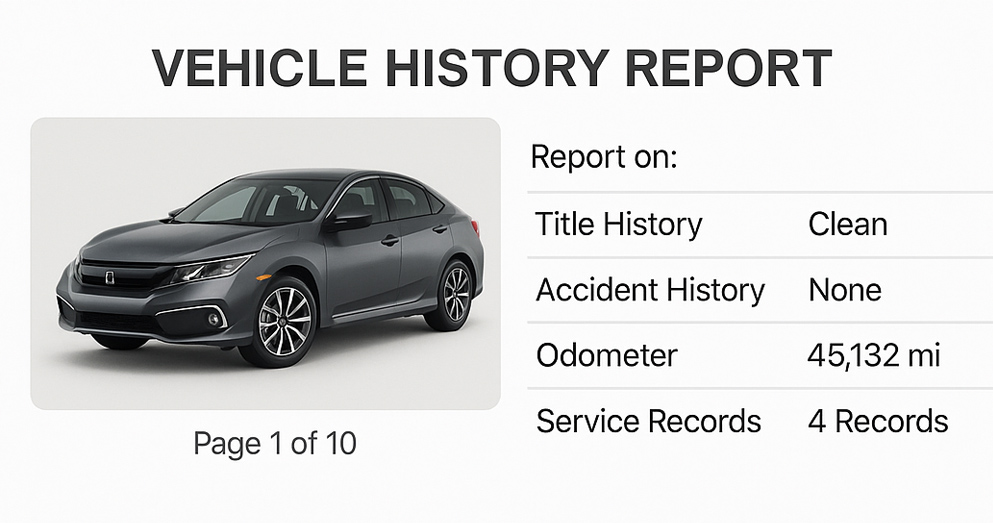
Vehicle History Report
Vehicle
Specifications
Specifications
Ownership
History
History
All History
Events
Events
NMVTIS Title
History Check
History Check
Salvage/Rebuilt
Check
Check
Accident
Check
Check
Theft
Check
Check
Open Lien
Check
Check
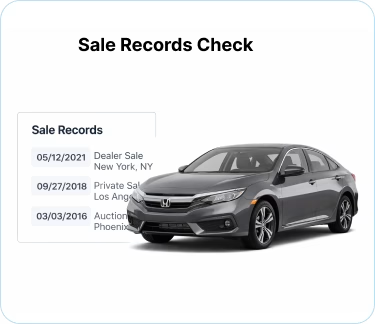
Past Sale
Listings
Listings
Safety
Recalls
Recalls
Odometer
Check
Check
Market Price
Analysis
Analysis
What Problems Does the 1982 Alfa Romeo Spider Have?
The 1982 Alfa Romeo Spider, while charming, comes with a set of frequently reported problems typical of classic Italian cars. Foremost among these is rust. These vehicles are notoriously prone to rust, particularly in critical areas such as the sills, floor pans, wheel arches, and trunk floor. Thorough inspection for body integrity is paramount before purchase.
Electrical issues are another common complaint. Owners frequently report problems with wiring degradation, malfunctioning gauges, faulty lights, and temperamental switches. Grounding problems are a regular source of headaches, often requiring a systematic tracing of circuits to resolve. The original SPICA mechanical fuel injection system, while effective when new, can be complex and expensive to maintain if not understood by a specialized mechanic. Many cars have been converted to aftermarket carburetors (like Webers), which introduce their own tuning challenges.
The hydraulic clutch system (master and slave cylinders) is prone to failure, leading to a soft or non-existent clutch pedal. Suspension and steering components, particularly bushings, wear out over time, resulting in vague steering and compromised handling dynamics. The steering box can also develop significant play, necessitating rebuilding or replacement.
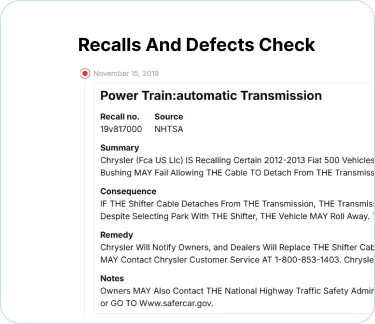
Convertible tops, being exposed to elements, often show wear, cracks in the plastic rear window, and leaks. The cooling system, if not meticulously maintained, can suffer from clogged radiators and degraded hoses, leading to overheating, a serious concern for any classic engine. Specific recalls for the 1982 model year are rare to find documented extensively compared to modern vehicles; however, general service bulletins might have addressed minor manufacturing quirks. Long-term reliability is directly proportional to maintenance. A neglected Alfa Spider will be a money pit, whereas a well-cared-for example can be a durable and rewarding classic, provided consistent preventative maintenance is performed.
Electrical issues are another common complaint. Owners frequently report problems with wiring degradation, malfunctioning gauges, faulty lights, and temperamental switches. Grounding problems are a regular source of headaches, often requiring a systematic tracing of circuits to resolve. The original SPICA mechanical fuel injection system, while effective when new, can be complex and expensive to maintain if not understood by a specialized mechanic. Many cars have been converted to aftermarket carburetors (like Webers), which introduce their own tuning challenges.
The hydraulic clutch system (master and slave cylinders) is prone to failure, leading to a soft or non-existent clutch pedal. Suspension and steering components, particularly bushings, wear out over time, resulting in vague steering and compromised handling dynamics. The steering box can also develop significant play, necessitating rebuilding or replacement.
Convertible tops, being exposed to elements, often show wear, cracks in the plastic rear window, and leaks. The cooling system, if not meticulously maintained, can suffer from clogged radiators and degraded hoses, leading to overheating, a serious concern for any classic engine. Specific recalls for the 1982 model year are rare to find documented extensively compared to modern vehicles; however, general service bulletins might have addressed minor manufacturing quirks. Long-term reliability is directly proportional to maintenance. A neglected Alfa Spider will be a money pit, whereas a well-cared-for example can be a durable and rewarding classic, provided consistent preventative maintenance is performed.
How long will the 1982 Alfa Romeo Spider last?
Estimating average mileage for a 1982 Alfa Romeo Spider is challenging, as many are now collector's items driven sparingly. However, with good maintenance habits, the robust 2.0-liter twin-cam engine is capable of exceeding 150,000 to 200,000 miles. Many examples are still in service today, over 40 years after manufacture, a testament to their inherent durability when cared for.
Long-term durability hinges significantly on proactive maintenance. Weaknesses over time primarily involve body rust, which can progressively worsen if not addressed early. Rubber components such as suspension bushings, door seals, and engine hoses degrade from age and UV exposure, necessitating regular replacement. Electrical wiring insulation can become brittle, leading to intermittent faults. Interior elements like dashboards and seat upholstery are also susceptible to cracking and wear due to sun exposure and age. Proactive care is key to longevity.
What Technology & Safety Features are Included?
The 1982 Alfa Romeo Spider, a product of its era, offers minimal "built-in tech" by modern standards. The instrumentation consists of essential analog gauges: a speedometer, tachometer, fuel level, oil pressure, and water temperature. Some models might have included a simple clock. There were no integrated digital displays, trip computers, or advanced electronic systems whatsoever. This simplicity is part of its charm for enthusiasts seeking an unadulterated driving experience.
For entertainment, the vehicle typically came with a basic AM/FM radio, often paired with a cassette player. Sound quality was rudimentary, delivered through simple speaker setups. Aftermarket stereo upgrades were very common, as owners sought to improve the audio experience.
Driver-assistance features were completely absent. There was no Anti-lock Braking System (ABS), traction control, stability control, or cruise control. Power steering was an optional feature on some higher trims (like the Veloce), but many cars came with manual steering, providing direct road feel.
Safety features were also very basic. The primary safety equipment included lap and shoulder seat belts for both occupants. Crumple zones, while present, were minimal compared to modern designs, offering limited occupant protection in severe impacts. There were no airbags, side-impact protection beams, or advanced occupant restraint systems. The dashboard was largely unpadded, and overall passive safety was dictated by the structural integrity of the chassis.
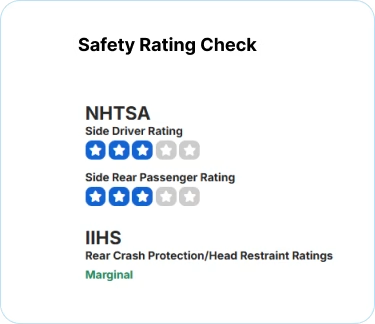
Optional features included air conditioning (often inefficient and a power drain), power windows (standard on Veloce, optional or unavailable on Graduate), leather seating surfaces (Veloce), alloy wheels (Veloce), and an optional removable hardtop for winter driving. Crash-test ratings for vehicles of this vintage are not available. Modern standardized crash testing by organizations like NHTSA or IIHS did not exist in the early 1980s, so there are no formal ratings for the 1982 Alfa Romeo Spider.
For entertainment, the vehicle typically came with a basic AM/FM radio, often paired with a cassette player. Sound quality was rudimentary, delivered through simple speaker setups. Aftermarket stereo upgrades were very common, as owners sought to improve the audio experience.
Driver-assistance features were completely absent. There was no Anti-lock Braking System (ABS), traction control, stability control, or cruise control. Power steering was an optional feature on some higher trims (like the Veloce), but many cars came with manual steering, providing direct road feel.
Safety features were also very basic. The primary safety equipment included lap and shoulder seat belts for both occupants. Crumple zones, while present, were minimal compared to modern designs, offering limited occupant protection in severe impacts. There were no airbags, side-impact protection beams, or advanced occupant restraint systems. The dashboard was largely unpadded, and overall passive safety was dictated by the structural integrity of the chassis.
Optional features included air conditioning (often inefficient and a power drain), power windows (standard on Veloce, optional or unavailable on Graduate), leather seating surfaces (Veloce), alloy wheels (Veloce), and an optional removable hardtop for winter driving. Crash-test ratings for vehicles of this vintage are not available. Modern standardized crash testing by organizations like NHTSA or IIHS did not exist in the early 1980s, so there are no formal ratings for the 1982 Alfa Romeo Spider.
What Colors Options are Available?
1982 Alfa Romeo Spider Prices and Market Value
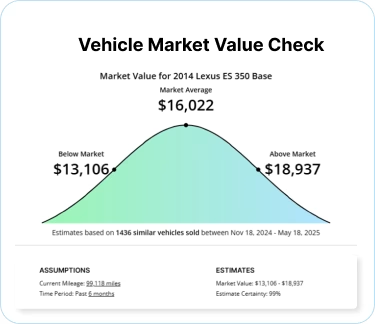
When new in 1982, the Alfa Romeo Spider Graduate retailed for approximately $13,500 to $14,500, while the more equipped Veloce trim was typically priced between $15,500 and $17,000. Like most cars, they initially depreciated significantly for the first 10-20 years.
However, as a classic, the 1982 Spider has appreciated. Current used market prices (as of 2024) widely vary: a project car might fetch $5,000-$15,000, a good driver $15,000-$25,000, and excellent to concours examples can command $25,000-$40,000+. Factors heavily affecting resale value include overall condition (especially a rust-free body), originality, documented maintenance history, the desirability of the Veloce trim, and functional mechanicals. A well-sorted example with minimal issues holds its value exceptionally well.
1982 Alfa Romeo Spider Cost of Ownership
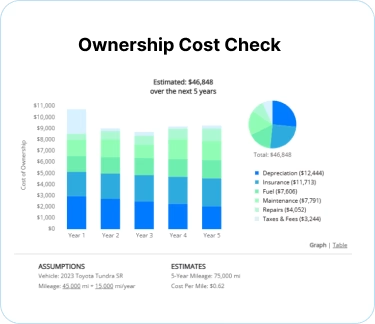
Insurance for a 1982 Alfa Romeo Spider can be surprisingly affordable, especially with classic car policies requiring limited mileage. Fuel costs are moderate, requiring premium unleaded, with economy around 20-25 MPG. However, maintenance and repair are where costs climb. Parts are generally available, but specialized knowledge is often required, leading to higher labor costs if you rely on mechanics. Finding an Alfa specialist is crucial. This is not an economical vehicle to own as a daily driver; it demands consistent preventative maintenance and prompt, potentially costly, repairs of age-related issues. Long-term ownership is costly, best suited for enthusiasts willing to invest time and money, or adept DIYers.
1982 Alfa Romeo Spider Fuel Efficiency
Fuel Type
Gasoline
Fuel Capacity
-
City Mileage
-
Highway Mileage
-
1982 Alfa Romeo Spider Warranty
Basic
Original warranty
0 months / No data
Estimated remaining
Expired
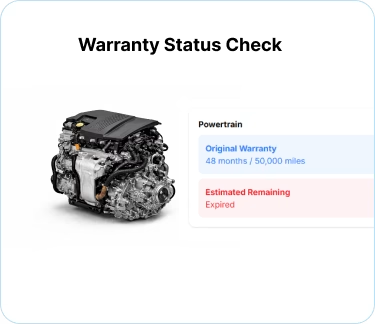
Powertrain
Original warranty
0 months / No data
Estimated remaining
Expired
Rust
Original warranty
0 months / No data
Estimated remaining
Expired
1982 Alfa Romeo Spider Insurance
Insurance for a 1982 Alfa Romeo Spider is moderately priced, reflecting its status as a Convertible with strong safety ratings and
reasonable repair costs.
How Does the 1982 Alfa Romeo Spider Compare to Other Convertible?
The 1982 Alfa Romeo Spider faced competition from various roadsters and sports cars of its era, each with distinct characteristics.
Against British rivals like the MG B Roadster (late models) and Triumph TR7/TR8, the Alfa generally offered a more sophisticated design (Pininfarina styling) and a more advanced DOHC engine. Performance-wise, the Alfa often felt more spirited than the aging MGB. The Triumph TR8, with its V8, was quicker, but reliability was notoriously poor across the TR7/TR8 range. The Alfa typically provided a more engaging, refined driving experience than its British counterparts, though it shared their propensity for electrical quirks.
The Fiat 124 Spider was a direct Italian contemporary, offering similar open-top motoring and engine characteristics. Both shared a flair for style but also a tendency towards rust and intricate mechanicals. The Alfa often held a slight edge in prestige and perceived sportiness.

Compared to German and Japanese offerings like the Porsche 924/944 or the Mazda RX-7 (first generation), the Alfa's standing varies. The Porsches generally boasted superior build quality, more robust performance (especially the 944), and a more sophisticated chassis, but at a significantly higher price point both new and used. The Mazda RX-7 offered a unique rotary engine experience, impressive handling, and often better reliability than most European sports cars of the period, presenting a strong value proposition.
In terms of features, all these vehicles were basic by modern standards. The Alfa held its own with standard items like a 5-speed manual, 4-wheel disc brakes, and available power windows on the Veloce.
Reliability of the Alfa was middling. It generally surpassed many British offerings but couldn't match the robustness of a well-maintained Mazda RX-7 or Porsche. Its price point was mid-range, more expensive than the MG/Fiat but significantly less than a Porsche.
Alternatives: For a similar classic Italian roadster feel, a later model Fiat 124 Spider could be considered. If reliability is a top priority over vintage charm, the first-generation Mazda Miata (MX-5) from the early 1990s provides a much more modern, dependable, and affordable open-top experience, though it lacks the Alfa's unique heritage. For a step up in performance and build quality (with a higher budget), a Porsche 944 Cabriolet could be an option.
Against British rivals like the MG B Roadster (late models) and Triumph TR7/TR8, the Alfa generally offered a more sophisticated design (Pininfarina styling) and a more advanced DOHC engine. Performance-wise, the Alfa often felt more spirited than the aging MGB. The Triumph TR8, with its V8, was quicker, but reliability was notoriously poor across the TR7/TR8 range. The Alfa typically provided a more engaging, refined driving experience than its British counterparts, though it shared their propensity for electrical quirks.
The Fiat 124 Spider was a direct Italian contemporary, offering similar open-top motoring and engine characteristics. Both shared a flair for style but also a tendency towards rust and intricate mechanicals. The Alfa often held a slight edge in prestige and perceived sportiness.

Compared to German and Japanese offerings like the Porsche 924/944 or the Mazda RX-7 (first generation), the Alfa's standing varies. The Porsches generally boasted superior build quality, more robust performance (especially the 944), and a more sophisticated chassis, but at a significantly higher price point both new and used. The Mazda RX-7 offered a unique rotary engine experience, impressive handling, and often better reliability than most European sports cars of the period, presenting a strong value proposition.


In terms of features, all these vehicles were basic by modern standards. The Alfa held its own with standard items like a 5-speed manual, 4-wheel disc brakes, and available power windows on the Veloce.
Reliability of the Alfa was middling. It generally surpassed many British offerings but couldn't match the robustness of a well-maintained Mazda RX-7 or Porsche. Its price point was mid-range, more expensive than the MG/Fiat but significantly less than a Porsche.
Alternatives: For a similar classic Italian roadster feel, a later model Fiat 124 Spider could be considered. If reliability is a top priority over vintage charm, the first-generation Mazda Miata (MX-5) from the early 1990s provides a much more modern, dependable, and affordable open-top experience, though it lacks the Alfa's unique heritage. For a step up in performance and build quality (with a higher budget), a Porsche 944 Cabriolet could be an option.
Final Verdict: Is the 1982 Alfa Romeo Spider a Good Convertible?
The 1982 Alfa Romeo Spider is ideal for the passionate enthusiast who cherishes classic Italian design, an engaging, unfiltered driving experience, and the unique character of Alfa Romeo. It's perfect as a weekend cruiser or a "fun" second car, appealing strongly to those who enjoy working on their vehicles or have access to a knowledgeable Alfa specialist.
Is it worth buying? Absolutely, but with caveats. This is not a car for the faint of heart or those seeking modern reliability and conveniences. It's always a used purchase, and condition is paramount. Buy the best, most rust-free example your budget allows, preferably with a comprehensive service history. Projects can quickly become financial black holes. Both Veloce and Graduate trims offer a similar core experience, with Veloce providing more luxury features. Avoid if seeking an economical daily driver, or if you're not prepared for the quirks and maintenance demands inherent in owning a classic Italian sports car.