
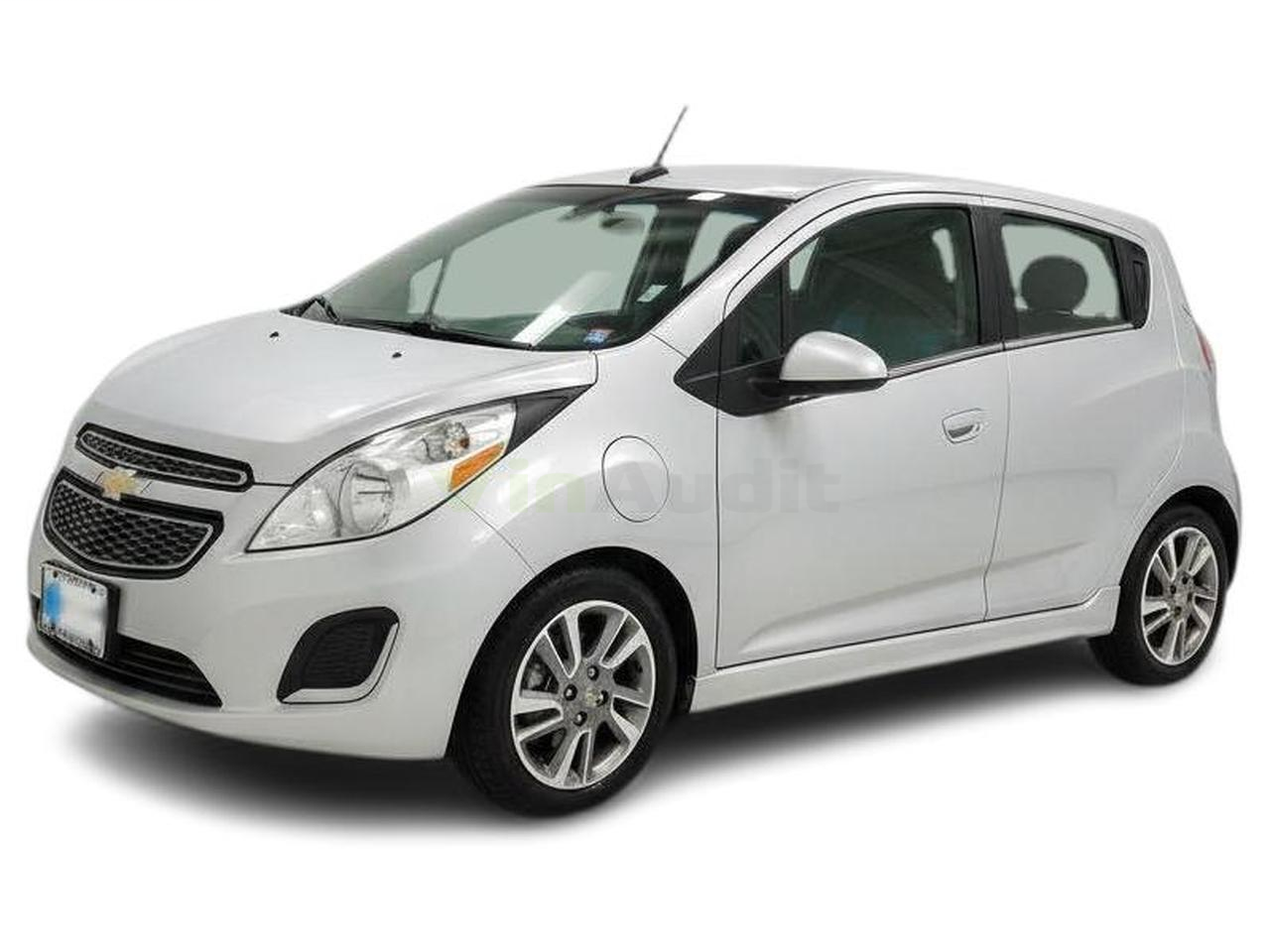
The Good
The 2014 Spark EV boasts impressive instant torque, delivering surprisingly brisk acceleration that makes city driving exhilarating. Its high efficiency leads to significantly lower "fuel" costs. Practical buyers appreciate its reliability and compact size for easy maneuverability and parking, while emotional buyers enjoy the quiet, smooth ride and zero emissions, contributing to a cleaner environment.
The Bad
Known weaknesses for the 2014 Spark EV include its limited all-electric range of 82 miles, which might not suit longer commutes. Its small interior and cargo space can be restrictive for some users. While it offered DC fast charging, Level 2 AC charging speeds were not the quickest, and its availability was restricted to specific states initially, limiting broader access.
2014 Chevrolet Spark EV: Quick Overview
- Engine Options: The 2014 Chevrolet Spark EV is exclusively powered by an advanced electric motor and a 21 kWh lithium-ion battery pack. There are no gasoline engine options for this model.
- Horsepower: The electric motor produces a robust 140 horsepower (104 kW), which is quite potent for a vehicle of its size.
- Torque: Early 2014 models were notable for their immense 400 lb-ft (542 Nm) of torque, later adjusted to a still impressive 327 lb-ft (443 Nm) for subsequent production. This massive torque is delivered instantly, contributing to its lively performance.
- Fuel Economy (EPA Equivalent): The EPA estimated fuel economy is 119 MPGe combined (128 MPGe city / 109 MPGe highway). Its all-electric range is rated at 82 miles on a full charge.
- 0-60 Times: Thanks to its potent electric motor and instant torque, the Spark EV can accelerate from 0 to 60 mph in approximately 7.6 seconds, making it one of the quickest subcompacts of its time.
- Towing Capacity: Like most small electric vehicles, the 2014 Chevrolet Spark EV is not rated or recommended for towing.
- Trim-Level Features:
- 1LT (Base Trim):
- 15-inch aluminum wheels
- MyLink infotainment system with a 7-inch touchscreen
- Bluetooth phone and audio connectivity
- Siri Eyes Free integration (for iPhones)
- USB port, auxiliary audio jack
- OnStar telematics with 4G LTE Wi-Fi hotspot (subscription required)
- Air conditioning
- Power windows and locks
- Cruise control
- Remote keyless entry
- Regenerative braking with an L-mode for increased energy recapture
- Standard DC fast-charging port (SAE Combo type) was often optional but became standard later in the model year production for some units. It was a crucial option to look for.
- 2LT (Upper Trim): Builds on the 1LT features, typically adding:
- Heated front seats
- Leatherette (synthetic leather) upholstery
- Leather-wrapped steering wheel
- Rear park assist (parking sensors)
- 1LT (Base Trim):
2014 Chevrolet Spark EV Specifications
Vehicle Information
| Year | 2014 |
| Make | Chevrolet |
| Model | Spark EV |
| Trim | - |
| Style | - |
| Type | - |
| Category | - |
Manufacturing Details
| Made In | - |
| Manufacturing City | - |
Dimensions
| Doors | - |
| Curb Weight | - |
| Gross Vehicle Weight Rating | - |
| Overall Height | - |
| Overall Length | - |
| Overall Width | - |
| Wheelbase Length | - |
| Standard Seating | - |
Engine & Performance
| Engine | - |
| Engine Size | - |
| Engine Cylinders | - |
| Transmission | - |
| Transmission Type | - |
| Transmission Speeds | - |
| Drivetrain | - |
Additional Features
| Anti-Brake System | - |
| Steering Type | - |
Pricing
| Manufacturer Suggested Retail Price (MSRP) | - |
| Invoice Price | - |
| Delivery Charges | - |
Vehicle History Report
Specifications
History
Events
History Check
Check
Check
Check
Check
Listings
Recalls
Check
Analysis
What Problems Does the 2014 Chevrolet Spark EV Have?
Frequently Reported Problems:
- 12-Volt Battery Issues: A common complaint across many EVs, the conventional 12-volt battery (which powers accessories and the car's computer systems) can drain prematurely or fail, especially if the car sits for extended periods. This can prevent the car from "starting" (booting up its electric system) even if the main high-voltage battery is charged. Regular checks and replacement every few years are advisable.
- Charging Port Malfunctions: Some owners have reported issues with the charging port, ranging from failure to latch correctly to internal connection problems, which can impede charging. This is less common but worth inspecting on a used model.
- Infotainment System Glitches: While the MyLink system was advanced for its time, some users experienced occasional freezes, reboots, or connectivity issues, especially with Bluetooth. Software updates can sometimes resolve these.
- HVAC System Noise/Malfunctions: Less frequent, but some owners have mentioned unusual noises from the heating, ventilation, and air conditioning system or reduced effectiveness over time.
- Power Steering Assist: A few isolated incidents of reduced power steering assist have been reported, potentially linked to electrical sensor issues.
Recalls:
For the 2014 model year, there have been a few recalls, primarily focusing on safety components:
- Airbag Recalls: Like many vehicles from the mid-2010s, the Spark EV was subject to recalls related to Takata airbag inflators. Owners should verify if these crucial safety recalls have been addressed.
- Seat Frame/Welds: Some recalls pertained to front seat frame welds that might not meet specifications, potentially affecting seat strength in a crash.
- Propulsion System Module: There was a recall related to the transmission (propulsion system) control module in some vehicles, where unintended gear changes could occur. This is an important one to ensure was fixed.
Long-Term Reliability Concerns:
The primary long-term concern for any older EV is battery degradation. While the Spark EV's 21 kWh battery is relatively small, Chevrolet equipped it with active liquid thermal management, which helps preserve battery health significantly better than some passively cooled rivals. Owners generally report good battery longevity, often retaining 85-95% of original capacity even after many years and miles. However, colder climates can temporarily reduce range and charging efficiency. Checking the battery health (State of Health - SOH) on a used model is recommended if possible.
How long will the 2014 Chevrolet Spark EV last?
Weaknesses over time are typically less about the core EV components and more about wear-and-tear items like suspension components, tires (which can wear faster due to instant torque), and the 12-volt accessory battery. The infotainment system's older technology might feel dated, but its core functionality persists. With diligent charging habits and routine checks, the Spark EV can be a dependable long-term commuter.
What Technology & Safety Features are Included?
Tech & Entertainment:
The centerpiece of its cabin technology was the Chevrolet MyLink infotainment system, presented on a vibrant 7-inch color touchscreen. This system offered:
- Bluetooth connectivity: For hands-free phone calls and audio streaming.
- USB port and auxiliary audio jack: For connecting external media devices.
- Pandora and Stitcher integration: Allowing control of these internet radio apps through the touchscreen when a smartphone was connected.
- Siri Eyes Free: For iPhone users, providing voice command access to phone functions without taking hands off the wheel.
- OnStar telematics: Standard with a trial subscription, offering automatic crash notification, roadside assistance, stolen vehicle assistance, and turn-by-turn navigation (via an advisor). Later models also integrated a 4G LTE Wi-Fi hotspot.
- Smartphone-based Navigation: While not having a built-in GPS, MyLink allowed for bring-your-own-navigation solutions, using apps on a connected smartphone for map guidance displayed on the screen.
Driver-Assistance Features:
Driver-assistance technology was more limited compared to modern EVs but included:
- Rear Park Assist: Available on the 2LT trim, providing audible warnings when backing up to obstacles.
Safety Features:
Chevrolet prioritized safety in the Spark EV:
- 10 Airbags: Including front, side-impact, head curtain (front and rear), and knee airbags for both driver and front passenger.
- StabiliTrak electronic stability control system: With traction control, helping maintain vehicle control in adverse conditions.
- Antilock disc brakes (ABS): On all four wheels, an upgrade from the gasoline Spark's rear drum brakes.
- OnStar Crash Response: Automatic notification to emergency services in the event of a crash.
Crash-Test Ratings:
The 2014 Chevrolet Spark EV performed reasonably well in crash tests:
- NHTSA (National Highway Traffic Safety Administration):
- Overall Safety Rating: 4 out of 5 Stars.
- Frontal Crash: 4 out of 5 Stars.
- Side Crash: 5 out of 5 Stars.
- Rollover: 4 out of 5 Stars.
- IIHS (Insurance Institute for Highway Safety): The IIHS rated the gasoline Spark (on which the EV is based) as "Good" in moderate overlap front, side, and roof strength tests. It received a "Marginal" rating in the small overlap frontal test. The Spark EV's heavier structure and battery placement might offer some differences, but generally, the ratings are indicative of its safety performance.
What Colors Options are Available?
2014 Chevrolet Spark EV Prices and Market Value
Today, in the used market, prices have depreciated considerably. Current used market prices for a 2014 Spark EV can range anywhere from $4,000 to $8,000, depending heavily on mileage, overall condition, and crucially, the health of its high-voltage battery.
Factors affecting resale value include the car's relatively limited 82-mile range, which is now considered low by modern EV standards, and its initial limited availability. The presence of DC fast charging is a significant value enhancer. Battery degradation, while generally well-managed in the Spark EV, is a key concern for buyers and can impact price. Its compact size and "city car" perception also contribute to its lower resale compared to larger EVs.
2014 Chevrolet Spark EV Cost of Ownership
2014 Chevrolet Spark EV Fuel Efficiency
2014 Chevrolet Spark EV Safety Rating
NHTSA
2014 Chevrolet Spark EV Insurance
reasonable repair costs.
How Does the 2014 Chevrolet Spark EV Compare to Other Vehicle?
Vs. 2014 Nissan Leaf:
- Performance: The Spark EV is significantly more powerful and quicker off the line (0-60 mph in ~7.6s vs. Leaf's ~10s) due to its higher torque.
- Features: Both offered similar infotainment and basic safety. The Leaf often had a slightly more upscale interior feel and more spacious rear seats/cargo.
- Reliability: Both are generally reliable. The Spark EV's active battery thermal management gives it an edge in battery longevity compared to the passively cooled Leaf, which often showed earlier capacity loss.
- Price: New, the Leaf was slightly more expensive. Used, the Spark EV often sells for less due to its smaller size and lower initial availability.
- Alternative: The Leaf offers more space and was more widely available, making it a better family EV. However, the Spark EV is superior for driving dynamics.
Vs. 2014 Fiat 500e:
- Performance: The 500e is also a strong performer for its size (0-60 mph in ~8.4s), but the Spark EV still has a noticeable edge in sheer torque and acceleration.
- Features: Both are city-focused, with similar tech. The 500e offers distinct Italian styling that some prefer.
- Reliability: Both have good EV reliability. The 500e also uses active thermal management for its battery.
- Price: New and used prices were often comparable, with styling being a major differentiator.
- Alternative: A very similar alternative; choice depends on styling preference and specific deal.
Vs. 2014 BMW i3 (BEV):
- Performance: The i3 is quicker (0-60 mph in ~7.0s) and offers a more premium, RWD driving experience.
- Features: The i3 is in a different class entirely with its premium materials, advanced tech, and unique carbon-fiber reinforced plastic (CFRP) construction.
- Reliability: The i3 is generally reliable but can have higher repair costs due to its complex construction and premium components.
- Price: Significantly more expensive new and used.
- Alternative: Not a direct rival due to price and segment, but offers a higher-end EV experience.
Recommendation: For a pure city commuter focusing on performance and value, the Spark EV is excellent. For more range and space, a used Nissan Leaf (2015+ with larger battery) could be a better alternative. The Fiat 500e is a direct, stylish competitor. If budget allows for premium, the i3 is a different league.
Final Verdict: Is the 2014 Chevrolet Spark EV a Good Vehicle?
It is definitely worth buying as a used vehicle, especially given its significant depreciation from new. Look for models with the DC fast-charging port, as it greatly enhances usability. While the 1LT trim offers great value, the 2LT adds nice-to-have comforts like heated seats.
The Spark EV excels in a "used vs. new" context due to its low current prices and robust battery thermal management. It's not suitable for frequent long-distance travel, but for daily errands and commuting, its surprising performance, low running costs, and strong reliability make it an excellent choice for budget-conscious EV adopters.

Simon A
Simon is a contributor to VinCheck, where he provides articles and reviews on various automotive topics. His work focuses on delivering accurate and up-to-date information about used cars, helping readers make informed decisions.