
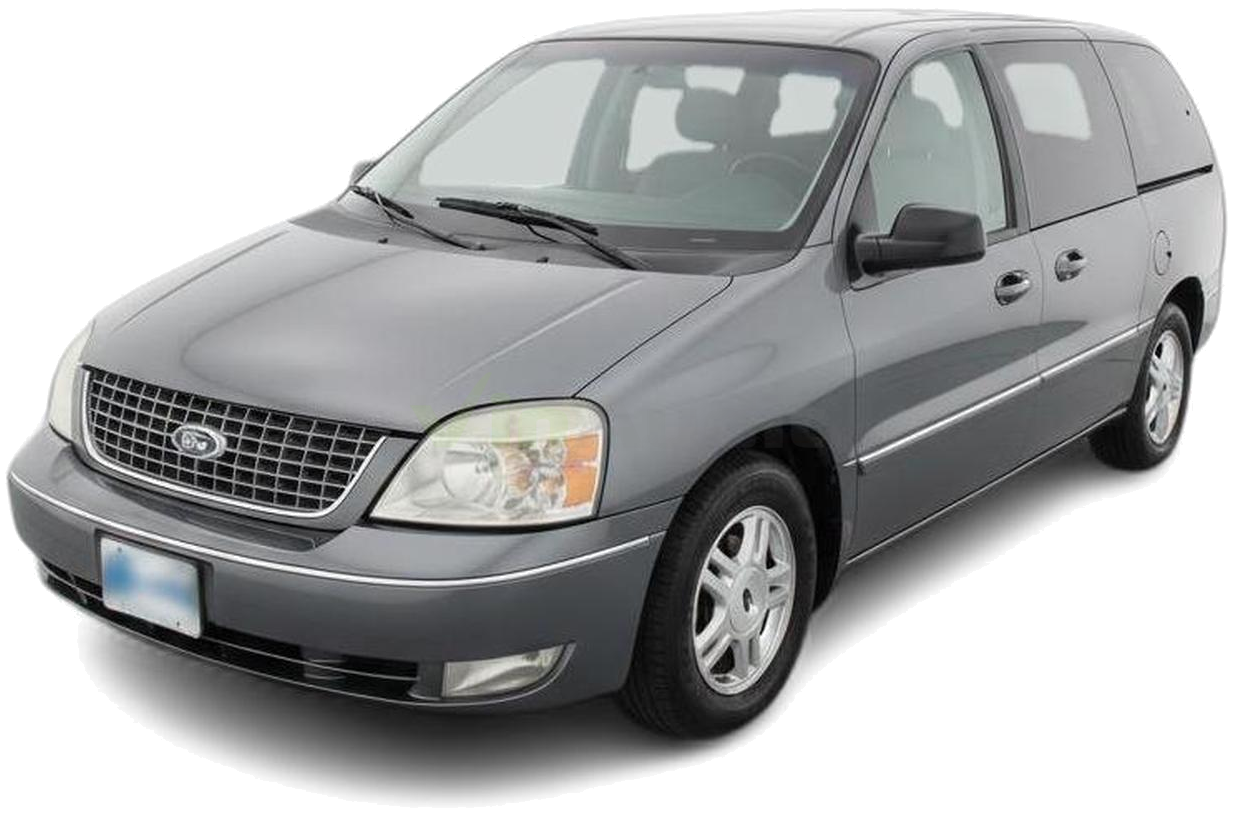
The 2006 Ford Freestar is a minivan that was produced by Ford from 2004 to 2007, succeeding the popular Windstar. It was available in various trims, including the S, SE, SEL, and Limited. New pricing at the time ranged from approximately $24,000 to over $35,000 depending on trim and options. Its popularity stemmed from Ford's established presence in the minivan market and its focus on family-friendly features and a comfortable ride.
The Good
The 2006 Ford Freestar offers a smooth and comfortable ride, spacious interior for families, and a decent value proposition. Practical buyers appreciate its potential for cargo hauling, while emotional buyers might connect with its family-oriented design and the sense of security it provides on the road.
The Bad
Potential buyers should be aware of common issues such as transmission problems, particularly with early models. Other areas to watch out for include potential electrical glitches, suspension wear, and rust, especially in harsher climates. Regular maintenance is crucial.
2006 Ford Freestar: Quick Overview
- Engine Options:
- 3.9L V6 (standard on some trims)
- 4.2L V6 (standard on higher trims, optional on others)
- Horsepower:
- 3.9L V6: Approximately 193 hp
- 4.2L V6: Approximately 201 hp
- Fuel Economy (EPA Estimated):
- Around 16 mpg city / 22 mpg highway (varies slightly by engine and drivetrain)
- 0-60 Times:
- Generally in the 8.5 - 10 second range, depending on engine and load.
- Towing Capacity:
- When properly equipped with a towing package, around 3,500 lbs.
- Trim-Level Features:
- S: Base model, typically includes essentials like air conditioning, power windows, and locks.
- SE: Adds features like cruise control, a better sound system, and sometimes second-row captain's chairs.
- SEL: Further enhances comfort with features like upgraded interior trim, power-adjustable driver's seat, and sometimes a power liftgate.
- Limited: The top-tier trim, offering premium features such as leather upholstery, heated front seats, a rear-seat entertainment system, dual-zone climate control, and premium audio.
- Optional Features: Available features across trims could include a rear-seat DVD player, power-folding third-row seat, roof rack, alloy wheels, and a navigation system (less common).
2006 Ford Freestar Specifications
Vehicle Information
| Year | 2006 |
| Make | Ford |
| Model | Freestar |
| Trim | - |
| Style | - |
| Type | Van |
| Category | Minivan |
Manufacturing Details
| Made In | Canada |
| Manufacturing City | OAKVILLE |
Dimensions
| Doors | 4-Door |
| Curb Weight | 4080 pounds |
| Gross Vehicle Weight Rating | 5880 pounds |
| Overall Height | 68.80 inches |
| Overall Length | 201.00 inches |
| Overall Width | 76.40 inches |
| Wheelbase Length | 120.80 inches |
| Standard Seating | 2 |
Engine & Performance
| Engine | 3.9L V6 |
| Engine Size | 3.9L |
| Engine Cylinders | 6 |
| Transmission | 4-Speed Automatic |
| Transmission Type | Automatic |
| Transmission Speeds | 4-Speed |
| Drivetrain | Front-Wheel Drive |
Additional Features
| Anti-Brake System | 4-Wheel ABS |
| Steering Type | Rack & Pinion |
Pricing
| Manufacturer Suggested Retail Price (MSRP) | $19,650 |
| Invoice Price | $18,232 |
| Delivery Charges | $730 |
Vehicle History Report
Vehicle
Specifications
Specifications
Ownership
History
History
All History
Events
Events
NMVTIS Title
History Check
History Check
Salvage/Rebuilt
Check
Check
Accident
Check
Check
Theft
Check
Check
Open Lien
Check
Check
Past Sale
Listings
Listings
Safety
Recalls
Recalls
Odometer
Check
Check
Market Price
Analysis
Analysis
What Problems Does the 2006 Ford Freestar Have?
The 2006 Ford Freestar, like many vehicles of its era, has some common issues that owners have reported. A prevalent concern revolves around the transmission. Some owners have experienced premature failure or rough shifting, particularly with the 4-speed automatic transmission. This can manifest as slipping gears, delayed engagement, or complete transmission failure. While not exclusive to the 2006 model year, it's a significant area to investigate when considering a purchase.
Another frequently cited problem is with the drivetrain components, including issues with the drive axles and wheel bearings, which can lead to noise or vibration.
Electrical gremlins are also a possibility. Owners have reported problems with the power door locks, power windows, and the instrument cluster malfunctioning. Sometimes, the check engine light may illuminate due to various sensor issues.
The braking system has also been a source of complaints, with some owners reporting premature wear of brake pads and rotors, and occasional issues with the ABS system.
Suspension components, such as struts and ball joints, can wear out over time, leading to a less comfortable ride and potential steering issues.
Regarding recalls, specific to the 2006 model year, some vehicles were subject to recalls related to potential airbag inflator issues and certain fuel system components. It is crucial to check the VIN with the NHTSA to ensure all recall work has been completed.
Long-term reliability can be a mixed bag. While some Freestars have proven to be dependable with diligent maintenance, others have succumbed to the aforementioned issues, particularly those not regularly serviced. The potential for transmission problems can significantly impact long-term ownership costs and reliability.
Another frequently cited problem is with the drivetrain components, including issues with the drive axles and wheel bearings, which can lead to noise or vibration.
Electrical gremlins are also a possibility. Owners have reported problems with the power door locks, power windows, and the instrument cluster malfunctioning. Sometimes, the check engine light may illuminate due to various sensor issues.
The braking system has also been a source of complaints, with some owners reporting premature wear of brake pads and rotors, and occasional issues with the ABS system.
Suspension components, such as struts and ball joints, can wear out over time, leading to a less comfortable ride and potential steering issues.
Regarding recalls, specific to the 2006 model year, some vehicles were subject to recalls related to potential airbag inflator issues and certain fuel system components. It is crucial to check the VIN with the NHTSA to ensure all recall work has been completed.
Long-term reliability can be a mixed bag. While some Freestars have proven to be dependable with diligent maintenance, others have succumbed to the aforementioned issues, particularly those not regularly serviced. The potential for transmission problems can significantly impact long-term ownership costs and reliability.
How long will the 2006 Ford Freestar last?
With consistent and proactive maintenance, a 2006 Ford Freestar can reasonably achieve an average mileage of 150,000 to 200,000 miles or more, translating to approximately 12-16 years of service given typical annual driving. Long-term durability is significantly influenced by how well the vehicle has been cared for. Weaknesses, particularly the transmission and potential for electrical issues, can emerge or worsen over time if not addressed promptly. Regular fluid changes for the transmission, engine, and brakes, along with addressing any minor suspension or electrical quirks as they arise, are key to extending its lifespan and maintaining its reliability over the years.
What Technology & Safety Features are Included?
The 2006 Ford Freestar offered a functional, albeit somewhat dated, suite of technology and safety features for its time. Standard on most trims were essentials like an AM/FM stereo with a CD player, and power accessories. Higher trims, particularly the SEL and Limited, could be equipped with more advanced entertainment options. These often included an optional rear-seat DVD entertainment system, which was a significant draw for families on long trips, providing a welcome distraction for children.
Climate control was also a consideration, with dual-zone manual climate control usually standard, and optional automatic dual-zone climate control available on top trims for enhanced passenger comfort.
In terms of driver-assistance features, the 2006 Freestar was relatively basic. Common features included cruise control and power steering. Advanced driver-assistance systems as we know them today (like lane departure warning or adaptive cruise control) were not available. Parking assistance, such as rear parking sensors, was an option on some higher trims.
Safety was a key focus, with standard features like anti-lock brakes (ABS) and front-seat airbags. Side curtain airbags for all three rows were also available on many models, significantly enhancing occupant protection in side-impact collisions. The Freestar was engineered with Ford's Safety Canopy system, designed to offer enhanced protection. Crash-test ratings from the NHTSA (National Highway Traffic Safety Administration) showed the Freestar performing reasonably well for its class and era. It typically received four out of five stars in frontal driver and passenger crash tests, and four stars in side-impact tests for the front and rear seats. These ratings provided a good indication of its structural integrity and protection capabilities.
Climate control was also a consideration, with dual-zone manual climate control usually standard, and optional automatic dual-zone climate control available on top trims for enhanced passenger comfort.
In terms of driver-assistance features, the 2006 Freestar was relatively basic. Common features included cruise control and power steering. Advanced driver-assistance systems as we know them today (like lane departure warning or adaptive cruise control) were not available. Parking assistance, such as rear parking sensors, was an option on some higher trims.
Safety was a key focus, with standard features like anti-lock brakes (ABS) and front-seat airbags. Side curtain airbags for all three rows were also available on many models, significantly enhancing occupant protection in side-impact collisions. The Freestar was engineered with Ford's Safety Canopy system, designed to offer enhanced protection. Crash-test ratings from the NHTSA (National Highway Traffic Safety Administration) showed the Freestar performing reasonably well for its class and era. It typically received four out of five stars in frontal driver and passenger crash tests, and four stars in side-impact tests for the front and rear seats. These ratings provided a good indication of its structural integrity and protection capabilities.
What Colors Options are Available?
2006 Ford Freestar Prices and Market Value
When new, the 2006 Ford Freestar had an MSRP that generally ranged from around $24,000 for base S models to upwards of $35,000 for well-equipped SEL and Limited trims. The minivan market experienced significant depreciation, and the Freestar is no exception. Currently, used market prices for a 2006 Ford Freestar can range from approximately $2,000 to $6,000, heavily dependent on mileage, condition, trim level, and maintenance history. Factors affecting resale value include the overall condition of the vehicle, particularly the transmission and any signs of rust. Vehicles with lower mileage, a comprehensive service record, and desirable features like a rear-seat entertainment system will command higher prices. The Freestar's reputation for potential reliability issues also plays a role in its depreciated value.
2006 Ford Freestar Cost of Ownership
The 2006 Ford Freestar is generally considered economical to own, especially on the used market. Insurance costs are typically moderate, falling in line with other minivans of its age. Fuel costs will depend on driving habits and the specific engine, but expect around 16-22 mpg combined. Routine maintenance, such as oil changes and tire rotations, is standard. However, repair costs can be a significant factor; potential transmission issues can lead to substantial expenses. While initially affordable, owners should budget for potential repairs, particularly to the transmission and electrical components, to avoid unexpected high ownership costs.
2006 Ford Freestar Fuel Efficiency
Fuel Type
Gasoline
Fuel Capacity
26.00 gallons
City Mileage
18 miles/gallon
Highway Mileage
24 miles/gallon
2006 Ford Freestar Safety Rating
NHTSA
IIHS
2006 Ford Freestar Recalls & Defects
Seats
Recall date
2013-03-07
Recall no.
13v081000
Source
NHTSA
Summary
Ford IS Recalling Certain Model Year 2004-2007 Freestar and Mercury Monterey Vehicles Manufactured From March 24, 2003, Through November 7, 2006, Equipped With A Third ROW Seat and Originally Sold IN, or Currently Registered IN, Connecticut, Delaware, Illinois, Indiana, Iowa, Maine, Maryland, Massachusetts, Michigan, Minnesota, Missouri, NEW Hampshire, NEW Jersey, NEW York, Ohio, Pennsylvania, Rhode Island, Vermont, West Virginia, Wisconsin and THE District OF Columbia. THE Third ROW Stowable Seat CAN Experience Corrosion and Structural Degradation AT THE Seat Anchor Mechanism Mounted TO THE Rear Wheel Wells. AS A Result OF THE Corrosion, THE Third ROW Seat MAY NOT Fully Latch Into ITS Seating Position.
Consequence
IN THE Event That THE Vehicle IS Crashed Into From THE Rear, AN Unlatched Seat MAY Increase THE Risk OF Personal Injury.
Remedy
Ford Will Notify Owners, and Dealers Will Install NEW Third ROW Seat Latch Striker Mounting Brackets, Free OF Charge. THE Recall Began ON March 28, 2013. Owners MAY Contact Ford Motor Company Customer Relationship Center AT 1-866-436-7332.
Notes
Ford's Recall Campaign Number IS 13s01.owners MAY Also Contact THE National Highway Traffic Safety Administration Vehicle Safety Hotline AT 1-888-327-4236 (Tty 1-800-424-9153), or GO TO Www.safercar.gov.
Structure:body:hatchback/Liftgate
Recall date
2006-03-09
Recall no.
06v069000
Source
NHTSA
Summary
ON Certain Vans Equipped With THE Power Liftgate Option, THE Power Liftgate Motor Automatically Disengages After THE Liftgate IS Powered Open.
Consequence
IN THE Event OF A Liftgate Strut Malfunction, THE Liftgate CAN Fall Freely With NO Prior Warning. Anyone Standing Beneath THE Liftgate MAY BE Injured IF THE Liftgate Falls.
Remedy
Dealers Will Reprogram THE Power Liftgate Module TO Reduce THE Likelihood That THE Liftgate Could Fall Free OF Charge. THE Recall Began ON March 15, 2006. Owners MAY Contact Ford AT 1-800-392-3673.
Notes
Ford Recall NO. 06s42.customers MAY Also Contact THE National Highway Traffic Safety Administration's Vehicle Safety Hotline AT 1-888-327-4236 (Tty 1-800-424-9153), or GO TO Http://Www.safercar.gov.
Fuel System, Gasoline
Recall date
2006-06-13
Recall no.
06e056000
Source
NHTSA
Summary
Certain Aftermarket Fuel Filters Sold Under THE Purolator Brand Name, P/N F65277, Shipped From January 16 Through June 2, 2006, FOR USE ON THE Above Listed Passenger Vehicles. DUE TO Incorrect Design, THE Quick Connectors MAY NOT Fully Seat With THE Tube Interface, Even Though THE Person Making THE Connection MAY Believe That THE Quick Connector IS Fully Attached.
Consequence
Failure OF This Connection Could Lead TO Fuel Spillage And, IN THE Presence OF AN Ignition Source, A Fire Could Occur.
Remedy
UFI Will Notify Owners and Replace THE Filters Free OF Charge. THE Recall Began ON August 4, 2006. Owners MAY Contact UFI Filters USA AT 800-230-5876.
Notes
This Recall Only Pertains TO UFI Filters USA (Purolator) Aftermarket Fuel Filters and HAS NO Relation TO ANY Original Equipment Installed ON THE Listed Passenger Vehicles.customers MAY Contact THE National Highway Traffic Safety Administration's Vehicle Safety Hotline AT 1-888-327-4236 (Tty: 1-800-424-9153); or GO TO Http://Www.safercar.gov.
2006 Ford Freestar Warranty
Basic
Original warranty
36 months / 36,000 miles
Estimated remaining
Expired
Powertrain
Original warranty
36 months / 36,000 miles
Estimated remaining
Expired
Rust
Original warranty
60 months / unlimited miles
Estimated remaining
Expired
2006 Ford Freestar Insurance
Insurance for a 2006 Ford Freestar is moderately priced, reflecting its status as a Van with strong safety ratings and
reasonable repair costs.
How Does the 2006 Ford Freestar Compare to Other Van?
The 2006 Ford Freestar competed in a crowded minivan segment against strong contenders like the Toyota Sienna, Honda Odyssey, and Chrysler Town & Country/Dodge Grand Caravan. In terms of performance, the Freestar's V6 engines offered adequate power for daily driving and hauling, but generally lagged behind the smoother, more refined powerplants found in the Sienna and Odyssey. Its ride quality was comfortable, a strong point for family transport.
Feature-wise, the Freestar offered a good array of family-oriented amenities, especially in higher trims, including available rear-seat entertainment. However, rivals like the Odyssey often provided more innovative seating configurations and a more modern interior design for the era. The Town & Country/Grand Caravan often led in sheer feature content and unique storage solutions like Stow & Go seating.
Reliability is where the Freestar faced its biggest challenges. While the Sienna and Odyssey built reputations for exceptional long-term reliability and fewer major mechanical issues, the Freestar, particularly concerning its transmission, was known to be less dependable. This is a significant drawback for buyers prioritizing peace of mind.
Price-wise, the Freestar typically offered a competitive entry price when new, and its used market prices are significantly lower than comparable models from Toyota or Honda, reflecting its reliability concerns. However, lower upfront cost can be offset by higher maintenance and repair bills over time.
Alternatives:
* Toyota Sienna: Generally considered the benchmark for minivan reliability, with a smooth ride and strong V6 engine. Often commands higher used prices.
* Honda Odyssey: Known for its versatile interior, engaging driving dynamics for a minivan, and strong reliability. Another model that holds its value well.
* Chrysler Town & Country / Dodge Grand Caravan: Offer a wide range of features, innovative seating (Stow & Go), and often a lower purchase price on the used market than Japanese rivals, though reliability can be more variable than Toyota/Honda.
Feature-wise, the Freestar offered a good array of family-oriented amenities, especially in higher trims, including available rear-seat entertainment. However, rivals like the Odyssey often provided more innovative seating configurations and a more modern interior design for the era. The Town & Country/Grand Caravan often led in sheer feature content and unique storage solutions like Stow & Go seating.
Reliability is where the Freestar faced its biggest challenges. While the Sienna and Odyssey built reputations for exceptional long-term reliability and fewer major mechanical issues, the Freestar, particularly concerning its transmission, was known to be less dependable. This is a significant drawback for buyers prioritizing peace of mind.
Price-wise, the Freestar typically offered a competitive entry price when new, and its used market prices are significantly lower than comparable models from Toyota or Honda, reflecting its reliability concerns. However, lower upfront cost can be offset by higher maintenance and repair bills over time.
Alternatives:
* Toyota Sienna: Generally considered the benchmark for minivan reliability, with a smooth ride and strong V6 engine. Often commands higher used prices.
* Honda Odyssey: Known for its versatile interior, engaging driving dynamics for a minivan, and strong reliability. Another model that holds its value well.
* Chrysler Town & Country / Dodge Grand Caravan: Offer a wide range of features, innovative seating (Stow & Go), and often a lower purchase price on the used market than Japanese rivals, though reliability can be more variable than Toyota/Honda.
Final Verdict: Is the 2006 Ford Freestar a Good Van?

The 2006 Ford Freestar is best suited for budget-conscious buyers seeking a spacious minivan for occasional family transport and cargo hauling, who are willing to accept a higher risk of potential mechanical issues. It's worth considering if found at a very low used price, provided a thorough pre-purchase inspection, especially of the transmission, is conducted. Opting for lower mileage, well-maintained examples, particularly SE or SEL trims for a balance of features and cost, is advisable. Avoid buying new, as it is a discontinued model with a less competitive standing today. If long-term reliability and peace of mind are paramount, investing in a comparable Toyota Sienna or Honda Odyssey, even with higher mileage or cost, is a wiser long-term decision.