
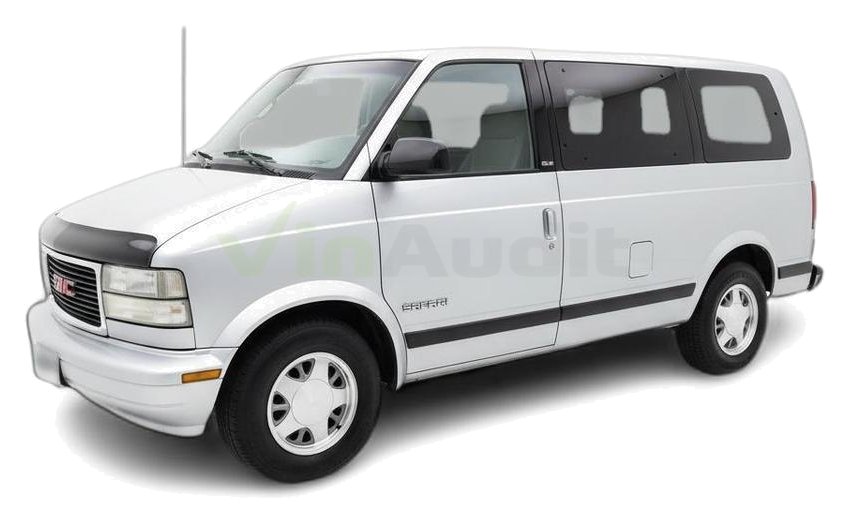
The 1995 GMC Safari, a sibling to the Chevrolet Astro, was a versatile full-size van produced from 1985 to 2005. Available in both standard and extended wheelbase versions, it offered cargo and passenger configurations. Key trims often included base, SLE, and SLT. Its popularity stemmed from its robust RWD platform, powerful V6 engines, and the ability to be optioned for hauling, passenger duty, or even camper conversions, making it a flexible choice for various needs.
The Good
The 1995 GMC Safari offers strong V6 performance, a rugged chassis for reliability, and surprisingly comfortable seating for passengers. Its utilitarian design is practical, and for its capabilities, it represents solid value, appealing to those seeking a dependable workhorse or a base for adventure.
The Bad
Potential buyers of the 1995 GMC Safari should watch out for aging suspension components, potential for rust in common areas, and the possibility of transmission issues if not properly maintained. Electrical gremlins can also surface in older vehicles.
1995 GMC Safari: Quick Overview
- Engine Options: The 1995 GMC Safari primarily came with a 4.3L (262 cu in) V6 engine.
- Horsepower: The standard 4.3L V6 typically produced around 160-190 horsepower, depending on the specific tune and configuration.
- Fuel Economy: Fuel economy was not a strong suit for the Safari. Expect estimates in the range of 13-16 MPG city and 17-20 MPG highway for RWD models. AWD versions would be slightly lower.
- 0-60 Times: Acceleration was generally leisurely, with 0-60 MPH times often in the 10-12 second range, depending on load and drivetrain.
- Towing Capacity: The Safari was capable of towing. With the proper equipment and engine, towing capacities could range from approximately 5,000 lbs up to 6,500 lbs or more, making it suitable for trailers and recreational vehicles.
- Trim-Level Features:
- Base: Typically included essential features like power steering, power brakes, AM/FM radio, and basic cloth upholstery.
- SLE (GMC's mid-level trim): Often added features such as air conditioning, cruise control, power windows, power door locks, upgraded interior trim, and sometimes captain's chairs in passenger versions.
- SLT (GMC's upscale trim): Further enhanced comfort and convenience with features like leather seating (optional), a premium sound system, upgraded exterior trim, fog lamps, and potentially a more refined suspension. Passenger versions could include rear climate control and entertainment options like a VCR.
Both cargo and passenger versions were available, with the passenger models offering various seating configurations and options for family or commercial use. All-wheel drive (AWD) was also an option for improved traction.
1995 GMC Safari Specifications
Vehicle Information
| Year | 1995 |
| Make | GMC |
| Model | Safari |
| Trim | - |
| Style | - |
| Type | Sport Utility Vehicle Van Extended; |
| Category | Cargo Van |
Manufacturing Details
| Made In | United States |
| Manufacturing City | PONTIAC |
Dimensions
| Doors | - |
| Curb Weight | - |
| Gross Vehicle Weight Rating | - |
| Overall Height | - |
| Overall Length | - |
| Overall Width | - |
| Wheelbase Length | - |
| Standard Seating | - |
Engine & Performance
| Engine | 4.3L V6 |
| Engine Size | 4.3L |
| Engine Cylinders | 6 |
| Transmission | - |
| Transmission Type | - |
| Transmission Speeds | - |
| Drivetrain | Rear-Wheel Drive |
Additional Features
| Anti-Brake System | - |
| Steering Type | - |
Pricing
| Manufacturer Suggested Retail Price (MSRP) | - |
| Invoice Price | - |
| Delivery Charges | - |
Vehicle History Report
Vehicle
Specifications
Specifications
Ownership
History
History
All History
Events
Events
NMVTIS Title
History Check
History Check
Salvage/Rebuilt
Check
Check
Accident
Check
Check
Theft
Check
Check
Open Lien
Check
Check
Past Sale
Listings
Listings
Safety
Recalls
Recalls
Odometer
Check
Check
Market Price
Analysis
Analysis
What Problems Does the 1995 GMC Safari Have?
The 1995 GMC Safari, like many vehicles of its era, is prone to certain common issues that owners should be aware of. One of the most frequently reported problems revolves around the transmission. Failures or issues with the transmission, particularly the 4L60-E automatic transmission, have been noted. This can manifest as slipping gears, delayed engagement, or complete failure. Regular fluid changes and proper maintenance are crucial to extending its lifespan, but even with care, it can be a weak point.
Another area of concern is the cooling system. Radiator leaks, heater core issues, and failing water pumps can lead to overheating, which can, in turn, cause more significant engine damage. Inspecting hoses for cracks and the radiator for corrosion is advisable. Suspension components are also a common wear item; worn ball joints, tie rod ends, and bushings can lead to poor handling, uneven tire wear, and clunking noises.
Rust is another prevalent issue, particularly in regions with harsh winters or high humidity. The rocker panels, wheel wells, and the frame beneath the vehicle are susceptible to corrosion. Thorough inspections for rust damage are essential when considering a purchase.
Electrical gremlins, while not always catastrophic, can be frustrating. Issues with power windows, door locks, instrument cluster lights, and sensors can arise as the vehicle ages. Diagnosing these can sometimes be complex.
While there haven't been widespread, model-year-specific recalls that stand out as particularly problematic for the 1995 model year compared to others in its production run, it's always recommended to check for any outstanding recalls with the NHTSA database using the vehicle's VIN. Long-term reliability is generally considered moderate; with diligent maintenance, these vans can last a long time, but they often require more attention to upkeep than newer vehicles due to their age and mechanical complexity.
Another area of concern is the cooling system. Radiator leaks, heater core issues, and failing water pumps can lead to overheating, which can, in turn, cause more significant engine damage. Inspecting hoses for cracks and the radiator for corrosion is advisable. Suspension components are also a common wear item; worn ball joints, tie rod ends, and bushings can lead to poor handling, uneven tire wear, and clunking noises.
Rust is another prevalent issue, particularly in regions with harsh winters or high humidity. The rocker panels, wheel wells, and the frame beneath the vehicle are susceptible to corrosion. Thorough inspections for rust damage are essential when considering a purchase.
Electrical gremlins, while not always catastrophic, can be frustrating. Issues with power windows, door locks, instrument cluster lights, and sensors can arise as the vehicle ages. Diagnosing these can sometimes be complex.
While there haven't been widespread, model-year-specific recalls that stand out as particularly problematic for the 1995 model year compared to others in its production run, it's always recommended to check for any outstanding recalls with the NHTSA database using the vehicle's VIN. Long-term reliability is generally considered moderate; with diligent maintenance, these vans can last a long time, but they often require more attention to upkeep than newer vehicles due to their age and mechanical complexity.
How long will the 1995 GMC Safari last?
The 1995 GMC Safari, with proper and consistent maintenance, can achieve significant mileage, often exceeding 200,000 miles and sometimes even reaching 250,000 to 300,000 miles. Owner data and anecdotal evidence suggest that vehicles that have had regular oil changes, transmission fluid flushes, and timely replacement of wear items can be remarkably durable. The V6 engine is generally robust. However, weaknesses tend to emerge over time, particularly in the transmission, suspension components, and the potential for rust. Neglecting maintenance, especially on the drivetrain and chassis, will significantly shorten its service life and lead to more costly repairs. Long-term durability is highly dependent on the owner's commitment to upkeep.
What Technology & Safety Features are Included?
The 1995 GMC Safari represented the technology and safety standards of its era, which were considerably more basic than modern vehicles. Standard features were generally limited, focusing on core functionality. On the tech and entertainment front, buyers could expect an AM/FM radio, often with a cassette player. Higher trims, particularly the SLT, offered optional upgrades like a CD player, which was a premium feature at the time. Rear-seat entertainment systems, like a VCR and flip-down screen, were also optional on some passenger configurations, catering to families on long trips.
Driver-assistance features were virtually nonexistent in the modern sense. Features like cruise control were available as options on higher trims, but advanced systems like ABS were often optional or part of specific packages, not standard across all models. The focus was on the fundamental driving experience rather than electronic aids.
Safety features in the 1995 Safari included seat belts (three-point belts in the front), airbags for the driver and front passenger, and anti-lock braking system (ABS) as an optional feature on many configurations. Side-impact door beams were also incorporated for structural integrity. Crash-test ratings from this era are less standardized and comprehensive than today's tests. While specific ratings for the 1995 model might be scarce, similar GM vans of the period generally performed moderately in front and side impacts, with some limitations in rollover resistance due to their high center of gravity. It's important to remember that safety technology has advanced significantly since the mid-90s, and the Safari would not meet current safety benchmarks.
Driver-assistance features were virtually nonexistent in the modern sense. Features like cruise control were available as options on higher trims, but advanced systems like ABS were often optional or part of specific packages, not standard across all models. The focus was on the fundamental driving experience rather than electronic aids.
Safety features in the 1995 Safari included seat belts (three-point belts in the front), airbags for the driver and front passenger, and anti-lock braking system (ABS) as an optional feature on many configurations. Side-impact door beams were also incorporated for structural integrity. Crash-test ratings from this era are less standardized and comprehensive than today's tests. While specific ratings for the 1995 model might be scarce, similar GM vans of the period generally performed moderately in front and side impacts, with some limitations in rollover resistance due to their high center of gravity. It's important to remember that safety technology has advanced significantly since the mid-90s, and the Safari would not meet current safety benchmarks.
What Colors Options are Available?
1995 GMC Safari Prices and Market Value
When new, the 1995 GMC Safari's price would have varied significantly based on trim level, wheelbase, and optional equipment. Base models might have started in the low $20,000s, while well-equipped passenger versions with AWD and luxury options could easily push into the high $20,000s or even $30,000s. As is typical for vehicles of this age, the Safari has experienced substantial depreciation. Current used market prices for a 1995 GMC Safari can range widely, from as little as $1,000-$2,000 for models in poor condition with high mileage, to $5,000-$8,000 or more for exceptionally well-maintained examples with lower mileage and desirable trims. Factors significantly affecting resale value include overall condition, maintenance history, rust presence, mileage, and the presence of desirable options like AWD or specific interior configurations. Well-documented maintenance and a clean body are paramount.
1995 GMC Safari Cost of Ownership
Owning a 1995 GMC Safari can be moderately economical, especially if purchased at a low used price. Insurance costs are generally reasonable for a vehicle of this age. Fuel costs, however, can be significant due to its V6 engine and less-than-stellar MPG. Maintenance and repair costs are where the expense can add up. While parts are generally available, the labor for some repairs, particularly transmission or complex electrical issues, can be substantial. Regular maintenance is key to preventing costly breakdowns. Overall, it's not the most economical vehicle to own in terms of fuel efficiency, but it can be cost-effective if you're handy with repairs or find a well-maintained example and perform diligent upkeep.
1995 GMC Safari Fuel Efficiency
Fuel Type
Gasoline
Fuel Capacity
-
City Mileage
-
Highway Mileage
-
1995 GMC Safari Recalls & Defects
Fuel System, Gasoline:storage:tank Assembly:mounting
Recall date
1994-10-04
Recall no.
94v188000
Source
NHTSA
Summary
THE Fuel Lines Attached TO THE Fuel Tank Were NOT Properly Tightened.
Consequence
These Fuel Lines CAN Loosen TO THE Point OF Allowing Fuel TO Leak From THE Lines Resulting IN A Vehicle Fire.
Remedy
Dealers Will Lower THE Fuel Tank and Tighten THE Fuel Tank Lines TO THE Proper Torque Value.
Notes
System: Fuel; Fuel Tank Assembly.vehicle Description: Passenger Vans Equipped With L35 Engines.note: IF Your Vehicle IS Presented TO AN Authorized Dealer ON AN Agreed Upon Service Date and THE Remedy IS NOT Provided Free OF Charge Within A Reasonable Time or THE Remedy Does NOT Correct THE Defect, Please Contact Chevrolet Truck AT 1-800-222-1020, or GMC AT 1-810-456-4547. Also, Contact THE National Highway Traffic Safety Administration's Auto Safety Hotline AT 1-800-424-9393.
Suspension:front:control Arm:lower ARM
Recall date
1995-09-13
Recall no.
95v175000
Source
NHTSA
Summary
These Vehicles Were Assembled With THE Left-Hand Lower Control Arm-To-frame Rear NUT NOT Tightened TO THE Specified Torque.
Consequence
Low Torque CAN Allow THE Attachment Bolt TO Loosen and Subsequently Fatigue and Break. This CAN Result IN Separation OF THE Left-Hand Control ARM From THE Frame Increasing THE Potential FOR A Vehicle Accident.
Remedy
Dealers Will Tighten THE Left-Hand Lower Control Arm-To- Frame Rear NUT TO THE Proper Torque Specification.
Notes
System: Suspension; Independent Front Control Arm; Lower.vehicle Description: Passenger Vans.note: Owners WHO Take Their Vehicles TO AN Authorized Dealer ON AN Agreed Upon Service Date and DO NOT Receive THE Free Remedy Within A Reasonable Time Should Contact Chevrolet AT 1-800-222-1020 or GMC AT 1-800-462-8782.also Contact THE National Highway Traffic Safety Administration's Auto Safety Hotline AT 1-800-424-9393.
Visibility:windshield Wiper/Washer
Recall date
2003-04-28
Recall no.
03v159000
Source
NHTSA
Summary
ON Certain Minivans, Pickup Trucks, and Sport Utility Vehicles With Certain Model-Engine Combinations, THE Windshield Wiper Motor MAY Fail DUE TO Cracked Solder Joints ON THE Controller Circuit Board. THE Windshield Wipers Could Work Intermittently or NOT AT All.
Consequence
IF This Were TO Occur During BAD Weather, Driver Visibility Would BE Reduced, Which Could Result IN A Crash.
Remedy
Dealers Will Replace THE Wiper Motor Circuit Board and Cover. Owner Notification Began ON June 19, 2003. Owners WHO Take Their Vehicles TO AN Authorized Dealer ON AN Agreed Upon Service Date and DO NOT Receive THE Free Remedy Within A Reasonable Time Should Contact Chevrolet AT 1-800-222-1020, GMC AT 1-800-462-8782, or Oldsmobile AT 1-800-442-6537.
Notes
GM Recall NO. 03023.customers CAN Also Contact THE National Highway Traffic Safety Administration's Auto Safety Hotline AT 1-888-Dash-2-dot (1-888-327-4236).
Exterior Lighting
Recall date
2006-03-23
Recall no.
06e026000
Source
NHTSA
Summary
Certain Pro-A Motors Corner Lamps, Turn Signals, and Headlights Sold AS Replacement Lamps FOR USE ON Certain Passenger Vehicles Listed Above. Some Combination Lamps That ARE NOT Equipped With Amber Side Reflectors Fail TO Conform TO Federal Motor Vehicle Safety Standard NO. 108, Lamps, Reflective Devices, and Associated Equipment.
Consequence
Without THE Amber Reflectors, THE Vehicle Will BE Poorly Illuminated, Possibly Resulting IN A Vehicle Crash Without Warning.
Remedy
Pro-A Motors Will Notify Owners and Offer TO Repurchase THE Lamps. THE Recall Began ON April 3, 2006. Owners MAY Contact Pro-A Motors AT 323-838-2988.
Notes
This Recall Only Pertains TO Pro-A Motors Aftermarket Lamps and HAS NO Relation TO ANY Original Equipment Installed ON THE Listed Passenger Vehicles.for More Information ON THE Lamp Model Numbers, Click ON Document Search and View Document Titled "lamp Model Numbers."customers MAY Contact THE National Highway Traffic Safety Administration's Vehicle Safety Hotline AT 1-888-327-4236 (Tty: 1-800-424-9153); or GO TO Http://Www.safercar.gov.
Fuel System, Gasoline
Recall date
2006-05-19
Recall no.
06e043000
Source
NHTSA
Summary
Certain Replacement Fuel Filters, Fram Brand Name P/N G3727, With Date Codes X52911 Through X60801 Sequentially or X600141 and A Mexico Country or Origin Marking ON THE Fuel Filter Housing Manufactured From October 18, 2005, Through March 21, 2006, Sold FOR USE ON THE Vehicles Listed Above and ON Certain School Buses. (TO SEE THE School Bus Engine Sizes, Click ON "document Search" and Then "bus Applications"). THE Connector ON THE Fuel Filter WAS NOT Manufactured TO Honeywell's Specification. AS A Result, THE O-Ring MAY NOT Seat Correctly ON THE Fuel Line.
Consequence
This Condition MAY Cause AN Inadequate Seal AT THE Connection, Potentially Leading TO A Fuel Leak. IN THE Presence OF AN Ignition Source, A Fire Could Occur.
Remedy
Honeywell Will Notify Owners and Replace THE Fuel Filters Free OF Charge. THE Recall Began ON October 18, 2006. Owners MAY Contact Fram Customer Service AT 1-800-890-2075 (Option 1).
Notes
This Recall Only Pertains TO Aftermarket Fram Fuel Filters and HAS NO Relation TO ANY Original Equipment Installed ON THE Vehicles Listed.customers MAY Contact THE National Highway Traffic Safety Administration's Vehicle Safety Hotline AT 1-888-327-4236 (Tty: 1-800-424-9153); or GO TO Http://Www.safercar.gov.
Fuel System, Gasoline:delivery:hoses, Lines/Piping, and Fittings
Recall date
2006-05-18
Recall no.
06e041000
Source
NHTSA
Summary
Certain R&b, Inc. Central Multiport Fuel Injection (Cmfi) Fuel Return Lines, Models Help 55163, Napa Balkamp 700-3270, and THE Connection 2560001, Sold FOR USE AS Replacement Equipment FOR THE Vehicles Listed Above. THE Fuel Return Line HAS A Mechanical Bleed Valve Which WAS NOT Installed AT THE Proper Torque.
Consequence
A Fuel Leak CAN Occur AT THE Valve, Possibly Resulting IN A Fire.
Remedy
R&b, Inc. Will Notify Owners and AT THE Customers Request, Either Replace THE Fuel Line or Offer A Full Refund. THE Recall Began ON MAY 4, 2006. Owners MAY Contact R&b, Inc. AT 215-712-5330.
Notes
This Recall Only Pertains TO R&b, Inc. Aftermarket Cmfi Return Fuel Lines and HAS NO Relation TO ANY Original Equipment Installed ON THE Listed Passenger Vehicles.customers MAY Contact THE National Highway Traffic Safety Administration's Vehicle Safety Hotline AT 1-888-327-4236 (Tty: 1-800-424-9153); or GO TO Http://Www.safercar.gov.
1995 GMC Safari Insurance
Insurance for a 1995 GMC Safari is moderately priced, reflecting its status as a Sport Utility Vehicle Van Extended; with strong safety ratings and
reasonable repair costs.
How Does the 1995 GMC Safari Compare to Other Sport Utility Vehicle Van Extended;?
The 1995 GMC Safari competed in the full-size van segment against rivals like the Ford Econoline and the Dodge Ram Van. In terms of performance, the Safari's 4.3L V6 provided respectable power and torque, often feeling more refined than some base engines in competitors, and its RWD/AWD platform offered good traction. The Ford Econoline, particularly with its V8 options, might have offered slightly more raw power for heavy-duty hauling, while the Dodge Ram Van offered a range of engine choices and a different driving dynamic.
Features on the 1995 Safari were comparable for the era. While basic trims were utilitarian, higher-end SLE and SLT trims offered amenities like cruise control, power accessories, and improved interior appointments that were on par with the Ford and Dodge offerings of the time. None of these vehicles offered advanced technology by today's standards; features were focused on comfort and convenience for the period.
Reliability is a mixed bag across these vans. The Safari, with its robust chassis, could be reliable if maintained, though transmission issues were a common concern, as they could be with competitors. The Ford Econoline often had a reputation for durability, particularly its powertrains, but could also be prone to rust. Dodge vans of this era had their own set of quirks and potential issues. Generally, none were immune to age-related problems.
Price-wise, the Safari was competitively positioned. Used prices for all these vans are now relatively low, making them budget-friendly options. The deciding factor often comes down to the specific condition and maintenance history of an individual vehicle.
Alternatives:
Features on the 1995 Safari were comparable for the era. While basic trims were utilitarian, higher-end SLE and SLT trims offered amenities like cruise control, power accessories, and improved interior appointments that were on par with the Ford and Dodge offerings of the time. None of these vehicles offered advanced technology by today's standards; features were focused on comfort and convenience for the period.
Reliability is a mixed bag across these vans. The Safari, with its robust chassis, could be reliable if maintained, though transmission issues were a common concern, as they could be with competitors. The Ford Econoline often had a reputation for durability, particularly its powertrains, but could also be prone to rust. Dodge vans of this era had their own set of quirks and potential issues. Generally, none were immune to age-related problems.
Price-wise, the Safari was competitively positioned. Used prices for all these vans are now relatively low, making them budget-friendly options. The deciding factor often comes down to the specific condition and maintenance history of an individual vehicle.
Alternatives:
- Similar: The Chevrolet Astro is virtually identical to the GMC Safari and would be an excellent alternative if a comparable model is found. The Ford Econoline (E-Series) is a strong contender, especially if more V8 power is desired, though it can be thirstier. The Dodge Ram Van is another option, offering a different styling and potential engine configurations.
- Considerations: For those prioritizing modern safety and technology, a used minivan like a Toyota Sienna or Honda Odyssey from the late 1990s or early 2000s might be a better, albeit smaller, alternative. For true cargo hauling or larger passenger needs, newer full-size vans are vastly superior but come at a much higher cost.
Final Verdict: Is the 1995 GMC Safari a Good Sport Utility Vehicle Van Extended;?

The 1995 GMC Safari is ideal for budget-conscious buyers seeking a versatile vehicle for hauling cargo, passenger transport, or as a base for DIY projects and camper conversions. It's best suited for those who value utility and a sturdy platform over modern amenities and fuel efficiency. Whether it's worth buying hinges heavily on its condition; a well-maintained example, especially an extended wheelbase version or an AWD model, can be a fantastic value. Avoid models with known transmission issues or significant rust. It is only advisable to buy used. Focus on lower-mileage, regularly serviced units, preferably with documented maintenance history. For its intended purpose, and at the right price point, a 1995 Safari can still be a practical and capable vehicle.