The 2017 Harley-Davidson VRSCDX, part of the V-Rod family, is a power cruiser known for its aggressive styling and potent performance. Produced from 2007 to 2017, the VRSCDX, often called the Night Rod Special, was a flagship model. Its muscular silhouette, low-slung profile, and custom chopper-esque aesthetics made it a standout. It offered a premium experience within the Harley-Davidson lineup, typically positioned at the higher end of their pricing spectrum. Its popularity stems from its unique blend of American cruiser heritage with a European-engineered, high-revving engine, offering a different kind of Harley ride.
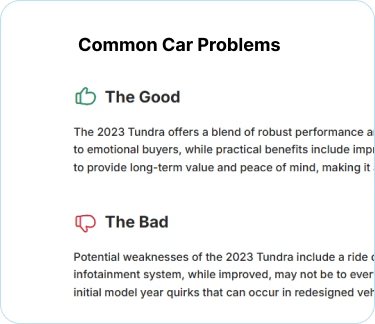
The Good
The 2017 Harley-Davidson VRSCDX boasts exhilarating performance from its potent V-twin, striking, aggressive design that turns heads, and surprisingly good handling for its class. It offers a visceral riding experience appealing to emotion, while its robust build and reliable engine appeal to practical buyers.
The Bad
Potential owners of the 2017 Harley-Davidson VRSCDX should be aware of its firm suspension, which can impact comfort on rough roads. Some riders find the riding position aggressive for long distances. Also, the exhaust note can be restrictive in stock form, prompting aftermarket modifications.

2017 Harley-Davidson VRSCDX: Quick Overview
- Engine: Revolution 1250cc (1247cc) liquid-cooled, 50-degree V-twin
- Horsepower: Approximately 125 hp @ 8,000 rpm
- Torque: Approximately 83 lb-ft @ 6,500 rpm
- Fuel Economy: Estimated around 30-35 mpg combined, though this can vary significantly with riding style.
- 0-60 mph: Typically in the 3.5 to 4.0-second range, depending on rider and conditions.
- Top Speed: Around 150 mph, limited by gearing and aerodynamics.
- Transmission: 5-speed manual
- Clutch: Hydraulically actuated, wet multi-plate
- Final Drive: Belt drive
- Brakes: Dual 300mm front discs with Brembo 4-piston calipers; Single 300mm rear disc with Brembo 2-piston caliper. ABS was typically standard or an option.
- Suspension:
- Front: 43mm inverted forks with 4.0 inches of travel.
- Rear: Dual shocks with adjustable preload and 3.4 inches of travel.
- Towing Capacity: Not applicable. This is a performance cruiser, not designed or equipped for towing.
- Fuel Tank Capacity: 5 gallons (18.9 L)
- Wheelbase: 67.1 inches (1704 mm)
- Seat Height: 25.6 inches (650 mm)
- Dry Weight: Approximately 636 lbs (288 kg)
- Trim-Level Features (VRSCDX - Night Rod Special):
- Aggressive styling with a blacked-out finish on many components (engine, exhaust, wheels).
- Forward-mounted foot controls and drag-style handlebars for a commanding riding position.
- Wide 240mm rear tire for a muscular stance.
- Color-matched radiator shrouds and tail section.
- Satin chrome exhaust pipes.
- Digital instrumentation integrated into the handlebar riser.
- Michelin Scorcher tires.
- LED taillight and turn signals.
2017 Harley-Davidson VRSCDX Specifications
Vehicle Information
| Year | 2017 |
| Make | Harley-Davidson |
| Model | VRSCDX |
| Trim | - |
| Style | - |
| Type | Motorcycle |
| Category | Motorcycle |
Manufacturing Details
| Made In | United States |
| Manufacturing City | KANSAS CITY |
Dimensions
| Doors | - |
| Curb Weight | - |
| Gross Vehicle Weight Rating | - |
| Overall Height | - |
| Overall Length | - |
| Overall Width | - |
| Wheelbase Length | - |
| Standard Seating | - |
Engine & Performance
| Engine | 1250CC |
| Engine Size | 1250L |
| Engine Cylinders | 2 |
| Transmission | - |
| Transmission Type | - |
| Transmission Speeds | - |
| Drivetrain | - |
Additional Features
| Anti-Brake System | - |
| Steering Type | - |
Pricing
| Manufacturer Suggested Retail Price (MSRP) | - |
| Invoice Price | - |
| Delivery Charges | - |
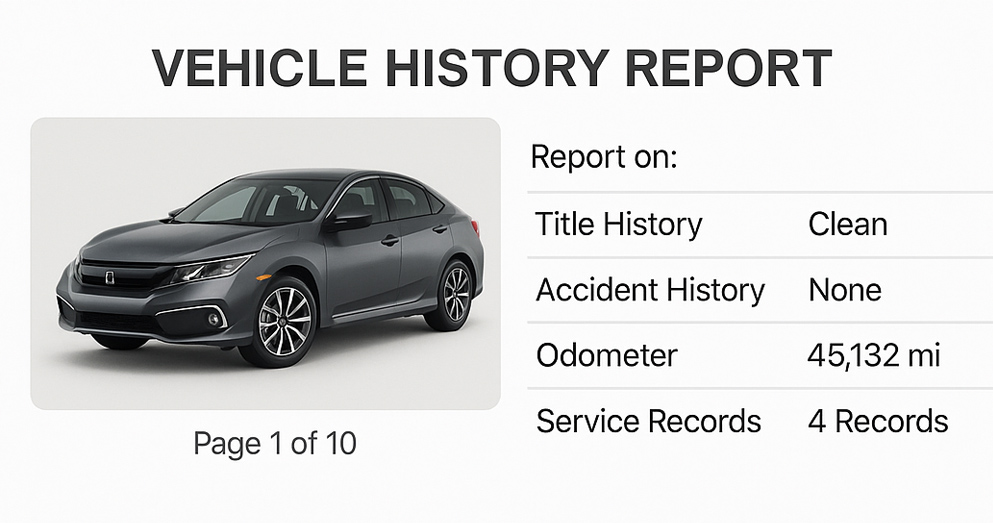
Vehicle History Report
Vehicle
Specifications
Specifications
Ownership
History
History
All History
Events
Events
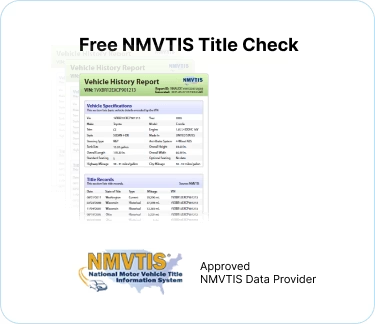
NMVTIS Title
History Check
History Check
Salvage/Rebuilt
Check
Check
Accident
Check
Check
Theft
Check
Check
Open Lien
Check
Check
Past Sale
Listings
Listings
Safety
Recalls
Recalls
Odometer
Check
Check
Market Price
Analysis
Analysis
What Problems Does the 2017 Harley-Davidson VRSCDX Have?
The 2017 Harley-Davidson VRSCDX, being part of the V-Rod lineage, generally benefits from a well-engineered platform developed in collaboration with Porsche. However, like any motorcycle, there are common points of attention and potential issues that owners might encounter over time. One area that sometimes arises is the transmission, specifically with clutch engagement or gear selection, though this is not rampant and often related to maintenance or riding style. Some owners have reported minor electrical gremlins, such as issues with the fuel pump or sensor readings, which can be intermittent and challenging to diagnose. Overheating, while not a widespread epidemic, can occur under extreme conditions or in heavy traffic due to the liquid-cooled nature of the Revolution engine; ensuring the cooling system is properly maintained is crucial.
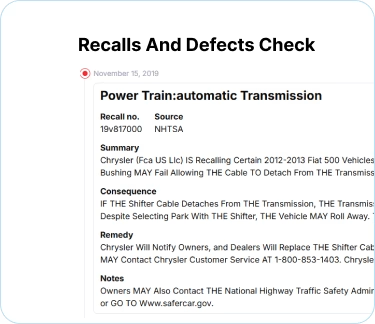
While specific recalls for the 2017 model year VRSCDX might be limited, it's always advisable to check Harley-Davidson's official recall database for any issued safety campaigns. For V-Rod models in general, particularly those with higher mileage, wear on components like the starter motor, regulator/rectifier, and wheel bearings can become a concern. The fuel system, especially the fuel pump and injectors, can require attention over the long term, and it's important to use high-quality fuel and keep the fuel filter clean. The stock exhaust system, while functional, can sometimes experience issues with internal baffling or chrome pitting over extended periods. Aftermarket modifications, if not done correctly, can also introduce reliability concerns, particularly regarding engine tuning and electrical systems.
Long-term reliability is generally considered good if the motorcycle receives consistent and proper maintenance. The Revolution engine is a robust unit, but its performance-oriented nature means it thrives on diligent care. Neglecting regular oil changes, coolant flushes, and timely replacement of wear items can lead to more significant issues down the line. The frame and suspension components are typically durable, but aesthetic elements like chrome or paint can be susceptible to environmental factors if not cared for.
While specific recalls for the 2017 model year VRSCDX might be limited, it's always advisable to check Harley-Davidson's official recall database for any issued safety campaigns. For V-Rod models in general, particularly those with higher mileage, wear on components like the starter motor, regulator/rectifier, and wheel bearings can become a concern. The fuel system, especially the fuel pump and injectors, can require attention over the long term, and it's important to use high-quality fuel and keep the fuel filter clean. The stock exhaust system, while functional, can sometimes experience issues with internal baffling or chrome pitting over extended periods. Aftermarket modifications, if not done correctly, can also introduce reliability concerns, particularly regarding engine tuning and electrical systems.
Long-term reliability is generally considered good if the motorcycle receives consistent and proper maintenance. The Revolution engine is a robust unit, but its performance-oriented nature means it thrives on diligent care. Neglecting regular oil changes, coolant flushes, and timely replacement of wear items can lead to more significant issues down the line. The frame and suspension components are typically durable, but aesthetic elements like chrome or paint can be susceptible to environmental factors if not cared for.
How long will the 2017 Harley-Davidson VRSCDX last?
Based on owner feedback and general motorcycle longevity, a well-maintained 2017 Harley-Davidson VRSCDX can comfortably achieve 50,000 to 100,000 miles or more. The robust Revolution engine is known for its durability, often requiring major service intervals well into the tens of thousands of miles. With diligent routine maintenance, including regular oil and filter changes, coolant flushes, and belt inspections, owners can expect many years of reliable service. Weaknesses over time might include wear on the clutch, occasional electrical component failures (like the regulator/rectifier), and potential degradation of suspension components. However, the core engine and drivetrain are built to last. Proper storage and care, especially in harsher climates, will significantly contribute to its long-term health.
What Technology & Safety Features are Included?
The 2017 Harley-Davidson VRSCDX, while focusing on raw performance and aggressive styling, is equipped with a practical suite of technology and safety features for its era. The primary rider interface is a digital speedometer integrated into a drag-style handlebar riser, offering essential information like speed, RPM, gear position, fuel level, and trip data. While it doesn't feature a full-color TFT display or smartphone integration found on newer bikes, it provides clear, concise readouts essential for performance riding. For entertainment, there is no built-in audio system, aligning with its performance cruiser ethos, encouraging riders to enjoy the mechanical symphony of the engine.
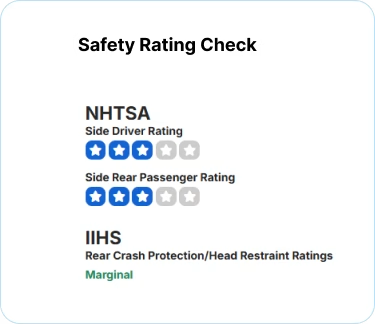
In terms of driver assistance, the VRSCDX is relatively basic, prioritizing a raw riding experience. It does not come equipped with electronic rider aids like traction control or multiple riding modes. However, anti-lock braking system (ABS) was typically available as an option or standard on many 2017 models, providing a crucial layer of safety for braking. This system helps prevent wheel lock-up during hard braking situations, enhancing stability and control. Safety is further enhanced by robust Brembo brakes front and rear, offering strong stopping power.
There are no integrated navigation systems or advanced connectivity features. Any navigation would rely on aftermarket GPS units or smartphone mounts. Crash-test ratings are not typically conducted or publicly released for production motorcycles like this in the same way they are for cars. However, the motorcycle's design emphasizes a low center of gravity and a solid chassis, contributing to inherent stability. The inclusion of ABS is the most significant electronic safety feature. Optional accessories from Harley-Davidson could include things like security systems with alarms and immobilizers, further enhancing theft deterrence.
In terms of driver assistance, the VRSCDX is relatively basic, prioritizing a raw riding experience. It does not come equipped with electronic rider aids like traction control or multiple riding modes. However, anti-lock braking system (ABS) was typically available as an option or standard on many 2017 models, providing a crucial layer of safety for braking. This system helps prevent wheel lock-up during hard braking situations, enhancing stability and control. Safety is further enhanced by robust Brembo brakes front and rear, offering strong stopping power.
There are no integrated navigation systems or advanced connectivity features. Any navigation would rely on aftermarket GPS units or smartphone mounts. Crash-test ratings are not typically conducted or publicly released for production motorcycles like this in the same way they are for cars. However, the motorcycle's design emphasizes a low center of gravity and a solid chassis, contributing to inherent stability. The inclusion of ABS is the most significant electronic safety feature. Optional accessories from Harley-Davidson could include things like security systems with alarms and immobilizers, further enhancing theft deterrence.
What Colors Options are Available?
2017 Harley-Davidson VRSCDX Prices and Market Value
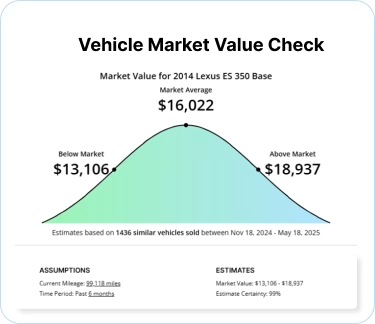
When new, the 2017 Harley-Davidson VRSCDX typically had an MSRP in the range of $18,499 to $19,299, depending on color options and any factory-installed accessories. On the used market, as of late 2023/early 2024, prices for a 2017 VRSCDX generally range from $11,000 to $16,000. This wide variation depends heavily on mileage, overall condition, maintenance history, and whether it has aftermarket modifications. Harley-Davidson motorcycles, particularly iconic models like the V-Rod, tend to hold their value relatively well compared to some other brands. Factors affecting resale value include mileage, the presence of desirable factory options (like ABS), immaculate condition, and the desirability of specific color schemes. Modifications can either increase or decrease value, with tasteful, high-quality upgrades often being more favorable than poorly executed ones.
2017 Harley-Davidson VRSCDX Cost of Ownership
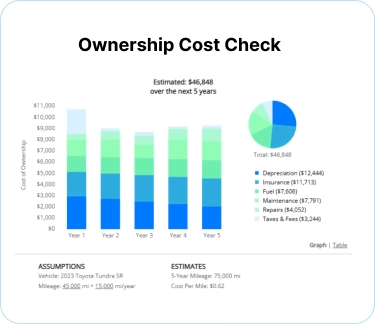
Owning a 2017 Harley-Davidson VRSCDX is generally considered moderately costly, leaning towards the higher end of motorcycle ownership expenses, rather than economical. Insurance premiums can be substantial, especially for younger riders or in high-risk areas, due to its performance and the Harley-Davidson brand. Fuel consumption, while not excessive for its class, will average around 30-35 mpg, so fuel costs are a factor. Routine maintenance, including oil changes, belt adjustments, and tire wear, is comparable to other premium motorcycles. However, specialized V-Rod parts and labor at authorized dealerships can be more expensive than for simpler bikes. Repairs can also be costly if major components fail, but with good care, its long-term durability can mitigate some of these expenses.
2017 Harley-Davidson VRSCDX Fuel Efficiency
Fuel Type
Gasoline
Fuel Capacity
-
City Mileage
-
Highway Mileage
-
2017 Harley-Davidson VRSCDX Warranty
Basic
Original warranty
0 months / No data
Estimated remaining
Expired
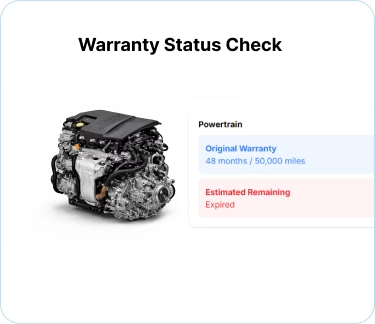
Powertrain
Original warranty
0 months / No data
Estimated remaining
Expired
Rust
Original warranty
0 months / No data
Estimated remaining
Expired
2017 Harley-Davidson VRSCDX Insurance
Insurance for a 2017 Harley-Davidson VRSCDX is moderately priced, reflecting its status as a Motorcycle with strong safety ratings and
reasonable repair costs.
How Does the 2017 Harley-Davidson VRSCDX Compare to Other Motorcycle?
The 2017 Harley-Davidson VRSCDX carved out a unique niche, often compared to other high-performance cruisers and power cruisers. In terms of performance, its 125 hp liquid-cooled Revolution engine was a beast, offering exhilarating acceleration that often outpaced many traditional V-twins. Rivals like the Ducati Diavel offered a similar European-engineered, high-performance cruiser experience, often with more advanced electronics and lighter weight, but at a higher price point and with a distinct Italian flair that might not appeal to all Harley loyalists.
Another competitor could be considered the Honda VTX1800 or the Kawasaki Vulcan 2000 in terms of sheer size and cruiser presence, but these generally lacked the sophisticated handling and high-revving power delivery of the V-Rod. The Yamaha VMAX, particularly older generations, also offered raw power but with a more brutish, less refined approach than the VRSCDX. Features on the VRSCDX were more focused on aggressive styling and a comfortable, albeit slightly forward, riding position rather than extensive electronic rider aids, which was typical for Harley-Davidson at the time.
Reliability of the V-Rod platform is generally good, but specialized parts and maintenance could be more involved than for some Japanese rivals. In terms of price, the VRSCDX sat in the premium segment of the cruiser market. If pure performance and modern electronic aids are paramount, a used Ducati Diavel could be a comparable, albeit more expensive, alternative. For a more traditional, but still powerful, cruiser experience with excellent reliability and often a lower price point on the used market, a Yamaha Raider or a Victory Hammer S (if found) would be strong contenders. However, for a unique blend of American muscle and European-engineered performance, the VRSCDX remains a compelling, if somewhat dated, option.
Another competitor could be considered the Honda VTX1800 or the Kawasaki Vulcan 2000 in terms of sheer size and cruiser presence, but these generally lacked the sophisticated handling and high-revving power delivery of the V-Rod. The Yamaha VMAX, particularly older generations, also offered raw power but with a more brutish, less refined approach than the VRSCDX. Features on the VRSCDX were more focused on aggressive styling and a comfortable, albeit slightly forward, riding position rather than extensive electronic rider aids, which was typical for Harley-Davidson at the time.
Reliability of the V-Rod platform is generally good, but specialized parts and maintenance could be more involved than for some Japanese rivals. In terms of price, the VRSCDX sat in the premium segment of the cruiser market. If pure performance and modern electronic aids are paramount, a used Ducati Diavel could be a comparable, albeit more expensive, alternative. For a more traditional, but still powerful, cruiser experience with excellent reliability and often a lower price point on the used market, a Yamaha Raider or a Victory Hammer S (if found) would be strong contenders. However, for a unique blend of American muscle and European-engineered performance, the VRSCDX remains a compelling, if somewhat dated, option.
Final Verdict: Is the 2017 Harley-Davidson VRSCDX a Good Motorcycle?
The 2017 Harley-Davidson VRSCDX is ideal for riders who crave a powerful, visually striking cruiser that offers a performance edge over traditional Harley-Davidsons. It appeals to those who appreciate aggressive styling, a commanding presence, and the thrilling acceleration provided by its potent Revolution engine. It's perfect for weekend rides, cruising through city streets, and making a statement. It is worth buying, especially on the used market, as new models are no longer produced.
Buying a used 2017 VRSCDX is the only option. Look for models with well-documented maintenance history and fewer than 30,000 miles if possible. Thoroughly inspect for any signs of neglect or poorly executed aftermarket modifications. While it may not be the most comfortable for long-distance touring due to its riding position and firm suspension, it excels as a dedicated performance cruiser. If you're seeking a unique blend of brute power and distinctive Harley-Davidson style with a European performance heart, the VRSCDX is a fantastic choice.