
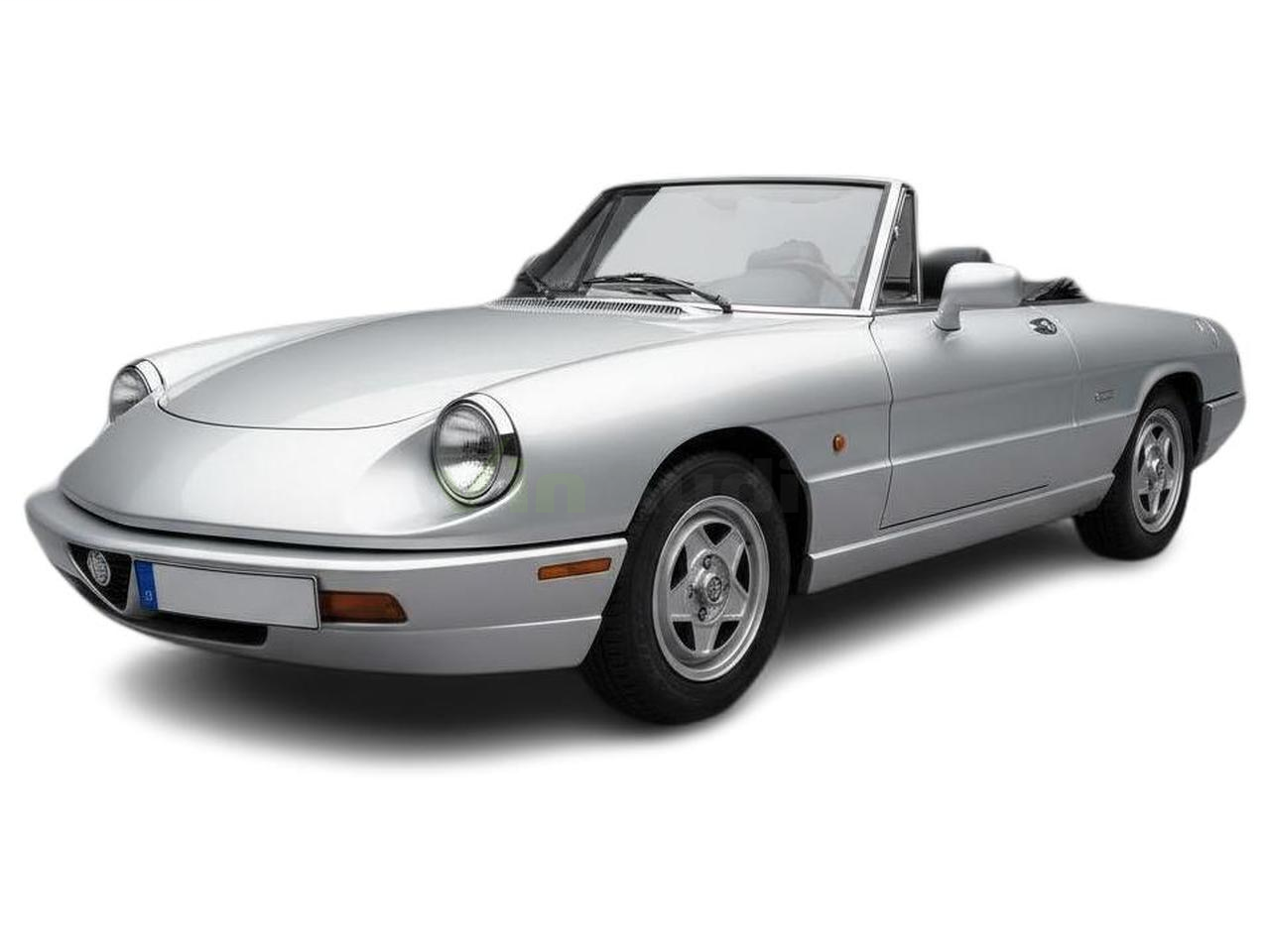
The Good
The 1991 Alfa Romeo Spider's advantages lie in its exhilarating performance, stunning Italian design, and engaging driving experience. It offers a delightful open-air motoring sensation, appealing to the heart, while its relatively simple mechanicals can appeal to practical buyers willing to maintain it.
The Bad
Known weaknesses for the 1991 Alfa Romeo Spider often revolve around electrical system gremlins, potential rust issues, particularly in the sills and wheel arches, and the need for diligent maintenance to ensure the engine and transmission remain in good health. Overheating can also be a concern.
1991 Alfa Romeo Spider: Quick Overview
- Engine Options: The 1991 Alfa Romeo Spider predominantly featured a 2.0-liter inline-four cylinder engine.
- Horsepower: This engine typically produced around 120-130 horsepower, depending on specific market configurations and emissions equipment.
- Fuel Economy: Fuel economy was generally in the range of 19-22 MPG in the city and 24-28 MPG on the highway, though this varied with driving style and conditions.
- 0-60 Times: Acceleration from 0 to 60 mph was typically in the 9-10 second range, offering sprightly, not blistering, performance.
- Towing Capacity: The Alfa Romeo Spider was not designed for towing, and no towing capacity information is applicable.
- Trim-Level Features:
- Base Model: Standard features often included power windows, power mirrors, leather-trimmed seats, a convertible soft top, and a basic AM/FM stereo system. Air conditioning was usually standard.
- Quadrifoglio Verde (QV): This sportier trim often added unique badging, sportier suspension tuning for improved handling, distinct alloy wheels, and sometimes upgraded interior trim, enhancing the driving experience and aesthetic appeal. Both trims usually came with a 5-speed manual transmission as standard.
1991 Alfa Romeo Spider Specifications
Vehicle Information
| Year | 1991 |
| Make | Alfa Romeo |
| Model | Spider |
| Trim | - |
| Style | Base Convertible RWD 5MT 2.0L I4 |
| Type | Convertible |
| Category | passenger |
Manufacturing Details
| Made In | Italy |
| Manufacturing City | MILAN |
Dimensions
| Doors | 2-Door |
| Curb Weight | 2700 pounds |
| Gross Vehicle Weight Rating | - |
| Overall Height | 48 inches |
| Overall Length | 162 inches |
| Overall Width | 66.5 inches |
| Wheelbase Length | 92 inches |
| Standard Seating | 2 |
Engine & Performance
| Engine | 2L I4 |
| Engine Size | 2L |
| Engine Cylinders | 4 |
| Transmission | 5-Speed Manual |
| Transmission Type | Manual |
| Transmission Speeds | 5-Speed |
| Drivetrain | Rear-Wheel Drive |
Additional Features
| Anti-Brake System | - |
| Steering Type | Rack & Pinion |
Pricing
| Manufacturer Suggested Retail Price (MSRP) | $25,000 |
| Invoice Price | $23,000 |
| Delivery Charges | $800 |
Vehicle History Report
Specifications
History
Events
History Check
Check
Check
Check
Check
Listings
Recalls
Check
Analysis
What Problems Does the 1991 Alfa Romeo Spider Have?
Another area of concern is rust. While the Series 4 Spiders generally had better rustproofing than earlier generations, they are still susceptible, especially in areas prone to moisture like the rocker panels, floor pans, and around the windshield frame. Thorough inspection for any signs of corrosion is paramount before purchasing.
The engine, while robust when properly maintained, can be prone to overheating if the cooling system is neglected. This includes checking the radiator, hoses, water pump, and thermostat regularly. The clutch and transmission can also wear over time, and while not inherently unreliable, they require attention.
Specific to the 1991 model year, which is part of the Series 4, there weren't widespread, model-year-specific recalls that stand out as major systemic failures. However, like many cars of this era, routine maintenance is crucial. Neglecting oil changes, coolant flushes, and general tune-ups can significantly shorten the lifespan of the engine and other components. Finding a mechanic experienced with Alfas is highly recommended, as their complexity and unique systems can be challenging for general repair shops.
How long will the 1991 Alfa Romeo Spider last?
What Technology & Safety Features are Included?
Driver-assistance features were virtually non-existent by modern standards. There were no advanced traction control systems, stability control, or the myriad of cameras and sensors found in today's vehicles. The focus was on the direct feedback from the road and the car.
Safety features were also rudimentary. Standard equipment included three-point seatbelts, crumple zones designed into the chassis, and typically disc brakes on all four wheels for effective stopping power. Some models might have offered optional anti-lock braking systems (ABS), though this was not universally standard. The strong chassis and A-pillar structure were designed to offer some degree of protection in a rollover scenario, especially with the top up.
Crash-test ratings for vehicles from this period are not as readily available or standardized as they are today through organizations like the NHTSA or IIHS. Alfa Romeo vehicles of this era were designed with structural integrity in mind, but without specific crash data, it's difficult to quantify their performance in modern crash simulations. The overall impression of the 1991 Spider's tech and safety suite is one of simplicity and a focus on mechanical engagement rather than electronic intervention.
What Colors Options are Available?
1991 Alfa Romeo Spider Prices and Market Value
Current used market prices for a 1991 Alfa Romeo Spider can vary significantly, generally ranging from $8,000 for cars needing significant restoration to $25,000 or more for pristine, low-mileage, and well-documented examples. Factors affecting resale value include condition (rust, mechanical soundness, interior wear), originality, maintenance history, and desirability of specific trims like the Quadrifoglio Verde. Low mileage and excellent original paintwork are key drivers for higher valuations.
1991 Alfa Romeo Spider Cost of Ownership
1991 Alfa Romeo Spider Fuel Efficiency
1991 Alfa Romeo Spider Insurance
reasonable repair costs.
How Does the 1991 Alfa Romeo Spider Compare to Other Convertible?
Performance: The Spider offered a spirited, albeit not blistering, performance with its 2.0-liter engine and engaging manual transmission. The Mazda Miata was generally quicker and more nimble in autocross scenarios due to its lighter weight and sharper handling. The Porsche 944 offered significantly more power and a more substantial feel.
Features: By 1991 standards, the Spider was relatively well-equipped for a sports car, typically including power windows and A/C. The Miata was more basic in its standard offerings initially. The Porsche 944 could be optioned with more luxury and performance features, but at a higher cost.
Reliability: This is where the Alfa Romeo Spider often lagged behind its rivals. The Mazda Miata, in particular, built a reputation for bulletproof reliability and low running costs, making it a more practical choice for daily driving. The Spider, while characterful, was known for its potential electrical gremlins and rust issues, demanding more frequent attention and specialized maintenance.
Price: The 1991 Spider was competitively priced against its European counterparts but often more expensive than a comparably equipped Mazda Miata.
Alternatives:
* Mazda Miata (NA generation, 1990-1997): For a highly reliable, fun, and affordable roadster, the Miata is arguably the superior choice for most buyers seeking a pure open-top experience.
* Porsche 944: If performance and a more premium feel are desired, and budget is less of a concern, the 944 offers a more potent and substantial driving experience, though at a higher price point and with its own set of maintenance needs.
* BMW Z3 (later models): While not a direct contemporary, the Z3 offered a more modern take on the European roadster, with generally better reliability than the Alfa, but often a less raw driving feel.
Final Verdict: Is the 1991 Alfa Romeo Spider a Good Convertible?
Buying a 1991 Spider should strictly be done on the used market. New examples are obviously unavailable. It's crucial to seek out well-maintained examples, ideally with extensive service records, and to thoroughly inspect for rust and electrical issues. The Quadrifoglio Verde trim offers a slightly sportier experience, but even the base model provides the essential Alfa Romeo Spider charm. It is not an ideal choice for a daily driver or for those on a tight budget, but for a weekend cruiser or a cherished classic addition, it can be a very rewarding ownership experience.

Drew B
Drew is a seasoned automotive expert and contributor to VinCheck.info. With nearly 15 years of experience as a former Porsche technician, he brings a wealth of hands-on knowledge to his writing. Born in North Carolina, a region renowned for its deep-rooted NASCAR culture, Drew developed a passion for cars early in life, often building and working on vehicles from a young age. At VINCheck, Drew leverages his extensive technical background to provide in-depth analyses of various vehicles. His articles often focus on engine performance, reliability, and maintenance insights, offering readers practical information grounded in real-world experience. Some of his notable contributions include reviews on the Mazda CX-5's longevity and detailed examinations of engine options for models like the 2011 Toyota Camry and Tacoma