
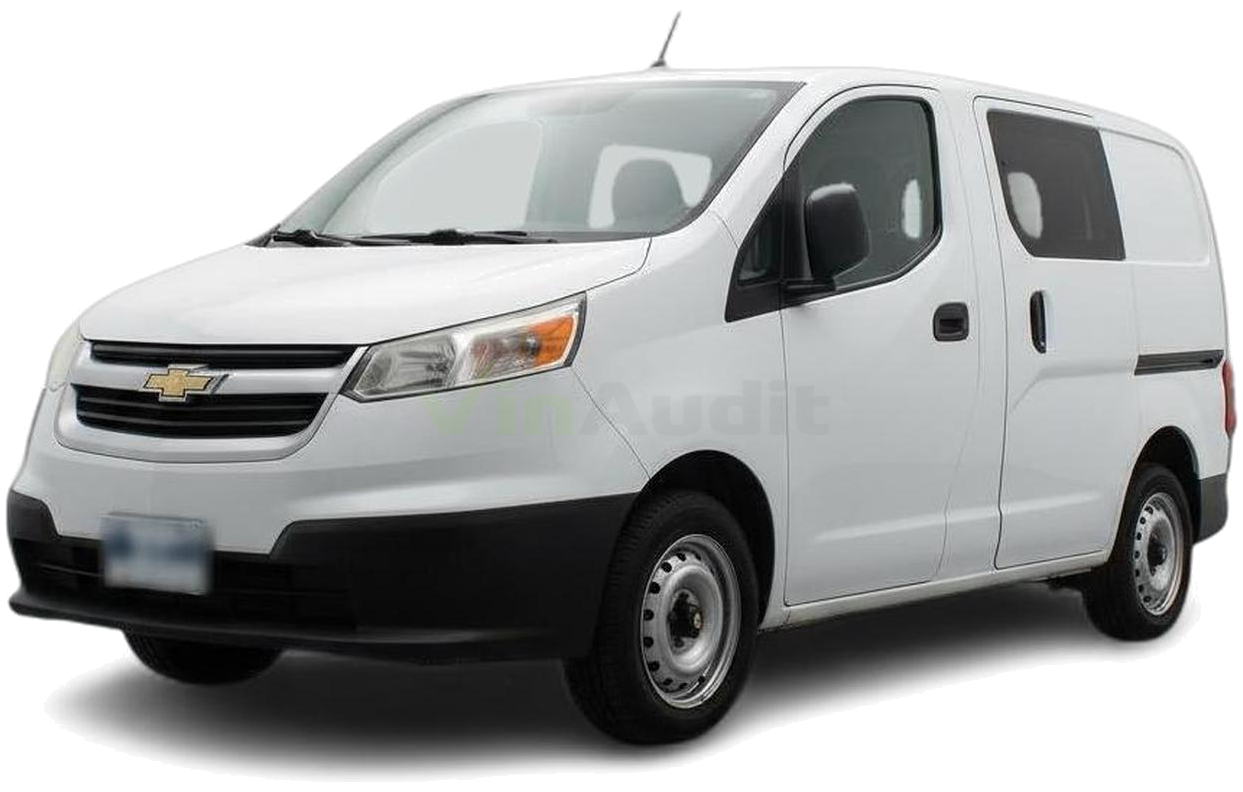
The 2016 Chevrolet City Express is a compact cargo van, essentially a rebadged Nissan NV200, produced from 2015 to 2018. It offered a practical solution for urban businesses needing maneuverability and cargo space without the bulk of larger vans. Available in LS and LT trims, its attractive pricing and fuel efficiency made it a popular choice for small businesses and tradespeople seeking an economical workhorse.
The Good
The 2016 City Express excels in maneuverability for city driving and offers impressive fuel economy, appealing to the practical buyer. Its compact size makes parking easy, and the versatile cargo space serves businesses well. Emotionally, its approachable price point and Chevrolet badging offer a sense of dependable utility.
The Bad
Potential buyers should be aware of the City Express's somewhat rudimentary interior and limited engine power, which can feel strained under heavy loads or on inclines. Road noise can also be noticeable, and some may find the ride quality less refined compared to larger vans.
2016 Chevrolet City Express: Quick Overview
- Engine Options: 1 engine option
- Engine: 2.0L 4-cylinder
- Horsepower: 131 hp @ 5600 rpm
- Torque: 139 lb-ft @ 4400 rpm
- Transmission: Continuously Variable Transmission (CVT)
- Fuel Economy (EPA Estimated): 24 MPG city / 26 MPG highway / 25 MPG combined
- 0-60 Times: Approximately 10.0 - 11.0 seconds (estimated)
- Towing Capacity: Not typically rated for towing. Designed primarily for cargo hauling.
- Drivetrain: Front-wheel drive
- Cargo Volume: Approximately 122.7 cubic feet
- Payload Capacity: Up to 1,600 lbs
- Key Trim Level Features (LS):
- Air conditioning
- Power windows and locks
- AM/FM/CD audio system with auxiliary input
- 2 front 12V power outlets
- Vinyl flooring
- Fold-flat passenger seat
- 15-inch steel wheels
- Key Trim Level Features (LT - adds to LS):
- Cruise control
- Bluetooth connectivity
- SiriusXM Satellite Radio capability
- Full-length black roof rails
- Chrome grille
- Body-color door handles and mirrors
- 15-inch steel wheels with wheel covers
- Optional Features: Rear parking assist, navigation system, rearview camera.
2016 Chevrolet City Express Specifications
Vehicle Information
| Year | 2016 |
| Make | Chevrolet |
| Model | City Express |
| Trim | - |
| Style | - |
| Type | - |
| Category | - |
Manufacturing Details
| Made In | - |
| Manufacturing City | - |
Dimensions
| Doors | - |
| Curb Weight | - |
| Gross Vehicle Weight Rating | - |
| Overall Height | - |
| Overall Length | - |
| Overall Width | - |
| Wheelbase Length | - |
| Standard Seating | - |
Engine & Performance
| Engine | - |
| Engine Size | - |
| Engine Cylinders | - |
| Transmission | - |
| Transmission Type | - |
| Transmission Speeds | - |
| Drivetrain | - |
Additional Features
| Anti-Brake System | - |
| Steering Type | - |
Pricing
| Manufacturer Suggested Retail Price (MSRP) | - |
| Invoice Price | - |
| Delivery Charges | - |
Vehicle History Report
Vehicle
Specifications
Specifications
Ownership
History
History
All History
Events
Events
NMVTIS Title
History Check
History Check
Salvage/Rebuilt
Check
Check
Accident
Check
Check
Theft
Check
Check
Open Lien
Check
Check
Past Sale
Listings
Listings
Safety
Recalls
Recalls
Odometer
Check
Check
Market Price
Analysis
Analysis
What Problems Does the 2016 Chevrolet City Express Have?
The 2016 Chevrolet City Express, sharing much of its mechanical underpinnings with the Nissan NV200, generally exhibits good reliability for its class. However, some owners have reported issues primarily related to the CVT transmission. Common complaints include occasional hesitation or rough shifting, particularly in older models or those with higher mileage. While not widespread, there have been some reports of the CVT requiring premature replacement, which can be a significant expense.
Another area that sometimes draws attention is the suspension and steering components. Some owners have noted premature wear on parts like tie rods or ball joints, leading to clunking noises or a less precise feel. This can be exacerbated by heavy usage or driving on rough roads.
Brake wear can also be a point of concern for some users, with reports of pads and rotors needing replacement sooner than expected, especially in stop-and-go city driving conditions which are typical for this vehicle's intended use.
Electrical issues are less common but have been mentioned, such as problems with the infotainment system or accessory power outlets. Regarding recalls, owners should always check the NHTSA website for any applicable recalls for their specific VIN. For the 2016 model year, recalls might have addressed issues like potential airbag inflator problems or minor software glitches. It's crucial to ensure any outstanding recalls have been addressed by a certified dealer.
Overall, while the City Express isn't immune to issues, many owners find it to be a durable work vehicle when properly maintained. The key to long-term reliability lies in adhering to the recommended maintenance schedule, paying attention to any unusual noises or driving behaviors, and addressing potential problems proactively.
How long will the 2016 Chevrolet City Express last?
Based on owner data and typical usage patterns for a commercial-oriented vehicle, the 2016 Chevrolet City Express can reasonably be expected to provide 150,000 to 200,000 miles or more of service with consistent and diligent maintenance. Regular oil changes, fluid checks, and timely replacement of wear items like brakes and tires are crucial. The CVT transmission is often the component that dictates long-term durability; while many units last the life of the vehicle, some can experience issues around the 100,000-150,000-mile mark. Suspension components may also require attention over time, especially if the van is frequently loaded heavily or driven on uneven surfaces. Overall, its long-term durability is considered fair to good, with the potential for significant service life if well-cared for.
What Technology & Safety Features are Included?
The 2016 Chevrolet City Express prioritizes functionality and utility over cutting-edge technology, which is typical for a budget-friendly cargo van. Standard tech and entertainment features are modest but sufficient for a work vehicle.
Standard Technology & Entertainment:
Driver-assistance features are minimal on the 2016 City Express. The most notable is the rear parking assist, which uses sensors to detect obstacles behind the vehicle and alert the driver.
Safety Features:
Standard safety features include:
As a commercial vehicle, the City Express was not subjected to the same rigorous crash testing by organizations like the NHTSA or IIHS as passenger cars. Therefore, official crash-test ratings are generally not available. However, its standard safety equipment provides a baseline level of protection.
- AM/FM/CD audio system with auxiliary input: A basic sound system to play music or radio.
- 2 front 12V power outlets: Essential for charging devices on the go.
- Vinyl flooring: Durable and easy to clean, suitable for cargo transport.
- Trip computer: Provides basic driving information.
- Bluetooth connectivity: Available on higher trims or as an option, allowing for hands-free calling and audio streaming.
- SiriusXM Satellite Radio capability: Offers a wider range of audio entertainment.
- Navigation system: For businesses that require reliable route planning.
- Rearview camera: Significantly improves visibility when reversing, especially in tight urban environments.
Driver-assistance features are minimal on the 2016 City Express. The most notable is the rear parking assist, which uses sensors to detect obstacles behind the vehicle and alert the driver.
Safety Features:
Standard safety features include:
- Front airbags
- Front-seat side-impact airbags
- Anti-lock brakes (ABS)
- Traction control
- Electronic stability control
- Tire pressure monitoring system
As a commercial vehicle, the City Express was not subjected to the same rigorous crash testing by organizations like the NHTSA or IIHS as passenger cars. Therefore, official crash-test ratings are generally not available. However, its standard safety equipment provides a baseline level of protection.
What Colors Options are Available?
2016 Chevrolet City Express Prices and Market Value
When new, the 2016 Chevrolet City Express had an MSRP that typically started in the low $20,000s, with higher trims and optional packages pushing the price closer to $25,000. Today, the used market prices for a 2016 City Express generally range from $7,000 to $14,000, depending heavily on mileage, condition, and trim level. This represents a significant depreciation from its original MSRP, which is common for work vans. Factors affecting its resale value include its reputation for fuel efficiency and maneuverability, which are attractive to small businesses. However, its relatively short production run and competition from more established or larger vans can also impact its desirability. Lower mileage and well-maintained examples will command higher prices, while those with extensive commercial use and wear will be at the lower end of the spectrum.
2016 Chevrolet City Express Cost of Ownership
The 2016 Chevrolet City Express is generally considered economical to own. Insurance costs are typically moderate, falling within the average range for commercial vehicles of its size and type. Fuel costs are a significant advantage due to its excellent MPG ratings, making it a budget-friendly choice for daily operations. Routine maintenance, such as oil changes and tire rotations, is straightforward and reasonably priced. Repair costs for common issues are usually manageable, though significant repairs to the CVT transmission can be an exception. Overall, the City Express offers low long-term ownership costs, making it an attractive proposition for businesses prioritizing affordability and efficiency.
2016 Chevrolet City Express Fuel Efficiency
Fuel Type
-
Fuel Capacity
-
City Mileage
-
Highway Mileage
-
2016 Chevrolet City Express Safety Rating
NHTSA
2016 Chevrolet City Express Insurance
Insurance for a 2016 Chevrolet City Express is moderately priced, reflecting its status as a Vehicle with strong safety ratings and
reasonable repair costs.
How Does the 2016 Chevrolet City Express Compare to Other Vehicle?
The 2016 Chevrolet City Express primarily competed against other compact cargo vans, with the most direct rivals being the Nissan NV200 (its mechanical twin) and the Ford Transit Connect.
vs. Nissan NV200: Performance, reliability, and basic features are virtually identical, as the City Express is a rebadged NV200. The primary difference lies in branding and potentially dealer network availability or local incentives. Both offer similar efficiency and maneuverability.
vs. Ford Transit Connect: The Transit Connect, particularly in its smaller configuration, is a strong competitor. The Transit Connect often offered more engine choices, including a more powerful optional engine, giving it a performance edge over the City Express's single, more modest powertrain. While the Transit Connect can be slightly more expensive, its perceived robustness and wider range of available configurations might appeal to some buyers. Reliability is generally good for both, but the Transit Connect has a longer track record and potentially a larger aftermarket support system. Features can be comparable, though Ford sometimes offered slightly more advanced tech options.
Performance: The City Express's 2.0L engine is adequate for urban use but can feel underpowered on highways or when fully loaded. The Transit Connect often provided a bit more pep. The NV200 is essentially the same as the City Express here.
Features: All three offer basic work van necessities. Optional features like rearview cameras and Bluetooth are available across the board, with Ford sometimes pushing the envelope slightly further on tech availability.
Reliability: All are generally considered reliable, but the CVT in the City Express/NV200 can be a point of concern for some long-term. The Transit Connect is known for solid dependability.
Price: The City Express and NV200 were typically priced very competitively, often undercutting the Transit Connect, especially when incentives were applied. This was a major selling point for the Chevrolet.
Recommendations:
vs. Nissan NV200: Performance, reliability, and basic features are virtually identical, as the City Express is a rebadged NV200. The primary difference lies in branding and potentially dealer network availability or local incentives. Both offer similar efficiency and maneuverability.
vs. Ford Transit Connect: The Transit Connect, particularly in its smaller configuration, is a strong competitor. The Transit Connect often offered more engine choices, including a more powerful optional engine, giving it a performance edge over the City Express's single, more modest powertrain. While the Transit Connect can be slightly more expensive, its perceived robustness and wider range of available configurations might appeal to some buyers. Reliability is generally good for both, but the Transit Connect has a longer track record and potentially a larger aftermarket support system. Features can be comparable, though Ford sometimes offered slightly more advanced tech options.
Performance: The City Express's 2.0L engine is adequate for urban use but can feel underpowered on highways or when fully loaded. The Transit Connect often provided a bit more pep. The NV200 is essentially the same as the City Express here.
Features: All three offer basic work van necessities. Optional features like rearview cameras and Bluetooth are available across the board, with Ford sometimes pushing the envelope slightly further on tech availability.
Reliability: All are generally considered reliable, but the CVT in the City Express/NV200 can be a point of concern for some long-term. The Transit Connect is known for solid dependability.
Price: The City Express and NV200 were typically priced very competitively, often undercutting the Transit Connect, especially when incentives were applied. This was a major selling point for the Chevrolet.
Recommendations:
- For ultimate budget savings and similar performance: The Nissan NV200 is the direct alternative, offering the same core product.
- For a bit more power and potentially wider feature set: The Ford Transit Connect is a strong alternative, though it might come at a slightly higher price point.
- If looking slightly larger: Consider the Ram ProMaster City or the larger Ford Transit/Ram ProMaster/Mercedes-Benz Sprinter if more cargo volume is needed, though these are in a different class and price bracket.
Final Verdict: Is the 2016 Chevrolet City Express a Good Vehicle?
The 2016 Chevrolet City Express is ideal for small business owners, tradespeople, and delivery services operating primarily in urban environments who need a compact, fuel-efficient, and easy-to-maneuver cargo van. Its primary appeal lies in its affordability both new and used, and its exceptional city MPG. It is worth buying if budget is a top priority and the vehicle will not be subjected to heavy highway use or constant steep inclines, where its limited power might be a drawback.
It is best purchased used, as new models are no longer produced. Opting for the LT trim is recommended for its slightly enhanced features like cruise control and Bluetooth. Thorough inspection, especially of the CVT transmission and suspension, is crucial when buying used. For those prioritizing sheer utility, low running costs, and ease of parking, the City Express remains a sensible choice, especially if found at a competitive used price.
