
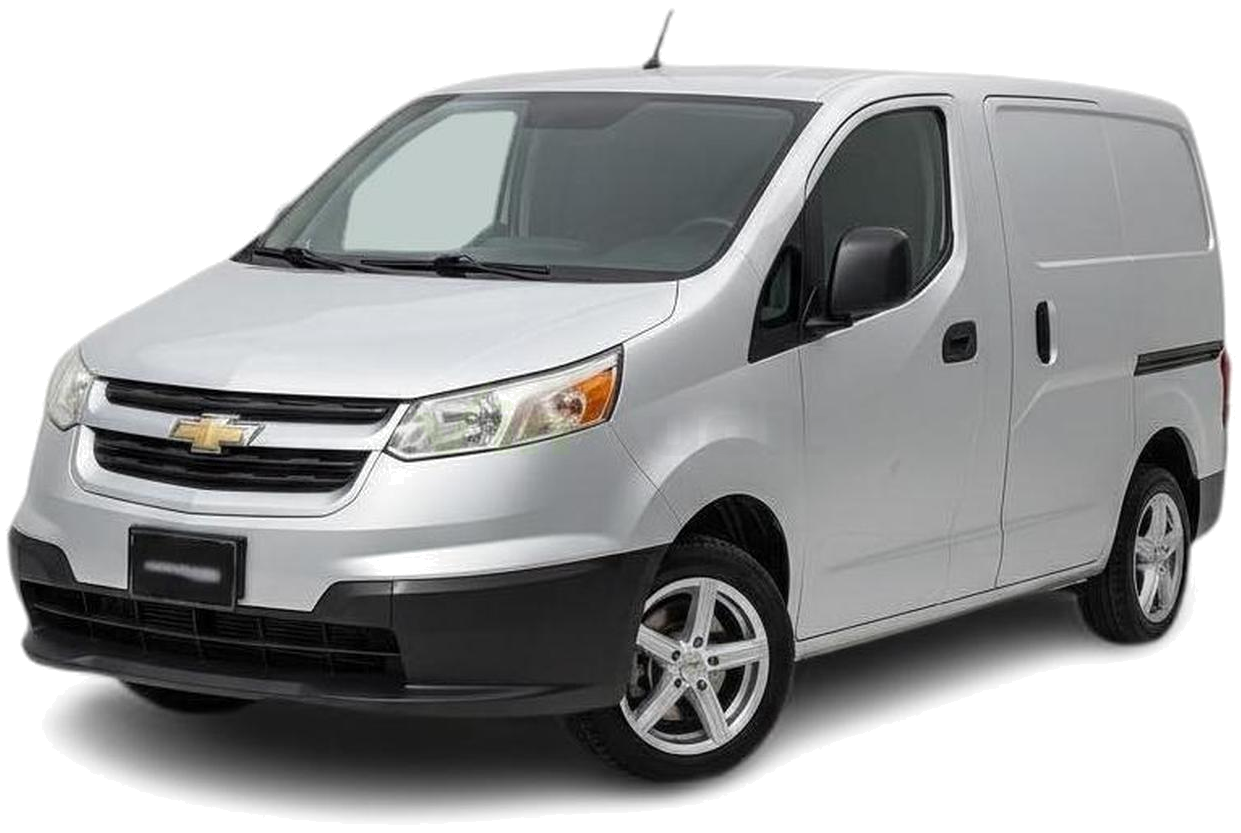
The Good
Key advantages of the 2017 Chevrolet City Express include its exceptional fuel efficiency, nimble handling ideal for urban driving, and its practical, compact design. It offers great value with low running costs, appealing to practical business owners. Its ease of parking and maneuverability can also provide a sense of efficiency and confidence in bustling city settings.
The Bad
Known weaknesses of the 2017 Chevrolet City Express include its somewhat underpowered engine for highway driving or heavy loads, and a rather basic, noisy interior. The ride can be firm, and it lacks advanced technology features found in some competitors. Cargo capacity is also smaller than some larger compact van rivals, which can be a limitation for certain businesses.
2017 Chevrolet City Express: Quick Overview
- Engine: The 2017 Chevrolet City Express is powered by a single engine option, a 2.0-liter DOHC 16-valve 4-cylinder engine. This engine is designed for efficiency and adequate power for city driving, rather than high-speed performance.
- Horsepower: This 2.0-liter engine produces 131 horsepower at 5,200 rpm, along with 139 lb-ft of torque at 4,800 rpm. Power is delivered to the front wheels via a continuously variable transmission (CVT).
- Fuel Economy: The City Express boasts impressive fuel efficiency for a cargo van, with EPA estimates of 24 MPG in the city, 26 MPG on the highway, and a combined rating of 25 MPG. This makes it an economical choice for businesses concerned with operational costs.
- 0-60 Times: Performance is not its strong suit. The 0-60 mph acceleration time for the City Express typically hovers in the range of 10 to 11 seconds, which is suitable for urban environments but can feel sluggish when merging onto highways or climbing steep grades with a full load.
- Towing Capacity: The 2017 Chevrolet City Express is generally not recommended for towing. While some sources may list a very minimal capacity (e.g., around 1,500 lbs), it's primarily designed for cargo hauling within its interior. Towing substantial loads is not a practical use case for this vehicle.
- Trim-Level Features:
- LS Trim: As the base model, the LS offers essential features for a work vehicle. Standard equipment includes 15-inch steel wheels, vinyl upholstery (for durability), manually adjustable outside mirrors, power windows and door locks, air conditioning, and a basic AM/FM stereo with a CD player and two speakers. It also comes with a 12-volt power outlet and multiple cargo tie-downs.
- LT Trim: The LT trim builds upon the LS, adding several convenience and aesthetic upgrades. These include cruise control, power-adjustable heated outside mirrors, remote keyless entry, body-color bumpers, and chrome grille accents. The LT also includes a rear 12-volt power outlet, and some models might feature an upgraded audio system with Bluetooth connectivity. Optional features for the LT include rear parking sensors, a rearview camera, and a NissanConnect infotainment system with navigation and a 5.8-inch touchscreen (owing to its NV200 roots). Cloth upholstery is also an available option on the LT. Both trims prioritize practicality and cargo space, offering 122.7 cubic feet of storage.
2017 Chevrolet City Express Specifications
Vehicle Information
| Year | 2017 |
| Make | Chevrolet |
| Model | City Express |
| Trim | - |
| Style | - |
| Type | - |
| Category | - |
Manufacturing Details
| Made In | - |
| Manufacturing City | - |
Dimensions
| Doors | - |
| Curb Weight | - |
| Gross Vehicle Weight Rating | - |
| Overall Height | - |
| Overall Length | - |
| Overall Width | - |
| Wheelbase Length | - |
| Standard Seating | - |
Engine & Performance
| Engine | - |
| Engine Size | - |
| Engine Cylinders | - |
| Transmission | - |
| Transmission Type | - |
| Transmission Speeds | - |
| Drivetrain | - |
Additional Features
| Anti-Brake System | - |
| Steering Type | - |
Pricing
| Manufacturer Suggested Retail Price (MSRP) | - |
| Invoice Price | - |
| Delivery Charges | - |
Vehicle History Report
Specifications
History
Events
History Check
Check
Check
Check
Check
Listings
Recalls
Check
Analysis
What Problems Does the 2017 Chevrolet City Express Have?
Beyond the CVT, other common issues include problems with the air conditioning system, such as refrigerant leaks or compressor failures, which can be an inconvenience in warmer weather. Owners have also occasionally reported issues with suspension components, such as worn struts or bushings, particularly with vehicles used on rough roads or carrying heavy loads consistently. Interior components, being utilitarian, can sometimes show signs of wear or breakage with heavy commercial use.
Regarding recalls for the 2017 model year, a search of NHTSA (National Highway Traffic Safety Administration) records reveals a few points of interest. One significant recall (NHTSA Campaign Number 18V794000) involved the rearview camera system, where the display may not show an image when the vehicle is in reverse, increasing the risk of a crash. Another recall (NHTSA Campaign Number 17V609000) addressed an issue where the side impact sensors might be incorrectly calibrated, potentially delaying or preventing side curtain airbag deployment in a crash, increasing injury risk. It's crucial for potential buyers to verify that all applicable recalls have been addressed by a dealership.
Long-term reliability concerns are primarily tied to the longevity of the CVT. Proper maintenance, including regular fluid changes, is vital for its lifespan. Otherwise, the 2.0L engine is generally considered robust and reliable. Owners should anticipate typical wear-and-tear items like brakes and tires, and monitor for any signs of rust developing, especially in areas with harsh winters or coastal environments. Overall, with diligent maintenance, the City Express can be a reliable workhorse, but the CVT remains the primary long-term watch point.
How long will the 2017 Chevrolet City Express last?
However, a key weakness over time can be the continuously variable transmission (CVT). While many will last, neglecting fluid changes or subjecting the vehicle to constant heavy loads and severe driving conditions can shorten its lifespan. Suspension components may also wear out over time, especially with frequent heavy hauling or driving on rough roads. Interior plastics, though durable for commercial use, can show significant wear or minor breakage. Rust can become a concern in regions exposed to road salt or coastal air. Regular, diligent maintenance is paramount to achieving maximum service life and mitigating these potential long-term issues.
What Technology & Safety Features are Included?
In terms of driver-assistance features, the City Express is also quite basic by modern standards. The most prominent optional driver aid was rear parking sensors, which helped with maneuvering in tight spaces, and the aforementioned rearview camera system. There were no advanced features such as blind-spot monitoring, forward collision warning, or lane departure warning available.
Safety features were standard for the segment. All 2017 City Express models came equipped with front airbags, side-impact airbags, and side curtain airbags. Other standard safety technologies included anti-lock brakes (ABS), electronic brakeforce distribution, traction control, and electronic stability control. These systems work together to help maintain control in challenging driving conditions. As for crash-test ratings, the National Highway Traffic Safety Administration (NHTSA) did not provide overall or frontal/side crash ratings specifically for the 2017 Chevrolet City Express or its Nissan NV200 twin. Similarly, the Insurance Institute for Highway Safety (IIHS) did not conduct full crash tests on this vehicle, which is common for smaller commercial vans. This lack of comprehensive third-party crash test data is typical for vehicles in this niche, as they are not subject to the same testing requirements as passenger cars.
What Colors Options are Available?
2017 Chevrolet City Express Prices and Market Value
Depreciation for compact commercial vans like the City Express is often more favorable than passenger vehicles, as their utility ensures consistent demand. While they still depreciate, they tend to hold a decent percentage of their value, especially for businesses seeking an economical workhorse. Factors significantly affecting resale value include a clean title, a complete service history, low mileage, the overall cosmetic and mechanical condition, and the presence of desirable options like a rearview camera or Bluetooth. Any signs of heavy commercial abuse or neglected maintenance will naturally depress the resale value.
2017 Chevrolet City Express Cost of Ownership
2017 Chevrolet City Express Fuel Efficiency
2017 Chevrolet City Express Safety Rating
NHTSA
2017 Chevrolet City Express Recalls & Defects
Electrical System:ignition
Fuel System, Gasoline:delivery:fuel Pump:control/Drive Module
2017 Chevrolet City Express Insurance
reasonable repair costs.
How Does the 2017 Chevrolet City Express Compare to Other Vehicle?
In terms of Performance, the City Express (with its 131 hp 2.0L engine) generally lags behind most competitors. The Ford Transit Connect offered more powerful engine options, including a 2.5-liter four-cylinder (169 hp) or a 1.6-liter EcoBoost (178 hp), providing better acceleration and highway merging capabilities. The Ram ProMaster City's 2.4-liter engine (178 hp) also offered more grunt. For sheer power, the City Express is outclassed, making it less ideal for heavy loads or frequent highway use.
Regarding Features, the City Express is quite basic. While it offered power accessories, AC, and optional Bluetooth/navigation on the LT, it lacked the more sophisticated infotainment systems, advanced driver-assistance features, or diverse interior configurations found in some rivals. The Transit Connect, for instance, could be equipped with more advanced SYNC 3 infotainment and a broader range of safety tech. The ProMaster City also offered a larger Uconnect touchscreen and various upfit options.
Reliability for the City Express, being a Nissan NV200, is generally considered good for a commercial vehicle, with the main caveat being the CVT transmission. When properly maintained, the powertrain can be robust. The Transit Connect and ProMaster City also have solid reputations, though each has its own common quirks. All three benefit from a focus on commercial durability.
Price was a strong selling point for the City Express, often undercutting rivals when new. On the used market, it generally remains a more affordable option, making it attractive for budget-conscious buyers. The Transit Connect and ProMaster City often command slightly higher prices, reflecting their more varied configurations and powertrain options.
Alternatives:
- Ford Transit Connect: A strong alternative offering superior driving dynamics, more powerful engine choices, and a wider range of available features and configurations (short/long wheelbase, passenger versions). It's often a better choice for those needing more power or versatility.
- Ram ProMaster City: Offers more cargo volume and a significantly higher payload capacity than the City Express, making it suitable for heavier duty tasks. Its nine-speed automatic transmission also provides a smoother power delivery than the City Express's CVT.
The City Express is best for those prioritizing maximum fuel efficiency, urban maneuverability, and the lowest possible acquisition cost, and who don't require high power or extensive features. For more demanding tasks or a more refined driving experience, alternatives are often better.
Final Verdict: Is the 2017 Chevrolet City Express a Good Vehicle?
It is certainly worth buying for those who understand its limitations, such as its modest power output and basic interior amenities. For a reliable, no-frills workhorse, it's a strong contender. The sweet spot for purchase is undoubtedly on the used market, where its initial depreciation has made it highly affordable. Look for well-maintained examples, ideally with documented service records, paying particular attention to the health of the CVT. The LT trim offers a few more creature comforts like cruise control and optional Bluetooth, which can enhance daily usability without significantly impacting cost. Avoid if you frequently haul very heavy loads or need strong highway acceleration; in those cases, rivals offer more.

Drew B
Drew is a seasoned automotive expert and contributor to VinCheck.info. With nearly 15 years of experience as a former Porsche technician, he brings a wealth of hands-on knowledge to his writing. Born in North Carolina, a region renowned for its deep-rooted NASCAR culture, Drew developed a passion for cars early in life, often building and working on vehicles from a young age. At VINCheck, Drew leverages his extensive technical background to provide in-depth analyses of various vehicles. His articles often focus on engine performance, reliability, and maintenance insights, offering readers practical information grounded in real-world experience. Some of his notable contributions include reviews on the Mazda CX-5's longevity and detailed examinations of engine options for models like the 2011 Toyota Camry and Tacoma